Sixth Amendment trial rights — el fundamento
The Sixth Amendment guarantees fundamental trial rights:
Right to jury trial. Article III and Sixth Amendment require jury trial for serious criminal offenses. Duncan v. Louisiana, 391 U.S. 145 (1968), incorporated jury trial right to states. Federal felonies always require jury trial unless waived per Fed. R. Crim. P. 23(a).
Right to confrontation. Crawford v. Washington, 541 U.S. 36 (2004), held testimonial hearsay inadmissible unless declarant unavailable and prior opportunity for cross-examination existed. Davis v. Washington, 547 U.S. 813 (2006), clarified what constitutes testimonial. Bullcoming v. New Mexico, 564 U.S. 647 (2011), addressed lab reports. Williams v. Illinois, 567 U.S. 50 (2012), further developed forensic evidence rules. Cross-examination of government witnesses is constitutional right, not privilege.
Right to counsel. Gideon v. Wainwright, 372 U.S. 335 (1963), incorporated counsel right. Strickland v. Washington, 466 U.S. 668 (1984), established ineffective assistance test. Counsel right attaches at critical stages including pretrial proceedings, plea negotiations (Lafler v. Cooper, 566 U.S. 156 (2012); Missouri v. Frye, 566 U.S. 134 (2012)), trial, sentencing, direct appeal.
Compulsory process. Right to subpoena witnesses and present defense. Washington v. Texas, 388 U.S. 14 (1967). Includes right to present witnesses with personal knowledge, expert witnesses, and impeachment evidence.
Right to speedy trial. Sixth Amendment requires speedy trial. Speedy Trial Act of 1974 (18 USC sección 3161 et seq.) implements specific time periods: indictment within 30 days of arrest; trial within 70 days of indictment (with extensive exclusions). Violation can result in dismissal with or without prejudice bajo sección 3162.
Right to public trial. Waller v. Georgia, 467 U.S. 39 (1984). Closure of proceedings requires specific findings. Recent Press-Enterprise doctrine cases address access by media and public.
Right against self-incrimination. Fifth Amendment guarantee. Defendant cannot be compelled to testify. Adverse inference instruction prohibited (Griffin v. California, 380 U.S. 609 (1965)). Defense can request curative instruction if prosecutor improperly comments on silence.
Due process. Fifth Amendment (federal) and Fourteenth Amendment (state) due process guarantees apply throughout trial. Includes right to present complete defense, fair tribunal, impartial jury, adequate notice.
Federal criminal trials representan una pequeña fraccion de federal prosecutions — según U.S. Sentencing Commission data, menos del 3 percent de federal criminal cases reach trial. La mayoría resuelve via plea agreement. Pero para casos que proceed to trial, la preparation es extensa y la procedural sophistication necesaria sustancial. Sixth Amendment guarantees incluyen el derecho a jury trial, confrontation, counsel, compulsory process, y speedy trial. La defense en juicio integra trial advocacy, evidentiary mastery, y procedural precisión.
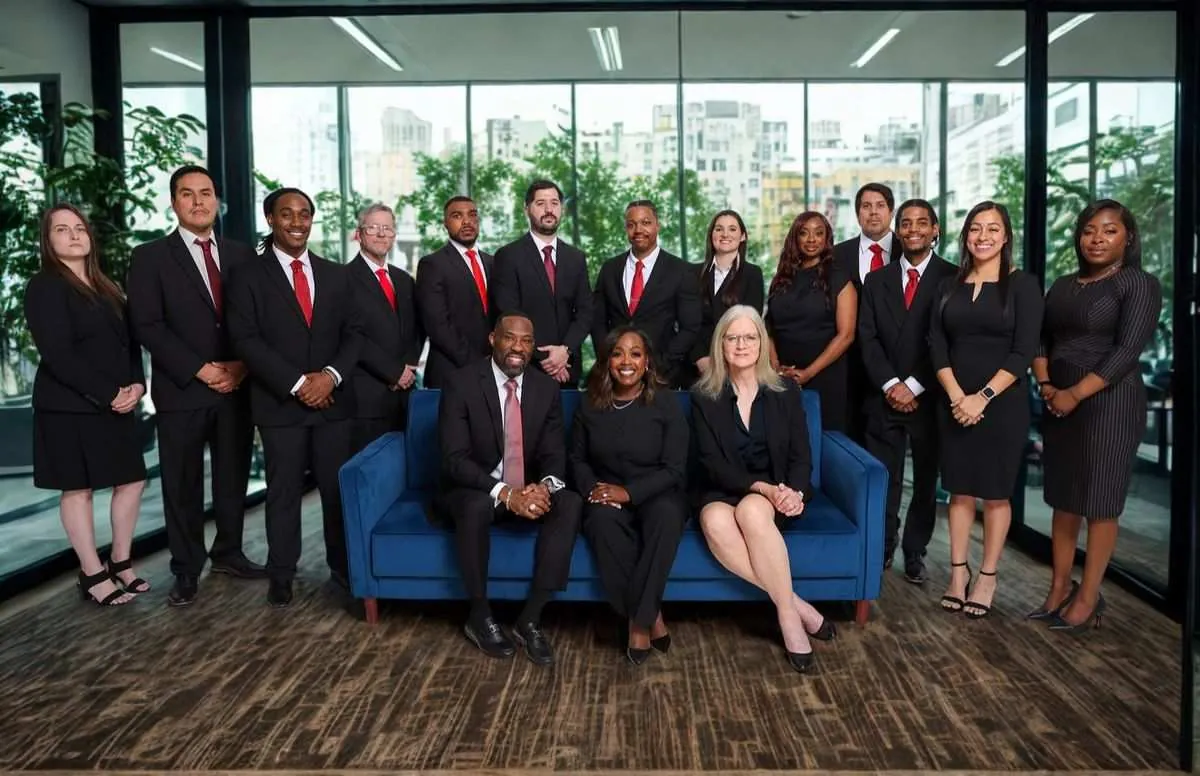
Federal trial defense incorpora múltiple components: jury selection bajo Batson v. Kentucky, 476 U.S. 79 (1986); opening statements; cross-examination bajo Federal Rules of Evidence; evidentiary objections; presentation of defense case; jury instructions bajo Fifth Circuit Pattern Jury Instructions (Criminal); Rule 29 motion for judgment of acquittal at close of government case y after verdict; closing argument; verdict; Rule 33 motion for new trial. Each component requires careful preparation. L and L Law Group, PLLC representa a clientes en federal criminal trials en TXND y TXED. Los socios cofundadores Reggie London (State Bar #24043514, admitido en TXND, TXED y 5th Cir.) y Njeri London (Bar #24043266) manejan trial work personalmente. Llame al (972) 370-5060.
Jury selection — voir dire y Batson
Federal jury selection follows Fed. R. Crim. P. 24 procedure:
Panel size. Federal criminal jury is 12 jurors unless reduced by stipulation under Rule 23(b). Six alternates typical for lengthy trials.
Voir dire procedure. Court conducts initial questioning (in TXND and TXED, judges typically conduct primary voir dire with limited attorney questioning permitted on case-specific issues). Procedure varies by judge:
- Some judges conduct all voir dire with attorney follow-up.
- Some permit attorney voir dire on specific topics.
- Some use written questionnaires for sensitive topics.
- Sequestered voir dire (individual questioning) for sensitive cases.
Strikes for cause. Unlimited strikes for cause (actual bias, implied bias, relationship to parties/witnesses, hardship). Each side may make for-cause challenges.
Peremptory challenges. Fed. R. Crim. P. 24(b):
- Capital case: 20 each side.
- Felony case: government 6, defendant 10.
- Misdemeanor case: 3 each side.
- Alternates: 1-3 additional per side depending on alternate count.
Batson v. Kentucky, 476 U.S. 79 (1986). Peremptory challenges cannot be exercised based on race. Three-step procedure:
- Prima facie case. Opponent shows circumstances raising inference of discriminatory purpose. Numbers of strikes against racial group, comparable jurors not struck, voir dire questioning patterns.
- Race-neutral explanation. Striking party offers race-neutral reason. Reason need not be persuasive or even plausible but must be facially neutral.
- Pretext determination. Court determines whether explanation is pretextual. Court considers all circumstances including persuasiveness of explanation.
Batson extensions:
- Powers v. Ohio, 499 U.S. 400 (1991) — defendant has standing regardless of race.
- Edmonson v. Leesville Concrete, 500 U.S. 614 (1991) — civil cases.
- Georgia v. McCollum, 505 U.S. 42 (1992) — defense challenges subject to Batson.
- J.E.B. v. Alabama, 511 U.S. 127 (1994) — gender-based challenges prohibited.
- Snyder v. Louisiana, 552 U.S. 472 (2008) — comparative juror analysis required.
- Flowers v. Mississippi, 588 U.S. 284 (2019) — reaffirmed Batson with detailed comparative analysis.
Defense voir dire strategy:
- Identify potential bias — case-specific (e.g., experience with similar offense, law enforcement relationships).
- Build juror commitment to legal principles (presumption of innocence, reasonable doubt).
- Develop rapport with jury panel.
- Strategic strikes — combine race-neutral basis with case-specific factors.
- Document basis for strikes for Batson defense.
- Preserve objections to government Batson violations.
Trial procedure — Fed. R. Crim. P. estructura
Federal criminal trial proceeds in standard sequence:
1. Jury selection. Voir dire, challenges, panel selection and sworn.
2. Preliminary instructions. Court instructs jury on basic principles (presumption of innocence, reasonable doubt, role of jury, conduct during trial).
3. Opening statements. Government first (or sometimes simultaneously). Defense follows or may reserve opening until close of government case. Opening is roadmap, not argument.
4. Government case-in-chief. Government calls witnesses, introduces exhibits. Defense cross-examines. Government must prove every element beyond reasonable doubt.
5. Rule 29 motion at close of government case. Fed. R. Crim. P. 29(a). Defense moves for judgment of acquittal arguing evidence insufficient as matter of law. Standard: viewing evidence in light most favorable to government, no rational trier could find guilt beyond reasonable doubt. Court may grant, deny, or reserve decisión.
6. Defense case (if presented). Defense not required to present case. If presenting: witnesses, exhibits, possible defendant testimony (Fifth Amendment decisión).
7. Government rebuttal. Limited to rebutting defense evidence. Cannot present case-in-chief evidence not previously offered.
8. Defense surrebuttal (if granted). Rare. Limited to government rebuttal.
9. Rule 29 renewal. Defense renews Rule 29 motion at close of all evidence.
10. Jury instructions conference. Court conducts charge conference. Parties argue requested instructions. Court rules on disputes.
11. Closing arguments. Government first, defense second, government rebuttal. Each side argues facts and law. Limitations on certain comments (vouching for witnesses, commenting on defendant silence, attacking defense counsel).
12. Jury instructions. Court instructs jury on applicable law. Fifth Circuit Pattern Jury Instructions (Criminal) provide template, with case-specific modifications.
13. Jury deliberation. Jury deliberates in private. May ask questions of court. Court responds with supplemental instructions or by referring jury to original instructions. Allen charge (deadlock instruction) per Allen v. United States, 164 U.S. 492 (1896), available if deadlock develops.
14. Verdict. Unanimous verdict required. Hung jury results in mistrial. Acquittal is final. Conviction proceeds to sentencing.
15. Post-verdict motions. Rule 29 renewal after verdict (must be filed within 14 days). Rule 33 motion for new trial (within 14 days, or 3 years for newly discovered evidence). Notice of appeal (within 14 days of judgment).
Pattern jury instructions — Fifth Circuit
The Fifth Circuit Pattern Jury Instructions (Criminal) provide standard templates updated periodically by Fifth Circuit Pattern Jury Instructions Committee. Categories:
General instructions.
- Functions of jury.
- Evidence types (direct, circumstantial).
- Witness credibility.
- Presumption of innocence.
- Burden of proof — beyond reasonable doubt.
- Reasonable doubt definition.
- Government must prove every element.
- Considering evidence as whole.
Substantive offense instructions. Specific elements per offense. Examples:
- Drug trafficking (21 USC 841): five elements including knowing/intentional, controlled substance, distribution or possession with intent.
- Wire fraud (18 USC 1343): four elements including scheme to defraud, interstate wire transmission, intent.
- Conspiracy (18 USC 371): four elements including agreement, voluntary joining, knowledge of unlawful purpose, overt act.
- Healthcare fraud (18 USC 1347): five elements.
- Felon in possession (18 USC 922(g)(1)): three elements per Rehaif v. United States, 588 U.S. 225 (2019).
Defense instructions.
- Theory of defense (when requested).
- Entrapment (Jacobson formulation).
- Self-defense.
- Duress.
- Mistake of fact.
- Withdrawal from conspiracy.
- Alibi.
Procedural instructions.
- Múltiple counts considered separately.
- Múltiple defendants considered separately.
- Co-defendant statements limitations.
- Witness immunity considerations.
- Cooperator/accomplice testimony cautionary instruction.
- Defendant testifying.
- Defendant not testifying (Griffin instruction).
- Unanimity on specific theory.
Defense instruction strategy:
- Request theory of defense instruction if any evidence supports.
- Request specific cautionary instructions (cooperator testimony, eyewitness identification, expert testimony).
- Request unanimity instructions when múltiple theories charged.
- Object to overly broad pattern formulations.
- Request specific element-by-element instructions.
- Preserve objections for appellate review.
Failure to request specific instruction can waive argument on appeal. Defense must affirmatively request instructions favoring defendant.
Rule 29 motion for judgment of acquittal
Fed. R. Crim. P. 29 governs motions for judgment of acquittal:
When motion is made:
- (a) At close of government evidence. Defense routinely makes Rule 29 motion at end of government case.
- At close of all evidence. Defense renews motion at end of all evidence.
- (c) After verdict. Defense files written Rule 29(c) motion within 14 days of guilty verdict. Court considers motion notwithstanding verdict.
Standard. Court considers evidence in light most favorable to government. Rule 29 granted only when no rational trier of fact could find essential elements beyond reasonable doubt. Jackson v. Virginia, 443 U.S. 307 (1979).
Common Rule 29 arguments:
- Insufficient evidence of specific element.
- No evidence of knowledge or intent.
- Identification evidence insufficient.
- Co-conspirator status not established.
- Interstate nexus not established.
- Quantity not established for quantity-based offenses.
- Loss amount not established for fraud.
- Constructive possession not established.
- Mental state for specific intent crime not established.
Granting Rule 29. When court grants Rule 29 after verdict, Double Jeopardy Clause prevents government appeal. Acquittal is final. United States v. Scott, 437 U.S. 82 (1978); Smalis v. Pennsylvania, 476 U.S. 140 (1986).
Reserving decisión. Court can reserve decisión on pre-verdict Rule 29 motion until after verdict. If court reserves and jury convicts, court can still grant Rule 29 — but government can then appeal because jeopardy did not terminate.
Rule 29(d) motion for new trial alternative. When court grants Rule 29 post-verdict, court may conditionally rule on motion for new trial in case Rule 29 ruling reversed on appeal.
Preservation:
- Make specific Rule 29 motion citing specific elements.
- Identify specific evidence deficiencies.
- Renew at close of all evidence.
- File written Rule 29(c) motion within 14 days of verdict.
- Specify each element with evidence summary.
- Address co-defendant/conspiracy issues separately.
Rule 33 motion for new trial
Fed. R. Crim. P. 33 governs motions for new trial:
Grounds:
- Rule 33(a) "interest of justice." Broad standard. Within 14 days of verdict (unless newly discovered evidence).
- Rule 33(b)(1) newly discovered evidence. Within 3 years of verdict.
- Rule 33(b)(2) other grounds. Within 14 days of verdict.
Interest of justice standard. United States v. Mason, 374 F.3d 1042 (9th Cir. 2004), and Fifth Circuit cases — court has broad discretion. New trial may be warranted when:
- Verdict against weight of evidence (different from Rule 29 sufficiency standard).
- Newly discovered evidence.
- Brady violations.
- Government misconduct.
- Juror misconduct.
- Improper jury instructions.
- Erroneous evidentiary rulings.
- Ineffective assistance (though typically raised via 2255 petition).
Newly discovered evidence test. United States v. Berry, 624 F.2d 1031 (5th Cir. 1980), five-factor test:
- Evidence discovered after trial.
- Failure to discover not due to defense lack of diligence.
- Evidence material to defense.
- Evidence not merely cumulative or impeaching.
- Evidence such that new trial would probably produce acquittal.
Brady violation as new trial basis. Brady v. Maryland, 373 U.S. 83 (1963), requires government disclose exculpatory and impeachment evidence. Post-trial discovery of withheld Brady evidence supports new trial. Materiality test: reasonable probability of different result. Kyles v. Whitley, 514 U.S. 419 (1995); Strickler v. Greene, 527 U.S. 263 (1999); Banks v. Dretke, 540 U.S. 668 (2004).
Juror misconduct. McDonough Power Equipment v. Greenwood, 464 U.S. 548 (1984), test for juror dishonesty during voir dire. Pena-Rodriguez v. Colorado, 580 U.S. 206 (2017), permits inquiry into juror deliberations when racial bias alleged. Other juror misconduct (outside evidence, premature deliberations, communications) may also warrant inquiry.
Prosecutorial misconduct. Improper argument, vouching for witnesses, inflammatory comments, commenting on defendant silence, attacking defense counsel. Standard generally requires showing misconduct and resulting prejudice. Donnelly v. DeChristoforo, 416 U.S. 637 (1974); Greer v. Miller, 483 U.S. 756 (1987).
Practical considerations:
- Rule 33 typically less successful than appellate review.
- Preserves issues for appellate review.
- Required to develop record on certain issues.
- Strategic decisión whether to file before or after appeal.
- Stay of sentence pending Rule 33 motion possible.
Que esperar — TXND y TXED trial practice
Federal trial practice en TXND y TXED has specific characteristics:
TXND Dallas División. Earle Cabell Federal Building. Diverse judicial roster. Trial culture varies by judge. Some judges expedited; others permit extended trials. Voir dire largely judge-conducted with limited attorney follow-up. Strong pretrial discovery practice.
TXED Sherman División. Eldon Mahon Federal Building. Smaller judicial roster. Trial culture more permissive of attorney voir dire and questioning. Pretrial conferences extensive. Sherman patent jury experience translates to thoughtful attention to complex evidence.
AUSA practice both districts:
- Strong preparation typical.
- Charging decisions reflect realistic trial assessment.
- Plea negotiation occurs late in process — actual trial preparation by both sides extensive.
- Settlement conferences with judges sometimes available.
- Brady compliance generally good.
- Discovery production typically thorough.
Trial logistics:
- Civil and criminal calendars share courtroom — flexibility required.
- Jury selection one day typical (with sequestered questioning for sensitive cases potentially extending).
- Trial duration: simple cases 2-3 days; complex cases 1-3 weeks.
- Court time: typically 9 a.m. to 5 p.m. with one hour lunch break.
- Friday trials sometimes shortened or eliminated.
- Jury sequestration rare.
Defense team composition. Federal trial frequently requires:
- Lead counsel.
- Second chair (often required for complex cases).
- Paralegal or investigator.
- Specialized experts (forensic, financial, medical).
- Trial consultant for jury issues (occasional).
- Document management resources.
Cost of federal trial defense varies widely — simple cases lower five-figure range; complex multi-defendant cases can reach six or seven figures. CJA panel and Federal Defender provide appointed counsel for qualifying defendants.
Para una evaluación gratuita y confidencial de su federal trial defense, llame al (972) 370-5060. L and L Law Group, PLLC representa a clientes en federal criminal trials en TXND y TXED. Reggie London (Bar #24043514, admitido en TXND, TXED y 5th Cir.) maneja trial work directamente.