The federal defense framework — N.D. Tex. Dallas Division at Earle Cabell
The Northern District of Texas covers the northern portion of the state and is divided into seven divisions. The Dallas Division — the largest of the seven — handles cases originating in Dallas and several surrounding counties. The Earle Cabell Federal Building and Courthouse at 1100 Commerce Street, Dallas, houses the Dallas Division courtrooms, the U.S. Attorney's Office, the U.S. Probation Office, and the U.S. Marshals Service offices.
Federal cases originate through one of three channels:
- Indictment. The grand jury reviews evidence presented by an Assistant U.S. Attorney and votes whether to return a true bill. Most federal felony cases proceed by indictment. The grand jury sits in the Dallas Division for the eligible cases.
- Information. A felony case can proceed by information after the defendant waives indictment under Federal Rule of Criminal Procedure 7(b). Misdemeanor cases proceed by information without indictment.
- Complaint. A criminal complaint supports an arrest warrant. The case must be presented to a grand jury within 30 days of arrest under 18 U.S.C. §3161(b) — extendable by 30 days for good cause — or dismissed.
Initial appearance under Federal Rule of Criminal Procedure 5 happens before a U.S. magistrate judge — typically the same day or the following business day after arrest. The defendant is advised of the charges, advised of the right to counsel and the right to remain silent, and is the subject of a detention hearing under 18 U.S.C. §3142. Counsel must be engaged before the detention hearing to argue for release.
The Federal Public Defender for the Northern District of Texas — and CJA panel attorneys appointed by the court — represent indigent defendants in the district. Retained counsel must enter an appearance and file the required forms before participating in the case.
Federal criminal cases in Dallas are prosecuted by the United States Attorney's Office for the Northern District of Texas and tried in the United States District Court for the Northern District of Texas, Dallas Division — housed at the Earle Cabell Federal Building and Courthouse at 1100 Commerce Street. The case is a different proceeding from a state criminal case in nearly every respect: the sentencing framework is the United States Sentencing Guidelines under United States v. Booker, 543 U.S. 220 (2005); the discovery rules are Federal Rule of Criminal Procedure 16, Federal Rule of Evidence 404(b), and the Jencks Act, 18 U.S.C. §3500; the pretrial detention framework is the Bail Reform Act of 1984 codified at 18 U.S.C. §3142; and the trial-timing rules are the federal Speedy Trial Act at 18 U.S.C. §3161 — not the state CCP Article 32A.02.
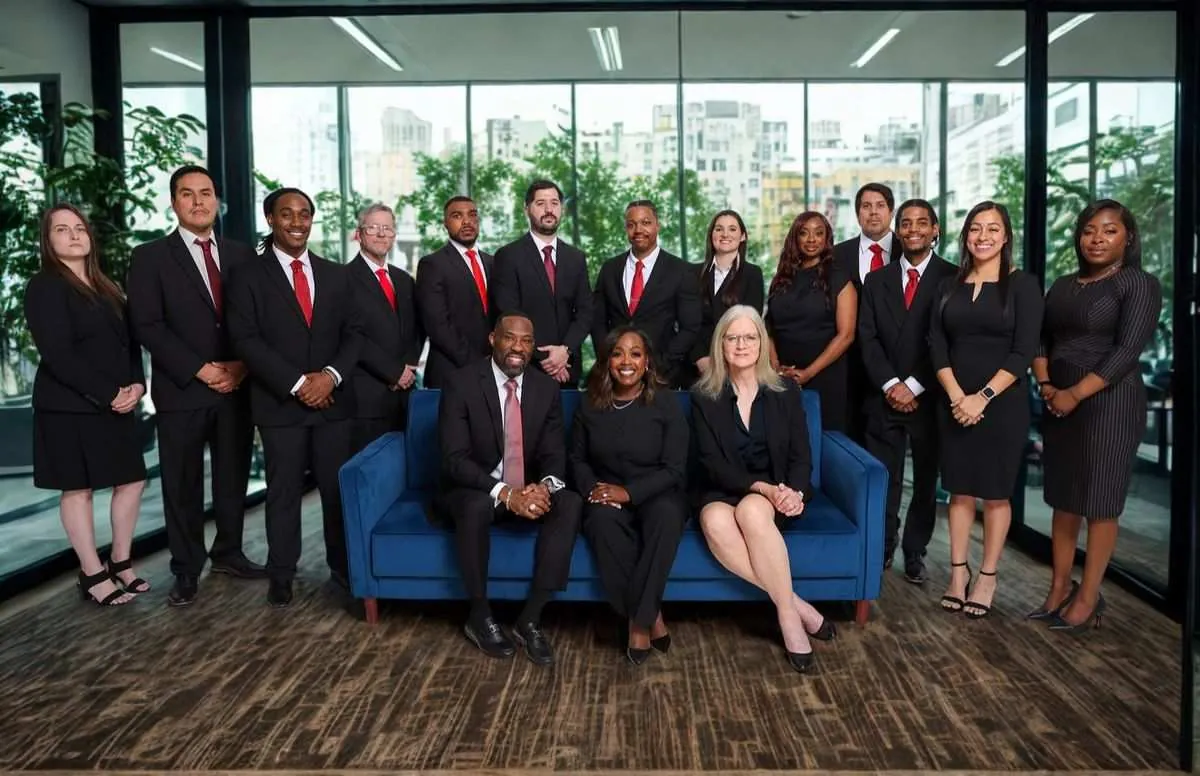
L and L Law Group, PLLC defends federal criminal cases in the Northern District of Texas. Co-founding partners Reggie London and Njeri London — licensed Texas attorneys since 2005 and 2006 respectively and admitted to practice in the Northern District of Texas — handle each case personally from intake through resolution. This page covers the federal defense framework: the Guidelines sentencing process, the 5K1.1 substantial assistance departure, the federal target letter and AUSA proffer process, federal pretrial detention practice, and the Earle Cabell courthouse procedural track.
Federal pretrial detention under the Bail Reform Act
Federal pretrial detention is governed by the Bail Reform Act of 1984, codified at 18 U.S.C. §3142. The Bail Reform Act differs substantially from the Texas state bail framework. Federal detention is not a function of monetary bond — the question is whether any conditions of release can reasonably assure the appearance of the defendant and the safety of the community. The government can move for detention on either ground, and the court holds a detention hearing.
The Bail Reform Act creates a rebuttable presumption of detention for certain enumerated offenses under §3142(e)(3) — including most drug offenses with a maximum penalty of 10 years or more, firearm offenses involving 18 U.S.C. §924(c), terrorism-related offenses, and certain other categories. Where the presumption applies, the defendant has the burden of producing evidence that conditions can be set. The government retains the ultimate burden of persuasion.
The four factors under §3142(g): (1) the nature and circumstances of the offense charged; (2) the weight of the evidence against the defendant; (3) the history and characteristics of the defendant (community ties, family ties, financial resources, prior criminal history, history of drug or alcohol abuse, history of violence); and (4) the nature and seriousness of the danger to any person or the community that would be posed by release. Detention hearings typically last 30 to 60 minutes and involve testimony from pretrial services and any government or defense witnesses.
The detention order can be appealed under 18 U.S.C. §3145 — to the district court if entered by a magistrate, then to the Fifth Circuit if entered by the district court. Conditions of release — under §3142(c) — can include third-party custodianship, home incarceration, electronic monitoring, travel restrictions, surrender of passport, mental health or substance abuse treatment, and reporting requirements. The U.S. Pretrial Services Office for the Northern District of Texas supervises conditions of release.
The federal target letter and the AUSA proffer process
A federal target letter is a written notice from an Assistant U.S. Attorney advising the recipient that they are a target of a federal grand jury investigation. Department of Justice guidelines distinguish between witnesses, subjects, and targets of an investigation. A target is "a person as to whom the prosecutor or the grand jury has substantial evidence linking them to the commission of a crime and who, in the judgment of the prosecutor, is a putative defendant." Receipt of a target letter is the clearest indication available before indictment that charges are imminent.
The target letter typically invites the recipient to a meeting with the AUSA — the proffer session. A proffer is a meeting in which the target or their counsel provides information to the government in exchange for a proffer agreement under which the government agrees not to use the proffered statements as direct evidence in the government's case-in-chief. The standard proffer letter — "Queen for a Day" — does permit use of the statements for impeachment, for derivative evidence, and in rebuttal. The precise terms vary by U.S. Attorney's Office and AUSA.
The decision whether to proffer is one of the most consequential decisions in federal practice. A proffer can produce substantial benefits: a non-prosecution agreement, a deferred-prosecution agreement, a charging reduction, a 5K1.1 substantial assistance motion at sentencing, or — in specific cases — declination. But a proffer also commits the target to truthful disclosure under penalty of additional charges if the disclosure is later contradicted. False statements at a proffer can be charged under 18 U.S.C. §1001.
Pre-proffer counsel work involves: reviewing all known evidence with the client; identifying the proffer scope (the subjects the target is being asked to address); preparing the client for the line-by-line questions; and negotiating the proffer agreement language. Where the target has limited knowledge or where the government's case against the target is the case itself (rather than against larger co-conspirators), a proffer may produce limited benefit. Where the target can provide substantial information about others, the calculus shifts.
Pre-indictment engagement with the AUSA can sometimes alter the charging decision. The AUSA has discretion to decline to charge, to offer a deferred-prosecution agreement, to charge a misdemeanor rather than a felony, or to charge specific counts rather than the maximum available. Pre-indictment work to surface mitigation, contest the government's factual narrative, or cooperate substantively can shift outcomes that become locked once an indictment is returned.
Federal sentencing — Guidelines, Booker, and the §3553(a) framework
Federal sentencing is the most distinctive feature of federal practice. The United States Sentencing Guidelines — promulgated by the U.S. Sentencing Commission — provide a calculation framework that produces a recommended sentencing range. United States v. Booker, 543 U.S. 220 (2005), made the Guidelines advisory rather than mandatory. But the court must still calculate the Guidelines range correctly as a starting point under 18 U.S.C. §3553(a).
The Guidelines calculation produces a base offense level driven by the offense of conviction, with offense-specific adjustments (drug quantity, firearm enhancements, role in the offense, vulnerable victim, obstruction of justice, acceptance of responsibility), then combined with the defendant's criminal history category (I through VI). The intersection of offense level and criminal history category produces the Guidelines range from the sentencing table.
After Booker, the court considers the §3553(a) factors: the nature and circumstances of the offense; the history and characteristics of the defendant; the need to reflect the seriousness of the offense, promote respect for the law, provide just punishment, afford adequate deterrence, and protect the public; the kinds of sentences available; the Guidelines range; any pertinent policy statements; the need to avoid unwarranted sentence disparities; and the need to provide restitution. The court must impose a sentence "sufficient, but not greater than necessary" to comply with these purposes.
The court can vary upward or downward from the Guidelines range based on the §3553(a) factors. The Supreme Court in Gall v. United States, 552 U.S. 38 (2007), held that the Guidelines are the starting point but the sentencing judge has substantial latitude to vary based on the individualized §3553(a) analysis. Sentencing memoranda from both sides — the government's and the defense's — argue the §3553(a) factors and present mitigation and aggravation evidence. Sentencing hearings typically last 30 to 90 minutes and produce the final sentence.
Mandatory minimums under specific statutes — 21 U.S.C. §841(b) for drug cases, 18 U.S.C. §924(c) for firearm-during-a-crime-of-violence-or-drug-trafficking cases, 18 U.S.C. §2241 et seq. for certain sex offenses — cut across the Guidelines. The court cannot sentence below a mandatory minimum unless a statutory exception applies. Two exceptions: the safety valve under 18 U.S.C. §3553(f) (drug cases only, for first-time non-violent defendants meeting five criteria), and substantial assistance under U.S.S.G. §5K1.1 / 18 U.S.C. §3553(e) (on government motion only).
5K1.1 substantial assistance departures
U.S.S.G. §5K1.1 provides that "upon motion of the government stating that the defendant has provided substantial assistance in the investigation or prosecution of another person who has committed an offense, the court may depart from the guidelines." The companion statute — 18 U.S.C. §3553(e) — authorizes a sentence below an otherwise applicable mandatory minimum when the defendant has provided substantial assistance.
The 5K1.1 motion is at the discretion of the government. The defendant cannot file the motion; only the government can. The government typically evaluates substantial assistance based on five factors enumerated in §5K1.1: (1) the significance and usefulness of the defendant's assistance; (2) the truthfulness, completeness, and reliability of any information or testimony provided; (3) the nature and extent of the assistance; (4) any injury suffered, or risk of injury, by the defendant or family members; and (5) the timeliness of the assistance.
The cooperation process typically involves a series of proffers, then a cooperation agreement, then ongoing cooperation — including providing testimony, identifying targets, participating in undercover work, or wearing a recording device. The defendant's sentencing is typically continued until after the cooperation is complete so the government can file the 5K1.1 motion based on the actual assistance provided.
The 5K1.1 departure can be substantial — 30%, 50%, sometimes more off the Guidelines calculation. The motion is heard at sentencing and the court has discretion to grant the requested departure or to depart by a different amount. The Northern District of Texas has its own practice in 5K1.1 cases. Coordination with the AUSA on the cooperation timeline and the departure recommendation is part of the cooperation framework.
Cooperation is a strategic decision that requires careful client counseling. It produces sentence reduction but also exposes the defendant to risks — relationship costs, safety risks in some cases, and the obligation to testify truthfully against others. Pre-cooperation work involves analyzing the defendant's knowledge against the government's investigative needs, evaluating the probable Guidelines range with and without cooperation, and assessing whether cooperation produces a meaningful net benefit.
Federal discovery, Brady, and the Jencks Act
Federal criminal discovery is governed by Federal Rule of Criminal Procedure 16 (defendant's statements, defendant's prior record, documents and tangible objects, reports of examinations and tests, expert witness disclosures), Federal Rule of Evidence 404(b) (notice of other crimes, wrongs, or acts), the Jencks Act at 18 U.S.C. §3500 (witness statements and reports of statements — typically not produced until after the witness testifies at trial), Brady v. Maryland, 373 U.S. 83 (1963), and its progeny (exculpatory evidence), and Giglio v. United States, 405 U.S. 150 (1972) (impeachment material affecting government witnesses).
The Brady/Giglio obligation is continuing. The government must disclose exculpatory and impeachment material as it becomes known, even after the case begins. Defense discovery motions in N.D. Tex. typically cover the Rule 16 categories with specific requests for Rule 404(b) notice, Brady material, Giglio material, witness list and prior statements, and exhibits.
Pretrial motions in federal practice include: motions to suppress under the Fourth Amendment (Fourth Amendment standards apply with full force in federal court); motions to dismiss for grand jury defects, for multiplicitous or duplicitous charges, or for selective prosecution; motions in limine on Rule 404(b), Rule 609 (prior convictions for impeachment), and Rule 403 (probative-value-vs-prejudice balancing); motions for severance under Rule 14; motions for bill of particulars under Rule 7(f); and offense-specific motions tied to the elements at issue. Motion practice in the N.D. Tex. typically involves written briefs with supporting authority, sometimes evidentiary hearings, and ruling from the bench or by written opinion.
The Speedy Trial Act at 18 U.S.C. §3161 requires that trial commence within 70 days of the indictment or the defendant's first appearance, whichever is later — with extensive provisions for excludable delay. The Act is more demanding than its state-law counterpart. Defense counsel tracking the Speedy Trial Act clock can sometimes use it to push the government on a timely-trial demand.
Plea agreements, trial, and post-trial procedure
Most federal cases resolve by plea agreement. The agreement structure under Federal Rule of Criminal Procedure 11(c)(1) takes one of three forms:
- Rule 11(c)(1)(A). The government agrees to dismiss specified charges or not bring specified charges.
- Rule 11(c)(1)(B). The government recommends, or agrees not to oppose, a particular sentence — but the recommendation is non-binding on the court.
- Rule 11(c)(1)(C). The government and the defendant agree to a specific sentence or sentencing range. If the court accepts the agreement, the court is bound by the agreed sentence. If the court rejects it, the defendant may withdraw the plea.
The 11(c)(1)(C) "C plea" is the most leveraged plea structure because it locks in the sentence. The 11(c)(1)(B) "B plea" is more common and produces a non-binding recommendation. The 11(c)(1)(A) "A plea" affects the charges but leaves sentencing open within the indicted-or-remaining-counts framework.
Pleas include a written agreement with detailed terms — the offense, the factual basis, the Guidelines calculation parties agree on (or contest), the appellate waiver, and the cooperation language if applicable. The defendant enters the plea before a magistrate judge or the district judge under Rule 11(b), which requires the court to inquire into the voluntariness of the plea, the defendant's understanding of the charges and consequences, and the factual basis.
Trial in federal court follows the Federal Rules of Criminal Procedure and the Federal Rules of Evidence. Jury selection is conducted under Rule 24 with peremptory and for-cause challenges. The case is presented by the government, then by the defense, then in rebuttal. The court instructs the jury on the law. Verdict must be unanimous under the Sixth Amendment as applied to federal trials under Federal Rule of Criminal Procedure 31.
Post-trial procedure includes Rule 29 motions for judgment of acquittal, Rule 33 motions for new trial, the presentence investigation report (PSR), sentencing under §3553(a), entry of judgment, direct appeal to the Fifth Circuit, and post-conviction relief under 28 U.S.C. §2255. The federal appellate process is structured and demanding — appellate briefs are filed on a court-set schedule, oral argument is heard in some cases, and decisions are issued in published or unpublished opinions.
Why direct-attorney representation matters in N.D. Tex. federal defense
Federal practice is unforgiving of mistakes. The Guidelines calculation has to be right. The Brady/Giglio review has to be thorough. The detention-hearing argument has to be made on the right §3142 ground at the right moment. The proffer decision has to be timed and structured for the case. The plea-agreement language has to be precise — including the appellate waiver scope, the stipulated facts, and the cooperation terms.
At L and L Law Group, the co-founding partner you meet at the consultation is the attorney handling the case — including the detention hearing at Earle Cabell, the AUSA discovery negotiations, any proffer session, the sentencing memorandum, and any trial. (972) 370-5060 reaches the firm directly for N.D. Tex. federal-defense consultations.