You're Being Watched! Know What to Say
In a modern Texas investigation, assume everything you say and nearly everything you do is being recorded, and say almost nothing. Give your name when the law requires it, decline consent to any search, and ask for a lawyer in one clear sentence. Then stop. The recordings, phone records and posts already exist; the only thing you still control is what you add to them.
Free, Confidential Case Review
Tell us what happened. A defense attorney reviews every submission — usually within an hour, day or night.
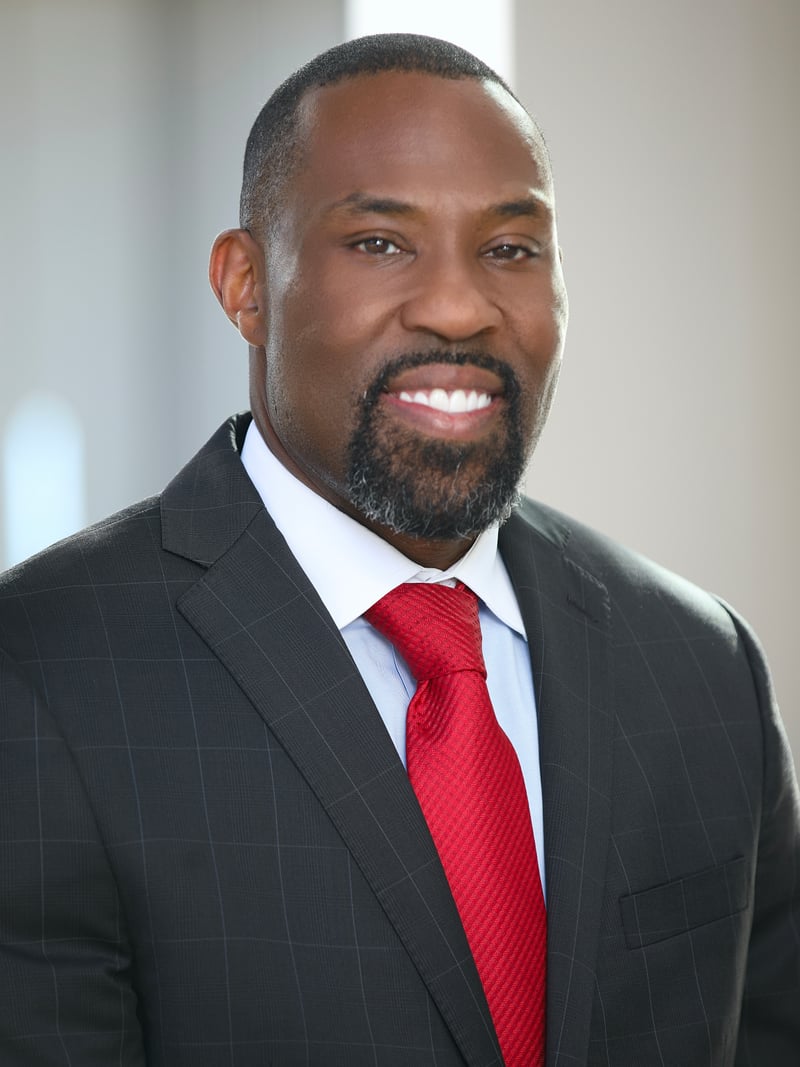

Co-Founding Partners
Texas Bar verified. Reggie London (Texas Bar No. 24043514) and Njeri London (Texas Bar No. 24043266) are the co-founding partners of L and L Law Group, PLLC — based at 5899 Preston Rd, Suite 101 in Frisco, Texas (Collin County), with many 5-star Google reviews, and available 24/7 for criminal defense consultations.
The Stop Is on Camera
Most officers in Collin County, Denton County and Dallas wear body cameras, and most patrol cars carry dash cameras. The camera is usually running from the moment the lights come on, and it records the small talk, the nervous joke, and the explanation you offer before anyone asks for one.
That matters because an ordinary traffic stop is not "custody." The U.S. Supreme Court held in Berkemer v. McCarty, 468 U.S. 420 (1984), that roadside questioning during a routine stop does not require Miranda warnings. So everything you say at the window is admissible even though nobody warned you. "I only had two beers" is on video before you ever reach a police station.
Texas law requires a driver to show a driver's license and proof of insurance on request. Hand them over. Beyond that, you can answer "Where are you headed?" with a polite "I'd rather not discuss my day, officer."
Your Phone Needs a Warrant
Police cannot search your phone just because they arrested you. In Riley v. California, 573 U.S. 373 (2014), the Supreme Court held that officers generally need a warrant to search the contents of a cell phone seized during an arrest.
The most common way people lose that protection is by unlocking the phone "to clear things up." An officer says, "If you have nothing to hide, just show me the texts." Once you unlock it and hand it over, you have consented, and consent is a search the Constitution allows. Under Schneckloth v. Bustamonte, 412 U.S. 218 (1973), consent must be voluntary, but a polite request followed by your "sure" is treated as voluntary.
What to say instead: "I do not consent to a search of my phone." If the officer takes the phone anyway, let it go. Do not fight over it, and do not type your passcode. A lawyer can challenge a warrantless search later, but not one you agreed to.
Where You Have Been Is Already Recorded
Your phone reports its position to nearby cell towers all day. In Carpenter v. United States, 585 U.S. 296 (2018), the Supreme Court held that the government generally needs a warrant to obtain historical cell-site location records from your carrier. That does not erase the records; prosecutors with a warrant can map your movements for weeks.
The same logic covers your car. In United States v. Jones, 565 U.S. 400 (2012), the Court held that attaching a GPS tracker to a vehicle and monitoring it is a search. Separately, Texas Penal Code § 16.06 makes it a crime for a private person to install a tracking device on someone else's car without permission. If you find a device on your vehicle, photograph it where it sits and do not remove it until your lawyer tells you to.
Two more sources get less attention. License-plate readers on patrol cars and at intersections log where your plate was seen and when. Doorbell and home-security cameras on private houses record the street, and neighbors hand that footage to police routinely. A story that puts you across town when a plate reader puts you on the block is worse than no story.
Jail Calls Are Recorded, Every One
If you are booked into the Collin County, Denton County or Dallas County jail, the phone system plays a recording that says calls are monitored. People forget it within a minute, then call a spouse and explain what "really" happened, or ask a friend to move something out of the apartment, or argue with a witness about what she saw.
Prosecutors listen to those calls. They are a common source of damaging evidence because the defendant is relaxed, angry, or trying to reassure someone. The rule is short: on a jail phone, talk about bail, family logistics and getting a lawyer. Never talk about the facts, and never ask anyone to do anything with evidence or witnesses. Calls with your attorney are the exception, and your attorney will tell you how those are handled.
Social Media Is Evidence, and Deleting It Is a New Problem
A public post is not private. Investigators screenshot profiles, and prosecutors subpoena the rest. A photo at a bar the night of a DWI arrest, a comment about a fight, a "message me" post to a person you were ordered not to contact, all of it comes in.
The instinct is to delete. Do not. Once you know an investigation or case exists, destroying or altering something that could be evidence can be charged in Texas as tampering with evidence, a separate crime that is often more serious than the original charge. Deleted posts are often recoverable from the platform anyway.
What to do instead: stop posting entirely, set every account to private, and do not accept new friend or follow requests while the case is open. Do not message the other side, the witnesses or the alleged victim, even to apologize. Tell your lawyer what exists so it can be addressed on your terms rather than discovered on theirs.
Police Are Allowed to Bluff
An investigator may tell you your fingerprints are on the door, your friend already confessed, or the camera caught everything, when none of that is true. The Supreme Court held in Frazier v. Cupp, 394 U.S. 731 (1969), that deception about evidence does not by itself make a confession involuntary. Texas Code of Criminal Procedure art. 38.21 requires that any statement be freely and voluntarily made, but a lie about what police already have usually does not cross that line.
The bluff only works if you respond to it. If you never explain, correct or argue, the false claim has nothing to pull out of you. Two Supreme Court rules protect people who speak up correctly. Under Edwards v. Arizona, 451 U.S. 477 (1981), once you clearly ask for a lawyer during custodial questioning, the questioning must stop. Under Davis v. United States, 512 U.S. 452 (1994), the request has to be unambiguous. "Maybe I should talk to a lawyer" is not enough; "I want a lawyer" is.
Silence alone is not enough either. In Salinas v. Texas, 570 U.S. 178 (2013), the Court held that simply going quiet during non-custodial questioning did not invoke the privilege. Say the words out loud. In Texas, art. 38.22 governs when a statement from custodial questioning can be used, and art. 38.23 lets a court exclude evidence obtained in violation of the law. Both work best when the recording shows you saying the right sentences and nothing else.
The Only Sentences Worth Saying
Memorize these. Say them calmly, once each, and then be quiet.
- "Am I free to leave?" If the answer is yes, leave. If the answer is no, you are detained, and the rest of this list applies.
- Your name, address and date of birth, if you are arrested. Texas Penal Code § 38.02 makes it an offense to refuse that information after a lawful arrest, and it is an offense to give a false name during a lawful detention. Never lie about who you are.
- "I do not consent to any search." Of your car, your pockets, your phone or your home. Say it even if the search happens anyway. Do not physically resist; Texas Penal Code § 38.03 makes resisting a separate charge.
- "I want a lawyer, and I am not answering questions." One sentence, no hedging. Repeat it word for word if questioning continues.
That is the entire script. No version of "let me just explain" helps you on a recording, and none helps off the recording either, because the officer writes a report.
What to Hand Your Lawyer
Because so much of a modern case is already recorded, your lawyer's first job is collecting it before it disappears. Bring, or write down, the following at the first meeting.
- The date, time, location and agency of every police contact, and the names or badge numbers you remember.
- Whether anyone said the words "body cam," "dash cam" or "recorded," and whether you were interviewed at a station.
- Your phone carrier and number, and whether the phone was taken, searched or unlocked.
- Any tracking device you found, with photos, left in place.
- Every social media account you use, including old ones, and anything you posted about the event.
- Any jail calls you made, roughly when, and to whom.
- Names of anyone with a doorbell or security camera near the location, if you know them.
Retention windows for private camera footage and some agency recordings can be short, so speed matters more than tidiness.
Key Legal Terms
- TDCJ (Texas Department of Criminal Justice)
- State agency operating Texas prisons and parole supervision. Felony sentences (state jail through 1st-degree) are served in TDCJ. Parole eligibility is governed by Government Code § 508.145.
- CCP (Code of Criminal Procedure)
- Texas statutory code governing criminal procedure — arrest, bail, indictment, trial, sentencing, appeals, and post-conviction relief. Distinct from the Penal Code which defines substantive offenses.
- Penal Code
- Texas statutory code defining substantive criminal offenses — assault, theft, drugs, sex offenses, weapons, etc. Chapter 12 sets punishment ranges. Title 5 (Chapters 19-49) covers most offenses against persons, property, and public order.
- TXND / TXED
- United States District Courts for the Northern District of Texas (TXND — Dallas, Fort Worth, Plano, Sherman, Lubbock, Amarillo) and Eastern District of Texas (TXED — Sherman, Plano, Tyler, Marshall, Beaumont, Lufkin). Federal jurisdiction divisions.
In our practice defending Texas criminal cases, we have represented clients in Collin, Dallas, Denton, and Tarrant County criminal courts on the full Texas Penal Code and Health & Safety Code spectrum. Reggie's prosecutor background in Dallas County means we know the State's evidentiary playbook; Njeri's trial-trained motion practice anchors the suppression-driven defense work.
Frequently Asked Questions
Do I have to unlock my phone with my face or fingerprint if police ask?
Can I get the body cam footage of my own stop?
If I already talked to police, is it too late?
What if a friend deletes a post or a video for me?
How long does a criminal case take in Texas?
What is the statute of limitations for criminal charges in Texas?
What is the difference between a misdemeanor and a felony in Texas?
Can I get my criminal record cleared in Texas?
How do I find an attorney for my Texas criminal case?
References & Authoritative Sources
About the Authors
Charged with a crime in Texas? Talk to L and L Law Group.
Co-founding partners Reggie London (Texas Bar No. 24043514) and Njeri London (Texas Bar No. 24043266) ensure attorney-level review at every stage. Free consultation. Frisco, Texas.
Call (972) 370-5060Was this article helpful?
Talk to a real attorney
Send a few details and a defense attorney will reach back within an hour, day or night. No call center. No paralegal screen.