You MUST Know Your State's Rights About THIS!
Most of what people know about their rights comes from television, and television teaches federal rules, not Texas rules. U.S. Supreme Court cases such as Miranda v. Arizona, 384 U.S. 436 (1966) set a floor for every state, not a ceiling. Texas law adds protections the federal cases never required: no general duty to identify yourself, no DWI checkpoints, recorded custodial statements, and an evidence rule that reaches private citizens.
Free, Confidential Case Review
Tell us what happened. A defense attorney reviews every submission — usually within an hour, day or night.
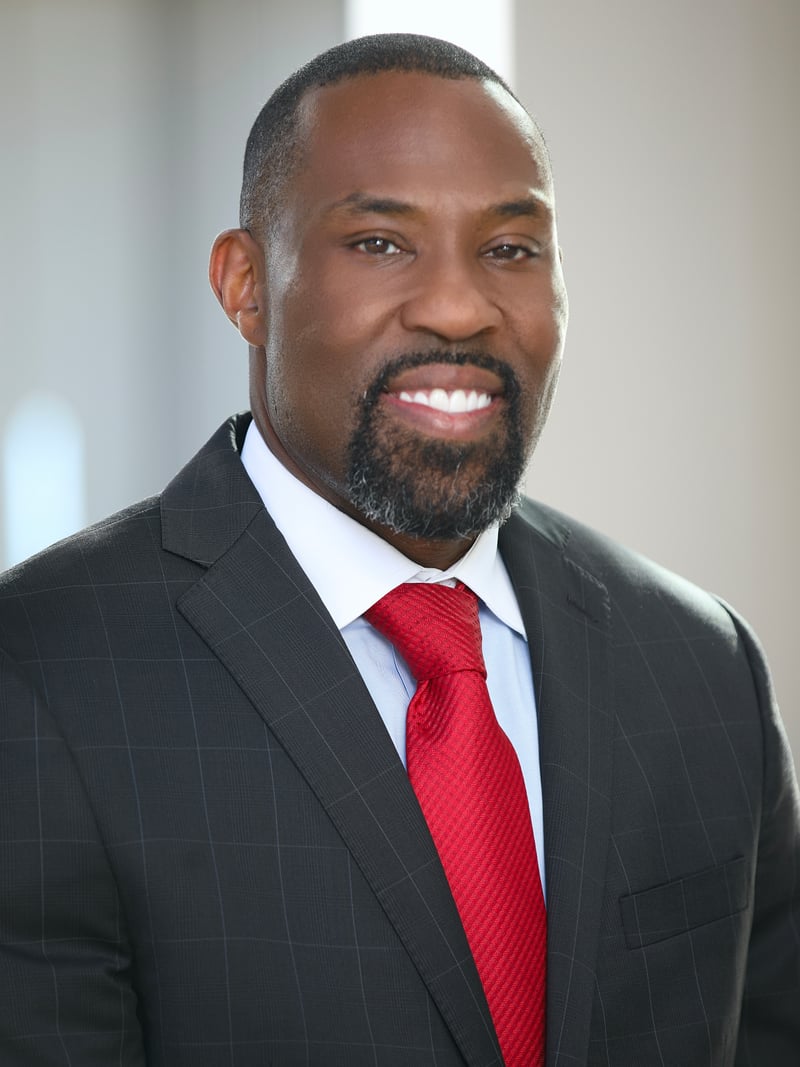

Co-Founding Partners
Texas Bar verified. Reggie London (Texas Bar No. 24043514) and Njeri London (Texas Bar No. 24043266) are the co-founding partners of L and L Law Group, PLLC — based at 5899 Preston Rd, Suite 101 in Frisco, Texas (Collin County), with many 5-star Google reviews, and available 24/7 for criminal defense consultations.
Videos
You Usually Do Not Have to Identify Yourself
Texas is not a general "stop and identify" state for people on foot. Under Texas Penal Code § 38.02, refusing to give your name, address, or date of birth is an offense only after an officer has lawfully arrested you and asked for it. If an officer walks up and starts asking questions, or briefly detains you on suspicion, refusing to state your name is not by itself a crime under that section.
The trap is a different part of the same statute. Section 38.02 also makes it an offense to give a false name, address, or date of birth to an officer who has lawfully arrested you, lawfully detained you, or has good cause to believe you witnessed a crime. Silence is protected in a detention; lying is not. Never give a fake name or a wrong birth date.
Driving is different. Texas law separately requires a driver to show a license on request during a traffic stop, so hand over your license, insurance, and registration without argument. A passenger who lies about identity is exposed under § 38.02 just like the driver.
On foot and not under arrest, you may say, "I am not going to answer questions. Am I free to leave?" Once you are under arrest, give your true name, address, and date of birth, and nothing else.
Refusing a Breath or Blood Test Is Not a Crime, but It Costs You
Under the Texas implied-consent law, Transportation Code § 724.011 through § 724.015, a person arrested for driving while intoxicated is deemed to have consented to a breath or blood specimen. Refusing is not a separate criminal offense, but the officer must warn you of two real consequences.
First, your refusal can be used against you at trial; the prosecutor can tell the jury you said no. Second, your license will be automatically suspended, for a statutory minimum of 180 days on a refusal. That suspension runs through a separate administrative process, and you have only 15 days to request a hearing to contest it. Miss the deadline and it takes effect without a fight.
Two things television leaves out. A refusal does not end the matter; officers can ask a judge for a warrant for a blood sample, and many North Texas agencies do. And the roadside eye test, walk-and-turn, and one-leg stand are not the "test" the statute covers. Those exercises are voluntary: "I am not going to do any field sobriety exercises." Whatever you decide about the breath or blood test, say it once, in a full sentence, and then be quiet.
Texas Does Not Allow DWI Checkpoints
In many states police set up sobriety checkpoints on holiday weekends and stop every car. Texas does not permit that. In Holt v. State, 887 S.W.2d 16 (Tex. Crim. App. 1994), the Texas Court of Criminal Appeals held that DWI sobriety checkpoints are not authorized in Texas.
Do not read too much into this. The holding is about DWI checkpoints. Under Whren v. United States, 517 U.S. 806 (1996), a stop based on a real traffic violation is valid even if the officer's real motive was something else. A "no refusal" weekend, advertised in Collin and Denton Counties, is not a checkpoint; it means a judge is on call to sign blood warrants, and it runs through ordinary traffic stops.
If you are stopped at anything that looks like a sobriety checkpoint, comply at the scene, say nothing beyond your identification and your decision about testing, and tell your lawyer exactly where and how it happened. Legality is argued in the courtroom, not at the roadside.
Your Statement Must Be Recorded to Be Used
Miranda does not require police to record what you say. Texas does. Under Texas Code of Criminal Procedure art. 38.22, an oral statement made during custodial interrogation is generally not admissible against you unless it was electronically recorded, the warnings were given on the recording before the statement, and you knowingly waived your rights. A written statement must show the warnings on its face. The Texas warnings also include one Miranda does not: you have the right to terminate the interview at any time.
Article 38.21 separately requires any statement to be voluntary. But art. 38.22 does not reach statements outside custodial interrogation, and that gap catches people. An ordinary traffic stop is not custody under Berkemer v. McCarty, 468 U.S. 420 (1984), so what you say through the car window is usually admissible with no recording and no warnings. Remarks volunteered in the patrol car or on a jail phone are not "interrogation" either.
Use these protections by speaking in complete, unambiguous sentences. Under Salinas v. Texas, 570 U.S. 178 (2013), staying quiet is not enough; you have to say you are invoking your rights. Under Davis v. United States, 512 U.S. 452 (1994), a request for a lawyer must be clear, not "maybe I should talk to someone." Once you clearly ask, Edwards v. Arizona, 451 U.S. 477 (1981) requires questioning to stop. Say: "I am invoking my right to remain silent. I want a lawyer. I will not answer questions without my lawyer present." Then stop, and do not re-open the conversation even to be polite.
Texas Excludes Illegally Obtained Evidence, Even From Private Citizens
The federal exclusionary rule applies only to government agents. Texas goes further. Under Texas Code of Criminal Procedure art. 38.23, no evidence obtained by an officer or other person in violation of the Constitution or laws of Texas or of the United States may be admitted against the accused. Two phrases carry the difference: "other person," and "laws," not only constitutions.
In plain terms, if a landlord, an ex, a security guard, or a neighbor breaks the law to get something and hands it to police, a Texas court can exclude it. Under Texas Penal Code § 16.06 it is an offense to install a tracking device on someone else's vehicle without consent, so evidence gathered that way is a candidate for exclusion. If the facts are disputed, the jury can be instructed to disregard evidence it believes was obtained illegally. A good-faith exception covers officers relying on a warrant, so this is not a blanket escape hatch, but it is broader than most people expect.
What to do: as soon as you can, write down how anything was found. Who had it, where it was, and who consented to what. Consent must be voluntary under Schneckloth v. Bustamonte, 412 U.S. 218 (1973). Protect that issue by saying out loud, "I do not consent to any search," and let your lawyer sort out the rest.
After an Arrest: The Magistrate and Bail
Under Texas Code of Criminal Procedure art. 15.17, a person who has been arrested must be taken before a magistrate without unnecessary delay, and not later than 48 hours after the arrest. The magistrate tells you the accusation, informs you of your rights to a lawyer, to remain silent, to have a lawyer present during any police interview, and to end that interview at any time, asks whether you want appointed counsel, and sets bail.
Bail is governed by art. 17.15. The amount must be high enough to give reasonable assurance you will appear, but may not be an instrument of oppression. The magistrate considers the nature of the offense and its circumstances, your ability to make bail, the future safety of any victim and the community, and your criminal history. Nothing in that list rewards explaining the case to the magistrate.
At magistration, answer only the questions about identity, address, employment, and finances that go to bail and appointed counsel. Ask for a lawyer. Do not discuss the facts. If a family member is arrested in Collin, Denton, or Dallas County, note the time of arrest, the agency, and the charge; the 48-hour clock runs from there.
The Exact Sentences to Say
Everything above reduces to a short script. Say each sentence calmly, in full, and once.
- "Am I being detained, or am I free to leave?"
- "I am not going to answer questions."
- "I do not consent to any search."
- "I am not going to do any field sobriety exercises."
- "I want a lawyer. I will not answer questions without my lawyer present."
And the things not to do, because each converts a right into evidence: do not give a false name, do not run or pull away when an officer takes hold of you (evading or resisting under Penal Code § 38.04 and § 38.03), do not argue about the stop, and do not keep talking after asking for a lawyer. Write down everything you remember as soon as you can, and give it only to your attorney.
Key Legal Terms
- TDCJ (Texas Department of Criminal Justice)
- State agency operating Texas prisons and parole supervision. Felony sentences (state jail through 1st-degree) are served in TDCJ. Parole eligibility is governed by Government Code § 508.145.
- CCP (Code of Criminal Procedure)
- Texas statutory code governing criminal procedure — arrest, bail, indictment, trial, sentencing, appeals, and post-conviction relief. Distinct from the Penal Code which defines substantive offenses.
- Penal Code
- Texas statutory code defining substantive criminal offenses — assault, theft, drugs, sex offenses, weapons, etc. Chapter 12 sets punishment ranges. Title 5 (Chapters 19-49) covers most offenses against persons, property, and public order.
- TXND / TXED
- United States District Courts for the Northern District of Texas (TXND — Dallas, Fort Worth, Plano, Sherman, Lubbock, Amarillo) and Eastern District of Texas (TXED — Sherman, Plano, Tyler, Marshall, Beaumont, Lufkin). Federal jurisdiction divisions.
In our practice defending Texas criminal cases, we have represented clients in Collin, Dallas, Denton, and Tarrant County criminal courts on the full Texas Penal Code and Health & Safety Code spectrum. Reggie's prosecutor background in Dallas County means we know the State's evidentiary playbook; Njeri's trial-trained motion practice anchors the suppression-driven defense work.
Frequently Asked Questions
Do I have to give my name to a Texas police officer who stops me on the street?
Is refusing a breath test in Texas a crime?
Can police set up DWI checkpoints in Frisco or anywhere in Texas?
If I was not read my rights, is my case dismissed?
How long does a criminal case take in Texas?
What is the statute of limitations for criminal charges in Texas?
What is the difference between a misdemeanor and a felony in Texas?
Can I get my criminal record cleared in Texas?
How do I find an attorney for my Texas criminal case?
References & Authoritative Sources
About the Authors
Charged with a crime in Texas? Talk to L and L Law Group.
Co-founding partners Reggie London (Texas Bar No. 24043514) and Njeri London (Texas Bar No. 24043266) ensure attorney-level review at every stage. Free consultation. Frisco, Texas.
Call (972) 370-5060Was this article helpful?
Talk to a real attorney
Send a few details and a defense attorney will reach back within an hour, day or night. No call center. No paralegal screen.