☎ Call Today
Criminal Defense • Frisco, Texas
Serving 9 DFW Counties — Collin • Dallas • Denton • Tarrant • Rockwall • Kaufman • Ellis • Johnson • Hunt — Available 24/7
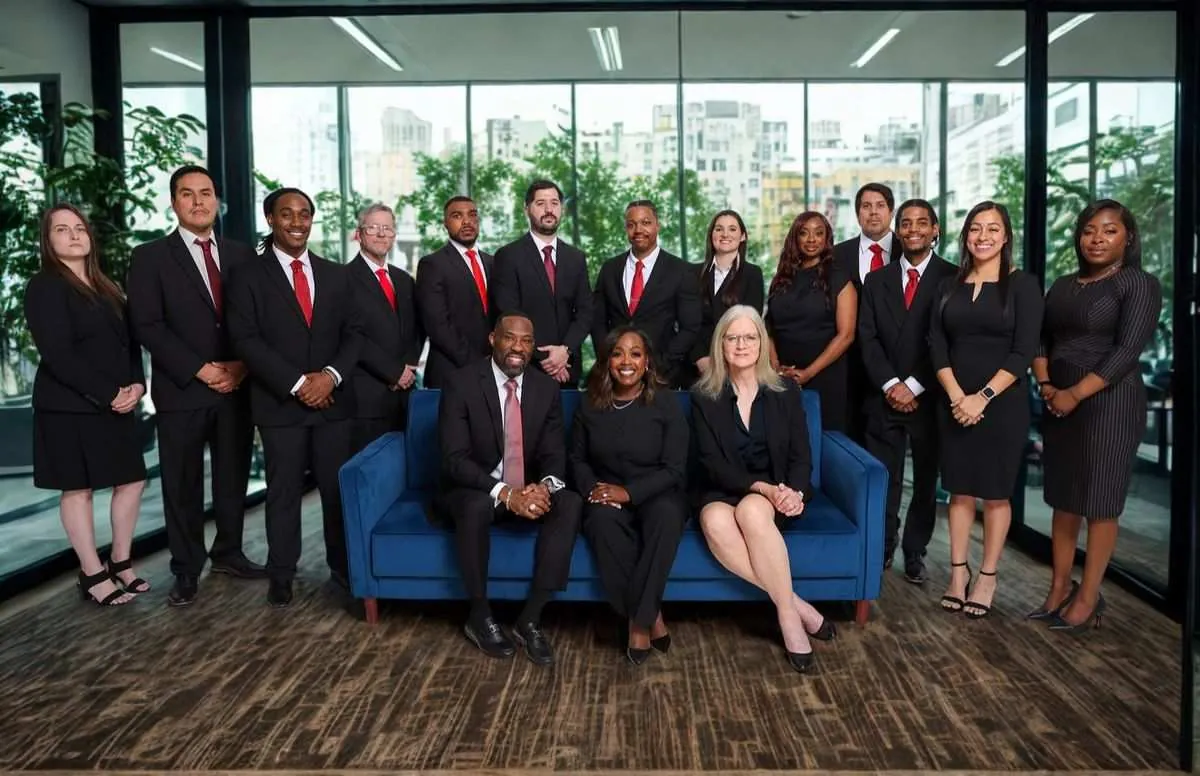
The L and L Law Group team at our Frisco, Texas office — co-founding partners Reggie London and Njeri London with staff
Our Frisco officeEst. 2011
The L and L Law Group team·Frisco, Texas
Process Crimes · False Report to a Peace Officer

Texas false report to police defense

In Texas, filing a false report to a peace officer is prosecuted as a Class B misdemeanor, carrying up to 180 days in county jail and a $2,000 fine on conviction. To convict, the State must prove you lied knowingly, with intent to deceive, about something material to a criminal investigation. L and L Law Group defends § 37.08 cases across Collin, Dallas, Denton, and Tarrant Counties.

A Texas false-report charge under Penal Code § 37.08 is a Class B misdemeanor — up to 180 days in county jail and a fine up to $2,000 under § 12.22 — that turns on three contested elements: whether the speaker acted with intent to deceive, whether the statement was knowingly false, and whether the false statement was material to a criminal investigation. The statute has no felony or Class A tier of its own. Honest mistakes, silence, and good-faith complaints about official misconduct are all defensible, and after McCreary v. State (Tex. App.—Fort Worth 2022) the materiality element is the operative battleground in most contested § 37.08 trials in DFW county courts.

False report & related Texas offenses at a glance
OffenseStatuteGradeMaximum jail / fine
False report to a peace officer§ 37.08Class B misdemeanor180 days county jail / $2,000
False report of missing child / person§ 37.081Class C misdemeanorFine only, up to $500
Perjury (false statement under oath)§ 37.02Class A misdemeanor1 year county jail / $4,000
False alarm or report (swatting, bomb/fire)§ 42.06Class A misdemeanor to felonyUp to state jail / 3rd-degree felony

Ranges per Tex. Penal Code ch. 12. Section 37.08 itself is a flat Class B misdemeanor with no internal enhancement ladder; the same conduct may, however, support a separate, more serious charge.

13 min read 2,750 words Reviewed June 20, 2026 By Reggie London
Direct Answer

A Texas false-report charge under Penal Code § 37.08 is a Class B misdemeanor with a punishment range of up to 180 days in county jail and a fine up to $2,000. The section has no felony or Class A tier. To convict, the State must prove three things beyond a reasonable doubt: that the defendant acted with intent to deceive, that he knowingly made a statement he knew was false, and that the statement was material to a criminal investigation. The statement must also have been made to a peace officer, federal special investigator, corrections officer, jailer, or an authorized law enforcement employee the speaker knew was conducting the investigation. Defense work hinges on negating intent to deceive, showing the statement was not knowingly false under PC § 6.03(b), contesting materiality after McCreary v. State, showing no affirmative false statement was made (silence and invoking the Fifth Amendment do not count), the good-faith / valid-grievance protection under Wood v. State when the report concerned official misconduct, suppressing a statement taken in violation of Miranda or Article 38.22, and confirming the conduct was charged under the correct statute. Even without jail, the arrest record and collateral consequences — employment, licensing, and immigration — make early defense planning essential.

Free case review
Key Takeaways
  • Class B misdemeanor under PC § 37.08 — up to 180 days in county jail and a fine up to $2,000. No felony or Class A tier.
  • Three contested elements: intent to deceive, knowing falsity, and materiality to a criminal investigation.
  • Silence is not a crime — refusing to answer or invoking the Fifth Amendment is not an affirmative false statement under the statute.
  • Materiality after McCreary v. State (Tex. App.—Fort Worth 2022) is argued from the subject of the statement, not whether the lie worked.
  • Good-faith complaints are protected — under Wood v. State, reports of official misconduct require the State to prove bad faith.
Quick Case Review · 24/7

Get a free review

Direct to attorney — no call center. Most clients hear back within an hour.

By submitting, you agree to our Privacy Policy. No attorney-client relationship is formed until a written engagement is signed.

Texas Bar
Licensed since 2004
TXND · TXED
Federal Court Admitted
4.8 ★
Google Reviewed
9 DFW
Counties Served
24/7
Direct-to-Attorney Line
40+
Years Combined
Texas Bar Licensed TXND & TXED Federal 24/7 Jail Release Se Habla Español
Texas Legal Context

What the statute actually requires

Controlling statute Texas Penal Code § 37.08
Analytical framework Texas false report to a peace officer under Penal Code § 37.08 is a Class B misdemeanor — up to 180 days county jail and a $2,000 fine — requiring proof that the defendant, with intent to deceive, knowingly made a false statement that was material to a criminal investigation, to a covered law enforcement official. The section has no felony or Class A tier. The defining battles are intent to deceive, knowing falsity under § 6.03(b), and the materiality element as construed in McCreary v. State (Tex. App.—Fort Worth 2022), together with the good-faith / valid-grievance protection of Wood v. State for reports of official misconduct.
5 Texas-specific insights
  1. § 37.08 is a flat Class B misdemeanor. Unlike many Texas offenses, § 37.08 has no internal enhancement ladder — there is no Class A version and no felony version inside the section. The grade does not rise because the lie was “bigger” or because the investigation involved a serious crime. What can change exposure are separate charges the same conduct may also support, and the defendant’s criminal history for sentencing purposes.
  2. Materiality is the element that decides close cases. In McCreary v. State, No. 02-21-00114-CR (Tex. App.—Fort Worth July 21, 2022, no pet.) (mem. op.), the court held that § 37.08 does not define “material,” so jurors give it its ordinary meaning — “of real importance,” “relevant,” or “pertinent.” The court refused to import the stricter perjury definition from § 37.04, but also held a statement can be material to any aspect of an investigation even if it did not change the outcome. The defense fights materiality on the subject of the statement, not on whether the lie worked.
  3. Silence and refusal are not false statements. Section 37.08 punishes an affirmative false assertion of fact. Staying silent, refusing to answer, saying “I don’t want to talk,” and invoking the Fifth Amendment are all constitutionally protected and are outside the statute. The offense requires an active lie made with intent to deceive — not a wrong guess, a confused answer, or a protected refusal.
  4. Good-faith reports of official misconduct get extra protection. When a person reports police or other official misconduct, the Court of Criminal Appeals held in Wood v. State, 577 S.W.2d 477, 480 (Tex. Crim. App. 1978), that the State must additionally prove the representations were “made in bad faith and for reasons other than to obtain action on a valid grievance,” protecting the right to petition the government. In Zahorik v. State, 475 S.W.3d 459 (Tex. App.—Houston [14th Dist.] 2015, no pet.), a conviction was reversed because the State produced no evidence of bad faith.
  5. Charging-statute confusion is common. Section 37.08 is frequently confused with neighboring statutes. § 42.06 (False Alarm or Report) covers fake bomb, fire, and emergency reports — the “swatting” statute — and carries far heavier grades. § 37.081 covers a false report about a missing child or person and is a Class C misdemeanor. Giving a false name is usually failure to identify under § 38.02. Getting the charging statute right is often the first defense conversation.
  6. The record is usually the real stake. Because a Class B misdemeanor is a jailable offense, a § 37.08 charge produces a permanent arrest record, can trigger a bond and conditions, and can surface on background checks for jobs, housing, and professional licensing. For many clients the issue is not jail time but the record itself — which is why a disposition that preserves expunction or nondisclosure eligibility is a central defense goal.

What is false report to a peace officer under § 37.08?

Texas Penal Code § 37.08 makes it a crime to lie to law enforcement during a criminal investigation. With intent to deceive, a person knowingly makes a false statement that is material to a criminal investigation, to a peace officer or authorized law enforcement employee conducting it. It is a Class B misdemeanor.

Texas Penal Code § 37.08 makes it a crime to lie to law enforcement during a criminal investigation. The full title is “False Report to Peace Officer, Federal Special Investigator, or Law Enforcement Employee.” In plain terms, a person commits the offense if, with intent to deceive, he knowingly makes a false statement that is material to a criminal investigation and makes that statement to (1) a peace officer, federal special investigator, corrections officer, or jailer conducting the investigation, or (2) any employee of a law enforcement agency who is authorized to conduct the investigation and who the speaker knows is conducting it.

The statute is narrower than most people assume. It does not punish staying silent, refusing to answer, or guessing wrong. It punishes a deliberate lie, made to deceive, about something that actually matters to the investigation. A person who tells an officer “I didn’t see anything” when they saw nothing has committed no crime. A person who invents an alibi for someone, names a fake culprit, or files a fabricated crime report can be charged – but only if the State can prove all three mental and materiality elements beyond a reasonable doubt.

One detail trips up even experienced practitioners: § 37.08 is frequently confused with the Class A and felony “false report” statutes that live in other chapters. Penal Code § 42.06 (False Alarm or Report) covers fake bomb, fire, and emergency reports – the “swatting” statute – and carries far heavier grades. Penal Code § 37.081 covers a false report about a missing child or missing person and is a Class C misdemeanor. Section 37.08 itself sits between them as a flat Class B misdemeanor. Getting the charging statute right is often the first defense conversation we have.

What are the penalties for a false report charge?

A conviction under § 37.08 is a Class B misdemeanor – up to 180 days in county jail and a fine up to $2,000. The section has no internal enhancement ladder: there is no Class A version and no felony version inside it. The grade does not rise because the lie was “bigger.”

A conviction under § 37.08 is a Class B misdemeanor. Unlike many Texas offenses, § 37.08 has no internal enhancement ladder – there is no Class A version and no felony version inside the section. The grade does not rise because the lie was “bigger” or because the investigation involved a serious crime. What can change exposure are separate charges the same conduct may also support (discussed below) and a defendant’s overall criminal history for sentencing purposes.

False report to a peace officer — § 37.08
Class B misdemeanor. Maximum punishment of 180 days in county jail and a fine up to $2,000 under § 12.22.
False report of missing child or person — § 37.081
Class C misdemeanor. Fine only, up to $500 — a distinct and lower-graded offense for a different fact pattern.
Perjury — § 37.02
Class A misdemeanor. A false statement under oath — up to 1 year in county jail and a fine up to $4,000 — not the same offense as § 37.08.
False alarm or report (swatting) — § 42.06
Class A misdemeanor up to a third-degree felony. Fake bomb, fire, and emergency reports are charged here, not under § 37.08.

Because a Class B misdemeanor is a jailable offense, a § 37.08 charge still produces a permanent arrest record, can trigger a bond and conditions, and can surface on background checks for jobs, housing, and professional licensing. For many clients the real stakes are not jail time – they are the record itself. That is why the defenses and record-relief paths below matter even when jail is off the table.

What must the State prove?

To convict, the prosecutor must prove every element beyond a reasonable doubt: intent to deceive, knowing falsity, an affirmative false statement, materiality to a criminal investigation, and that the statement was made to a covered official. Each element is a separate hurdle – and a separate defense.

To convict, the prosecutor must prove every element beyond a reasonable doubt. Texas courts measure the evidence against a hypothetically correct jury charge built from the statutory elements as pleaded. Each element is a separate hurdle – and a separate opportunity for the defense.

1. Intent to deceive
The State must show the defendant spoke to deceive the officer – not to vent, argue, complain, or protect a privacy interest. A statement made in confusion, panic, or anger is not the same as a statement made to mislead an investigation.
2. Knowing falsity
Under Penal Code § 6.03(b), “knowingly” means the defendant was aware the statement was false when he made it. An honest mistake, a faulty memory, or a good-faith belief that turns out to be wrong does not satisfy this element.
3. A false statement
There must be an affirmative false assertion of fact. Silence, refusal to answer, “I don’t want to talk,” and invoking the Fifth Amendment are not false statements – they are constitutionally protected, and § 37.08 does not reach them.
4. Materiality to a criminal investigation
The lie must be material – of real importance or relevance – to a criminal investigation. This is the element that most often decides close cases, and Texas courts have given it a specific meaning (next section).
5. Made to a covered official
The statement must be made to a peace officer, federal special investigator, corrections officer, jailer, or an authorized law enforcement employee the speaker knows is conducting the investigation. A lie to a non-investigating clerk or a private party is not § 37.08.

What does “material to a criminal investigation” mean?

In McCreary v. State (Tex. App.—Fort Worth 2022), the court held that § 37.08 does not define “material,” so the word takes its ordinary meaning — relevant or pertinent. A statement can be material to any aspect of an investigation, even if it did not change the outcome.

The single most important § 37.08 decision in recent years is McCreary v. State, No. 02-21-00114-CR (Tex. App.—Fort Worth July 21, 2022, no pet.) (mem. op.). The Fort Worth Court of Appeals – the appellate court that hears Tarrant County cases – held that “Section 37.08 of the Texas Penal Code does not define material or otherwise explain the phrase material to a criminal investigation.” Because the Legislature left the word undefined, jurors give it its ordinary meaning: “of real importance,” “relevant,” or “pertinent.”

McCreary made two rulings that cut in opposite directions, and a good defense uses both. First, the court refused to import the stricter perjury definition of “material” from Penal Code § 37.04 – the “could have affected the course or outcome” standard – because § 37.08 is a lower-level offense about statements made during an investigation rather than under oath in an official proceeding. Second, and unhelpfully for that defendant, the court held that “whether a statement is material to a criminal investigation could cover any aspect of a criminal investigation, not just the result,” so a false statement can be material even if it did not change the investigation’s outcome and even if the officer never believed it.

For the defense, the practical takeaways are concrete. A statement about a side issue with no “legitimate tendency” to bear on the investigation is a genuine materiality fight – the State cannot satisfy this element with a lie about something irrelevant. At the same time, we never argue to a jury that “it didn’t matter because the officers figured out the truth anyway,” because McCreary forecloses that exact argument. The materiality defense has to be built on the subject of the statement, not on whether the lie ultimately worked.

What defenses work against a § 37.08 charge?

Every false-report case turns on facts – the exact words used, the recording, the officer’s report, and the timeline. The defense theories below are each tied to a statutory or case-law hook, from no-intent-to-deceive through wrong-charging-statute and suppression.

Every false-report case turns on facts – the exact words used, the recording, the officer’s report, and the timeline. These are the defense theories we evaluate on a § 37.08 matter, each tied to a statutory or case-law hook:

  • No intent to deceive. The statement was a product of fear, intoxication, language difficulty, or misunderstanding – not a calculated effort to mislead. Body-camera audio frequently supports this.
  • The statement was not knowingly false. Under § 6.03(b), an honest but mistaken belief is a complete defense. Memory errors after a traumatic or chaotic event are common and legitimate.
  • Immateriality. The statement did not bear on any aspect of the criminal investigation. After McCreary, this is argued from the subject matter of the statement, not its effect.
  • No affirmative false statement. The client stayed silent, refused to answer, gave an opinion, or invoked the Fifth Amendment. None of these is a “false statement” under the statute.
  • Good-faith report of official misconduct. When a person is reporting police or other official misconduct, the Court of Criminal Appeals held in Wood v. State, 577 S.W.2d 477, 480 (Tex. Crim. App. 1978), that the State must additionally prove the representations were “made in bad faith and for reasons other than to obtain action on a valid grievance,” to protect the constitutional right to petition the government. In Zahorik v. State, 475 S.W.3d 459 (Tex. App.—Houston [14th Dist.] 2015, no pet.), the court reversed and rendered an acquittal because the State produced no evidence of bad faith – the defendant’s underlying complaint was factually supported even though he used imprecise legal terminology.
  • Wrong charging statute. Conduct that is really a § 42.06 false-alarm issue, a § 37.081 missing-person report, a § 38.05 hindering-apprehension theory, or a § 38.02 failure-to-identify problem is sometimes charged under § 37.08 (or the reverse). The correct statute can change the grade, the defenses, and the plea posture.
  • Coerced or improperly obtained statement. Statements taken in violation of Miranda or Article 38.22 may be suppressed, removing the alleged false statement from evidence entirely.
  • Recantation and context. A client who corrected the record, or whose “false” statement was a frightened victim’s shifting account, presents very differently to a prosecutor than the State’s initial framing suggests.

A note on false-accusation cases. Section 37.08 charges often arise out of family-violence and assault investigations, where an alleged victim’s account changes – exactly the McCreary fact pattern. These are sensitive, high-stakes situations. A complaining witness who recants, or who is later accused of making a false report, needs counsel before speaking further with investigators, because new statements can create new exposure.

How does a false report case move through DFW courts?

A Class B misdemeanor follows the standard county-court track, but where the case is heard depends on where the alleged statement was made. From our Frisco office we appear in all four core DFW counties, and local practice differs by jurisdiction.

A Class B misdemeanor follows the standard county-court track, but where the case is heard depends on where the alleged statement was made. From our Frisco office we appear in all four core DFW counties, and the local practice differs:

  • Collin County. Misdemeanors are filed in the County Courts at Law and heard at the Collin County Courthouse in McKinney. A § 37.08 case that grows out of a Frisco, Plano, McKinney, or Allen police investigation lands here.
  • Dallas County. Misdemeanor dockets run through the County Criminal Courts at the Frank Crowley Courts Building in downtown Dallas. Dallas handles a high volume of process-crime filings, and early prosecutor contact often shapes the outcome.
  • Denton County. Cases are heard in the County Criminal Courts at the Denton County Courts Building in Denton, covering investigations in Denton, Lewisville, Frisco’s Denton-County portion, and the surrounding area.
  • Tarrant County. Misdemeanors are filed in the County Criminal Courts at the Tim Curry Criminal Justice Center in Fort Worth. Appeals from Tarrant misdemeanors go to the Second Court of Appeals – the court that decided McCreary.

The typical sequence is arrest or citation, then magistration and bond, then filing of the charging instrument (an information for a misdemeanor), then pretrial settings where the defense reviews body-camera footage, dispatch logs, and the officer’s narrative. Because so much of a § 37.08 case is captured on audio or written reports, the most valuable early work is obtaining and analyzing that evidence – the recording usually shows exactly what was said, in what tone, and in what context.

Collateral consequences & record relief

Even without jail time, a false-report conviction can affect employment, professional licenses, immigration status, and credibility in any pending case. The record itself is often the central issue – and a dismissal or deferred result can open the door to expunction or nondisclosure.

Even without jail time, a false-report conviction can affect employment, professional licenses (including educator certification under TEA/SBEC review), immigration status, and any pending case in which the client is a witness – a § 37.08 conviction is a prior bad act that can be used to attack credibility. For non-citizens, a crime involving deception can carry immigration consequences and warrants careful, individualized advice.

The record itself is often the central issue. A dismissal or acquittal on a § 37.08 charge can open the door to an expunction of the arrest record, while a deferred-adjudication outcome may support an order of nondisclosure (record sealing) under Government Code Chapter 411. Whether and when those remedies are available depends on the disposition – another reason the goal in many of these cases is a result that preserves the client’s ability to clear the record later. Our guide to expunction vs. nondisclosure explains the difference.


Defense Strategy

What we evaluate first

A handful of defense levers do most of the work in Texas false-report cases. We evaluate every one before charting a path — intent to deceive, knowing falsity, materiality, whether any affirmative false statement was made, the good-faith protection, and suppression together set the strategy.

  1. No intent to deceive
    The State must show the defendant spoke to deceive the officer — not to vent, argue, complain, or protect a privacy interest. A statement made in fear, intoxication, language difficulty, panic, or anger is not the same as one made to mislead an investigation. Body-camera audio frequently captures the tone and context that supports this defense and undercuts the State's intent theory.
  2. The statement was not knowingly false under § 6.03(b)
    “Knowingly” means the defendant was aware the statement was false when he made it. Under Penal Code § 6.03(b), an honest mistake, a faulty memory, or a good-faith belief that turns out to be wrong is a complete defense. Memory errors after a traumatic or chaotic event are common and legitimate, and the defense develops the record showing the client believed what he said.
  3. Immateriality after McCreary v. State
    The lie must be material — of real importance or relevance — to a criminal investigation. A statement about a side issue with no legitimate tendency to bear on the investigation cannot satisfy this element. After McCreary v. State (Tex. App.—Fort Worth 2022), the defense argues materiality from the subject matter of the statement, never from whether the lie ultimately worked, because that argument is foreclosed.
  4. No affirmative false statement
    Section 37.08 punishes an affirmative false assertion of fact, not silence. The client who stayed silent, refused to answer, gave an opinion, or invoked the Fifth Amendment has made no “false statement” under the statute. These responses are constitutionally protected, and the defense holds the State to proof of an actual lie made with intent to deceive.
  5. Good-faith report of official misconduct (Wood v. State)
    When a person reports police or other official misconduct, Wood v. State, 577 S.W.2d 477 (Tex. Crim. App. 1978), requires the State to additionally prove the representations were made in bad faith and not to obtain action on a valid grievance, protecting the right to petition the government. In Zahorik v. State, 475 S.W.3d 459 (Tex. App.—Houston [14th Dist.] 2015), a conviction was reversed because the State produced no evidence of bad faith.
  6. Wrong charging statute
    Conduct that is really a § 42.06 false-alarm issue, a § 37.081 missing-person report, a § 38.05 hindering-apprehension theory, or a § 38.02 failure-to-identify problem is sometimes charged under § 37.08 (or the reverse). The correct statute can change the grade, the available defenses, and the plea posture, so auditing the charging instrument against the proven conduct is an early priority.
  7. Coerced or improperly obtained statement
    Statements taken in violation of Miranda or Texas Code of Criminal Procedure Article 38.22 may be suppressed, removing the alleged false statement from evidence entirely. The defense audits how, when, and in what custodial posture the statement was obtained, and moves to suppress where the warnings, recording, or voluntariness requirements were not met.
Defense Timeline

How we build the case

Texas false-report defense follows a predictable four-phase arc — counsel and evidence preservation (0-14 days), discovery and recording analysis (14-60 days), motion practice and plea negotiation (2-6 months), then trial readiness or resolution (6 months+).

  1. Day 0-14
    Arrest or citation, counsel, evidence preservation
    Stop talking to investigators and retain experienced misdemeanor defense counsel before any further statement; invoke the Fifth Amendment and right to counsel; preserve body-camera audio, dispatch logs, texts, and messages that show state of mind; pin down the exact words allegedly spoken; prepare for magistration, bond, conditions, and the first court setting.
  2. Day 14-60
    Discovery, recording analysis, theory development
    Article 39.14 discovery requests; obtain and analyze body-camera footage, the offense report, and the officer's narrative; identify which element is weakest — intent to deceive, knowing falsity, materiality, or whether any affirmative false statement was made; confirm the conduct was charged under the correct statute (§ 42.06, § 37.081, § 38.05, or § 38.02); evaluate the good-faith / valid-grievance posture under Wood v. State.
  3. Month 2-6
    Motion practice and plea negotiation
    Motion to suppress a statement taken in violation of Miranda or Article 38.22; materiality challenge built on the subject matter of the statement after McCreary v. State; motion to quash where the charging statute is wrong; plea negotiation, pretrial diversion, or dismissal that preserves expunction or nondisclosure eligibility under Government Code Chapter 411.
  4. Month 6+
    Trial readiness or resolution
    Class B misdemeanor trial settings in the county courts at law of Collin, Dallas, Denton, or Tarrant County; bench or jury trial on intent, knowledge, and materiality, with the recording usually deciding the case; record-relief planning through expunction after dismissal or acquittal, or nondisclosure after a qualifying deferred-adjudication discharge. Past results do not guarantee a similar outcome.

Accused of filing a false police report in Collin, Dallas, Denton, or Tarrant County?

L and L Law Group defends Texas false-report cases under § 37.08 from arrest through trial or resolution. Free initial consultation.

Call (972) 370-5060

Frequently asked questions

Nine questions we answer most often about Texas false report to a peace officer cases — whether it is a felony, honest mistakes, silence, materiality, fake names, complaints about officers, swatting, record relief, and what to do if accused.

Is filing a false police report a felony in Texas?

No. False report to a peace officer under Penal Code § 37.08 is a Class B misdemeanor, punishable by up to 180 days in county jail and a $2,000 fine. The statute has no felony tier. Felony exposure only arises if the same conduct also violates a separate statute, such as § 42.06 false alarm or report or a tampering offense.

What if I told police something wrong by mistake?

An honest mistake is a defense. Section 37.08 requires that you knowingly made a false statement — meaning you were aware it was false when you said it. Under Penal Code § 6.03(b), a faulty memory, confusion, or a good-faith belief that turns out to be wrong does not satisfy the knowledge element.

Can I be charged for refusing to answer police questions?

No. Section 37.08 punishes an affirmative false statement, not silence. Declining to answer, saying you do not want to talk, and invoking your Fifth Amendment right are all constitutionally protected and are not “false statements” under the statute. The offense requires an active lie made with intent to deceive.

What does “material to a criminal investigation” mean?

It means the false statement was of real importance or relevance to the investigation. In McCreary v. State (Tex. App.—Fort Worth 2022), the court held that “material” takes its ordinary meaning and can cover any aspect of an investigation — so a statement may be material even if it did not change the outcome. A lie about a truly irrelevant side issue, however, is not material.

I gave officers a fake name — is that this charge?

Giving a false name is usually charged as failure to identify under § 38.02, a separate offense. If the false identity was material to an ongoing investigation, prosecutors can stack both § 38.02 and § 37.08. The correct charging statute affects the grade and the available defenses, so it is worth scrutiny.

Can I be charged for complaining about an officer’s conduct?

There is special protection here. When a person reports police or official misconduct, the Court of Criminal Appeals held in Wood v. State (1978) that the State must also prove the report was made in bad faith and not to seek action on a valid grievance. In Zahorik v. State (2015), a conviction was reversed because the State could not prove bad faith. Good-faith complaints are protected by the right to petition the government.

Is swatting the same as a § 37.08 false report?

No. Swatting — a fake emergency call to draw a police or SWAT response — is charged under Penal Code § 42.06 (False Alarm or Report), which can reach felony grades, not under § 37.08. Bomb and fire-threat hoaxes fall under the same § 42.06 statute. Section 37.08 covers false statements made during an existing criminal investigation.

Can a false report charge be dismissed or expunged?

Yes, depending on the outcome. A dismissal or acquittal can make the arrest eligible for expunction, which erases the record. A deferred-adjudication result may instead qualify for an order of nondisclosure (sealing) under Government Code Chapter 411. The available remedy depends entirely on the disposition, which is why preserving record-relief options is a core defense goal.

What should I do if I’m accused of making a false report?

Stop talking to investigators and call a defense lawyer before giving any further statement — new statements can create new exposure, especially in family-violence cases where an account has changed. Preserve any recordings, texts, or messages that show your state of mind. Then let counsel obtain the body-camera footage and reports, which usually decide these cases. You can reach L and L Law Group at (972) 370-5060.

References

All citations link to statutes.capitol.texas.gov for primary text. Footnote numbers in the body link here; the arrow returns to the citing paragraph.

  1. Tex. Penal Code § 37.08 — False Report to Peace Officer, Federal Special Investigator, or Law Enforcement Employee.
  2. Tex. Penal Code § 6.03 — Definitions of culpable mental states (“knowingly”).
  3. McCreary v. State, No. 02-21-00114-CR (Tex. App.—Fort Worth July 21, 2022, no pet.) (mem. op.) — materiality element of § 37.08.
  4. Wood v. State, 577 S.W.2d 477 (Tex. Crim. App. 1978) — valid-grievance / right-to-petition rule.
  5. Zahorik v. State, 475 S.W.3d 459 (Tex. App.—Houston [14th Dist.] 2015, no pet.) — good-faith report of official misconduct.
  6. Tex. Penal Code § 42.06 — False alarm or report (swatting, bomb/fire).
  7. Tex. Penal Code § 37.081 — False report regarding missing child or person.
  8. Tex. Code Crim. Proc. art. 38.22 — Suppression of an improperly obtained statement.
40+
Years
Combined defense experience
$0
Consult
Free initial consultation
24/7
Available
Direct-to-attorney for jail release
About the authors

The attorneys behind this page

Reggie London

Reggie London

Co-Founding Partner · Criminal Defense Attorney

Admitted in Texas, TXND, TXED, and the U.S. Court of Appeals for the Fifth Circuit. Practice spans DWI, drug, weapons, theft, and process crimes — plus federal practice.

Njeri London

Njeri London

Co-Founding Partner · Criminal Defense Attorney

Texas-licensed criminal defense attorney with deep Fourth Amendment motion practice. Focus: suppression hearings, drug-crime defense, federal-practice support.

From the blog

Related writing on this topic

Free Consultation · 24/7

Talk to an attorney — not a screener.

Tell us about your case. Most clients hear back within an hour. Often within minutes.

5899 Preston Rd, Ste 101 · Frisco, TX 75034

By submitting, you agree to our Privacy Policy.

Call (972) 370-5060

Attorney Advertising

This website is for general information purposes only and constitutes attorney advertising under the Texas Disciplinary Rules of Professional Conduct. Nothing on this site should be taken as legal advice for any individual case or situation. Receipt or viewing does not create an attorney–client relationship.

Past results do not guarantee similar outcomes. Each case is unique and must be evaluated on its own facts and circumstances.

L and L Law Group, PLLC attorneys are licensed to practice in the State of Texas. Njeri London (Texas Bar No. 24043266) and Reggie London (Texas Bar No. 24043514) are the attorneys responsible for the content of this site. None of the attorneys at L and L Law Group, PLLC are Board Certified by the Texas Board of Legal Specialization unless specifically and separately stated.

Please do not transmit any confidential information to L and L Law Group, PLLC by email, web form, or telephone before a written engagement is in place. Privacy Policy.

Service Areas

L&L Law Group represents clients across North Texas counties for DWI, assault, drug crimes, juvenile defense, outstanding warrants, bond reduction, and expunction matters.

Call Email Map Top
developed by MPR Digital Legal Services