Don't Talk! They're Allowed To Lie
Yes. In Texas and everywhere else in the United States, police officers are allowed to lie to you during questioning. They can claim to have your DNA, a witness, or your friend's confession when they have none of it. The lie is legal. The way to protect yourself is to ask for a lawyer, clearly, and then stop talking.
Free, Confidential Case Review
Tell us what happened. A defense attorney reviews every submission — usually within an hour, day or night.
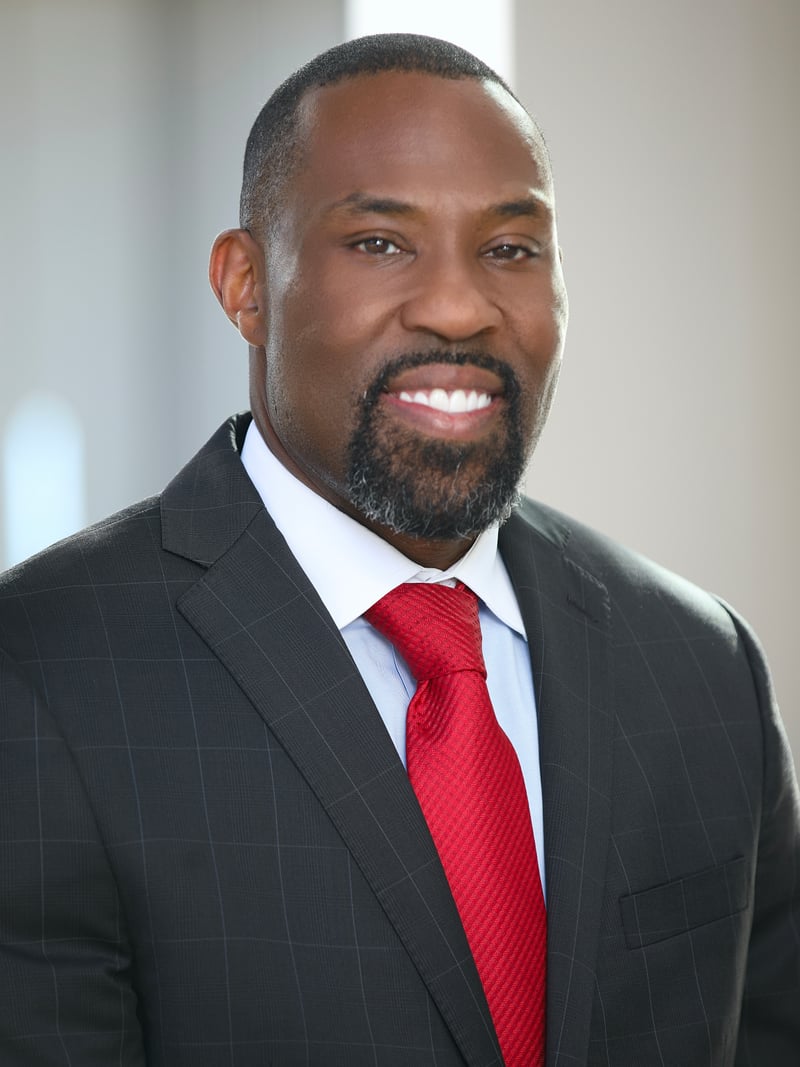

Co-Founding Partners
Texas Bar verified. Reggie London (Texas Bar No. 24043514) and Njeri London (Texas Bar No. 24043266) are the co-founding partners of L and L Law Group, PLLC — based at 5899 Preston Rd, Suite 101 in Frisco, Texas (Collin County), with many 5-star Google reviews, and available 24/7 for criminal defense consultations.
Yes, Police Can Lie to You During Questioning
Most people walk into an interview room believing that an officer who lies to them has broken a rule. That belief is wrong, and it is one of the main reasons people talk. An officer can sit across the table, look you in the eye, and say things that are simply not true. Nothing about the interview becomes illegal because of it.
The United States Supreme Court settled this in Frazier v. Cupp, 394 U.S. 731 (1969). Officers falsely told a suspect that his co-defendant had already confessed. The Court held that deception about a co-defendant's confession did not make the resulting confession involuntary. The statement stayed in the case.
Texas courts apply that same federal standard. Whether the room is in Frisco, McKinney, Denton, or Dallas, an officer may bluff about what the investigation has found.
Why the Lie Is Legal
The law does not ask whether the officer was honest. It asks whether your statement was voluntary. Texas puts this in writing: under Texas Code of Criminal Procedure article 38.21, a statement may be used against you only if it was freely and voluntarily made. A lie about evidence is treated as one factor in that question, and courts have consistently found that a bluff, standing alone, does not overcome a person's free will.
That is the whole point of the interview. You are being invited to react to a story. If the story is "we already have your DNA," the officer is hoping you will start explaining why your DNA might be there. If the story is "your friend already put this on you," the officer is hoping you will put it back on your friend. Every one of those answers is a statement, and every one can be recorded and repeated to a jury.
Treat the room as the officer's workspace. Its purpose is to collect statements from you, not to hear your side.
What Police Are Not Allowed to Do
Lying about evidence is permitted. Some other tactics are not, and they matter because they can make a statement involuntary or keep it out of court entirely.
Promises of leniency. "Tell me what happened and I'll make sure you go home tonight" is a different thing from a bluff about DNA. A statement that is the product of a promise rather than free choice is not "freely and voluntarily made," and that is the article 38.21 test.
Threats and coercion. Threats of harm, threats against your family, and pressure designed to break you down rather than question you push a statement out of the voluntary category for the same reason.
Ignoring a clear request for a lawyer. Under Edwards v. Arizona, 451 U.S. 477 (1981), once a suspect in custody clearly asks for a lawyer, questioning must stop. An officer who keeps going after that request puts everything said afterward at risk.
Skipping the warnings. Miranda v. Arizona, 384 U.S. 436 (1966) requires police to warn you, before custodial questioning, that you have the right to remain silent and the right to a lawyer. Texas adds its own layer in article 38.22, which sets requirements for oral and written statements, including that a custodial oral statement must be recorded.
The enforcement tool for all of this is article 38.23: evidence obtained in violation of the law is excluded. A statement taken the wrong way can be kept away from the jury.
Silence Is Not Enough: You Have to Say the Words
This is the part almost everyone gets wrong. You cannot protect yourself by simply going quiet.
In Salinas v. Texas, 570 U.S. 178 (2013), a man answered some police questions and then fell silent when the questions turned to the crime. The Supreme Court held that his silence, before any Miranda warnings had been given, could be used against him, because he never expressly invoked his right. Silence alone was not an invocation. He had to say it.
The same rule applies to asking for a lawyer. Under Davis v. United States, 512 U.S. 452 (1994), the request must be unambiguous. The words at issue in that case were "maybe I should talk to a lawyer," and they were not enough. A question, a hedge, or a mumble does not trigger the Edwards protection. A clear sentence does.
What to Say, Word for Word
Say these sentences out loud, in full, and in this order. Do not soften them, do not phrase them as questions, and do not explain why you are saying them.
- "I want a lawyer."
- "I am not answering questions."
- "I do not consent to any search."
- "Am I free to leave?" If the answer is yes, leave. If the answer is no, repeat the first two sentences and stop.
After that, say nothing else about the case. Not to the officer who "just wants to hear your side," not to the officer who takes over when the first one leaves, not to the person in the next holding cell, and not on the jail phone, which is recorded. If you are asked again, give the same two sentences again. You can be polite. You do not have to be helpful.
Do not sign anything. A written statement is still a statement, and article 38.22 governs those too. Identifying yourself is different from answering questions about what happened; give your name if asked and stop there.
Do Not Consent to Searches, and Do Not Explain
The same instinct that makes people talk makes them say "go ahead and look, I have nothing to hide." Do not say it. When you consent, the officer no longer needs a warrant or a legal justification, and a search you agreed to is far harder to challenge later than one you objected to. Say the sentence above and let the officer decide whether to search anyway. Do not physically resist; the objection is made with words.
The other instinct is to explain. You know you are innocent, or you know the situation was more complicated than it looks, and you believe that a few minutes of honest talking will clear it up. Understand the asymmetry: the officer has the file and you do not. You do not know what the evidence actually is, and after reading this page you know you cannot trust what you are told it is. A partial truth, a wrong date, a detail told slightly differently the second time through, each becomes an inconsistency that will be presented as a lie.
A statement does not need to be a confession to hurt you. It only needs to place you somewhere, admit a relationship, or contradict something else in the file. The safest statement is the one you never made.
How Texas Law Treats Your Statement
Three articles of the Texas Code of Criminal Procedure decide what happens to whatever you said.
Article 38.21 is the gate. A statement may be used only if it was freely and voluntarily made. Promises, threats, and coercion are attacked here.
Article 38.22 is the rulebook for form. It sets requirements for oral and written statements, including the recording requirement for custodial oral statements. An unrecorded custodial oral statement, or a written one taken without the required formalities, is attacked here.
Article 38.23 is the remedy. Evidence obtained in violation of the law is excluded, which is what a motion to suppress asks the court to do.
These articles give the defense real tools. A statement taken after you clearly asked for a lawyer, or one that was never recorded when it had to be, is a target. But every one of these arguments starts from the statement you actually made, and the court will read every word of it. The cleanest record is the one where the only words are "I want a lawyer" and "I am not answering questions."
Questions About Police Lies and Your Rights
Can police lie about having my DNA or fingerprints?
Yes. Claims about physical evidence, witnesses, video, and co-defendant statements are all bluffs an officer is permitted to make. Frazier v. Cupp is the controlling case, and a lie about evidence does not by itself make your statement involuntary under article 38.21.
If I ask for a lawyer, does the questioning really stop?
Under Edwards v. Arizona it must, once you are in custody and the request is clear. If an officer keeps asking anyway, do not answer, repeat the request, and tell your lawyer exactly what was said after you invoked. Statements taken in violation of that rule are the kind article 38.23 keeps out.
Does "I want a lawyer" work if I am not under arrest?
The Miranda and Edwards rules attach to custodial questioning. If you are not in custody, the officer may not have to warn you at all, and Salinas v. Texas shows that silence alone in that setting can be used against you. That is why you say the words out loud, then ask whether you are free to leave, and leave if the answer is yes.
What if I already talked?
Stop now. You can invoke your rights at any point in an interview, and from that moment forward the Edwards rule applies. Do not try to fix or clarify what you already said; more words create more inconsistencies. A defense attorney can review how the statement was taken and whether articles 38.21, 38.22, and 38.23 give you a way to challenge it.
Key Legal Terms
- TDCJ (Texas Department of Criminal Justice)
- State agency operating Texas prisons and parole supervision. Felony sentences (state jail through 1st-degree) are served in TDCJ. Parole eligibility is governed by Government Code § 508.145.
- CCP (Code of Criminal Procedure)
- Texas statutory code governing criminal procedure — arrest, bail, indictment, trial, sentencing, appeals, and post-conviction relief. Distinct from the Penal Code which defines substantive offenses.
- Penal Code
- Texas statutory code defining substantive criminal offenses — assault, theft, drugs, sex offenses, weapons, etc. Chapter 12 sets punishment ranges. Title 5 (Chapters 19-49) covers most offenses against persons, property, and public order.
- TXND / TXED
- United States District Courts for the Northern District of Texas (TXND — Dallas, Fort Worth, Plano, Sherman, Lubbock, Amarillo) and Eastern District of Texas (TXED — Sherman, Plano, Tyler, Marshall, Beaumont, Lufkin). Federal jurisdiction divisions.
In our practice defending Texas criminal cases, we have represented clients in Collin, Dallas, Denton, and Tarrant County criminal courts on the full Texas Penal Code and Health & Safety Code spectrum. Reggie's prosecutor background in Dallas County means we know the State's evidentiary playbook; Njeri's trial-trained motion practice anchors the suppression-driven defense work.
Frequently Asked Questions
How long does a criminal case take in Texas?
What is the statute of limitations for criminal charges in Texas?
What is the difference between a misdemeanor and a felony in Texas?
Can I get my criminal record cleared in Texas?
How do I find an attorney for my Texas criminal case?
References & Authoritative Sources
About the Authors
Charged with a crime in Texas? Talk to L and L Law Group.
Co-founding partners Reggie London (Texas Bar No. 24043514) and Njeri London (Texas Bar No. 24043266) ensure attorney-level review at every stage. Free consultation. Frisco, Texas.
Call (972) 370-5060Was this article helpful?
Talk to a real attorney
Send a few details and a defense attorney will reach back within an hour, day or night. No call center. No paralegal screen.