Checkpoint Turnaround What Really Happened
Texas does not allow DWI sobriety checkpoints, so the "checkpoints" North Texas drivers hear about are usually no-refusal enforcement periods, license-and-insurance stops, or, far south of Dallas, federal immigration checkpoints. Turning around before one is not a crime, and a legal turn by itself does not give an officer a reason to stop you. An illegal U-turn or any other traffic violation does. If you are stopped, hand over your documents and say very little.
Free, Confidential Case Review
Tell us what happened. A defense attorney reviews every submission — usually within an hour, day or night.
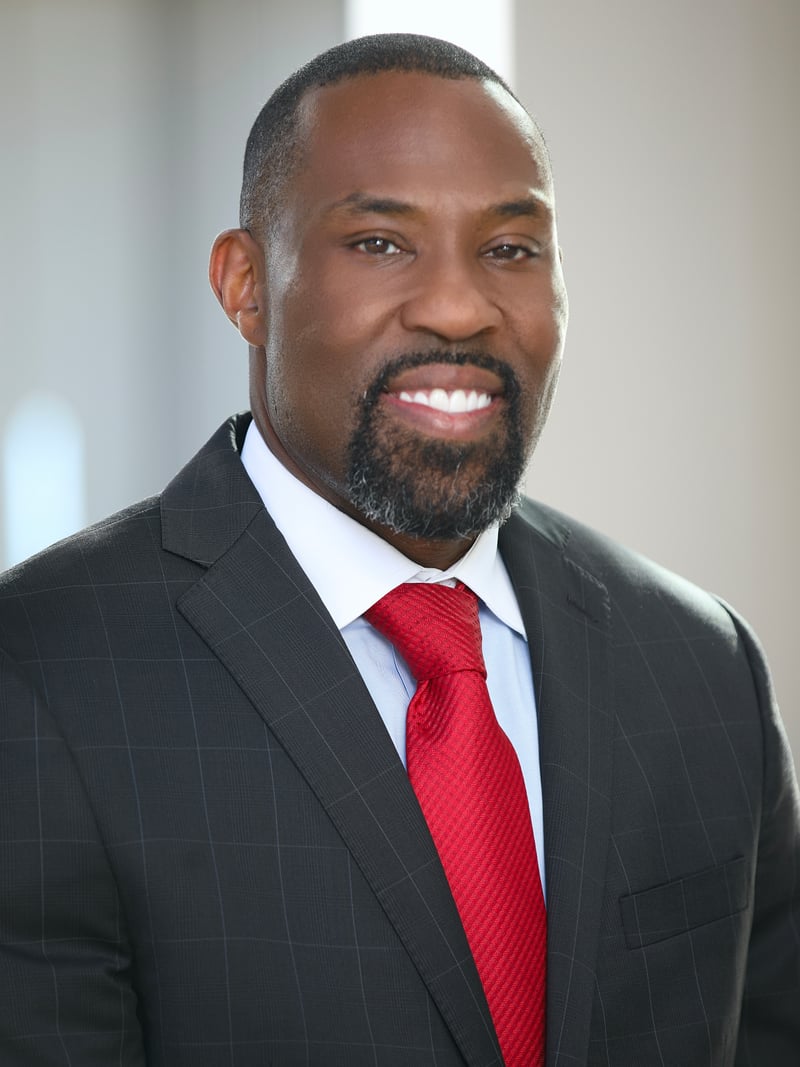

Co-Founding Partners
Texas Bar verified. Reggie London (Texas Bar No. 24043514) and Njeri London (Texas Bar No. 24043266) are the co-founding partners of L and L Law Group, PLLC — based at 5899 Preston Rd, Suite 101 in Frisco, Texas (Collin County), with many 5-star Google reviews, and available 24/7 for criminal defense consultations.
Why Texas Has No DWI Sobriety Checkpoints
The federal Constitution does not forbid sobriety checkpoints, and some states run them. Texas does not. In Holt v. State, 887 S.W.2d 16 (Tex. Crim. App. 1994), the Texas Court of Criminal Appeals held that DWI sobriety checkpoints are not authorized in Texas because the Legislature has never set up a statewide program with rules for when, where, and how they operate.
If a Texas officer stopped you at a true sobriety roadblock, with no individual reason to suspect you, the stop is open to challenge and evidence gathered after it can be excluded under Texas Code of Criminal Procedure art. 38.23. That is why Collin, Denton, and Dallas County departments use other tools.
What the "Checkpoints" in North Texas Actually Are
When a friend texts that there is a checkpoint on Preston Road or the Dallas North Tollway, one of these is usually what they saw.
- No-refusal enforcement periods. Around holidays, counties across Dallas–Fort Worth announce "no-refusal" weekends. This is not a roadblock. Officers still need a specific reason to stop your car and probable cause to arrest you. The difference is that a judge is on call to sign blood-search warrants quickly, so refusing a breath test does not end the matter.
- License-and-insurance checks. Texas courts have treated these differently from DWI checkpoints, and whether one holds up depends on how it was planned and run and what its real purpose was.
- Federal immigration checkpoints. Permanent U.S. Border Patrol stations on highways heading north from the Mexican border, where federal law allows brief stops to ask about citizenship. There are none in Dallas–Fort Worth.
Controlling Texas law and cases
Each authority below was checked against the current statute text or the published opinion on November 9, 2026. Links go to the official Texas statute or the full opinion.
- Tex. Transp. Code § 724.011 — Anyone arrested for operating a motor vehicle in a public place while intoxicated is deemed to have consented to giving breath or blood specimens to test for alcohol or drugs, subject to the rest of Chapter 724. Implied consent is triggered by arrest, not by the stop itself, which is why the legality of the initial stop is the first battleground.
- Tex. Transp. Code § 724.035 — Refusing an officer's request for a specimen brings a 180-day driver's license suspension, or two years if the driver has a prior alcohol- or drug-related enforcement contact within the preceding 10 years; the suspension takes effect 40 days after notice. This is the concrete price of a refusal, separate from the criminal case.
- Tex. Code Crim. Proc. art. 38.23 — Evidence obtained in violation of the Texas or U.S. Constitution or laws may not be used against the accused, and the jury must be told to disregard it if the facts raise the issue. If a stop near a checkpoint lacked reasonable suspicion, everything that followed, including field sobriety tests and any specimen, is subject to suppression under this article.
- Holt v. State, 887 S.W.2d 16 (Tex. Crim. App. 1994) — The Court of Criminal Appeals held that a DWI checkpoint cannot satisfy the Fourth Amendment unless it is authorized by a statewide policy from a politically accountable governing body, and because Texas has no such authorization, DWI roadblocks here are unreasonable and unconstitutional. This is the reason Texas has no lawful sobriety checkpoints, and any stop at one is suppressible.
- Murphy v. State, 864 S.W.2d 70 (Tex. App. 1993) — The Tyler Court of Appeals upheld a stop where occupants halted short of a roadblock and visibly switched drivers, holding that this specific conduct supplied reasonable suspicion independent of the roadblock; it did not hold that simply turning away from a checkpoint is enough. Officers need articulable facts beyond avoidance, such as a traffic violation or evasive driving, to justify a stop.
Is Turning Around Before a Checkpoint a Reason to Stop You?
Not by itself. Under Terry v. Ohio, 392 U.S. 1 (1968), an officer needs reasonable suspicion, meaning specific, articulable facts suggesting a crime, before detaining you. A legal turn onto a side street or a signaled exit is not, on its own, a fact that points to a crime.
The problem is how people turn around. Under Whren v. United States, 517 U.S. 806 (1996), any traffic violation, however minor, gives an officer a lawful basis to stop you, even if the real reason is that you turned away. Officers watch for the mistakes a nervous driver makes in the first ten seconds:
- A U-turn where one is prohibited, or across a solid or double yellow line.
- Turning without a signal, or signaling late.
- Stopping in a traffic lane, backing up on the roadway, or using the shoulder to turn.
- Accelerating hard, weaving, or drifting over a lane line while watching the mirror.
If you decide not to drive through, signal early, take a legal turn or exit, drive the speed limit, and keep going. Once an officer has signaled you to stop, turning away is no longer a choice: driving off is evading arrest under Texas Penal Code § 38.04, a felony when a vehicle is used, and fleeing is separately an offense under Texas Transportation Code § 545.421.
If You Are Stopped Anyway
Once the lights come on, the goal is a short stop that gives the officer nothing to work with.
- Pull over promptly. Signal, stop fully off the lane, turn on the interior light at night, and put both hands on the wheel.
- Hand over your documents. Texas law requires a driver to show a license and proof of insurance on request. Say "My license is in my wallet" before reaching for it.
- Get out if told to. Under Pennsylvania v. Mimms, 434 U.S. 106 (1977), an officer may order the driver out of a lawfully stopped car; Maryland v. Wilson, 519 U.S. 408 (1997), extends that to passengers.
- Answer only what identifies you. Under Berkemer v. McCarty, 468 U.S. 420 (1984), an ordinary traffic stop is not custody, so no Miranda warning is required and your answers can be used against you. "Have you had anything to drink?" builds the DWI case; you do not have to answer it.
- Say the sentences, out loud. "I'm going to remain silent." "I don't consent to any searches." "Am I free to go?" Under Salinas v. Texas, 570 U.S. 178 (2013), simply staying quiet is not the same as invoking your rights.
- Decline field sobriety tests politely. The roadside balance-and-eye tests are voluntary. Say, "I'd rather not do any tests." The officer may still arrest you on other observations, but you will not have handed over a video of yourself stumbling.
- Do not consent to a search. Under Schneckloth v. Bustamonte, 412 U.S. 218 (1973), consent must be voluntary, and a search you agree to is very hard to challenge later. Say no once, and do not interfere if the officer searches anyway; resisting is an offense under Penal Code § 38.03.
- Ask if you are free to go. Under Rodriguez v. United States, 575 U.S. 348 (2015), an officer cannot stretch a stop past the time needed for the traffic issue, for example to wait for a drug dog, without reasonable suspicion.
Under Frazier v. Cupp, 394 U.S. 731 (1969), police may lie about the evidence they have, including "your passenger already told us." If you are arrested, say "I want a lawyer" in exactly those words: under Davis v. United States, 512 U.S. 452 (1994), the request must be unambiguous, and under Edwards v. Arizona, 451 U.S. 477 (1981), questioning must then stop until a lawyer is present. A magistrate then gives you the warnings required by Code of Criminal Procedure art. 15.17.
Implied Consent and What a Refusal Costs You
Texas Transportation Code § 724.011 is the implied-consent law. By driving in a public place in Texas, you are deemed to have consented to give a breath or blood specimen if you are arrested for DWI. The arrest comes first; implied consent covers the chemical test after arrest, not the roadside balance tests.
Before asking for a specimen, the officer must read the statutory warning under § 724.015, which says:
- A refusal can be used against you in the criminal case.
- A refusal means your license is suspended for not less than 180 days, whether or not you are ever prosecuted.
- A specimen at or above the legal limit means a suspension of not less than 90 days.
Refusing does not necessarily stop the test. Texas law lists situations, such as a crash with serious injuries, a child passenger, or certain prior convictions, in which officers will seek a specimen after a refusal, and during a no-refusal period a judge is standing by to sign a blood warrant. Do not physically resist the draw; your lawyer attacks the warrant later, not the nurse.
After a refusal or failed test, calendar the deadline to request an administrative license hearing. That window is short, 15 days from the notice of suspension, and missing it means the suspension takes effect with no one reviewing the officer's paperwork. The hearing is also your first chance to question the officer under oath.
What Not to Do
- Do not argue the checkpoint's legality on the roadside. Under art. 38.23, an unlawful stop is fought with a motion to suppress in a Collin, Denton, or Dallas County courtroom.
- Do not give a false name or date of birth. Under Penal Code § 38.02, lying about who you are to an officer who has lawfully detained or arrested you is a separate offense.
- Do not explain. "I only had two beers" and "I forgot my wallet" are admissions, and the recording keeps them.
- Do not throw anything from the car or reach under a seat. Furtive movements are the "articulable facts" that turn a stop into a search.
How the Case Is Actually Fought
A checkpoint-turnaround stop is won or lost on a few questions. Was there a lawful reason for the stop, or did the officer stop you because you turned away? Was the stop prolonged, in violation of Rodriguez? Was any consent voluntary? If it was a true roadblock, was it the kind Holt says Texas does not authorize? If blood was drawn, was the warrant supported by sworn facts? Were your statements voluntary under art. 38.21 and, if you were in custody, recorded as art. 38.22 requires?
Your lawyer builds those answers from dash-camera and body-camera footage, the warrant affidavit, and your notes. Write everything down the same night: time, location, the officer's name and unit number, the stated reason for the stop, and every question and answer. Then stop talking about the case to anyone but your attorney.
Key Legal Terms
- TDCJ (Texas Department of Criminal Justice)
- State agency operating Texas prisons and parole supervision. Felony sentences (state jail through 1st-degree) are served in TDCJ. Parole eligibility is governed by Government Code § 508.145.
- CCP (Code of Criminal Procedure)
- Texas statutory code governing criminal procedure — arrest, bail, indictment, trial, sentencing, appeals, and post-conviction relief. Distinct from the Penal Code which defines substantive offenses.
- Penal Code
- Texas statutory code defining substantive criminal offenses — assault, theft, drugs, sex offenses, weapons, etc. Chapter 12 sets punishment ranges. Title 5 (Chapters 19-49) covers most offenses against persons, property, and public order.
- TXND / TXED
- United States District Courts for the Northern District of Texas (TXND — Dallas, Fort Worth, Plano, Sherman, Lubbock, Amarillo) and Eastern District of Texas (TXED — Sherman, Plano, Tyler, Marshall, Beaumont, Lufkin). Federal jurisdiction divisions.
In our practice defending Texas criminal cases, we have represented clients in Collin, Dallas, Denton, and Tarrant County criminal courts on the full Texas Penal Code and Health & Safety Code spectrum. Reggie's prosecutor background in Dallas County means we know the State's evidentiary playbook; Njeri's trial-trained motion practice anchors the suppression-driven defense work.
Frequently Asked Questions
Can police in Texas set up a DWI checkpoint?
Is it illegal to turn around before a checkpoint in Texas?
Do I have to do the field sobriety tests?
What happens to my license if I refuse a breath or blood test?
How long does a criminal case take in Texas?
What is the statute of limitations for criminal charges in Texas?
What is the difference between a misdemeanor and a felony in Texas?
Can I get my criminal record cleared in Texas?
How do I find an attorney for my Texas criminal case?
References & Authoritative Sources
About the Authors
Charged with a crime in Texas? Talk to L and L Law Group.
Co-founding partners Reggie London (Texas Bar No. 24043514) and Njeri London (Texas Bar No. 24043266) ensure attorney-level review at every stage. Free consultation. Frisco, Texas.
Call (972) 370-5060Was this article helpful?
Talk to a real attorney
Send a few details and a defense attorney will reach back within an hour, day or night. No call center. No paralegal screen.