Categories
Criminal Defense

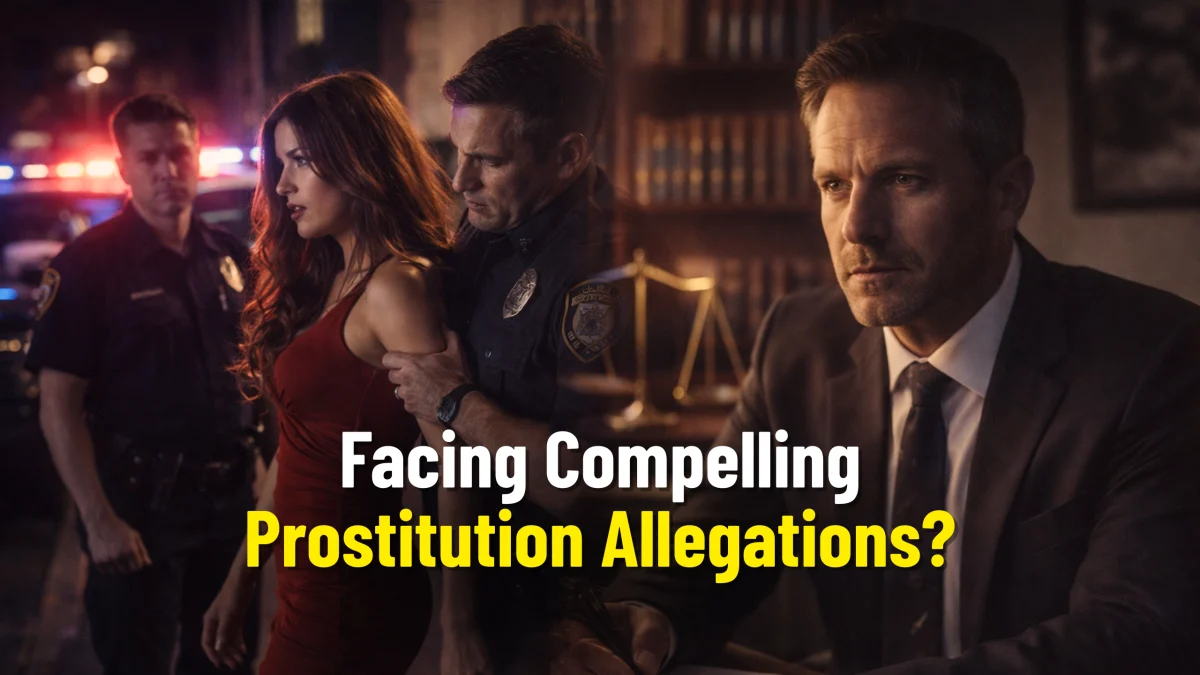
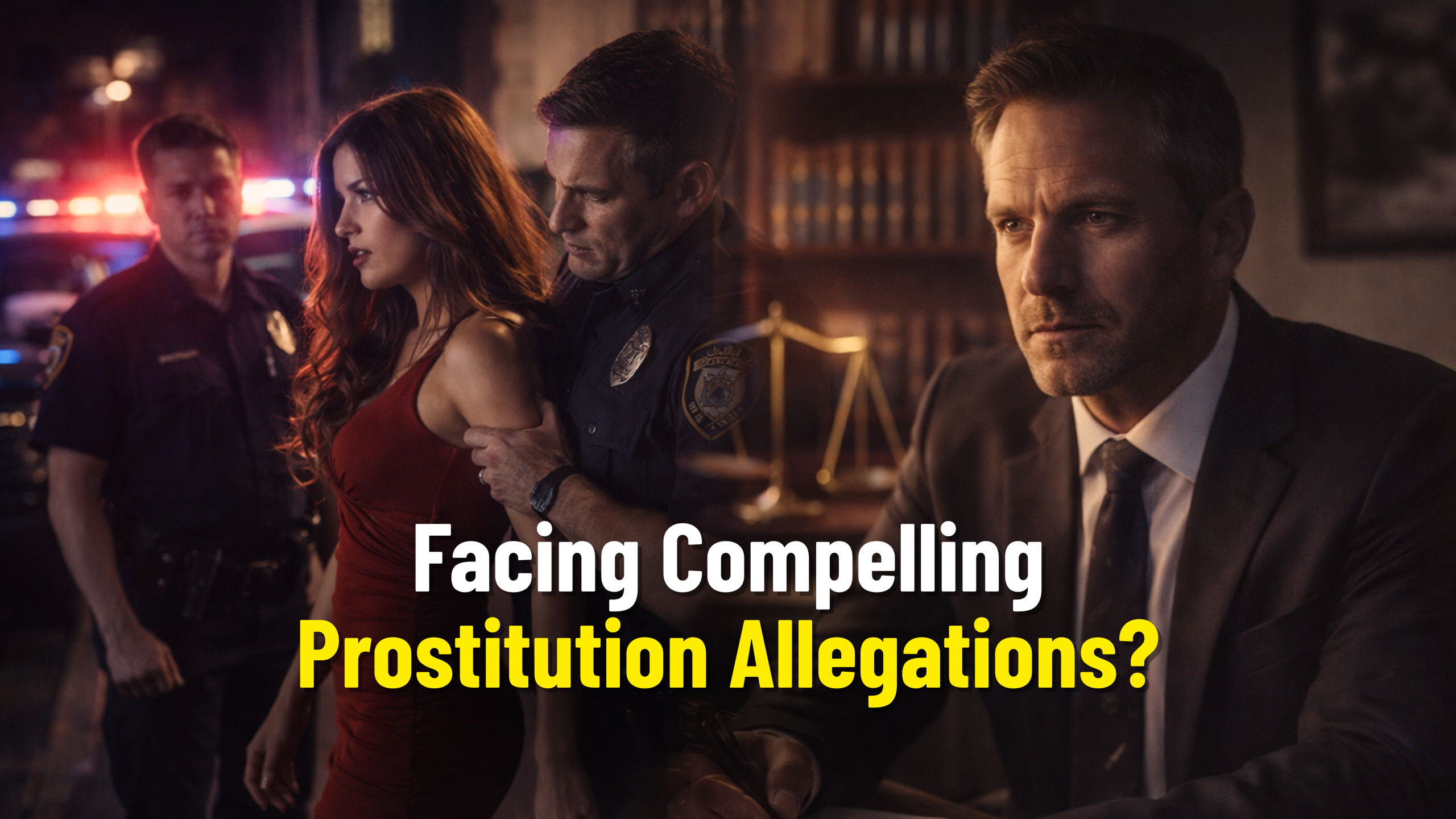
Facing Compelling Prostitution Allegations? Know Your Rights

Blog

Facing Compelling Prostitution Allegations? Know Your Rights

Reggie London

Reggie London

Facing Compelling Prostitution Allegations-elementor-io-optimized

What Does It Mean to Be Accused of Compelling Prostitution (Including Minors)? Imagine your phone ringing at dawn. It’s law enforcement. Within seconds, your life is turned upside down by an accusation you never saw coming. Being accused of compelling prostitution (including minors) is not just a legal problem; it is a life-altering event that triggers fear, confusion, and immediate threats to your freedom and reputation.

In criminal law, compelling prostitution is a specific and severe offense. It is distinct from prostitution itself. While prostitution involves the exchange of sexual acts for compensation, compelling prostitution involves forcing, coercing, or encouraging another individual to engage in that exchange. When the allegation involves a minor, the charges escalate dramatically, carrying the weight of enhanced penalties and mandatory sex offender registration.

The severity of this allegation cannot be overstated. Conviction can mean decades in prison, the loss of parental rights, devastating immigration consequences, and a permanent place on a sex offender registry. However, an accusation is not a conviction. The moment you learn you are under investigation, understanding your constitutional rights and securing experienced legal defense is the single most critical step you can take to protect your future. This blog post will guide you through what these charges mean and, most importantly, how to defend against them.

What Is Compelling Prostitution? Legal Definition and Elements

To defend against a charge, you must first understand what the prosecution is trying to prove. The legal definition of compelling prostitution laws varies slightly by state, but the core elements remain consistent across jurisdictions.

Generally, a person commits compelling prostitution charges by knowingly advancing prostitution through specific illegal means. This involves causing another person to commit prostitution by using force, threat, coercion, or fraud. In some states, the statute specifically highlights the element of compelling a person under 18 through force or intimidation. Other state laws similarly define it as compelling a person by threat or force to engage in prostitution.

Key Elements Prosecutors Must Prove

The key elements prosecutors must prove beyond a reasonable doubt usually include:

  • Knowing Conduct: The accused acted intentionally, not accidentally.
  • Advancement of Prostitution: The accused took some role in promoting or facilitating prostitution.
  • Coercion or Force: The alleged victim was placed in fear or physically forced to participate. This can include psychological pressure, economic control, or blackmail.
  • Involvement of a Minor: If the alleged victim is under 18, many statutes lower the burden of proof regarding force. In many cases, any involvement of a minor in prostitution can be charged as compelling prostitution, regardless of whether overt force was used, because the law deems a minor incapable of consenting to being prostituted.

Understanding the distinction between prostitution and compelling prostitution is vital. Prostitution is typically a misdemeanor for the individual selling or buying sex. Compelling prostitution is a felony that treats the accused as a trafficker or abuser.

Why Compelling Prostitution (Including Minors) Is a Serious Charge?

This is not a charge that will simply “go away.” The criminal and collateral consequences are life-altering. To better understand the escalating severity of these charges, consider the following breakdown:

Charge Type Typical Legal Classification Potential Penalties & Consequences
Simple Prostitution
Misdemeanor
Fines, short jail time (days/weeks), probation.
Compelling Prostitution (Adult)
Felony
Years in state prison, significant fines, loss of voting rights, and employment prohibitions.
Compelling Prostitution (Minor)
Aggravated Felony/Trafficking
Decades in federal/state prison, mandatory sex offender registration, potential deportation for non-citizens, loss of parental rights.

The jump from a misdemeanor to a felony, and especially to an aggravated felony involving a minor, is immense. The consequences extend far beyond the sentence handed down by a judge. A conviction can lead to:

  • Sex Offender Registration: This public registry can affect where you live and work, and how your community perceives you, for years or even a lifetime.
  • Loss of Parental Rights: A conviction can be used in family court to limit or terminate your right to see your children.
  • Deportation: For non-citizens, this is considered an aggravated felony that almost always leads to deportation proceedings.
  • Social Stigma: The mere allegation can destroy reputations, end careers, and sever personal relationships.

Common Misconceptions About Compelling Prostitution Allegations

When facing these allegations, people often cling to misunderstandings that can hurt their case. Here is the legal reality behind some common myths:

“I never forced anyone; they consented.”

  • Reality: In many jurisdictions, if the person was a minor, consent is not a legal defense. Additionally, force can include subtle coercion, such as threats of deportation, withholding money, or emotional manipulation.

“It was just one time.”

  • Reality: The law does not require a pattern of behavior. A single instance of compelling a person to engage in prostitution is enough to sustain a felony conviction.

“I didn’t know they were a minor.”

  • Reality: While this can be a defense in some specific circumstances, many statutes hold defendants accountable if a reasonable person would have known the individual was a minor, or if the defendant was reckless in failing to determine the individual’s age.

“I just helped with errands that’s not criminal.”

  • Reality: Driving someone to a location, renting a hotel room, or collecting money for the purpose of prostitution can be prosecuted as advancing prostitution, making you legally complicit.

Your Rights When You're Accused

Your Rights When You're Accused

When the weight of the government bears down on you, the U.S. Constitution provides a shield. Knowing and exercising your rights is not an admission of guilt; it is a rational response to a high-stakes legal situation.

  • Right to Remain Silent: You have an absolute right to remain silent. You cannot be forced to testify against yourself. I am exercising my right to remain silent and wish to speak with my attorney.
  • Right to an Attorney: You have the right to have an attorney present during any questioning. If you cannot afford one, the state must provide one. Do not answer any questions without your lawyer present.
  • Protection Against Unreasonable Searches: Police cannot search your home, car, or phone without a warrant or your consent. Do not consent to searches, even if you have nothing to hide.
  • No Social Media: You have the right to remain silent, but anything you post on social media is a public statement. Do not post about your case, your innocence, or your life. Prosecutors will use your posts against you.

Exercising these rights is critical. Early legal representation ensures that these rights are protected and that you do not inadvertently waive them.

How an Attorney Helps in Compelling Prostitution (Including Minors) Cases?

Navigating a compelling prostitution (including minors) case alone is impossible. A skilled criminal defense attorney is your guide, protector, and advocate. Here is how they provide crucial assistance:

Immediate Case Assessment

An attorney will immediately review the evidence, the police report, and the charges. They will explain the timeline, the potential penalties you face, and the specific laws applicable to your case. This immediate clarity replaces panic with a plan.

Legal Strategy Tailored to Your Situation

There is no one-size-fits-all defense. Your attorney will build a strategy based on the facts. This may include arguing a lack of intent, mistaken identity, false allegations, or challenging improper police conduct such as entrapment or illegal searches.

Handling Special Issues When Minors Are Involved

Cases involving minors require an understanding of mandatory reporting laws and the heightened public scrutiny they attract. Your attorney will manage these sensitivities while building a defense that challenges the prosecution’s evidence regarding age, knowledge or the presence of force.

Negotiating With Prosecutors

In some cases, an attorney can negotiate for reduced charges, alternative sentencing, or diversion programs that avoid a felony conviction and sex offender registration.

Representation at Trial

If the case goes to trial, your attorney will handle jury selection, cross-examine witnesses, challenge forensic evidence, and fight for a verdict of not guilty.

If you are under investigation, you cannot afford to wait. Consult with an experienced attorney today.

Possible Defenses to Compelling Prostitution Charges

A creative and aggressive attorney will explore every avenue to defend you. While no outcome is guaranteed, several defense strategies have proven effective in these cases:

  • Lack of Evidence: The burden of proof is on the state. If the prosecution cannot produce credible evidence of force, fraud, or coercion, the case should not proceed.
  • No Coercion or Force: If the relationship and actions were between consenting adults with no element of force or threat, this may negate the compelling element of the crime. However, this defense is extremely complex and fact-dependent.
  • Entrapment: If the idea and initiation of the crime originated with law enforcement, and the defendant was not predisposed to commit it, entrapment may be a valid defense. This is common in stings where police are overly aggressive.
  • Mistaken Identity: Particularly in cases based on financial records or old allegations, the accused may have been wrongly identified.
  • Lack of Knowledge: If you were truly unaware that a minor was involved, or unaware that your actions were advancing prostitution, this lack of guilty mind can be a defense.

What to Do If You're Investigated or Arrested?

What to Do If You're Investigated or Arrested-elementor-io-optimized

If you are contacted by law enforcement or arrested, the moments that follow are critical. Follow these practical steps to protect yourself:

  • Ask for an Attorney Immediately: As soon as you are detained, ask for your attorney. Do not negotiate, plead, or explain.
  • Do Not Answer Questions Without Counsel: Even seemingly innocent answers can be twisted by prosecutors. Exercise your right to remain silent.
  • Preserve Evidence That Supports Your Innocence: If you have receipts, phone records, GPS data, or witness contacts that establish your whereabouts or undermine the allegation, preserve them and give them to your lawyer.
  • Do Not Speak to Anyone Else About the Case: This includes friends, family, and cellmates. Jailhouse informants are often used to elicit incriminating statements. Only discuss your case with your attorney.
  • Stop Posting on Social Media: Immediately deactivate or lock down your social media accounts. Do not post anything until your attorney advises you it is safe.

Conclusion

Facing an accusation of compelling prostitution (including minors) is an undeniably serious and terrifying experience. The charges carry the potential for devastating penalties, including decades in prison and a lifetime of registration as a sex offender. However, it is crucial to remember that you have rights, and there is a path forward.

From the moment you learn of the investigation, your focus must be on protecting your future. This means remaining silent, invoking your right to counsel, and hiring an experienced criminal defense attorney who understands the complexities of these laws. They can dissect the evidence, challenge the prosecution’s case, and fight for the best possible outcome, whether that is a dismissal, a reduction in charges, or an acquittal at trial. Do not face this battle alone. Your freedom, your family, and your future depend on the actions you take today. Contact L&L Law Group criminal defense attorney for a case evaluation immediately.

Frequently Asked Questions

What's The Difference Between Prostitution And Compelling Prostitution?

Prostitution involves the individual performing or soliciting the sex act. Compelling prostitution involves a third party who forces, encourages, or profits from the prostitution of another person.

Can Charges Be Dropped?

Yes. Charges can be dropped if evidence is lacking, if witnesses recant, if police misconduct is found, or if the defense attorney successfully negotiates with the prosecutor.

What Happens If A Minor Is Involved?

Penalties escalate significantly. The age of the victim often triggers mandatory minimum sentences, longer prison terms, and lifetime sex offender registration in many states.

Do I Go To Jail Immediately After Arrest?

Not necessarily. You may be eligible for bail or bond. An attorney can argue for your release pending trial, often with conditions.

How Long Does A Case Take?

These complex felony cases can take anywhere from several months to over a year to resolve, depending on the evidence, the court’s calendar, and the negotiation process.

Section Title

Simplifying Data Breach Liability Law And Your Legal Risks

In the current digital landscape, data breach liability law makes it clear that a breach is no...

What Impacts The Role Of DNA Evidence In Criminal Cases In Texas?

DNA evidence in criminal cases in Texas carries immense weight with modern juries, often viewed as...

Possession Of Prohibited Weapons In Texas: What You Need To Know?

Possession of prohibited weapons in Texas is taken very seriously under state law, even though Texas...

Tampering With Evidence Texas: Hidden Felony Risks And Defense Strategies

Facing accusations of tampering with evidence Texas can be overwhelming, especially when the...

Cryptocurrency Fraud Charges in Frisco, Texas: What You Need to Know?

The legal landscape is shifting as the cryptocurrency fraud charges Texas residents face become a...

Wire Fraud Charges In Texas: Risks, Penalties, And Defense Strategies

Facing wire fraud charges in Texas can feel like the world is crashing down around you. The...

Kidnapping Charges In Frisco, Texas: A Defense Lawyer’s Perspective

Facing kidnapping charges in Frisco is one of the most serious legal situations an individual can...

Capital Murder Charges In Frisco, Texas: A Defense Lawyer’s Guide To High-Stakes Cases

Capital murder charges in Texas represent the most serious legal category in the state’s judicial...

How To Get Frisco Family Violence Charges Dismissed Or Dropped?

Frisco Family Violence Charges can feel overwhelming from the moment an arrest happens in North...
Categories
Criminal Defense

Why You Need An Experienced Prostitution Defense Attorney On Your Side?

Blog

Why You Need An Experienced Prostitution Defense Attorney On Your Side?

Reggie London

Reggie London

Why You Need An Experienced Prostitution Defense Attorney On Your Side-elementor-io-optimized

Facing an accusation of Prostitution charges or solicitation can be an overwhelming and embarrassing experience. In the state of Texas, these are not minor infractions; they are criminal charges that carry serious penalties, including jail time, heavy fines, and a permanent criminal record. Beyond the courtroom, a conviction can lead to social stigma, job loss, and even immigration consequences.

If you or a loved one is facing such accusations, it is crucial to understand that an arrest does not equal a conviction. The law is complex, and the prosecution’s case is not always ironclad. Having a strong legal defense is the most critical step you can take to protect your rights, your reputation, and your freedom. Our law firm brings decades of combined experience and a specialized focus on sex-crime defense. We are committed to providing aggressive, compassionate, and personalized representation for every client facing prostitution charges.

When you need an attorney for prostitution charges, you need someone who understands the nuances of the law and the local courts. Let us put our experience to work for you.

What Are Prostitution Charges?

Under Texas law, the crime of prostitution is defined by statute. It is broadly defined and applies to both the person providing the sexual act and the person seeking to purchase it. Understanding the specific Texas prostitution laws is the first step in building a defense.

A person commits the offense of prostitution if they:

  • Offer to engage in sexual conduct for a fee; or
  • Agree to engage in sexual conduct for a fee; or
  • Actually engages in sexual conduct for a fee.

This means you can be charged even if no sexual act took place. Simply offering or agreeing to exchange money for a sexual act is enough to constitute a crime. Common circumstances that lead to these charges include:

  • Solicitation: This is the act of seeking out or arranging a transaction for sex, often charged against the “buyer.” It covers offering, agreeing to, or attempting to pay for sex.
  • Engaging in Prostitution: This typically refers to the person accused of providing the sexual service in exchange for payment.
  • Sting Operations: Law enforcement frequently conducts undercover operations in hotels, massage parlors, or online to arrest individuals for prostitution and solicitation.

The legal consequences are severe and escalate quickly:

  • First Offense: A Class B misdemeanor, punishable by up to 180 days in jail and a fine of up to $2,000.
  • Second Offense: A Class A misdemeanor, carrying up to one year in jail and a fine of up to $4,000.
  • Third and Subsequent Offenses: A state jail felony, with penalties ranging from 180 days to two years in a state jail facility and fines up to $10,000.
  • Soliciting a Minor: If the person solicited is under 18, or believed to be under 18, the charge is a second-degree felony, punishable by up to 20 years in prison.

Common Defenses Against Prostitution Charges

When you are accused, the prosecution will attempt to prove its case beyond a reasonable doubt. Our job is to challenge their evidence and present robust defenses to prostitution charges on your behalf. Every case is unique, but successful strategies often include:

  • Innocence Defense / Lack Of Intent

The state must prove you had the specific intent to exchange money for a sexual act. Sometimes, conversations are ambiguous, or actions are misinterpreted. Vague statements, joking, or simply being in the wrong place at the wrong time are not enough to secure a conviction. If you never actually intended to complete the transaction, this is a powerful defense.

  • Entrapment

This defense applies when law enforcement officers induce you to commit a crime you were not otherwise predisposed to commit. It is not entrapment if an officer simply provides you with an opportunity; they must have pressured, persuaded, or harassed you into breaking the law. This is a common argument in sting operations where undercover officers may be overly aggressive.

  • Lack Of Evidence

The burden of proof lies solely with the prosecution. In many cases, especially those arising from busy sting operations, the evidence may be insufficient. There may be no clear record of an offer, the police reports may contain inconsistencies, or the arresting officers may have had a poor vantage point. If the state cannot prove every element of the crime, the case should be dismissed.

  • Coercion Or Duress / Victim Of Trafficking

Texas law recognizes that individuals are sometimes forced into prostitution through force, fraud, or coercion. If you engaged in the conduct as a direct result of being a victim of trafficking, this can be a complete defense to the charge.

  • Mistaken Identity

In chaotic environments or operations with multiple arrests, it is not uncommon for police to misidentify a suspect. If you were not the person who made the offer or agreement, we can challenge the identification procedures and evidence.

Having a skilled lawyer for criminal defense for prostitution means having someone who can immediately identify which of these defenses applies to your unique situation.

Consequences Of A Prostitution Conviction

Consequences Of A Prostitution Conviction-elementor-io-optimized

A prostitution conviction’s consequences extend far beyond the courtroom. While the immediate penalties like jail time and fines are daunting, the long-term impact of a prostitution charge can disrupt every aspect of your life.

  • Criminal Penalties

As outlined above, a conviction can result in significant jail time, state jail time for felonies, and thousands of dollars in fines. You may also be placed on probation, required to perform community service, and mandated to undergo mandatory STI testing.

  • Permanent Criminal Record

A conviction creates a permanent mark on your record. This is not something that simply goes away. It will appear on routine background checks, making it incredibly difficult to secure employment, find housing, or obtain professional licenses.

  • Professional And Personal Stigma

For many professionals, a sex crime-related conviction can be a career-ender. It can damage personal relationships and lead to irreparable harm to your reputation in the community.

  • Immigration Consequences

For non-citizens, a prostitution charge can be devastating. It is often considered a crime involving moral turpitude under federal immigration law, which can lead to denial of citizenship, green card applications, visa renewals, and even deportation.

  • Collateral Consequences

A conviction can affect child custody battles and can bar you from certain types of government assistance or volunteer opportunities.

Minimizing these consequences is our primary goal. We fight not just for a “not guilty” verdict, but for solutions that allow you to move forward with your life.

How Can We Help Defend You?

When you choose our firm, you are not just hiring a lawyer; you are building a partnership with a dedicated advocate. Our prostitution defense attorney services are comprehensive and tailored to each client’s unique needs. We understand the fear and uncertainty you are facing, and we approach every case with the seriousness and confidentiality it deserves.

Here is how we provide legal help for prostitution charges:

  • Initial Consultation And Case Analysis

We begin by listening. During a confidential consultation, we will review every detail of your arrest, the evidence against you, and your personal history. We will explain the charges, the potential penalties, and the legal process in plain English.

  • Developing A Tailored Defense Strategy

No two cases are the same. Based on our investigation, we will identify the most effective defense strategy. This may involve challenging the legality of the stop or arrest, filing motions to suppress evidence obtained in violation of your constitutional rights, or negotiating with prosecutors for a favorable resolution.

  • Negotiating For The Best Possible Outcome

For many first-time offenders, the best outcome is avoiding a conviction altogether. We have extensive experience negotiating pretrial intervention programs. These programs allow you to complete certain requirements in exchange for a dismissal of your case. If you are eligible, we can also negotiate a reduction in charges to help you become eligible for record sealing sooner.

  • Aggressive Trial Representation

If the prosecution’s offer is not in your best interest, or if you are innocent, we are fully prepared to take your case to trial. Our attorneys are experienced litigators who are not afraid to hold the State to its burden of proof, cross-examine witnesses, and fight for a not-guilty verdict before a judge or jury.

  • Post-Conviction Relief

If you have already been convicted, we can still help. We will advise you on your eligibility for an expunction, which completely erases the arrest, or a nondisclosure, which seals the record from most employers, so you can legally deny the incident ever occurred.

Case Study

To illustrate how these strategies work in practice, consider the following anonymized example of a successful prostitution defense handled by our firm. This serves as a powerful case study in prostitution defense using our approach.

  • The Case

A young woman with limited English proficiency worked as a dancer at a club. One night, law enforcement conducted an undercover sting operation at the club. An undercover officer alleged that she offered to perform a sexual act for money, leading to her arrest for prostitution.

  • The Challenge

The prosecution’s case hinged solely on the word of the undercover officer. However, the accused had a very different story. The club was filled with loud music and strobe lights. She barely spoke English and insisted she never made any such offer. It was a complete misunderstanding born from a language barrier and the chaotic environment.

  • The Defense Strategy

Our approach was multi-faceted. First, we focused on the lack of clear evidence. There was no concrete, unambiguous offer. Second, we highlighted the environmental factors that made reliable communication impossible. We obtained a sworn, translated statement detailing her version of events. Rather than proceeding to trial immediately, we strategically shared this exculpatory evidence with the prosecutor.

  • The Outcome

The night before the trial was set to begin, the prosecution dismissed all charges for lack of evidence. She avoided a conviction, a permanent criminal record, and the devastating immigration consequences that would have followed. Our firm’s thorough investigation and strategic negotiation made all the difference.

Possible Defenses Vs. Prosecution's Evidence

Navigating a defense strategy for a prostitution charge requires understanding what you are up against. The following table outlines common legal defenses to prostitution arguments and how they counter typical prosecution evidence.

Defense Strategy Prosecution's Typical Evidence Potential Outcome

Innocence / Lack of Intent

Undercover officer testimony, police reports claiming an offer was made.
Dismissal or Acquittal: If the “offer” was ambiguous, a joke, or misinterpreted, the State cannot prove criminal intent.

Entrapment

Recordings or testimony showing the defendant made an offer or agreement.
Dismissal or Acquittal: If the defendant can show the officer pressured them into committing a crime they weren’t predisposed to commit.

Lack of Evidence

No recording of the transaction; unclear or inconsistent police reports; no corroborating witnesses.
Dismissal: The State fails to meet its burden of proof. The case is dismissed before or during trial.

Coercion / Victim of Trafficking

Evidence that the defendant was present and engaged in the act.
Affirmative Defense: The defendant admits to the conduct but argues they were a victim of force, fraud, or coercion, making them not criminally responsible.

Mistaken Identity

Eyewitness identification from a chaotic sting operation; online ad or phone number not definitively linked to the defendant.
Dismissal or Acquittal: If the State cannot prove that the defendant committed the act, the case fails.

Constitutional Violations

Evidence obtained from an illegal stop, search, or arrest.
Evidence Suppressed / Case Dismissed: If the judge rules the evidence was obtained illegally, it cannot be used, often crippling the prosecution’s case.

The Importance Of Choosing The Right Defense Attorney

The Importance Of Choosing The Right Defense Attorney-elementor-io-optimized

The difference between a conviction that haunts you for life and a dismissal that allows you to move forward often comes down to one decision: choosing a prostitution defense attorney who is experienced, dedicated, and knowledgeable.

When your freedom and future are at stake, you cannot afford to hire just any lawyer. You need a top attorney for a prostitution case who possesses specific qualities:

  • Experience And Specialization

You need an attorney who handles sex crimes and prostitution cases regularly, not as an afterthought. Specialized expertise in criminal law is a key indicator of this experience and peer recognition.

  • Knowledge Of Local Courts And Prosecutors

Our firm has years of experience practicing in Houston and the surrounding counties. We know the tendencies of local judges and prosecutors, which is invaluable when negotiating plea deals or diversion programs.

  • A Commitment To Personalization

You are not a case number. We take the time to understand your personal story, your goals, and your fears. We build a defense strategy around you. As our case study shows, the small details can be the key to winning a case.

  • Resources And Tenacity

A strong defense requires investigation. We leave no stone unturned, scrutinizing every piece of evidence, interviewing witnesses, and challenging police procedures to ensure your rights are protected.

Contact Us For A Consultation

If you are facing an accusation of prostitution or solicitation, time is of the essence. The legal system moves quickly, and the steps you take in the first few days can have a lasting impact on the outcome of your case. You do not have to navigate this difficult time alone.

We invite you to reach out to us for a confidential, no-obligation consultation for prostitution charges. We provide a safe, judgment-free environment where you can speak openly about your situation. We will listen to your story, explain your rights, and outline the legal options available to you. Our promise is to provide you with honest, compassionate, and expert legal guidance.

Do not let one mistake or misunderstanding define your future. Contact us today to schedule your consultation and get legal help for prostitution accusations. You can reach us by phone or visit our office to speak with a member of our team.

Conclusion

Facing prostitution charges defense is a serious matter with life-altering stakes. From mandatory jail time and staggering fines to the permanent scar of a criminal record and severe immigration consequences, the fallout from a conviction can be devastating. However, an accusation is not a conviction. The Texas legal landscape is complex, but it is also full of opportunities for a strong defense.

Having an experienced prostitution defense attorney by your side is the single most important factor in protecting your future. Our firm combines specialized expertise, deep local knowledge, and a personalized approach to fight tirelessly for the best possible outcome in your case. Whether that means getting charges dismissed, negotiating a pretrial diversion, or securing an acquittal at trial.

When you are ready to fight back, we are ready to lead the way. Contact L&L Law Group today to start building your defense.

Frequently Asked Questions

Can I Be Charged With Solicitation Even If No Sex Act Occurred?

Yes. Under Texas law, the crime is complete the moment you offer or agree to engage in sexual conduct for a fee. You do not actually have to go through with the act, nor does money have to change hands.

What Is The Difference Between Prostitution And Solicitation Of Prostitution?

While both are covered under the same statute, “prostitution” often refers to the person offering to perform the sexual act for money. “Solicitation of prostitution” typically refers to the person offering to pay for the sexual act. Both are criminal offenses.

Is Entrapment A Valid Defense In Texas Prostitution Stings?

Yes, but it has strict limits. Entrapment occurs when law enforcement induces or pressures a person to commit a crime they were not already predisposed to commit. It is not entrapment if an officer simply provides the opportunity for a willing person to break the law.

I Was Arrested For The First Time. Is There Any Way To Avoid A Permanent Record?

Yes. For many first-time offenders, the best option is a pretrial intervention program. If you successfully complete the program, the charge is dismissed, and you may become eligible for an expunction, which erases the arrest from your record entirely.

What Should I Do Immediately After Being Arrested For Prostitution?

The most important thing is to remain silent and ask for a lawyer. Do not try to explain your side of the story to law enforcement without your attorney present. Everything you say can and will be used against you. Contact an experienced criminal defense attorney immediately to begin building your defense and protecting your rights.

Section Title

Simplifying Data Breach Liability Law And Your Legal Risks

In the current digital landscape, data breach liability law makes it clear that a breach is no...

What Impacts The Role Of DNA Evidence In Criminal Cases In Texas?

DNA evidence in criminal cases in Texas carries immense weight with modern juries, often viewed as...

Possession Of Prohibited Weapons In Texas: What You Need To Know?

Possession of prohibited weapons in Texas is taken very seriously under state law, even though Texas...

Tampering With Evidence Texas: Hidden Felony Risks And Defense Strategies

Facing accusations of tampering with evidence Texas can be overwhelming, especially when the...

Cryptocurrency Fraud Charges in Frisco, Texas: What You Need to Know?

The legal landscape is shifting as the cryptocurrency fraud charges Texas residents face become a...

Wire Fraud Charges In Texas: Risks, Penalties, And Defense Strategies

Facing wire fraud charges in Texas can feel like the world is crashing down around you. The...

Kidnapping Charges In Frisco, Texas: A Defense Lawyer’s Perspective

Facing kidnapping charges in Frisco is one of the most serious legal situations an individual can...

Capital Murder Charges In Frisco, Texas: A Defense Lawyer’s Guide To High-Stakes Cases

Capital murder charges in Texas represent the most serious legal category in the state’s judicial...

How To Get Frisco Family Violence Charges Dismissed Or Dropped?

Frisco Family Violence Charges can feel overwhelming from the moment an arrest happens in North...
Categories
Criminal Defense

Aggravated Kidnapping With Intent To Violate/Abuse Sexually: Texas Law

Blog

Aggravated Kidnapping With Intent To Violate/Abuse Sexually: Texas Law

Reggie London

Reggie London

Aggravated Kidnapping With Intent To ViolateAbuse Sexually-elementor-io-optimized

The crime of aggravated kidnapping with intent to violate or abuse sexually is one of the most serious offenses in the Texas Penal Code. It represents a terrifying intersection of violent crime and sexual predation, carrying consequences that can alter the course of a person’s life forever. For the victim, the trauma is profound and lasting. For the accused, the weight of such a charge brings the full force of the criminal justice system down upon them, threatening decades in prison and a permanent mark on their record.

In Texas, simply abducting an individual is a serious crime, but when the element of sexual intent is introduced, the charge escalates to aggravated kidnapping, a first-degree felony. This distinction is critical and hinges on proving the defendant’s state of mind at the time of the offense. This blog will delve into the intricate details of this charge, exploring the legal definitions, the severe penalties, and the available strategic defenses. If you or a loved one is facing such allegations, understanding the law is the first step, but securing experienced legal counsel is the most crucial.

Understanding Aggravated Kidnapping

To fully grasp the severity of “aggravated kidnapping with intent to violate or abuse sexually,” one must first understand the baseline crime of kidnapping in Texas and what elevates it to an “aggravated” level.

Kidnapping vs. Aggravated Kidnapping

Under Texas law, kidnapping is generally defined as intentionally or knowingly abducting another person. “Abduction” involves restraining a person with the intent to prevent their liberation by either: (a) secreting or holding them in a place where they are unlikely to be found, or (b) using or threatening to use deadly force. A standard kidnapping is typically a felony of the third degree.

However, the offense transforms into aggravated kidnapping under two specific circumstances outlined in Section 20.04 of the Texas Penal Code. First, a person commits aggravated kidnapping if they abduct another person with one of six specific intents. These intents include:

  • Holding the victim for ransom or reward.
  • Using the victim as a shield or hostage.
  • Facilitating the commission of a felony or flight therefrom.
  • Inflicting bodily injury on the victim or violating or abusing the victim sexually.
  • Terrorizing the victim or a third person.
  • Interfering with a governmental or political function.

Second, a person also commits aggravated kidnapping if they abduct someone and use or exhibit a deadly weapon during the commission of the offense. Therefore, the presence of a deadly weapon can also elevate the charge, regardless of the underlying intent.

The Legal Implications of Sexual Intent in Kidnapping Cases

The specific clause “or violate or abuse [the person abducted] sexually” is what transforms a kidnapping case into a sexually-oriented offense with significantly harsher consequences. This provision acknowledges that the act of abduction is often a precursor to further violence, including sexual assault.

When the prosecution can demonstrate that the defendant had the intent to commit a sexual violation at the time of the abduction, the crime becomes about more than just unlawful restraint; it becomes a tool for sexual predation. This charge often intersects with other violent crimes. For instance, if a defendant abducts a child with the intent to commit a sexual act, it can also serve as a predicate offense for a charge of Continuous Sexual Abuse of a Young Child.

The penalties for this offense are severe. Under Section 20.04(c), aggravated kidnapping is a felony of the first degree. A first-degree felony conviction in Texas carries a punishment of 5 to 99 years, or life, in prison, and a potential fine of up to $10,000.

There is a potential, though often challenging, path to a reduced sentence. Under Section 20.04(d), if the defendant can prove at the punishment stage that they “voluntarily released the victim in a safe place,” the offense is reduced to a felony of the second degree. A second-degree felony carries a sentence of 2 to 20 years in prison and a fine of up to $10,000. However, the term “voluntarily” is strictly construed by courts; a release motivated by external factors (such as the victim’s deception or fear of being caught) is generally not considered voluntary.

Offense Penalties Maximum Sentences Potential Fines
Aggravated Kidnapping (First-Degree Felony)
Imprisonment and Fine
5 to 99 years or Life
Up to $10,000
Aggravated Kidnapping (with voluntary release in a safe place)
Imprisonment and Fine
2 to 20 years
Up to $10,000

Elements of the Crime

For a conviction of aggravated kidnapping with intent to sexually violate or abuse, the prosecution must prove every element of the crime beyond a reasonable doubt. These elements can be broken down into two key components.

The Act of Abduction

First, the state must prove that the defendant intentionally or knowingly abducted another person. As noted earlier, this means the defendant restrained the person with the intent to prevent their liberation by hiding them or using/threatening deadly force. This is the physical component of the crime.

Specific Intent to Sexually Violate or Abuse

This is the defining element of the charge. “Intent to violate or abuse sexually” refers to the defendant’s state of mind at the time of the abduction. The prosecution does not have to prove that a sexual assault actually occurred; they only need to prove that the defendant had the intent to commit one.

Proving intent often relies on circumstantial evidence. For example, in the case of Michael Larkin v. State, the defendant was convicted of attempting to commit aggravated kidnapping with intent to sexually abuse after he put his arm around a child’s neck, tried to cover her mouth, and told her she was “coming with him”. The court found that the act of trying to grab a child from a bathroom, combined with other evidence, was sufficient to prove the intent to sexually abuse, even though the abduction was not completed. This combination of abduction plus sexual intent is what distinguishes this charge from simple kidnapping or standalone sexual assault.

Specific Intent to Sexually Violate or Abuse-elementor-io-optimized

What The Prosecution Must Prove?

In any criminal case, the burden of proof rests squarely on the prosecution. They must prove the defendant’s guilt beyond a reasonable doubt. In cases of aggravated kidnapping with sexual intent, this involves proving the specific mental state of the defendant.

The prosecution will typically rely on several key pieces of evidence to build its case:

  • Witness Testimony: This can include testimony from the victim about what the defendant said or did during the incident, as well as testimony from eyewitnesses who may have observed the abduction.
  • Defendant’s Statements: Any statements made by the defendant to friends, family, or law enforcement can be used to establish intent. For example, in Roger Scott Wilson v. State, the defendant’s own statements to an acquaintance about disposing of a body were used as key evidence.
  • Forensic Evidence: DNA, fingerprints, or other physical evidence linking the defendant to the victim or the scene.
  • Circumstantial Evidence: This is often the most critical factor in proving intent. Circumstances such as the location of the abduction (e.g., near a secluded area), the defendant’s behavior (e.g., carrying restraints or weapons), and any statements made that imply a sexual motive can all be used to convince a jury of the defendant’s intent.

The prosecution’s narrative will aim to show a clear link between the act of abduction and a premeditated desire to commit a sexual crime.

Defense Strategies For Aggravated Kidnapping With Sexual Intent

Facing a charge of aggravated kidnapping with sexual intent is daunting, but it is not a losing battle. An experienced criminal defense attorney will meticulously investigate the case and craft a defense tailored to its unique facts. The goal is always to create reasonable doubt in the jurors’ minds.

Lack Of Intent Or Wrongful Accusation

Since intent is a crucial element of the crime, it is also a primary area for defense. The defense can argue that the defendant did not possess the specific intent to sexually violate or abuse the victim at the time of the abduction. The incident may have been a misunderstanding, or the alleged sexual intent may be a fabrication by the accuser. False accusations can arise from a variety of motives, including custody disputes, bitter divorces, or attempts to gain a financial advantage.

Mistaken Identity

When the defendant is unknown to the victim, mistaken identity can be a powerful defense. The defense can present an alibi by demonstrating, through witnesses, receipts, or electronic data, that the defendant was in another location at the time of the crime.

Challenging The Evidence

A skilled attorney will scrutinize every piece of evidence presented by the prosecution.

  • Tainted Testimony: In cases involving children, young witnesses may be susceptible to leading questions from investigators, parents, or therapists, which can taint their memories and create false narratives.
  • Illegal Search and Seizure: If law enforcement obtained evidence in violation of the defendant’s Fourth Amendment rights, such as through an unlawful search or seizure, a defense attorney can file a motion to suppress that evidence, potentially weakening the prosecution’s case significantly.
  • Lack of Corroboration: The defense can highlight inconsistencies in witness statements or a lack of physical evidence linking the defendant to the crime.

Consent (Inapplicable In Tthis Context)

While “consent” is a common defense in many sex crimes, it is crucial to note that it is almost never a valid defense to aggravated kidnapping with sexual intent. A person cannot consent to being abducted.

The right defense strategy depends on the specific circumstances of the case. An attorney’s ability to investigate, challenge evidence, and present a compelling counter-narrative is essential to protecting the defendant’s rights and future.

Why You Need An Experienced Attorney?

The complexity of aggravated kidnapping charges cannot be overstated. These cases are not just about the facts of an abduction; they involve intricate legal arguments about intent, the admissibility of evidence, and nuanced interpretations of the Texas Penal Code. This is not an area where general legal knowledge suffices.

An experienced Texas criminal defense attorney brings several critical assets to a case:

  • Thorough Investigation: They have the resources to conduct their own investigation, interview witnesses, and uncover evidence that the prosecution may have overlooked or chosen to ignore.
  • Challenging the Prosecution’s Case: A seasoned lawyer knows how to effectively cross-examine witnesses, challenge forensic evidence, and file pre-trial motions to suppress illegally obtained evidence or to dismiss the charges altogether.
  • Negotiating Plea Deals: While the goal may be an acquittal, sometimes negotiating a plea to a lesser offense is in the client’s best interest. An attorney can navigate these complex negotiations with the District Attorney’s office.
  • Guidance and Support: Facing a life sentence is terrifying. A dedicated attorney provides not only legal representation but also guidance, explaining each step of the process and what to expect, helping the client make informed decisions during a stressful time.

Consequences Of Conviction

The consequences of a conviction extend far beyond the prison sentence. While a first-degree felony conviction carries a potential life sentence, the collateral consequences are equally devastating.

  • Prison Time and Fines: As detailed, a conviction means decades or life in prison and a substantial fine.
  • Permanent Criminal Record: A felony conviction of this magnitude is a permanent mark on one’s record. It will appear on background checks for the rest of the individual’s life.
  • Sex Offender Registration: While aggravated kidnapping is not automatically a registerable sex offense, if the underlying facts involve a sexual motive, the judge may require registration, which imposes severe restrictions on where a person can live and work.
  • Loss of Civil Rights: Convicted felons in Texas lose the right to possess firearms and the right to vote while incarcerated.
  • Social and Professional Stigma: The social stigma associated with a violent, sexual felony is immense. It creates nearly insurmountable barriers to employment, housing, and education, and can destroy personal and family relationships.

Legal Resources And Assistance

Navigating a charge of aggravated kidnapping with intent to sexually abuse is like navigating a ship through a hurricane. You need a captain who knows these waters intimately. The statutes are complex, the stakes are impossibly high, and the prosecution will leverage every resource to secure a conviction.

At L & L Law Group, we understand the gravity of your situation. Our team possesses in-depth knowledge of Texas Penal Code Chapter 20 and the intricacies of defending against first-degree felony charges. We are committed to providing a robust, aggressive defense for our clients. We will meticulously examine every piece of evidence, challenge unlawful procedures, and fight tirelessly to protect your rights and freedom. When you work with us, you can expect clear communication, a personalized defense strategy, and a dedicated legal team standing by your side through every step of the legal process.

Legal Resources And Assistance-elementor-io-optimized

Conclusion

The charge of aggravated kidnapping with intent to violate or abuse sexually is among the most severe accusations a person can face in Texas. It combines the violence of kidnapping with the depravity of sexual intent, leading to penalties that can end a life as you know it, from decades to life in prison to the lifelong stigma of a felony record. Understanding the law, from the definition of abduction to the critical distinction of “voluntary release,” is vital.

However, understanding the law is not enough. If you or someone you care about is under investigation or has been arrested for this crime, time is of the essence. The path to a strong defense begins the moment you secure legal representation. Do not leave your future to chance. Contact L&L Law Group today to schedule a consultation and start building your defense. Your freedom is too important to trust to anyone but an experienced, dedicated legal professional.

Frequently Asked Questions

Does The Sexual Assault Have To Actually Occur For Someone To Be Charged With This Crime?

No. In Texas, the charge hinges on the intent of the accused at the time of the abduction, not necessarily the outcome. The prosecution does not need to prove that a sexual assault was completed. Under Texas Penal Code § 20.04(a)(4), the crime is considered “aggravated kidnapping” if the defendant abducts another person with the intent to “violate or abuse [them] sexually.” If the prosecution can prove this specific intent often using circumstantial evidence or statements made by the defendant the charge stands, regardless of whether a sexual act actually took place.

Is "Aggravated Kidnapping With Sexual Intent" Considered A Sex Crime In Texas?

While it is technically classified as a kidnapping offense under Chapter 20 of the Texas Penal Code (not Chapter 21, which covers sexual offenses), it carries the weight and stigma of a sexually-motivated violent crime. Because the “aggravated” nature of the crime is defined by the intent to commit a sexual violation, courts and law enforcement treat it with the same severity as a sex offense. Furthermore, depending on the facts of the case, a conviction may require the defendant to register as a sex offender, as the judge may find that the crime involved a “sexual motivation.”

What Is The Difference Between A First-Degree And Second-Degree Felony For This Charge?

The standard penalty for Aggravated Kidnapping (including cases with sexual intent) is a first-degree felony, which carries 5 to 99 years or life in prison. However, Texas law provides a specific pathway to a reduced sentence under Texas Penal Code § 20.04(d). If the defense can prove that the defendant “voluntarily released the victim in a safe place,” the charge is reduced to a second-degree felony, which carries 2 to 20 years in prison. It is important to note that the “voluntary” release must be genuine; if the defendant released the victim only because police were nearby or because the victim escaped, the reduction does not apply.

Can I Be Convicted If The Victim Initially Came With Me Willingly?

Yes, potentially. In Texas, the crime of kidnapping is defined by abduction, which requires restraining someone with the intent to prevent their liberation. If a person initially agrees to go with you but you later use force, threats, or deception to prevent them from leaving (specifically with the intent to sexually abuse them), you can still be charged with aggravated kidnapping. The key factor is whether the victim was deprived of their freedom at any point during the encounter.

What Are The Most Common Defenses Against A Charge Of Sexual Intent In A Kidnapping Case?

Because “intent” is a mental state, defending against it often involves challenging the prosecution’s narrative. Common defense strategies include:

  • Lack of Intent: Arguing that the defendant did not have any sexual motivation and that the abduction (if it occurred) was for another reason, or that the accuser has misinterpreted the situation.
  • False Accusation: Demonstrating that the charges stem from a vindictive relationship, a custody battle, or an attempt to cover up a consensual encounter.
  • Mistaken Identity: Proving the defendant was not the person who committed the crime, especially in cases involving stranger abductions.
  • Challenging Evidence: Filing motions to suppress evidence obtained through illegal searches or coercive interrogations, or highlighting inconsistencies in witness testimony to create reasonable doubt.

Section Title

Simplifying Data Breach Liability Law And Your Legal Risks

In the current digital landscape, data breach liability law makes it clear that a breach is no...

What Impacts The Role Of DNA Evidence In Criminal Cases In Texas?

DNA evidence in criminal cases in Texas carries immense weight with modern juries, often viewed as...

Possession Of Prohibited Weapons In Texas: What You Need To Know?

Possession of prohibited weapons in Texas is taken very seriously under state law, even though Texas...

Tampering With Evidence Texas: Hidden Felony Risks And Defense Strategies

Facing accusations of tampering with evidence Texas can be overwhelming, especially when the...

Cryptocurrency Fraud Charges in Frisco, Texas: What You Need to Know?

The legal landscape is shifting as the cryptocurrency fraud charges Texas residents face become a...

Wire Fraud Charges In Texas: Risks, Penalties, And Defense Strategies

Facing wire fraud charges in Texas can feel like the world is crashing down around you. The...

Kidnapping Charges In Frisco, Texas: A Defense Lawyer’s Perspective

Facing kidnapping charges in Frisco is one of the most serious legal situations an individual can...

Capital Murder Charges In Frisco, Texas: A Defense Lawyer’s Guide To High-Stakes Cases

Capital murder charges in Texas represent the most serious legal category in the state’s judicial...

How To Get Frisco Family Violence Charges Dismissed Or Dropped?

Frisco Family Violence Charges can feel overwhelming from the moment an arrest happens in North...
Categories
Criminal Defense

What To Do If A Child Is Accused Of Sexual Performance In Texas?

Blog

What To Do If A Child Is Accused Of Sexual Performance In Texas?

Reggie London

Reggie London

What To Do If A Child Is Accused Of Sexual Performance In Texas

Facing an allegation involving a child and sexual performance is a serious and emotional experience for any family. Under Texas law, these are complex cases with high stakes. While the law is designed to protect children from exploitation, there are difficult situations where a minor themselves can be accused of an offense. This can happen in cases involving peer interaction, digital mistakes, or misunderstanding.

When a child is accused, the focus must be on protecting their rights and their future. Sexual performance by a child charges can have lasting consequences, which is why it is critical for parents and guardians to seek knowledgeable legal guidance immediately. This article provides a relatable overview of the law, what to expect, and how to build a defense focused on protection and rehabilitation.

Sexual Performance By Child Under Texas Law

The legal definition of this offense is found in Texas Penal Code § 43.25. It is a law intended to stop the sexual exploitation of minors. Understanding its specific language is the first step in grasping the seriousness of any related accusation.

Under this statute, a “sexual performance” means any performance or part of a performance that includes sexual conduct by a child younger than 18 years of age. The law broadly defines a “performance” as any play, motion picture, photograph, dance, or other visual representation that can be shown before an audience—even an audience of one person.

“Sexual conduct” is also defined in detail and includes actual or simulated:

  • Sexual intercourse
  • Deviate sexual intercourse
  • Masturbation
  • Lewd exhibition of the genitals, anus, or female breast below the top of the areola 

A person commits an offense if they knowingly employ, authorize, or induce a child to engage in sexual conduct or a sexual performance. This can also include a parent or guardian who consents to a child’s participation .

It is important to clarify that this law primarily targets adults who exploit children. However, minors can become involved unintentionally or be accused in situations involving peers. For example, if a teenager records a sexual act involving another minor and shares it, they could potentially face charges under this statute. The law also makes it an offense to produce or promote a performance that includes sexual conduct by a child. This means that simply sharing a digital recording can lead to severe legal trouble.

When Can A Minor Be Accused Of Sexual Performance Offenses?

While the law is designed to punish exploiters, minors can sometimes be caught in its net. These situations are often heartbreaking and arise from poor judgment, peer pressure, or manipulation rather than malicious intent.

Common scenarios where a minor might be accused include:

  • Peer-Related Incidents: Two teenagers in a relationship may consensually create a sexual image. If that image is shared with friends or posted online, both the creator and the individual who shared it could face accusations related to producing or promoting a sexual performance of a minor.
  • Social Media and Digital Recording: A minor might record a sexual act at a party or receive an explicit image on their phone. Simply possessing or forwarding that image can be considered promoting or possessing child pornography, which falls under the umbrella of sexual performance by a child.
  • Online Coercion or Manipulation: Predators may coerce minors into producing sexual images through threats or manipulation. In these tragic cases, the minor who created the image at the direction of an adult can sometimes be accused, even though they are the primary victim.
  • Pressure from Adults: While less common, a minor might be pressured or forced by an adult to participate in a performance. In these instances, the minor is a victim, but the complexities of the legal process can still be overwhelming.

In many of these situations, there is no intent to break the law. The minors involved often do not understand the gravity of their actions or how a momentary lapse in judgment can escalate into a serious criminal accusation.

When Can A Minor Be Accused Of Sexual Performance Offenses

Potential Legal Consequences In Texas

The consequences for a charge related to sexual performance by a child are severe. The law outlines specific felony classifications :

  • An offense under Subsection (b) (employing, authorizing, or inducing a child) is a second-degree felony, but it becomes a first-degree felony if the child is under 14 years of age.
  • An offense under Subsection (d) (producing or promoting a performance) is a third-degree felony, but it becomes a second-degree felony if the child is under 14 years of age.

These charges can lead to significant prison time if the minor is tried as an adult. In the juvenile system, consequences can still be life-altering and may include:

  • Confinement in a juvenile detention facility.
  • Court-ordered counseling and treatment programs.
  • Strict probation with numerous conditions.

One of the most frightening potential consequences is the possibility of having to register as a sex offender. While registration is often discretionary in juvenile court, it can be ordered depending on the offense and the outcome of a registration hearing. This can impact a young person’s life for years, affecting education, college admissions, employment, and personal relationships. Early intervention by a skilled attorney is crucial to fight for alternatives to registration.

Juvenile Justice Vs Adult Criminal Court

In Texas, most minors (ages 10-16) are handled in juvenile court, not in adult criminal court. The juvenile system is supposed to focus on rehabilitation rather than punishment. A minor is not found “guilty,” but is “adjudicated delinquent.”

However, for serious felony offenses, including certain sex crimes, a prosecutor can seek to transfer or certify the juvenile to stand trial as an adult. This process requires a certification hearing, during which a judge considers factors such as the child’s age, maturity, prior record, and the seriousness of the alleged offense.

If a case is transferred to adult court, the minor faces the same penalties as an adult, including long prison sentences and mandatory, public sex offender registration. This is why presenting strong mitigating evidence during the juvenile phase is essential to keep the case in a system designed to give young people a second chance.

Sexual Performance By A Child Charges In Texas

To help families understand the landscape of these charges, the following table breaks down key issues, their explanations, and potential impacts.

Issue Explanation Potential Impact

Definition of Offense

Conduct involving employing, inducing, or producing a child in a sexual performance.

Determines the level of charge and whether the case is a felony.

Degree of Felony

Ranges from Third-Degree to First-Degree Felony, depending on the specific act and the child’s age.
Affects potential sentencing ranges, from probation to decades in prison.

Juvenile Handling

Cases involving minors (10-16) typically start in juvenile court, with a focus on rehabilitation.
Focus on treatment, probation, and avoiding an adult conviction.

Adult Certification

A transfer hearing is required to move a case from juvenile court to adult court for serious felonies.
Opens the door to severe penalties for adults, including long prison sentences.

Sex Offender Registration

May be ordered by a juvenile court judge (discretionary) or is mandatory if tried as an adult.
Long-term consequences for education, housing, and employment. Can be private or public.

Defense Strategies

Includes lack of intent, coercion, analysis of digital evidence, and protection of rights.
A strong defense can lead to a dismissal of the case, reduced charges, or avoidance of registration.

Defense Strategies When A Child Is Accused

When a child is accused, a compassionate and aggressive defense is needed. Strategies focus on the minor’s vulnerability and lack of criminal intent. A defense team will investigate:

  • Lack of Intent: Did the minor understand the nature of their actions? Were they acting under coercion or manipulation?
  • Coercion by Adults or Peers: Was the minor pressured or threatened by someone else, including an adult or an older peer?
  • Peer Pressure or Mutual Conduct: In cases involving two minors, was the conduct consensual and part of a mutual relationship? The “Romeo and Juliet” affirmative defense, available in some related sex crimes, may be relevant if the age difference is minimal.
  • Digital Evidence Analysis: Were images or videos shared without the minor’s knowledge? Was a device hacked? Who had access to the phone or computer? A thorough analysis of digital evidence can be critical.
  • Constitutional Rights Violations: Were the minor’s rights violated during a police interrogation? Texas law requires the recording of custodial interrogations for offenses like sexual performance by a child. If a recording is missing or a confession was coerced, it may be suppressed.
  • Improper Police Questioning: Did law enforcement question the minor without a parent or attorney present, or use improper tactics?

The goal is to protect the minor’s record and future. An early investigation can uncover these defenses and shape the case toward a positive resolution.

Protecting The Child’s Rights During Investigation

The moments after an accusation are critical. It is vital to ensure the child’s rights are protected from the very beginning. Parents and guardians must be proactive.

  • Right to Remain Silent: A child has the absolute right to remain silent. They should be polite but clearly state, “I want a lawyer,” before answering any questions.
  • Right to Counsel: A child has the right to an attorney. Do not allow any interrogation to happen without legal counsel present.
  • Parental Involvement: Parents have the right to be present during police questioning. If you are not present, your child should not speak to law enforcement.
  • School vs. Police Investigations: Be aware that school officials may question a student, and these conversations can sometimes be shared with police. If a school wants to talk about a potential crime, request that a parent be present.
  • Avoiding Self-Incrimination: Children may try to explain their way out of a situation, inadvertently admitting to elements of a crime. Early legal guidance can prevent this and help navigate conversations with investigators.

Long-Term Impact On A Child’s Future

A charge involving sexual performance by a child can have a ripple effect on a young person’s life, even if the case is ultimately resolved.

  • Academic Record: School disciplinary actions can become part of a student’s record.
  • Scholarships and College Admissions: Colleges and universities often ask about disciplinary and criminal history. An adjudication or conviction can jeopardize scholarship and admission opportunities.
  • Professional Licensing: Many professions require background checks. A sex offense on a record can be a permanent barrier to careers in teaching, healthcare, law, and more.
  • Social Stigma: The social consequences for a child and their family can be devastating, leading to isolation and bullying.
  • Immigration Consequences: For families who are not U.S. citizens, these charges can have severe immigration consequences, including deportation.

Because of these impacts, it is vital to explore all options for sealing or expunging the juvenile record once the case is over to give the child a clean start.

How A Texas Criminal Defense Attorney Can Help?

A skilled Texas criminal defense lawyer is more than just legal representation; they are a protector of a child’s future. At L & L Law Group, our team understands the immense stakes involved. We are dedicated to providing top-tier legal services with compassion and dedication, standing by clients when the stakes are high.

Our approach is to:

  • Conduct an Independent Investigation: We don’t rely on the state’s evidence. We do our own digging to find the truth.
  • Negotiate for Diversion Programs: We fight to keep kids out of the system by seeking deferred prosecution or other rehabilitative alternatives.
  • Argue for Juvenile Handling: We present compelling evidence to keep the case in juvenile court, where rehabilitation is the focus.
  • Protect Confidentiality: We work to shield the child’s identity and record from public exposure.
  • Seek Dismissal: When the evidence is weak or rights have been violated, we fight to have the case dismissed in its entirety.
  • Advocate for Rehabilitation: We present a full picture of the child’s life, emphasizing their potential and the need for help, not punishment.

Why Early Legal Intervention Matters?

Time is not on your side after an accusation. Acting immediately can make all the difference.

  • Evidence Preservation: Text messages, social media posts, and video footage can be deleted or lost. A lawyer can act quickly to preserve this critical evidence.
  • Preventing Harmful Statements: A lawyer will ensure that the child and family do not make statements that could be misconstrued as admissions.
  • Protecting Digital Devices: If a device is going to be examined, a lawyer can advise on the best way to proceed to protect privacy while complying with lawful requests.
  • Strategic Defense Planning: Early intervention enables the development of a cohesive defense strategy from the outset, rather than reacting to the state’s case.
  • Shielding the Child: An attorney can often handle communications with law enforcement and prosecutors, shielding the child from unnecessary stress and exposure.
Why Early Legal Intervention Matters

Final Thoughts

If your child has been accused of an offense involving sexual performance by a child, it is a time of fear and uncertainty. But you are not alone. The law provides a path forward, one that emphasizes protection, fairness, and due process. For minors, the system often allows for a focus on rehabilitation and the chance to correct mistakes.

The most important step you can take is to secure experienced legal counsel immediately. At L&L Law Group, our team is committed to protecting your child’s rights and securing the best possible outcome. We approach every case with the dedication and understanding it deserves. Don’t wait. Contact us today for a consultation and let us help you protect your child’s future.

Frequently Asked Questions

Can A Minor Be Charged With Sexual Performance By A Child?

Yes. Although the statute is designed to target exploitation, minors may face charges in cases involving consensual image sharing, recording of sexual activity, or forwarding explicit material. These cases are often handled in juvenile court, where the focus is typically on rehabilitation rather than punishment.

What Happens If A Case Is Handled In Juvenile Court?

In juvenile court, a child is not found “guilty” but may be “adjudicated delinquent.” The system emphasizes rehabilitation and may order counseling, probation, community supervision, or placement in a juvenile facility. The court may also decide whether sex offender registration is required.

Can A Juvenile Be Tried As An Adult In Texas?

Yes. For serious felony allegations, prosecutors can request certification to transfer the case to adult criminal court. If approved, the child faces adult penalties, including potential prison time and mandatory sex offender registration. Early legal advocacy is critical to argue against transfer.

Does Sexual Performance By A Child Require Sex Offender Registration?

Sex offender registration may be required, but in juvenile court it is often discretionary and depends on the facts of the case and the outcome of a registration hearing. Avoiding registration is often a central focus of the defense because of its long-term consequences.

What Are The Potential Penalties For Sexual Performance By A Child?

Penalties vary depending on the specific subsection and the age of the child involved. Charges can range from third-degree to first-degree felonies. In juvenile court, consequences may include probation, mandatory counseling, or detention. In adult court, penalties can include lengthy prison sentences.

Section Title

Simplifying Data Breach Liability Law And Your Legal Risks

In the current digital landscape, data breach liability law makes it clear that a breach is no...

What Impacts The Role Of DNA Evidence In Criminal Cases In Texas?

DNA evidence in criminal cases in Texas carries immense weight with modern juries, often viewed as...

Possession Of Prohibited Weapons In Texas: What You Need To Know?

Possession of prohibited weapons in Texas is taken very seriously under state law, even though Texas...

Tampering With Evidence Texas: Hidden Felony Risks And Defense Strategies

Facing accusations of tampering with evidence Texas can be overwhelming, especially when the...

Cryptocurrency Fraud Charges in Frisco, Texas: What You Need to Know?

The legal landscape is shifting as the cryptocurrency fraud charges Texas residents face become a...

Wire Fraud Charges In Texas: Risks, Penalties, And Defense Strategies

Facing wire fraud charges in Texas can feel like the world is crashing down around you. The...

Kidnapping Charges In Frisco, Texas: A Defense Lawyer’s Perspective

Facing kidnapping charges in Frisco is one of the most serious legal situations an individual can...

Capital Murder Charges In Frisco, Texas: A Defense Lawyer’s Guide To High-Stakes Cases

Capital murder charges in Texas represent the most serious legal category in the state’s judicial...

How To Get Frisco Family Violence Charges Dismissed Or Dropped?

Frisco Family Violence Charges can feel overwhelming from the moment an arrest happens in North...
Categories
Criminal Defense

TEA Investigation? How to Defend Your Texas Teaching Certificate

Blog

TEA Investigation? How to Defend Your Texas Teaching Certificate

Reggie London

Reggie London

TEA Investigation How to Defend Your Texas Teaching Certificate

For educators across Texas, a teacher license certificate is more than a document. It is the culmination of years of higher education, countless hours in student teaching, and a genuine passion for shaping young minds. It is also your ticket to economic stability and professional respect. However, a single allegation, whether rooted in a misunderstanding, a momentary lapse in judgment, or a false accusation, can trigger an investigation by the Texas Education Agency (TEA) that threatens to permanently sever you from the profession you love.

If you are facing an investigation by the TEA or the State Board for Educator Certification (SBEC), you are likely experiencing a mix of fear, confusion, and frustration. The administrative process is complex, the timelines are short, and the jargon can be overwhelming. This guide is designed to demystify the process and explain how a Texas teacher license defense attorney builds a strategic response to protect your career, reputation, and future.

How The TEA Investigates And Disciplines Educators?

The Texas Education Agency, through the SBEC, has exclusive authority to issue, suspend, or revoke teaching certificates. Their authority is derived from the Texas Administrative Code and the TEA Code of Ethics, formally known as the Educators’ Code of Ethics.

It is critical to understand that the TEA operates independently from your school district. Even if your principal supports you or you were never formally disciplined by your campus, the TEA can still initiate an investigation into educator misconduct. The Agency views its mission as protecting students and maintaining public trust in schools. Consequently, their standards for “good moral character” are stringent, and their definitions of misconduct can be surprisingly broad.

What Triggers a TEA Investigation?

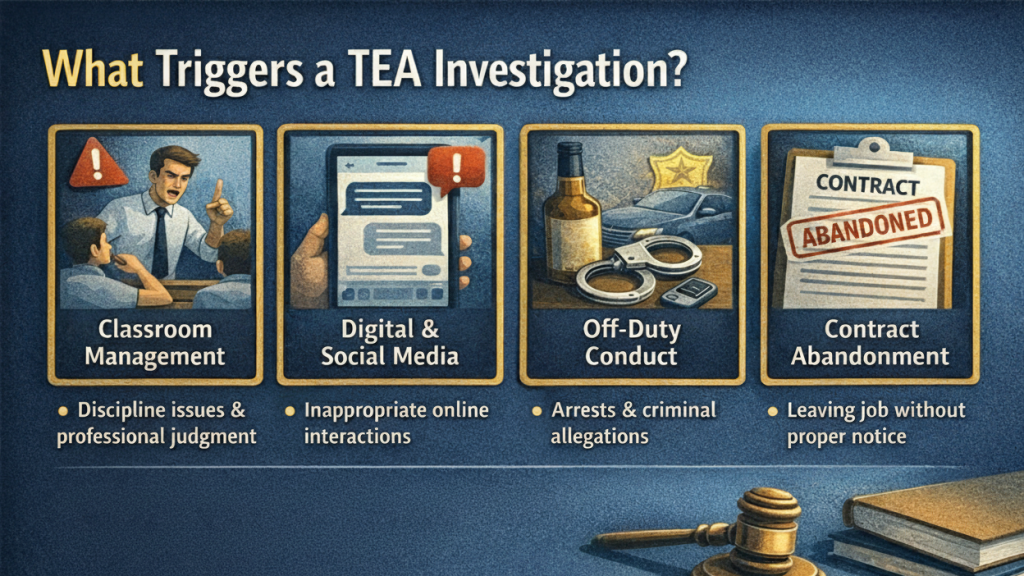
While every case is unique, allegations generally fall into four distinct categories. Recognizing where your situation fits is the first step in formulating a defense.

Classroom Management And Professional Judgment

These cases often stem from frustrations on both sides. A teacher raises their voice to quiet a rowdy class; a student misinterprets a joke; a physical intervention is required to break up a fight. Parents may file complaints alleging “verbal abuse” or “inappropriate physical contact.” While these incidents often do not involve criminal intent, the TEA views them through the lens of the educator’s duty to provide a safe environment.

Digital Boundaries And Social Media

This is the fastest-growing area of classroom misconduct allegations. An innocent comment on a former student’s athletic achievement, a direct message to a student-athlete about practice schedules, or even a private social media account that students discover can be flagged. The TEA strictly scrutinizes any communication between educators and students that occurs outside of approved district platforms.

Off-Duty Conduct And Criminal Allegations

Educators are held to a higher standard, even when they are not in the classroom. An arrest for Driving While Intoxicated (DWI), an allegation of assault (even a misdemeanor), or charges involving controlled substances automatically trigger mandatory reporting requirements for the educator. You do not need to be convicted to face revocation defense proceedings for your teaching certificate. The TEA can sanction you based solely on the conduct underlying the charge.

Contract Abandonment

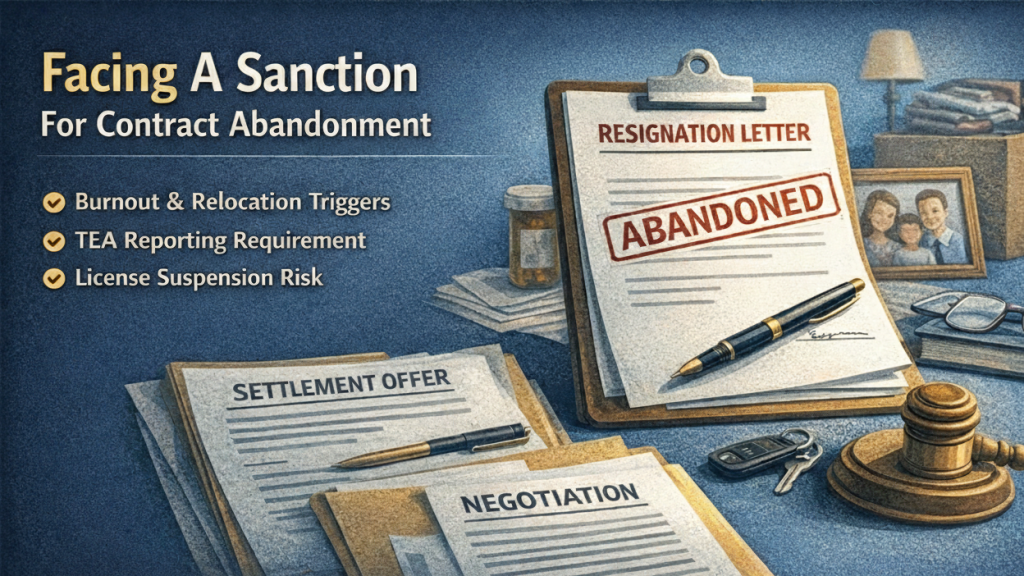
Amid a teacher shortage, the TEA has aggressively pursued sanctions against educators who leave their contracts without a valid release. This is a common pitfall for teachers who accept out-of-state positions or leave the profession mid-year due to health or family emergencies without following proper protocol.

Texas teacher license

Facing embezzlement allegations in Dallas Fort Worth can have serious personal and professional consequences, making early and experienced legal guidance essential. A skilled Federal Embezzlement Lawyer can help navigate complex investigations, protect your rights, and work toward minimizing penalties. By carefully analyzing evidence, advising on legal options, and negotiating strategically, you gain the best chance for a favorable outcome. Dealing with charges or a legal investigation can be overwhelming and stressful. L & L Law Group ensures you have a team devoted to defending your rights at every turn. Taking action promptly can make all the difference in safeguarding your future.

Facing embezzlement allegations in Dallas Fort Worth can have serious personal and professional consequences, making early and experienced legal guidance essential. A skilled Federal Embezzlement Lawyer can help navigate complex investigations, protect your rights, and work toward minimizing penalties. By carefully analyzing evidence, advising on legal options, and negotiating strategically, you gain the best chance for a favorable outcome. Dealing with charges or a legal investigation can be overwhelming and stressful. L & L Law Group ensures you have a team devoted to defending your rights at every turn. Taking action promptly can make all the difference in safeguarding your future.

The TEA Investigation and Sanction Process: A Roadmap

Navigating the administrative process without a guide is risky. Below is a table detailing the typical lifecycle of a TEA case. Missing a single deadline in this process can result in a default judgment against you.

Phase What Happens Why Legal Representation Matters

Complaint Intake

TEA receives a complaint (from a parent, administrator, or the public). Staff screen for jurisdiction.
Many complaints lack merit. An attorney can sometimes submit a preemptive response to discourage a formal investigation.

Formal Investigation

An investigator is assigned. You receive a letter requesting a written response (usually within 14-20 days).
Your written response sets the tone. A poorly worded apology can amount to an admission. Attorneys frame facts to negate intent or mitigate severity.

Preliminary Finding

TEA issues a “Proposed Sanction” or invites you to an Informal Settlement Conference (ISC).
The ISC is your only chance to speak directly with TEA staff. Counsel negotiates the specific sanction and presents mitigating evidence.

SOAH Hearing

If no settlement is reached, the case goes to the State Office of Administrative Hearings.
This is a formal trial. Rules of evidence and procedure apply. Cross-examination of TEA witnesses is critical.

Final Order

SBEC adopts a proposal; TEA issues a final order (Reprimand, Suspension, Revocation).
Attorneys ensure the final order contains accurate language, particularly if you intend to apply for licensure in another state.

The Danger Of Going It Alone

Many educators make the mistake of believing that if they simply explain their side of the story, the TEA will understand and close the case. They draft heartfelt letters that acknowledge mistakes and apologize profusely. While honesty is a virtue, in the context of a TEA investigation, this instinct can be devastating.

Statements like “I didn’t mean to hurt the student” or “I was just having a bad day” are treated as admissions of misconduct. Once you admit to the conduct, the only question left for the TEA is the punishment. This is why consulting a Texas Education Agency lawyer before you put pen to paper is essential. An attorney will help you exercise your right to remain silent while still cooperating with the investigation in a procedurally safe manner.

Defense Strategy: Mitigation, Context, And Rehabilitation

In administrative law, the goal is often not to prove “innocence” in the criminal sense, but to demonstrate that you do not pose a current or future threat to students. This is where a skilled defense shifts the narrative.

Contextualizing The Incident

Was there a lack of administrative support on your campus? Were you assigned a class with known behavioral challenges without adequate training? Did the district fail to follow its own student discipline policy? By presenting the full context, we can argue that while the incident was unfortunate, it was an isolated event driven by systemic failures, not moral turpitude.

Proactive Remediation

One of the most effective ways to mitigate a sanction is to show that you have already taken steps to improve. This might include completing continuing education courses on classroom management, attending ethics seminars, or undergoing counseling. Presenting this evidence to the TEA demonstrates professional growth and a commitment to the educator standards expected of Texas teachers.

Character And Reputation

We collect letters of recommendation not only from current principals but also from former supervisors, colleagues, parents of current and former students, and community members. A chorus of voices affirming your positive character and teaching ability can be powerful leverage during an Informal Settlement Conference.

The Collateral Consequences Of License Revocation

When educators focus solely on the immediate crisis, they often overlook the long-term fallout of a revoked teaching certificate.

  • Portability: Texas has reciprocity agreements with many states. If your teaching certificate is revoked for cause, you will likely be denied a Texas teaching license in those states as well.
  • Advanced Credentials: A sanction on your base teaching certificate can affect your ability to obtain or maintain a master teacher designation, an administrative certificate, or a counseling certificate.
  • Alternative Careers: Many teachers who leave the classroom transition to corporate training, educational consulting, or private tutoring. These employers conduct background checks that reveal TEA disciplinary actions, creating barriers to employment.

Why Attorneys With Criminal Defense Experience Are Essential?

There is significant overlap between the criminal justice system and the TEA disciplinary system. If your investigation stems from an arrest for instance, a DWI or a family violence allegation, you are essentially fighting two concurrent battles.

In the criminal court, the goal is to avoid a conviction. In the administrative arena, the goal is to avoid a Texas teaching license sanction, even if the criminal case results in deferred adjudication or dismissal. This requires a unified legal strategy. At L & L Law Group, our foundation is in Dallas criminal defense. We understand how to leverage the outcome of a criminal proceeding, speak to probation officers, and interpret police reports in a way that protects your professional standing. We bridge the gap between the courtroom and the boardroom.

Facing A Sanction For Contract Abandonment

Texas teacher license

A specific subset of TEA cases involves educators who leave their positions mid-contract. Often, these educators are suffering from severe burnout, family medical crises, or relocation for a spouse’s career. They assume that resigning is a private matter between them and their district.

It is not. Districts are required to report contract abandonments to the TEA, which can result in a one-year suspension of your teaching certificate or even revocation. In these cases, we negotiate directly with both the former district and the TEA to secure a “settlement agreement” or a “reprimand” rather than a suspension, allowing the educator to maintain their eligibility while they resolve their personal circumstances.

Protecting Your Livelihood

The moment you receive a certified letter from the Texas Education Agency, the clock starts ticking. You are not required to face this process alone, nor should you. Administrative law judges and TEA staff attorneys handle hundreds of these cases each year. You deserve representation that levels the playing field.

At L & L Law Group, we approach every educator’s case with the same principles we apply to our high-stakes criminal trials: dedication, compassion, and an unwavering commitment to our clients’ futures. We do not minimize the stress you are under. We understand that this investigation is not just about a teaching certificate. It is about your identity, your calling, and your family’s financial security.

We invite you to contact our firm for a confidential consultation. We will listen to your story, review the allegations against you, and map out a clear, strategic path forward. Whether you are navigating the early stages of an educator misconduct investigation or preparing for a formal hearing, we are ready to stand by your side. Your career is worth defending. Let us help you protect it.​

Frequently Asked Questions

What Are My Options If My Texas Teaching License Is Revoked?

If your Texas teaching license is revoked, you may be able to appeal the decision. A lawyer can assist with the appeals process or help secure a conditional license or probationary period.

How Long Does It Take For Tea To Process A License Defense Case?

The process can take several months, depending on the complexity of the case. It is important to act quickly and seek legal counsel early to expedite the process.

Can I Continue To Teach While My License Is Under Review?

Typically, teachers cannot work while their Texas teaching license is under review. However, certain exceptions may apply, depending on the circumstances and the defense strategy.

What Evidence Do I Need To Present To Defend My Teaching License?

The evidence required will depend on the allegations. Typically, teachers will need documentation, witness statements, and possibly expert testimony to support their case.

What Happens If I Lose My Texas Teaching License Defense Case?

If the case is lost, the teacher’s license may be revoked or suspended. However, in some cases, there may be opportunities to appeal or negotiate a lesser penalty.

Section Title

Simplifying Data Breach Liability Law And Your Legal Risks

In the current digital landscape, data breach liability law makes it clear that a breach is no...

What Impacts The Role Of DNA Evidence In Criminal Cases In Texas?

DNA evidence in criminal cases in Texas carries immense weight with modern juries, often viewed as...

Possession Of Prohibited Weapons In Texas: What You Need To Know?

Possession of prohibited weapons in Texas is taken very seriously under state law, even though Texas...

Tampering With Evidence Texas: Hidden Felony Risks And Defense Strategies

Facing accusations of tampering with evidence Texas can be overwhelming, especially when the...

Cryptocurrency Fraud Charges in Frisco, Texas: What You Need to Know?

The legal landscape is shifting as the cryptocurrency fraud charges Texas residents face become a...

Wire Fraud Charges In Texas: Risks, Penalties, And Defense Strategies

Facing wire fraud charges in Texas can feel like the world is crashing down around you. The...

Kidnapping Charges In Frisco, Texas: A Defense Lawyer’s Perspective

Facing kidnapping charges in Frisco is one of the most serious legal situations an individual can...

Capital Murder Charges In Frisco, Texas: A Defense Lawyer’s Guide To High-Stakes Cases

Capital murder charges in Texas represent the most serious legal category in the state’s judicial...

How To Get Frisco Family Violence Charges Dismissed Or Dropped?

Frisco Family Violence Charges can feel overwhelming from the moment an arrest happens in North...
Categories
Criminal Defense

Online Solicitation of a Minor Under 17

Blog

Online Solicitation of a Minor Under 17: Understanding U.S. Charges and Legal Consequences

Reggie London

Reggie London

The internet has transformed communication across the United States. Social media platforms, private messaging apps, online games, and digital forums allow people to connect instantly, often without verifying who they are speaking with. While this access creates convenience, it also exposes users to serious legal risks, especially when adults interact with minors online.

One of the most aggressively prosecuted internet crimes involving minors is online solicitation of a minor under 17. Federal and state lawmakers treat this offence as a major public safety concern. Law enforcement agencies devote significant resources to investigating online activity involving minors, and prosecutors routinely pursue charges even when no in-person meeting ever occurred.

Many individuals mistakenly believe that online conversations are protected speech or that criminal charges arise only when physical contact occurs. Under United States online solicitation laws, these assumptions are incorrect. Criminal liability may arise solely from digital communication when it shows sexual intent toward a person believed to be under the age of 17.

This article explains how online solicitation of a minor under 17 is defined under U.S. law, how federal and state online solicitation laws apply, how investigations unfold, and why the consequences often last a lifetime.

Online Solicitation of a Minor Under 17

What Online Solicitation of a Minor Means Under U.S. Law?

Online solicitation of a minor under 17 refers to using electronic communication to persuade, entice, or attempt to involve a child in sexual activity. The core issue is intent, not physical contact. Courts focus on what the accused intended to accomplish through the communication.

Messages exchanged through text, social media, emails, online gaming chats, or dating platforms may all qualify. The language does not need to be graphic. Courts often evaluate the entire conversation, including grooming behaviour, suggestive comments, and attempts to create secrecy or emotional dependency.

A key aspect of online solicitation laws is that the offence may exist even if the recipient was not actually a minor. If the accused believed they were communicating with someone under 17, solicitation of a minor charges may still apply. This legal principle allows prosecution in undercover sting operations conducted by law enforcement.

Why the Law Focuses on Minors Under 17?

Many people confuse solicitation laws with age-of-consent rules. These legal concepts serve different purposes. Age-of-consent laws govern physical sexual activity, while online solicitation laws are designed to prevent exploitation before physical contact occurs.

In many states, state solicitation laws specifically protect individuals under 17, even if consensual sexual activity may be legal at a younger age. Lawmakers recognize that digital environments create increased risks of manipulation, coercion, and grooming.

Courts consistently uphold these statutes, noting that minors are especially vulnerable in online settings. Consent, initiation, or willingness by a minor does not eliminate criminal liability in cases involving online solicitation of a minor under 17.

Federal Laws Governing Online Solicitation of a Minor

Because the internet is considered an interstate communication system, many cases involving online solicitation of a minor under 17 fall under federal jurisdiction. Even when both parties are located in the same state, using online platforms that operate across state lines can trigger federal online solicitation laws.

Federal statutes prohibit using electronic communication to entice or attempt to entice a minor into sexual activity. Prosecutors must generally prove that the accused knowingly used electronic means, believed the recipient was underage, and intended to engage in unlawful sexual conduct.

A critical feature of federal online solicitation laws is that attempted solicitation is treated the same as completed conduct. Courts have consistently ruled that waiting for physical harm defeats the preventive purpose of the statute. As a result, messages alone may support federal charges.

Federal investigations often involve extensive digital evidence, data from service providers, and coordination among multiple agencies.

State Laws and How They Apply?

While federal law plays a major role, many cases are prosecuted under state solicitation laws. Every U.S. state has enacted statutes addressing electronic sexual communication with minors, though terminology and penalties vary.

Some states classify online solicitation of a minor under 17 as a felony in all circumstances. Others allow misdemeanour charges in limited situations, such as minimal communication or small age differences. However, aggravating factors, such as graphic content, repeated messaging, or attempts to meet, often elevate charges.

Despite these differences, courts nationwide consistently emphasize deterrence and child protection when applying online solicitation penalties.

Online Solicitation of a Minor Under 17

What Prosecutors Must Prove?

To secure a conviction for online solicitation of a minor under 17, prosecutors must prove specific elements beyond a reasonable doubt. These generally include electronic communication, belief regarding the minor’s age, and sexual intent.

Intent is often inferred from conversation patterns rather than explicit language. Courts look at escalation, secrecy, and grooming behaviour. Even subtle conduct may satisfy the intent requirement under online solicitation laws.

Undercover Sting Operations and Decoy Accounts

Undercover sting operations are a common investigative tool in internet crimes involving minors. Law enforcement officers create decoy profiles posing as minors and monitor interactions with adults who initiate or pursue sexual conversations.

Courts have repeatedly upheld these operations as lawful. Simply providing an opportunity to commit a crime does not constitute misconduct. Entrapment defences rarely succeed unless law enforcement induces behaviour that would not otherwise occur.

When an accused initiates sexual conversation or continues after learning the purported age, solicitation of a minor charges are commonly sustained.

Criminal Penalties for Online Solicitation of a Minor

Online solicitation penalties are severe at both the federal and state levels. Federal convictions often lead to lengthy prison sentences followed by supervised release. State penalties may include incarceration, probation, fines, and mandatory treatment programs.

Judges consider several factors during sentencing, including the content of the message, the duration of the communication, prior history, and attempts to arrange meetings. Even first-time offenders may face felony convictions under online solicitation laws.

Courts may also impose strict internet-use restrictions as part of sentencing.

Legal Factor Federal Law State Law (General Overview)

Protected Age

Under 18
Commonly under 17

Charge Level

Felony
Felony or misdemeanour

Incarceration

Multi-year prison terms
Jail or prison

Registration

Mandatory
Often mandatory

Jurisdiction

Interstate or online
State-specific

Sex Offender Registration Requirements

A conviction for online solicitation of a minor under 17 often triggers sex offender registration requirements. Registration may last for decades or for life, depending on the jurisdiction and offence level.

Registered individuals must comply with strict reporting rules, residency limitations, and employment restrictions. Public registries frequently affect housing access and job opportunities, creating long-term consequences well beyond the original sentence.

Courts have consistently upheld sex offender registration requirements as a lawful public safety measure.

Online Solicitation of a Minor Under 17

Long-Term Consequences Beyond Sentencing

The collateral consequences of penalties for online solicitation often outweigh the penalties themselves. A permanent criminal record can affect employment, housing, education, and family relationships. Professional licenses may be revoked, and social stigma may persist indefinitely.

Family law consequences may also arise, including restrictions on custody or visitation. These effects underscore why online solicitation of a minor under 17 is considered among the most damaging criminal charges in the U.S. legal system.

  • Digital Evidence in Solicitation Cases

Digital evidence is central to prosecutions involving internet crimes involving minors. Investigators rely on chat logs, timestamps, IP addresses, device records, and metadata. Deleted messages may still be recovered through forensic analysis or service providers.

Courts generally admit digital evidence when properly authenticated, though challenges may arise regarding collection methods and constitutional protections.

  • Common Legal Defences

Defences to solicitation of a minor charges vary by case. Some involve disputes over intent or belief about age. Others challenge investigative procedures, the handling of digital evidence, or constitutional violations.

Each defence requires careful legal analysis of the communication and the methods used to obtain evidence.

  • Juveniles Accused of Online Solicitation

In certain cases, juveniles may face online solicitation of a minor under 17 allegations, particularly when messaging significantly younger minors. Juvenile court proceedings often emphasize rehabilitation, though serious cases may still result in substantial consequences.

  • False Allegations and Online Misinterpretation

False accusations may arise from misrepresented ages, shared devices, hacked accounts, or misunderstood conversations. Because online communication lacks tone, messages may be misinterpreted and escalated into criminal investigations.

Even unfounded allegations can lead to device seizures, interrogations, and reputational harm.

  • Responding to an Investigation

Anyone facing an investigation related to online solicitation laws should understand their constitutional rights. Deleting messages, discussing the matter publicly, or attempting to explain communications without guidance can increase legal exposure.

Conclusion

Online solicitation of a minor under 17 is one of the most serious internet crimes involving minors under U.S. law. Federal and state solicitation laws prioritize prevention, allowing prosecution based on intent and communication alone. The consequences, including incarceration, sex offender registration requirements, and lifelong collateral damage are severe and enduring.

Understanding how online solicitation laws operate is essential in today’s digital environment. Contact L & L Law Group for professional guidance. Awareness and caution remain the strongest safeguards against irreversible legal outcomes.

Frequently Asked Questions

Q1. Is A Physical Meeting Required For Online Solicitation Of A Minor Under 17 Charges?

No, a physical meeting is not required for charges involving online solicitation of a minor under 17 under U.S. law. Federal and state statutes focus on intent and communication, not physical contact. If prosecutors can show that an individual used electronic communication and intended to engage in sexual activity with someone believed to be under 17, charges may apply even if no meeting occurred. Courts have repeatedly upheld convictions based solely on messages, chats, or emails. The law is designed to prevent harm before it escalates into physical exploitation, which is why attempted or incomplete conduct is treated seriously.

Q2. Can Someone Be Charged If The “Minor” Was Actually An Undercover Police Officer?

Yes. Under U.S. law, a person can still face solicitation of a minor charges even if the recipient was an undercover law enforcement officer posing as a minor. What matters legally is the belief and intent of the accused, not the actual age of the recipient. Courts consistently rule that if an individual believed they were communicating with someone under 17 and engaged in sexual communication or attempted to entice that person, the crime is complete. This principle allows undercover sting operations to lawfully target and prosecute suspected offenders without involving real minors.

Q3. Does It Matter Who Initiated The Conversation In Online Solicitation Cases?

Generally, it does not matter who initiated the conversation. Even if a minor or decoy account sends the first message, criminal liability may still apply if the adult continues the interaction with sexual intent. Courts focus on how the conversation develops, not who started it. If the accused steers the communication toward sexual topics, requests explicit content, or attempts to arrange sexual activity after learning the person’s age, online solicitation laws may apply. Initiation alone rarely serves as a defence, especially when the accused had the opportunity to disengage but chose not to.

Q4. Are Online Solicitation Of A Minor Charges Always Classified As Felonies?

Not always, but many jurisdictions classify online solicitation of a minor under 17 as a felony, especially when aggravating factors are present. Federal charges are typically felonies with significant prison exposure. At the state level, some statutes allow misdemeanour charges in limited circumstances, such as brief communication or minimal age differences. However, repeated messaging, sexual language, image requests, or attempts to meet often elevate the offence to a felony. Even misdemeanour convictions can still trigger severe consequences, including sex offender registration requirements, depending on the state and case facts.

Q5. Does Age Misrepresentation By A Minor Eliminate Criminal Liability?

In most cases, age misrepresentation does not eliminate liability. U.S. courts focus on what the accused reasonably believed at the time of the communication. If the conversation included statements indicating the person was under 17, or if circumstances suggested minor status, prosecutors may still pursue charges. Even when a minor initially claims to be older, later references to being underage can override that claim. Courts consistently hold that individuals engaging in sexual communication online bear responsibility for verifying age and disengaging when uncertainty exists.

Categories
Criminal Defense

Legal Implications of Sexual Abuse of a Child

Blog

Understanding The Legal Implications Of Continuous Child Sexual Abuse (Under 14)

Reggie London

Reggie London

The continuous sexual abuse of a child under the age of 14 is one of the most serious criminal offenses under Texas law. This crime involves repeated sexual abuse over time, leaving the victim with long-lasting emotional and psychological trauma. In Texas, the offense is defined under Texas Penal Code Section 21.02 and carries severe penalties to protect vulnerable children and provide justice for victims.

The offense of continuous sexual abuse targets the perpetrator’s repeated actions against a child and focuses on protecting the rights and safety of minors. In this blog, we’ll explore what constitutes continuous sexual abuse of a child, the legal elements of the offense, the penalties for offenders, the importance of timely reporting, and the role of legal counsel in these sensitive cases. By understanding the legal framework surrounding this issue, parents, educators, and legal professionals can take steps to protect children and hold perpetrators accountable.

Sexual Abuse of a Child

What Constitutes Continuous Sexual Abuse of a Child?

In Texas, continuous sexual abuse of a child under the age of 14 is defined as repeated sexual offenses committed by an individual within a specific period of time, typically at least twice within a 30-day period. This law recognizes that repeated incidents of sexual abuse have a profound impact on the child’s well-being, and the law seeks to address the harm caused by ongoing trauma.

Legal Elements of the Offense

  • Age of the Victim: The victim must be under 14 at the time the offenses occur. This is a key component of the statute, as the law places special protections around minors in this age group, considering them incapable of consenting to sexual activity.
  • Pattern of Abuse: For the crime to qualify as continuous sexual abuse, the perpetrator must commit multiple offenses. The law requires that at least two acts of sexual abuse occur within a 30-day period, creating a pattern of behavior.
  • Sexual Act: Sexual abuse in this context can include acts such as sexual penetration, fondling, or any other inappropriate sexual conduct. The law doesn’t specify the exact nature of the sexual act, but it must be of a sexual nature.
  • Perpetrator’s Relationship to the Child: The perpetrator can be anyone who has access to the child. It could be a family member, teacher, caregiver, or another trusted individual.

Key Elements of Continuous Sexual Abuse of a Child Under 14

To better understand the legal structure surrounding the continuous sexual abuse of a child, we need to break down the key elements involved in this offense:

  • Child Victim’s Age: The law is specifically designed to protect children under 14. This is a critical distinction, as children in this age range are legally incapable of consenting to any form of sexual activity. This ensures they receive the highest level of protection under Texas law.
  • Pattern of Abuse: Unlike single instances of sexual abuse, continuous abuse involves a pattern of repeated offenses. The law requires two or more incidents of sexual abuse that take place over a span of 30 days or more. This continuous nature makes the offense more damaging and harder for the victim to heal from.
  • Sexual Acts Involved: The types of sexual acts can vary. Penetration, fondling, and exposure are just a few examples of the acts that may qualify under this statute. Importantly, the perpetrator need not commit the same act repeatedly, as long as the offenses meet the legal criteria.
  • Who Can Be the Perpetrator: The perpetrator may be anyone who has access to the child, including family members, caregivers, teachers, and even strangers. This broad scope highlights the vulnerability of children in various environments.

Penalties for Continuous Sexual Abuse of a Child Under 14

The penalties for continuous sexual abuse of a child under 14 are severe, reflecting the gravity of the crime and the long-term impact on the child. The Texas Penal Code imposes first-degree felony charges for those convicted of this offense, resulting in the following consequences:

Offense Penalty Additional Consequences

Continuous Sexual Abuse of a Child

25 to 99 years in prison or life imprisonment
Lifetime sex offender registration, parole ineligibility, mandatory counseling, permanent criminal record

Other Sexual Offenses Against Children

Varies from a second-degree felony to capital punishment, depending on the severity
Victim restitution, child protection services, and long-term psychological support
  • Prison Sentences: A conviction for continuous sexual abuse of a child can result in 25 to 99 years in prison, or even a life sentence. Given the long-term effects on the victim, the law imposes severe prison sentences to reflect the seriousness of the crime.
  • Lifetime Sex Offender Registration: One of the most significant consequences for the perpetrator is being required to register as a sex offender for life. This means the offender’s personal details, including their address, will be publicly accessible and subject to regular checks by law enforcement.
  • No Parole: In some cases, parole eligibility may be denied, meaning offenders must serve their full sentences before being considered for release.
  • Criminal Record: A conviction for continuous sexual abuse leaves a permanent criminal record, which significantly impacts the offender’s ability to gain employment, housing, or engage in relationships, especially with minors.
  • Permanent Impact on the Victim: The victim of sexual abuse may also face long-term effects, including psychological trauma, emotional distress, and social challenges. Texas law recognizes these devastating impacts and supports victims through recovery resources.

How to Prove Continuous Sexual Abuse of a Child?

Proving continuous sexual abuse is complex and requires a combination of evidence and testimony. Given the nature of the crime and the sensitive subject matter, it’s important to understand what evidence is necessary to secure a conviction.

  • Victim’s Testimony: Testimony from the victim plays a key role in these cases, though it’s important to note that the victim’s emotional state can make it difficult for them to testify. Child advocacy centers are often used to ensure the child feels safe during their testimony, and this often involves specially trained professionals questioning the child.
  • Forensic Evidence: Forensic evidence, including DNA testing, medical examinations, and photographic evidence, may also be critical in proving the abuse. Physical injuries or the presence of sexual fluids can strengthen the case.
  • Witness Testimonies: Other witnesses may include family members, teachers, or friends who have seen signs of abuse or heard the child’s disclosures. Their testimonies can corroborate the victim’s account.
  • Behavioral Evidence: In many cases, experts in child psychology may be called to testify about the effects of continuous abuse on the child’s mental health. Behavioral changes in the child can be important evidence, showing the emotional toll the abuse has had.

Legal Defenses in Continuous Sexual Abuse Cases

Defendants accused of continuous sexual abuse of a child may attempt to use legal defenses to fight the charges. While these cases often have compelling evidence, it’s important to understand the defenses that can be raised.

  • Lack of Evidence: One common defense is the lack of evidence to prove that the abuse occurred. The defense may argue that the victim’s testimony is unreliable or that there is insufficient forensic or physical evidence to support the claims.
  • False Allegations: The defendant may argue that the accusations are false. While false allegations are rare, they can occur. The defense may claim that the child or someone else fabricated the story for various reasons, such as family conflict.
  • Mistaken Identity: The defense may also argue that mistaken identity led to the wrongful accusation. This is more likely when the perpetrator is not someone close to the child.
  • Consent (Not Applicable): In Texas, children under 14 cannot legally consent to sexual activity, so consent is not a viable defense in these cases. This is critical, as the law recognizes the vulnerability of children in this age group.

Reporting Abuse of a Child

Reporting child sexual abuse is essential to ensuring that perpetrators are held accountable and that children are protected. In Texas, there are clear procedures for reporting suspected abuse, and it is important for everyone to be aware of their legal obligations.

  • Who Should Report: Teachers, doctors, social workers, and parents are among those required by law to report any suspicion of child sexual abuse. Texas law mandates that professionals working with children report suspected abuse to authorities immediately.
  • How to Report: Suspected abuse should be reported to the Texas Department of Family and Protective Services (DFPS) or local law enforcement. Texas has a 24-hour abuse hotline available for anyone who suspects a child is being abused.
  • What Happens After Reporting: Once the abuse is reported, the child protective services (CPS) and law enforcement will investigate the claims. If abuse is confirmed, the child may be removed from the situation to ensure their safety. The perpetrator will face legal consequences, and victim support services will be provided.

The Role of Child Protective Services (CPS)

Child Protective Services (CPS) plays a critical role in investigating and responding to sexual abuse of children in Texas. CPS is tasked with ensuring the safety and well-being of children who are victims of abuse, including continuous sexual abuse. When a report of child sexual abuse is made, CPS begins an investigation to determine whether the child is in immediate danger and to assess the overall safety of the child’s living environment.

  • CPS Responsibilities in Continuous Sexual Abuse Cases: Investigation and Safety Plans: CPS investigates allegations of sexual abuse by gathering evidence, interviewing the child, and speaking with family members or others who may have information. They work to ensure the child’s immediate safety and may implement a safety plan to prevent further abuse, which may include removing the child from the abuser’s home if necessary.
  • Collaboration with Law Enforcement: CPS works closely with local law enforcement agencies to ensure that any criminal aspects of the case are handled appropriately. If the abuse is confirmed, CPS may assist in gathering evidence for court, including coordinating with medical professionals for examinations and forensic interviews.
  • Victim Support Services: If abuse is confirmed, CPS will help connect the child and their family with support services, such as counseling, mental health care, and advocacy groups that specialize in helping victims of child sexual abuse. These services are essential for the child’s recovery and to address the emotional and psychological effects of the abuse.
  • Long-Term Supervision and Monitoring: Even after the child is removed from a harmful environment, CPS may continue to monitor their well-being, ensuring they are placed in a safe environment and receive necessary services. CPS also plays a role in family reunification or, if necessary, in placing the child in long-term foster care.

The Importance of Early Intervention and Prevention in Child Sexual Abuse

Preventing continuous sexual abuse of a child is a shared responsibility that requires the cooperation of parents, schools, communities, and law enforcement. Early intervention is critical in stopping abuse before it escalates and in protecting children from lasting trauma.

Education and Awareness

The first step in preventing child sexual abuse is educating both children and adults about the signs of abuse and the importance of boundaries. Children should be taught that their bodies belong to them and that they have the right to say “no” to inappropriate touch.

Parents and guardians should be informed about the risks, warning signs of abuse, and the importance of open communication with their children. Schools and community organizations can also play a vital role in raising awareness through programs that teach children about personal safety and empower them to speak up if something feels wrong.

Building Trusting Relationships

Creating an environment where children feel comfortable talking about anything, including sensitive issues like sexual abuse, can help identify concerns early on. If a child knows that they can approach a trusted adult without fear of judgment, it becomes easier for them to share any uncomfortable experiences.

Screening for Risk

Many sexual abuse cases involve perpetrators who are known to the child, such as family members, teachers, or caretakers. It’s important for communities, schools, and daycare centers to screen adults who interact with children and to ensure that those in positions of authority undergo background checks to reduce the risk of abuse.

Regular monitoring and assessments of family dynamics, especially in high-risk environments, can prevent abusive behavior from escalating. Teachers and counselors should also be trained to identify changes in a child’s behavior that could indicate abuse.


Sexual Abuse of a Child


Creating Safe Spaces

It’s essential to create safe spaces where children can go for help if they feel threatened. This includes safe spaces at school, in their community, and even at home. Every adult who interacts with a child must understand the importance of being approachable, trustworthy, and responsive to the child’s needs.

Intervention and Immediate Action

Early intervention can make a world of difference in preventing continuous sexual abuse. If abuse is suspected, it is crucial to act quickly. Delays in reporting or investigating allegations can lead to further harm. The earlier a child receives the help and protection they need, the better their chances are for recovery.

Conclusion

The continuous sexual abuse of a child under 14 is a devastating crime that can have lifelong consequences for the victim. Texas law recognizes the seriousness of this offense and imposes severe penalties to protect children and ensure justice is served. However, the legal consequences alone cannot undo the damage caused by such abuse. It is critical for both early intervention and prevention strategies to be in place to protect children from these heinous crimes.

If you suspect a child is being sexually abused, it is vital to report it immediately to Texas Child Protective Services (CPS) or local law enforcement. The sooner the abuse is reported, the sooner the child can be removed from harm’s way and provided with the necessary support for recovery.

Additionally, education, awareness, and the creation of safe environments for children can go a long way in preventing continuous sexual abuse before it starts. By working together, parents, schools, and communities can ensure that children are protected from sexual abuse and that offenders are held accountable for their actions.

If you or someone you know is dealing with the aftermath of sexual abuse, contacting L & L Law Group can navigate the legal process and begin the healing journey.

Frequently Asked Questions

Q1. What Constitutes Continuous Sexual Abuse Of A Child Under 14 In Texas?

Continuous sexual abuse of a child under 14 occurs when an individual commits at least two acts of sexual abuse against a child under the age of 14 within a 30-day period. The abuse can involve a variety of sexual acts, including penetration, fondling, or other forms of sexual misconduct. The key factor is the repetition of the abuse, which distinguishes it from isolated incidents. The offense is defined under Texas Penal Code Section 21.02, and those convicted face severe penalties, including long prison sentences and mandatory sex offender registration.

Q2. What Are The Penalties For Continuous Sexual Abuse Of A Child In Texas?

Individuals convicted of continuous sexual abuse of a child under 14 in Texas face 25 to 99 years in prison or even life imprisonment. This offense is classified as a first-degree felony. In addition to lengthy prison terms, convicted individuals must register as sex offenders for life, and they may be subject to parole ineligibility, depending on the case. These convictions also result in a permanent criminal record and may require the individual to undergo mandatory counseling and treatment.

Q3. How Can I Report Child Sexual Abuse In Texas?

Reporting child sexual abuse in Texas is mandatory for certain professionals, such as teachers, healthcare workers, and social workers. However, anyone who suspects a child is being sexually abused is encouraged to report it. Reports can be made to Texas Child Protective Services (CPS) or local law enforcement. The Texas Department of Family and Protective Services (DFPS) operates a 24/7 abuse hotline to report abuse. Once reported, CPS and law enforcement will investigate the claims and take appropriate action to protect the child.

Q4. What Legal Defenses Are Available In Continuous Sexual Abuse Cases?

While continuous sexual abuse of a child is a serious crime, there are several potential legal defenses available to the accused. These include:

  • Lack of evidence: The defense may argue that there is insufficient evidence to prove the abuse occurred or that the accused was the perpetrator.
  • False allegations: The defense might claim that the accusations were fabricated or that the defendant was wrongfully accused.
  • Mistaken identity: The accused may argue that they were misidentified as the perpetrator.

Consent: Although Texas law prohibits any sexual activity with children under 14, in some rare cases, the defense may attempt to argue the accused believed the victim was older than 14. However, this defense is generally not applicable in cases involving children under 14.

Q5. How Can The Victim’s Testimony Be Used In Continuous Sexual Abuse Cases?

In cases of continuous sexual abuse of a child, the victim’s testimony plays a crucial role in proving the abuse. However, because children may find it difficult to recount traumatic experiences, special care is taken when questioning the victim. Child advocacy centers are often used to provide a safe, supportive environment for the child to share their story. Expert witnesses, such as child psychologists, may also testify about the victim’s emotional and behavioral responses to the abuse, helping to corroborate their testimony.

Section Title

Simplifying Data Breach Liability Law And Your Legal Risks

In the current digital landscape, data breach liability law makes it clear that a breach is no...

What Impacts The Role Of DNA Evidence In Criminal Cases In Texas?

DNA evidence in criminal cases in Texas carries immense weight with modern juries, often viewed as...

Possession Of Prohibited Weapons In Texas: What You Need To Know?

Possession of prohibited weapons in Texas is taken very seriously under state law, even though Texas...

Tampering With Evidence Texas: Hidden Felony Risks And Defense Strategies

Facing accusations of tampering with evidence Texas can be overwhelming, especially when the...

Cryptocurrency Fraud Charges in Frisco, Texas: What You Need to Know?

The legal landscape is shifting as the cryptocurrency fraud charges Texas residents face become a...

Wire Fraud Charges In Texas: Risks, Penalties, And Defense Strategies

Facing wire fraud charges in Texas can feel like the world is crashing down around you. The...

Kidnapping Charges In Frisco, Texas: A Defense Lawyer’s Perspective

Facing kidnapping charges in Frisco is one of the most serious legal situations an individual can...

Capital Murder Charges In Frisco, Texas: A Defense Lawyer’s Guide To High-Stakes Cases

Capital murder charges in Texas represent the most serious legal category in the state’s judicial...

How To Get Frisco Family Violence Charges Dismissed Or Dropped?

Frisco Family Violence Charges can feel overwhelming from the moment an arrest happens in North...
Categories
Criminal Defense

Federal Conspiracy Lawyers Defend Conspiracy Cases

Blog

How Federal Conspiracy Lawyers Defend Conspiracy Cases?

Reggie London

Reggie London

Federal Conspiracy Lawyer

When someone is charged under federal conspiracy statutes, a federal conspiracy lawyer can be the difference in how the case unfolds in court, especially in Dallas Fort Worth, where federal courts handle serious conspiracy matters. Facing conspiracy charges under federal law involves complex legal standards, heavy penalties, and a unique set of procedures that differ significantly from Texas state conspiracy laws. This article explains how an experienced attorney develops effective defense strategies for federal conspiracy cases in the North Texas area.

What Is a Federal Conspiracy Charge?

A federal conspiracy charge typically arises when the government alleges that two or more people agreed to commit a crime and took some step toward accomplishing it. Under 18 U.S.C. § 371, prosecutors must show there was an agreement to violate federal law and an act in furtherance of that agreement. Unlike many state laws, federal prosecutors don’t need to prove the crime was actually completed for conspiracy liability to attach. 

In contrast, the Texas state conspiracy under Penal Code §15.02 requires agreement and an overt act toward committing a felony, but the penalties differ significantly from federal charges. Federal conspiracy covers broader categories, from drug trafficking conspiracies to wire fraud conspiracies, and often leads to harsher outcomes under the federal sentencing structure. 

Overview of Common Federal Conspiracy Offenses

Federal conspiracy charges cover a range of criminal activities, typically involving two or more individuals working together to commit unlawful acts. These charges can have severe consequences, including long prison sentences and hefty fines. In 2022, federal law enforcement made over 96,000 arrests for various criminal offenses. Below are some of the most common federal conspiracy charges:

Drug Trafficking Conspiracy

One of the most frequently prosecuted federal conspiracy offenses, this charge involves planning or conspiring to distribute or transport illegal drugs across state lines or internationally. These cases are subject to federal laws and are often treated with heightened scrutiny in court.

Conspiracy to Participate in Organized Crime

This charge applies to individuals conspiring to engage in activities linked to organized crime, such as racketeering, human trafficking, illegal gambling, or loan sharking. These conspiracies are usually large-scale operations with far-reaching criminal enterprises.

Fraud and Financial Scheme Conspiracy

Federal conspiracy charges are often filed against individuals involved in complex financial fraud schemes, including wire fraud, securities fraud, and bank fraud. These cases can carry strict deadlines for prosecution and require detailed evidence to build a solid defense.

Money Laundering Conspiracy

Money laundering conspiracy charges arise when individuals agree to conceal the source of illegally gained money through sophisticated financial transactions. This often includes the use of shell companies, offshore accounts, or other methods to disguise the true origin of the funds.

Terrorism-Related Conspiracy

This serious charge involves individuals conspiring to plan, promote, or carry out terrorist acts. These conspiracies may be politically or ideologically motivated, and federal authorities treat them with the highest level of priority and scrutiny.

Facing any of these charges can result in life-altering consequences, making it critical to seek immediate legal advice. An experienced federal conspiracy attorney can help navigate the complexities of the legal process and work to protect your rights.

Why Are Federal Conspiracy Cases Serious?

Federal conspiracy charges are treated with the utmost seriousness in Dallas Fort Worth, largely because they involve coordination among multiple individuals to commit criminal activity under federal law. 

Federal Conspiracy Lawyer

Unlike state charges, federal conspiracy cases often carry heavier penalties, broader investigative reach, and more complex legal standards. Federal prosecutors have significant resources at their disposal and pursue these cases rigorously, making the role of an experienced federal conspiracy lawyer essential for anyone facing such allegations in North Texas.

Penalties for Conspiracy Charges in Texas Under Federal Law

Under federal law, conspiracy charges involve an agreement between two or more people to commit an illegal act, even if the act was not completed. The penalties for conspiracy depend on the specific crime involved in the conspiracy. 

Conspiracy Type Penalty Range Fines Additional Consequences
Drug Conspiracy
5 years to life imprisonment
Up to $250,000 (individual), up to $500,000 (organization)
Restitution to victims, loss of civil rights
Violent Crime or Terrorism Conspiracy
5 years to life imprisonment
Up to $250,000
Restitution to victims, permanent criminal record
White-Collar Conspiracy (Fraud/Racketeering)
Several years, depending on the offense
Up to $250,000 (individual), up to $500,000 (organization)
Restitution to victims, fines for fraudulent activities
Organized Crime Conspiracy
Severe penalties, often life imprisonment
Up to $250,000
Heavy fines, restitution, and asset forfeiture

Defenses against conspiracy charges include arguing a lack of knowledge of the conspiracy or proving that the defendant withdrew from the conspiracy before the crime was carried out.

How a Federal Conspiracy Lawyer Handles Conspiracy Cases?

Federal conspiracy cases are often complex, and successfully defending against them requires strategic thinking and an in-depth understanding of the legal process. A skilled federal conspiracy lawyer plays a vital role at every stage, ensuring that every possible defense is pursued.

Key Steps in Building a Strong Defense for Federal Conspiracy Charges

Early Investigation Assessment

A strong defense begins with an early investigation. In the early stages, a federal conspiracy lawyer meticulously reviews critical elements such as:

  • Evidence the Government Plans to Present: Understanding the evidence that will be used against the defendant allows the defense to identify weaknesses and inconsistencies early on.
  • Existence of an Actual Agreement: The lawyer evaluates whether a genuine agreement to commit a crime truly existed or if the prosecution is relying on circumstantial evidence.
  • Details of Alleged Acts: Defense attorneys assess the acts claimed to have furthered the conspiracy, looking for evidence of coercion or alternative explanations that could cast doubt on the prosecution’s case.

The objective during this phase is to identify potential weaknesses in the government’s case, such as flaws in evidence collection, a lack of actual criminal intent, or whether the defendant was unfairly linked to the conspiracy. Early identification of these issues can prevent an escalation of charges and can also lay the groundwork for successful challenges later in the process.

Grand Jury and Indictment Stage

Federal conspiracy charges typically begin with a grand jury indictment. The indictment is a critical stage where a lawyer’s experience can make a significant difference. An experienced federal conspiracy lawyer can:

  • Scrutinize the indictment for any procedural flaws or insufficient evidence.
  • Identify errors or weaknesses in the way the conspiracy was framed.
  • Prepare challenge strategies to contest the charges, increasing the chances of favorable plea negotiations or even dismissal.

By identifying weaknesses in the indictment and filing motions early, a federal conspiracy lawyer can lay a solid foundation for challenging the prosecution’s case before it even reaches the trial phase.

Defense Strategies Used in Federal Conspiracy Cases

A federal conspiracy lawyer employs the following strategies to challenge the government’s case and protect a defendant’s rights.

Challenging the Government’s Proof

The prosecution must prove several elements to secure a conviction. A federal conspiracy lawyer can challenge the government’s proof on multiple fronts:

  • Genuine Agreement: A federal conspiracy lawyer may argue that there was no agreement or that the defendant was unaware of the plan to commit a crime. The defense can challenge whether the actions of the accused truly constituted participation in a criminal agreement.
  • Intent to Join the Conspiracy: Simply being in proximity to others involved in a conspiracy is not enough for conviction. A defense attorney will analyze whether the defendant’s actions demonstrate the intent to participate in the conspiracy. They will scrutinize evidence to show that the defendant had no intent to join the criminal act.
  • Evidence Reliability: Federal conspiracy lawyers challenge the legality of evidence collection. Evidence obtained through illegal means, such as improper surveillance or coercion, can be suppressed. For example, wiretap evidence or coercive statements may be inadmissible. If the evidence is based solely on unreliable testimony from co-conspirators, a lawyer will work to discredit this testimony and argue that it lacks corroboration or independent evidence. 

This rigorous examination of every element can lead to a reduction in charges, a favorable plea deal, or, in some cases, a complete dismissal of the case.

Plea Negotiations and Sentencing Options

While some cases may proceed to trial, many federal conspiracy lawyers recommend negotiating a plea deal to secure a more favorable outcome. Even in cases with strong evidence, plea agreements offer several advantages:

  • Charge Reductions: Defense lawyers can negotiate for reduced charges based on cooperation with the government or mitigating circumstances that show the defendant’s role was less severe than originally charged.
  • Alternative Sentencing: For eligible defendants, a federal conspiracy lawyer might negotiate for alternatives to incarceration, such as probation or home confinement, especially in cases involving first-time offenders or non-violent conspiracies.
  • Minimizing Collateral Consequences: A skilled lawyer ensures that the plea deal safeguards the client’s future rights, reducing the negative impacts of the conviction beyond just the prison sentence (e.g., maintaining employment, travel restrictions, etc.).

Federal sentencing guidelines are complicated, and penalties can be harsh—especially for crimes like drug conspiracies, fraud, or wire fraud. A lawyer experienced in federal sentencing laws will evaluate every option to tailor negotiation strategies to the specific circumstances of the case. The goal is to minimize penalties or, in the best-case scenario, avoid a conviction altogether.

Federal Conspiracy Lawyer

Maximizing a Defense Strategy

By combining rigorous challenges to the prosecution’s evidence with strategic plea negotiations, a federal conspiracy lawyer maximizes a client’s chances of achieving the best possible outcome. Whether that means reducing charges, securing alternative sentencing, or achieving dismissal altogether, a skilled lawyer ensures that the defense is positioned to protect the client’s rights and future.

This multi-faceted approach is critical in a field as complex as federal conspiracy law. By preparing early, challenging every element of the case, and pursuing the most favorable sentencing alternatives, a federal conspiracy lawyer helps clients navigate the challenges of facing such serious charges.

Conclusion

Facing federal conspiracy charges in the Dallas Fort Worth area carries serious consequences, from long prison terms to significant fines. L & L Law Group’s seasoned federal conspiracy lawyers understand federal procedures and work to safeguard your rights, whether negotiating plea agreements or preparing for trial. Navigating these allegations is difficult; connect with us to understand your options and get experienced legal support.

Frequently Asked Questions

Q1. What Is a Federal Conspiracy Charge?

A federal conspiracy charge occurs when two or more individuals are accused of collaborating to commit an illegal act, and the offense falls under federal jurisdiction. This typically involves violations of federal laws or activities that span across state lines, leading to federal authorities, such as the FBI or DEA, handling the case.

Q2. How Can You Defend Against a Federal Conspiracy Charge?

Successfully defending against a federal conspiracy charge can be difficult, but there are several potential defense strategies. These may include proving that you did not participate in the agreement to commit a crime, showing that there was no intent to act criminally, or challenging the reliability of the evidence presented by the prosecution. Additionally, a defense may argue that no overt act was taken to further the conspiracy or that the evidence is insufficient to establish a criminal conspiracy.

An experienced attorney also helps organize your financial documents, identify potential defenses, and strategize for the best possible outcome. Early legal guidance can significantly influence the trajectory of your case.

Q3. What Are the Penalties for Conspiracy Charges?

The penalties for federal conspiracy charges vary based on the nature of the crime. Sentences can differ depending on whether the conspiracy involved drug trafficking, terrorism, organized crime, or violent offenses. Convictions typically result in significant consequences, including lengthy prison sentences, substantial fines, and mandatory supervised release. Other factors, such as the defendant’s prior criminal record or cooperation with investigators, can also influence the severity of the sentence.

Q4. What Are Common Examples of Conspiracy Charges?

A frequent example of a conspiracy charge involves drug trafficking. For instance, if two or more people plan to distribute illegal substances, like cocaine or heroin, even if the drugs are never actually transported or sold, the mere agreement to commit the crime can lead to a conspiracy charge. 

Lawyers may also challenge improperly obtained evidence or highlight procedural errors during the investigation. The best defense depends on the facts of the case and the value of the property involved. A Federal Embezzlement Lawyer in Dallas Fort Worth evaluates all evidence, develops tailored strategies, and presents arguments to reduce charges or secure a favorable outcome.

Q5. How Can a Lawyer Assist with My Federal Conspiracy Case?

A skilled federal conspiracy lawyer can be a crucial asset in defending against federal conspiracy charges. With an in-depth understanding of federal law, they can evaluate the evidence against you, identify any weaknesses in the case, and craft a robust defense strategy. Having legal counsel ensures that you are well-supported throughout the legal process and helps you make informed decisions about your case.

Hiring an experienced Federal Embezzlement Lawyer early can help streamline proceedings, ensure proper documentation is provided, and guide clients through each stage efficiently while protecting their rights.

Section Title

Simplifying Data Breach Liability Law And Your Legal Risks

In the current digital landscape, data breach liability law makes it clear that a breach is no...

What Impacts The Role Of DNA Evidence In Criminal Cases In Texas?

DNA evidence in criminal cases in Texas carries immense weight with modern juries, often viewed as...

Possession Of Prohibited Weapons In Texas: What You Need To Know?

Possession of prohibited weapons in Texas is taken very seriously under state law, even though Texas...

Tampering With Evidence Texas: Hidden Felony Risks And Defense Strategies

Facing accusations of tampering with evidence Texas can be overwhelming, especially when the...

Cryptocurrency Fraud Charges in Frisco, Texas: What You Need to Know?

The legal landscape is shifting as the cryptocurrency fraud charges Texas residents face become a...

Wire Fraud Charges In Texas: Risks, Penalties, And Defense Strategies

Facing wire fraud charges in Texas can feel like the world is crashing down around you. The...

Kidnapping Charges In Frisco, Texas: A Defense Lawyer’s Perspective

Facing kidnapping charges in Frisco is one of the most serious legal situations an individual can...

Capital Murder Charges In Frisco, Texas: A Defense Lawyer’s Guide To High-Stakes Cases

Capital murder charges in Texas represent the most serious legal category in the state’s judicial...

How To Get Frisco Family Violence Charges Dismissed Or Dropped?

Frisco Family Violence Charges can feel overwhelming from the moment an arrest happens in North...
Categories
Criminal Defense

Improper relationship with a student in Texas

Blog

Improper Sexual Relationship With A Student Is A Big Issue: Legal & Ethical

Reggie London

Reggie London

Improper Sexual Relationship

Facing an accusation of an improper relationship with a student in Texas is a devastating experience. It is a moment that can shatter a career, destroy a reputation, and threaten personal freedom in an instant. The gravity of such an allegation cannot be overstated.

As a society, our primary duty is to protect the well-being and safety of children, a principle that underpins our educational system and laws. The trust placed in educators is immense, and any violation of that trust is a serious matter with profound consequences.

For the accused teacher, coach, or administrator, the path forward is fraught with peril. The moment an allegation surfaces, an educator faces not only the potential for criminal charges but also an investigation by the Texas Education Agency (TEA) that puts their teaching certificate and lifelong career at risk.

The legal landscape is complex, involving intricate statutes, aggressive prosecutions, and a court of public opinion that often rushes to judgment. In this highly charged environment, navigating the process alone is not an option. Securing experienced legal representation immediately is the most critical step an accused educator can take to protect their rights, their livelihood, and their future.

Understanding Texas Law On Improper Relationships Between Educators And Students

Texas law takes a particularly firm stance on sexual misconduct in schools, creating a specific legal framework designed to hold educators accountable and protect students from those in positions of authority.

Texas Penal Code 

The primary statute governing these cases is Texas Penal Code § 21.12, officially titled “Improper Relationship Between Educator and Student.” This law makes it a criminal offense for an employee of a public or private school to engage in any sexual contact, sexual intercourse, or deviate sexual intercourse with a student enrolled at the school where they work. It is crucial to understand that this law applies regardless of the student’s age. It covers all employees from teachers and coaches to principals and administrative staff. The core element is an educator-student relationship in which the educator holds authority and trust over the student. The law also explicitly prohibits soliciting sexual conduct or sending inappropriate electronic communications to a student.

Age Of Consent And Why It May Not Apply

A common point of confusion involves the age of consent in Texas, which is 17. Many people mistakenly believe that if a student is 17 or older, a relationship with them is legal. Under Texas Penal Code 21.12, this is absolutely not the case. The statute explicitly states that it is a defense to prosecution only if the educator is legally married to the student. The age of consent is irrelevant because the law recognizes the inherent power imbalance in an educator-student relationship. 

A teacher has authority over a student, including the ability to influence grades, provide recommendations, and serve as a mentor. The law’s purpose is to prevent the exploitation of this dynamic, ensuring that students are protected from those in power, even if they are technically old enough to consent to a relationship with someone else. This provision underscores the state’s commitment to maintaining professional boundaries and safeguarding the educational environment.

Why Does Texas Strictly Protect Students?

The severity of these laws is rooted in a fundamental societal value: protecting children and preserving public trust in our schools. Parents send their children to school each day expecting that they will be safe, nurtured, and taught in a professional environment. When an educator breaches that trust, it undermines the entire educational system.

The relationship between a teacher and a student is, by its very nature, unequal. Students, regardless of their age, look up to educators as mentors and authority figures. This power imbalance creates a significant risk of manipulation, coercion, and exploitation. Young people are vulnerable as they navigate their formative years, and the law recognizes that they must be shielded from those who might use their authority for personal gratification. 

Strong enforcement of these laws is essential to deter misconduct, hold wrongdoers accountable, and send a clear message that students’ safety and well-being are non-negotiable. However, the very strength of these laws and the public passion behind them also means that an accusation alone, even an unfounded one, can trigger a powerful and potentially unfair process. This is why a fair and thorough investigation that protects the rights of the accused is a critical component of justice.

Criminal Charges A Teacher May Face

Common Criminal Offenses

While Improper Relationship Between Educator and Student (Texas Penal Code 21.12) is the most specific charge, prosecutors may also file other, related offenses depending on the facts of the case. These can include:

  • Sexual Assault: If the student is under 17, or if the contact involved coercion or was without consent.
  • Indecency with a Child: This charge can apply to sexual contact with a child younger than 17, including inappropriate touching.
  • Online Solicitation of a Minor: If the initial inappropriate contact or communication occurred online or through electronic means.
  • Electronic Communication Violations: Sending explicit or sexually suggestive texts, images, or messages to a student can be a crime in itself, even if no physical contact ever occurred.

Potential Criminal Penalties

The penalties for these offenses are life-altering. A conviction almost always results in a felony record. Depending on the specific charge, potential consequences include:

  • Significant Prison Time: Sentences can range from state jail felonies (180 days to 2 years) to higher-level felonies carrying decades in prison.
  • Substantial Fines: Thousands of dollars in court-ordered fines.
  • Mandatory Sex Offender Registration: This is one of the most severe consequences, requiring an individual to register as a sex offender for years or for life, severely restricting where they can live and work.
  • Long-Term Collateral Consequences: A felony conviction can affect voting rights, the ability to own firearms, and future employment opportunities far beyond education.

TEA Administrative Proceedings And License Risk

Simultaneously with any criminal investigation, the accused educator faces a separate but equally threatening process overseen by the Texas Education Agency (TEA).

How TEA Investigations Begin?

The moment a school district becomes aware of an allegation, they have a mandatory duty to report it to the TEA. Typically, the educator is immediately placed on administrative leave. The TEA then opens its own investigation, which runs parallel to any criminal probe. 

This administrative process is separate from the criminal courts and has its own rules, timelines, and potential punishments. The TEA investigator will gather evidence, interview witnesses, and build a case to determine if the educator violated the state’s educator code of ethics.

Possible Certification Consequences

The TEA’s primary authority is over an educator’s teaching certificate. The potential outcomes of their investigation can be career-ending:

  • Suspension: A temporary revocation of the license, often for a set period.
  • Revocation: A permanent cancellation of the teaching certificate, ending the educator’s career in Texas public schools forever.
  • Probation: The educator may keep their license but will be under strict monitoring for a period.
  • Reprimand: A formal, public statement of wrongdoing that remains on their record.

A license revocation is a permanent scar on an educator’s professional record, effectively blacklisting them from any school district in the state and often from other states as well.

Criminal Case vs. TEA Administrative Action: A Comparison

It is vital for an accused educator to understand that they are fighting two separate battles. They operate under different rules and standards, as outlined in the table below.

Category Criminal Court TEA Process
Who Initiates
District Attorney (DA)
Texas Education Agency (TEA)
Burden of Proof
Beyond a Reasonable Doubt
Preponderance of the Evidence
Potential Penalties
Jail/Prison, Fines, Sex Offender Registration
License Suspension, Revocation, Probation
Timeline
Can take many months or years to resolve
Often moves faster than the criminal case
Career Impact
Severe, often permanent
Potentially permanent and career-defining

Common Defense Strategies In Educator Misconduct Cases

Every case is unique, and the specific defense strategy will depend on the facts. However, several common themes often emerge in the defense of educators facing these allegations.

False Allegations

Unfortunately, false allegations do occur. A student may fabricate a story out of anger over a bad grade, a desire for attention, pressure from a parent, or as an act of rebellion. In these cases, the defense focuses on uncovering the motive for the lie and presenting evidence that contradicts the accusation.

Insufficient Or Inconsistent Evidence

The burden of proof rests with the prosecution or the TEA. A skilled Texas educator misconduct defense lawyer will meticulously examine the evidence for weaknesses, such as inconsistent statements by the accuser, a lack of corroborating witnesses, or gaps in the timeline that create reasonable doubt.

Misinterpreted Digital Communication

In the age of texting and social media, a significant number of cases hinge on digital messages. A friendly or supportive comment can be twisted and taken out of context to appear romantic or sexual. A defense attorney can work with forensic analysts to present the full context of a communication history, showing that an isolated message was part of a larger, appropriate conversation.

Lack Of Required Criminal Elements

Sometimes, the facts simply do not meet the legal definition of the crime. For example, for a charge under Texas Penal Code 21.12, the state must prove the accused was an “educator” as defined by law and that the other person was a “student” enrolled in the same school district. A careful legal review may reveal that these technical elements cannot be proven.

Digital Evidence And Modern Investigations

Today, nearly every investigation into educator misconduct involves a deep dive into digital evidence. Text messages, WhatsApp conversations, direct messages on social media platforms like Instagram or Snapchat, and email records are often the primary sources of evidence.

This digital footprint can be a double-edged sword. It can provide the evidence needed to prove innocence, such as a timeline showing the educator was not where the accuser claimed. However, it can also be a source of damaging, misleading, or misinterpreted information. Metadata, which provides information about the data (such as timestamps and locations), can be critical for authentication. A defense attorney may challenge the admissibility of digital evidence if it was obtained through an unlawful search by the school or law enforcement, violating the defendant’s Fourth Amendment rights. A thorough, independent forensic review of all digital evidence is often essential to building a strong defense.

What To Do Immediately If Accused?

If you are an educator who has been accused of an improper relationship with a student, the steps you take in the first few hours and days are critical. Your actions can have a profound impact on the outcome of your case.

  • Do Not Speak to Anyone Without an Attorney: This is the most important rule. Politely but firmly decline to answer questions from police, school administrators, or TEA investigators until your lawyer is present. You have the right to remain silent, and exercising that right is not an admission of guilt.
  • Do Not Contact the Student or Their Family: Any attempt to contact them will be perceived as witness tampering or intimidation, making your situation far worse.
  • Preserve All Communications: Do not delete any texts, emails, or social media messages. Deletion can be seen as destroying evidence. Save everything so your attorney can review it.
  • Avoid Social Media: Do not post anything about the case, your job, or your personal life. Assume that everything you post will be seen by investigators and used against you.
  • Hire an Experienced Criminal Defense Attorney for Educators Immediately: You need a lawyer who understands the unique intersection of criminal law and TEA administrative proceedings. They can guide you through the process, protect your rights, and begin building your defense from day one.

Balancing Child Protection And Due Process

It is possible, and necessary, to hold two truths simultaneously: we must have zero tolerance for adults who exploit and harm children, and we must ensure that every individual accused of a crime receives a fair process. The principle of due process, the right to be heard, to confront one’s accuser, and to present a defense is a cornerstone of American justice.

A rushed investigation that presumes guilt from the start serves no one. It fails to uncover the truth, can destroy the career of an innocent person, and ultimately undermines public confidence in the justice system. When false allegations are not thoroughly investigated and exposed, it can also trivialize the very real suffering of genuine victims. A careful, meticulous, and fair investigation is the only way to ensure that the truth emerges and that justice is served for all parties involved.

Long-Term Professional And Personal Consequences

Even if an educator is ultimately cleared, the accusation itself can leave lasting scars. The stigma of an improper relationship charge can follow a person for the rest of their life. A professional reputation built over many years can be irreparably damaged. The case may attract local media attention, leading to public humiliation for the educator and their family.
There are also significant personal consequences. The emotional toll of facing a criminal investigation and the potential loss of a cherished career is immense. It can lead to severe anxiety, depression, and strain on marriages and family relationships. Even after a case is resolved, finding new employment outside of education can be challenging, as many employers conduct background checks and may be hesitant to hire someone with this type of allegation in their past. The financial burden of legal fees and the potential loss of income only compound the stress.

Improper Sexual Relationship

Conclusion

An accusation of an improper relationship with a student in Texas is a life-altering event. It triggers a complex, high-stakes legal battle with the potential to send you to prison, brand you as a sex offender, and permanently end your career. The laws are strict for a vital reason: to protect students and preserve the integrity of our schools. This commitment to child safety must always be the paramount concern.

However, within this system, every accused educator retains the fundamental right to a defense. They have the right to be heard, to have the evidence against them scrutinized, and to have their side of the story told. If you or someone you know is facing this situation, the time to act is now. Do not wait and hope the problem will go away. The legal and administrative processes are already in motion. Contact a qualified attorney who focuses on defending educators immediately. Your career, your freedom, and your future depend on having a dedicated advocate in your corner to fight for a just outcome.

Check L&L LawGroup for more info.

Frequently Asked Questions

Q1. Can I Be Charged If The Student Is 17?

Yes. Under the Texas Penal Code improper relationship statute, an educator’s authority can override the general age of consent rule. Even if a student is legally 17, prosecution may still occur if the statutory elements are satisfied.

Q2. Will I Automatically Lose My Teaching License?

No. TEA conducts an independent review. However, certification is at serious risk. A strong TEA certificate revocation defense strategy is essential to protect your career.

Q3. Can Text Messages Alone Lead To Charges?

Yes. Inappropriate electronic communication may support criminal charges if it meets statutory definitions. Context and intent are critical factors.

Q4. Should I Resign During The Investigation?

You should not resign without legal advice. Employment decisions can affect both criminal and administrative proceedings.

Q5. What If The Accusations Are False?

False accusations require aggressive legal defense. Investigating inconsistencies, examining motives, and challenging weak evidence can be critical in protecting your rights.

Section Title

Simplifying Data Breach Liability Law And Your Legal Risks

In the current digital landscape, data breach liability law makes it clear that a breach is no...

What Impacts The Role Of DNA Evidence In Criminal Cases In Texas?

DNA evidence in criminal cases in Texas carries immense weight with modern juries, often viewed as...

Possession Of Prohibited Weapons In Texas: What You Need To Know?

Possession of prohibited weapons in Texas is taken very seriously under state law, even though Texas...

Tampering With Evidence Texas: Hidden Felony Risks And Defense Strategies

Facing accusations of tampering with evidence Texas can be overwhelming, especially when the...

Cryptocurrency Fraud Charges in Frisco, Texas: What You Need to Know?

The legal landscape is shifting as the cryptocurrency fraud charges Texas residents face become a...

Wire Fraud Charges In Texas: Risks, Penalties, And Defense Strategies

Facing wire fraud charges in Texas can feel like the world is crashing down around you. The...

Kidnapping Charges In Frisco, Texas: A Defense Lawyer’s Perspective

Facing kidnapping charges in Frisco is one of the most serious legal situations an individual can...

Capital Murder Charges In Frisco, Texas: A Defense Lawyer’s Guide To High-Stakes Cases

Capital murder charges in Texas represent the most serious legal category in the state’s judicial...

How To Get Frisco Family Violence Charges Dismissed Or Dropped?

Frisco Family Violence Charges can feel overwhelming from the moment an arrest happens in North...
Categories
Criminal Defense

Teacher License Defense Texas for Educators

Blog

Protect Your Texas Education Agency Teacher License With Effective Defense

Reggie London

Reggie London

Protect Your Texas Education Agency Teacher License With Effective Defense

In Texas, a teacher’s license is far more than just a credential, and it’s the cornerstone of their career. It is a professional validation that ensures they meet the qualifications to educate and inspire students. The Texas Education Agency (TEA) is tasked with regulating the education system, including issuing and overseeing teacher licenses. However, this license is not permanent, and teachers must remain in good standing with the TEA to retain their credentials.

For teachers, facing allegations or investigations that threaten the validity of their license can be a daunting experience. Whether it’s related to criminal accusations, professional misconduct, or failure to meet continuing education requirements, the consequences can be devastating, potentially ending a teacher’s career. When this happens, it’s crucial to understand how to protect your license and defend yourself effectively.

This blog will explore the various aspects of the Texas Education Agency teacher license defense, helping educators understand the process, common causes of license suspension or revocation, and actionable steps they can take to defend their license and secure their future in education.

The Role of the Texas Education Agency in Teacher Licensure

The Texas Education Agency (TEA) is the state’s governing body for all public education, and one of its key responsibilities is overseeing teacher licensure and certification. The TEA’s role includes regulating teacher standards, investigating potential violations, and taking appropriate action when necessary. The agency ensures that teachers adhere to the state’s educational standards and ethical guidelines, which are vital for maintaining the quality of education in Texas.

TEA’s Jurisdiction Over Teacher Licensure

The TEA grants teaching licenses to qualified individuals who meet the state’s educational and professional requirements. Once issued, the agency continues to monitor teachers through periodic evaluations, continuing education requirements, and background checks. If any allegations of misconduct, criminal behavior, or ethical violations arise, the TEA has the authority to suspend, revoke, or place restrictions on a teacher’s certification.

The TEA’s regulations require all teachers to comply with professional conduct standards, complete ongoing education, and avoid actions that could compromise their ability to teach. Teachers who fail to adhere to these standards risk license suspension or revocation.

Licensing Process and Renewals

Obtaining a teaching license in Texas is a rigorous process. To become licensed, teachers must:

  • Complete the required educational programs (typically a bachelor’s degree in education or a related field).
  • Pass the necessary certification exams (e.g., Texas Examinations of Educator Standards or TExES).
  • Undergo a background check and fingerprinting.

Once a teacher is licensed, they must meet specific continuing education requirements to maintain their certification. Every five years, teachers must complete continuing professional education (CPE) to renew their license. Failure to do so can result in a license hold, suspension, or even revocation.

Common Causes For Teacher License Suspension or Revocation

A teacher’s license can be suspended or revoked for various reasons. While some of these causes are straightforward, others may involve nuances in professional conduct, legal boundaries, or ethical expectations. Below are some of the most common causes for TEA teacher license suspension or revocation.

Criminal Offenses

Teachers must maintain a clean criminal record to ensure their license remains intact. Criminal offenses such as drug-related crimes, violent behavior, or sexual misconduct can lead to immediate suspension or revocation. In Texas, all teachers are required to undergo background checks, and any criminal convictions, whether related to their teaching or personal life, may disqualify them from maintaining their teaching credentials.

If a teacher is convicted of a serious criminal offense, such as child abuse, assault, or fraud, it is almost certain that the TEA will initiate an investigation. Even less serious offenses that compromise the profession’s integrity can trigger disciplinary action.

Professional Misconduct

The TEA Code of Ethics establishes clear guidelines for professional behavior. Teachers are expected to model respect, integrity, and appropriate conduct at all times. Professional misconduct includes actions such as:

  • Harassment or abuse of students, colleagues, or parents.
  • Sexual misconduct or inappropriate relationships with students.
  • Dishonesty, such as falsifying student records or grades.

Inappropriate behavior, even if it is isolated or unintentional, can result in disciplinary proceedings by the TEA. Any allegations of misconduct are taken seriously, and teachers found guilty may face severe penalties, including suspension or revocation of their licenses.

Teacher License Defense Texas

Failure to Meet Continuing Education Requirements

Texas requires teachers to complete continuing education courses to renew their teaching licenses. This ensures that teachers stay up to date on new teaching methodologies, state regulations, and educational practices. Teachers are expected to complete a set number of continuing professional education (CPE) hours every five years.

Failure to meet these requirements can prevent a teacher from renewing their license. In some cases, if a teacher fails to complete the required CPE hours, the TEA may place a hold on their license or suspend it until they demonstrate compliance.

Ethical Violations

Teachers must adhere to the TEA Code of Ethics, which outlines the professional conduct expected of educators. Violations of this code, such as fraud, discrimination, or misuse of student data, can lead to suspension or revocation of a teacher’s license. Teachers who are found guilty of ethical violations may be required to undergo corrective measures or additional training, but in more severe cases, they may face a complete loss of certification.

Examples of ethical violations include:

  • Falsifying student records or attendance.
  • Discriminatory behavior against students or staff based on race, gender, or other factors.
  • Failure to report abuse or misconduct committed by other educators.

Non-Compliance with TEA Regulations

In addition to adhering to ethical standards, teachers must comply with TEA regulations regarding classroom management, documentation, and administrative duties. Teachers who fail to comply with state guidelines, whether it’s missing paperwork deadlines, refusing to follow mandated curriculum, or engaging in unauthorized classroom activities, may face disciplinary action from the TEA.

Steps to Take If Your Texas Teacher License Is at Risk

Take Immediate Action

If your TEA teacher license is under investigation, you must act quickly. Ignoring the issue or delaying a response can lead to more severe consequences. The first step is to contact a qualified attorney who specializes in education law. They can provide guidance on next steps and help protect your professional reputation.

Review the Allegations

Once you are notified of an investigation, you must thoroughly review the allegations against you. The TEA will outline the accusations, provide any evidence they have gathered, and inform you of the potential consequences. It’s important to understand the specifics of the case, as this will inform the defense strategy your attorney develops for you.

Gather Evidence

An essential part of defending your Texas teacher license is gathering evidence that supports your case. This can include:

  • Character references from colleagues or supervisors.
  • Documentation proving compliance with professional standards or continuing education.
  • Witness testimony that supports your version of events or disputes the allegations.

Collecting evidence will help you build a strong defense and demonstrate to the TEA that you are a responsible and professional educator.

Respond to the TEA Investigation

After gathering all relevant evidence, it’s time to respond formally to the TEA’s investigation. This is where your attorney will help you present your case, showing that the allegations are either incorrect or exaggerated. You can challenge the evidence, question the credibility of witnesses, or present counterarguments to mitigate the situation.

Prepare for a Hearing

If the case escalates to a hearing, you will have the opportunity to present your defense in front of the TEA panel or an administrative judge. This is an important stage, as the outcome of the hearing can determine whether your license is suspended, revoked, or upheld. Your lawyer will represent you at the hearing, cross-examine witnesses, and present evidence that supports your defense.

Defending Your Teacher License: Legal Strategies

Challenge the Evidence

One of the most effective strategies in defending your TEA teacher license is challenging the evidence against you. Your attorney will analyze the evidence provided by the TEA to identify inconsistencies or weaknesses in the case. For instance, witness testimony may be biased or conflicting, or physical evidence may not be as conclusive as it seems.

Proving Rehabilitation

If the case involves a past violation of conduct, you may be able to demonstrate rehabilitation. For example, if you were involved in an ethical violation or criminal case in the past, showing that you have taken corrective actions, such as attending counseling, engaging in community service, or completing professional development courses, can be a strong defense.

Negotiating Settlements

In some cases, it may be possible to negotiate a settlement with the TEA rather than proceed to a full hearing. Settlements often involve agreeing to certain conditions, such as probation or additional training, in exchange for retaining your license. This can be an effective strategy if the evidence against you is strong, but you still want to avoid a full revocation.

Presenting Character References

Strong character references from colleagues, principals, or professional peers can help show that you are a dedicated and ethical educator. References from others who vouch for your character and work ethic can mitigate the effects of any isolated incidents.

Case Studies: Real-Life Teacher License Defense Examples

Case Study 1: Criminal Allegations Dismissed

A teacher in Texas faced criminal allegations involving an incident unrelated to their teaching role. The teacher worked with their legal defense team to gather evidence, present a clear record of good professional conduct, and demonstrate that the charges had no bearing on their ability to teach. As a result, the TEA dismissed the allegations, and the teacher retained their license.

Case Study 2: Ethical Violation and Rehabilitation

A teacher was accused of ethical violations involving improper conduct with students. However, the teacher took immediate action by enrolling in professional development programs, attending counseling, and seeking support to improve behavior. After reviewing this evidence, the TEA decided to suspend the teacher’s license for a short period and allowed the teacher to return to work after completing the rehabilitation process.

The Importance of Preventive Measures: How to Protect Your Teacher License

Stay Up to Date with Continuing Education

One of the simplest ways to protect your TEA teacher license is by completing the required continuing education. Teachers must ensure they complete the required number of professional development hours to avoid suspension or revocation.

Follow Ethical Guidelines

Adhering to the TEA Code of Ethics is essential for maintaining your license. Teachers should be proactive in maintaining professional relationships and in avoiding situations that could lead to allegations of misconduct.

Maintain Accurate Documentation

Keeping detailed records of classroom activities, student communications, and professional development courses can help protect you during an investigation.

Teacher License Defense Texas

Common Reasons for Teacher License Suspension or Revocation in Texas

Reason Impact on License Defensive Action
Criminal Offenses (e.g., drug-related)
Immediate Suspension/Revocation
Legal Defense and Rehabilitation
Unprofessional Conduct (e.g., abuse)
Investigation, Possible Revocation
Evidence of Corrective Action
Failure to Complete Required CE
Probation or License Hold
Completing Required Continuing Ed
Non-compliance with TEA Guidelines
Suspension or Revocation
Appeal and Compliance Demonstration

Conclusion

Defending your Texas Education Agency (TEA) teacher license is an essential step in safeguarding your career in education. Whether you’re facing allegations related to criminal offenses, professional misconduct, or failure to meet continuing education requirements, the consequences of losing your license can be severe and life-altering. However, it’s important to remember that every teacher has the right to a fair defense. By understanding the process, seeking expert legal representation, and following the proper steps, you can protect your ability to continue teaching and positively influencing students.

Taking immediate action is key. Contacting a skilled education law attorney as soon as possible can make all the difference. A knowledgeable lawyer can help you navigate the complex legal system, challenge any false evidence, and present a solid defense to retain your teaching credentials. Additionally, adhering to professional standards and proactively meeting required standards will reduce the risk of facing allegations.

Contact L & L Law Group for a consultation to protect your teacher’s license and continue your career with confidence!

Frequently Asked Questions

What Should I Do If My Texas Teaching License Is At Risk?

If your Texas teaching license is under threat, the first step is to seek legal advice immediately. Contact a lawyer who specializes in Texas Education Agency (TEA) teacher license defense. They will help you understand the specific allegations, gather evidence, and build a solid defense strategy to protect your career.

What Are The Common Reasons For Teacher License Suspension Or Revocation In Texas?

The most common reasons for TEA teacher license suspension or revocation include criminal offenses (e.g., drug-related crimes or assault), unprofessional conduct (e.g., abuse or unethical behavior), failure to complete continuing education requirements, and violations of the TEA Code of Ethics.

How Can I Defend My Texas Teaching License From Revocation Or Suspension?

To defend your license, you can challenge the evidence presented by the TEA, prove rehabilitation if applicable, negotiate a settlement, or present character references. An experienced education law attorney will help you navigate the legal process and use the most effective defense strategies for your case.

Can I Continue Teaching While My License Is Under Investigation?

In some cases, you may be allowed to continue teaching while your TEA teacher license is under investigation, depending on the nature of the allegations and whether your license is suspended temporarily. It’s crucial to consult with a lawyer to understand your rights and the TEA’s decision.

How Can I Prevent Issues With My Texas Teacher License?

To prevent issues with your license, ensure you meet all TEA requirements, including completing your continuing education on time, adhering to professional ethical standards, and maintaining accurate documentation. Staying informed on TEA regulations and avoiding any conduct that could be deemed unprofessional or unethical will help protect your license.

Section Title

Simplifying Data Breach Liability Law And Your Legal Risks

In the current digital landscape, data breach liability law makes it clear that a breach is no...

What Impacts The Role Of DNA Evidence In Criminal Cases In Texas?

DNA evidence in criminal cases in Texas carries immense weight with modern juries, often viewed as...

Possession Of Prohibited Weapons In Texas: What You Need To Know?

Possession of prohibited weapons in Texas is taken very seriously under state law, even though Texas...

Tampering With Evidence Texas: Hidden Felony Risks And Defense Strategies

Facing accusations of tampering with evidence Texas can be overwhelming, especially when the...

Cryptocurrency Fraud Charges in Frisco, Texas: What You Need to Know?

The legal landscape is shifting as the cryptocurrency fraud charges Texas residents face become a...

Wire Fraud Charges In Texas: Risks, Penalties, And Defense Strategies

Facing wire fraud charges in Texas can feel like the world is crashing down around you. The...

Kidnapping Charges In Frisco, Texas: A Defense Lawyer’s Perspective

Facing kidnapping charges in Frisco is one of the most serious legal situations an individual can...

Capital Murder Charges In Frisco, Texas: A Defense Lawyer’s Guide To High-Stakes Cases

Capital murder charges in Texas represent the most serious legal category in the state’s judicial...

How To Get Frisco Family Violence Charges Dismissed Or Dropped?

Frisco Family Violence Charges can feel overwhelming from the moment an arrest happens in North...