

Categories
Criminal Defense

Simplifying Data Breach Liability Law And Your Legal Risks

Blog

Simplifying Data Breach Liability Law And Your Legal Risks

Reggie London

Reggie London

Data breach liability law

In the current digital landscape, data breach liability law makes it clear that a breach is no longer a question of “if,” but “when.” For businesses operating in the Lone Star State, the legal fallout from a security incident can be more damaging than the technical hack itself.  Data breach liability can get complicated, and it’s not something your IT team should handle alone. It requires a sophisticated legal shield to protect your company from crippling litigation and regulatory fines. 

When a data breach occurs, you must act quickly to meet legal requirements. Failure to respond within the strict windows mandated by Texas law can escalate a manageable incident into a corporate catastrophe. This is where a data breach defense lawyer becomes indispensable.

At L&L Law Group, we provide the aggressive corporate data breach defense attorney services necessary to mitigate risk and defend your organization’s future.

Understanding Data Breach Liability Law

What is data breach liability law? Simply put, it is the set of rules that says you are responsible for the data you collect. If you keep names, credit card numbers, or social security numbers, you must keep them safe. When a leak happens, the law asks if you did enough to prevent it.

Many different statutes fall under the umbrella of data breach liability law. For example, medical offices must follow HIPAA. Retail stores must follow credit card standards. Texas also has its own specific identity theft laws. A data breach defense lawyer looks at these rules to see where your business stands. We check if you followed every safety step required by the state.

Sometimes, a breach is not your fault. A smart data breach defense lawyer proves that you met all legal standards. If you did your part, you might not be liable for the criminal acts of a hacker.

Business Responsibility & Legal Risks For Data Breaches In Texas

Data breach liability law

Texas has some of the most stringent notification requirements in the United States. The business liability for data breach Texas companies face is primarily dictated by the Texas Identity Theft Enforcement and Protection Act.

As of recent amendments, if a breach affects at least 250 Texas residents, the business must notify the Texas Attorney General within 60 days. Failure to adhere to this timeline is a fast track to government investigation. Furthermore, business liability for data breach Texas involves potential civil lawsuits from consumers who claim their financial or personal lives were upended by the leak. Engaging a corporate data breach defense attorney early in the process ensures that your notification letters are drafted to meet legal requirements without inadvertently admitting negligence.

The Role Of A Data Breach Defense Lawyer

A data breach defense lawyer does more than just talk in court. We act as your primary shield against angry customers and government regulators. First, we review the facts of the leak. We find out exactly what data went missing. Next, we check whether you notified everyone properly.

Data breach liability law requires you to tell victims about the leak within a specific timeframe. If you wait too long, the state will punish you. Your data breach defense lawyer ensures you meet every deadline. Much like a federal defense attorney guide to identity theft helps individuals navigate federal scrutiny, we guide businesses through state and federal regulatory hurdles.  We also talk to the authorities for you. This prevents you from saying something that might hurt your case later.

Furthermore, we manage the data breach lawsuit defense strategy. If customers sue you, we fight those claims. We aim to show that your business took reasonable steps to stay safe.

Penalties For Data Breaches In Texas

The penalties for data breaches in Texas are not just small slaps on the wrist. They can bankrupt a small or medium-sized company. For each violation, the state can fine you thousands of dollars. If you lose thousands of files, the total fine becomes astronomical. Besides fines, penalties for data breaches in Texas include:

  • Court-ordered audits of your systems.
  • Mandatory security upgrades that cost a fortune.
  • Public notices that damage your brand’s name.
  • Long-term monitoring by state agencies.

Avoiding these penalties for data breaches in Texas requires a fast response. You cannot hide a breach and hope no one notices; attempting to do so can lead to allegations of tampering with evidence in Texas. A data breach defense lawyer will tell you that honesty and speed are your best friends. If you follow the law perfectly after a breach, the state might go easier on you.

Data Breach Lawsuit Defense Strategies

When a class-action firm files suit, your data breach lawsuit defense must be multi-layered. Our corporate data breach defense attorney team utilizes several proven strategies:

  1. Standing Challenges: We argue that the plaintiffs haven’t suffered an “actual injury.” Simply having your data stolen doesn’t always give someone the right to sue; they must show concrete harm.
  2. Safe Harbor Compliance: We demonstrate that your business followed specific data breach liability law frameworks (like NIST or ISO standards), which can serve as a shield against negligence claims.
  3. Third-Party Blame: Often, the breach occurs at a vendor or software provider. In cases involving digital assets, such as cryptocurrency fraud charges in Frisco, we work to shift the focus of data breach liability law to the truly responsible party.

Why Your Business Needs A Corporate Data Breach Defense Attorney?

Data breach liability law

Large companies have even more to lose. A corporate data breach defense attorney understands the high stakes of big business. You have shareholders to answer to. You have long-term contracts that might be at risk. A breach can lead to a drop in stock price and a loss of trust.

Your corporate data breach defense attorney looks at your contracts. We see if your vendors or partners share the blame. Sometimes, the leak happens on their end, but you get sued. We shift the data breach liability law focus back to the responsible party.

Additionally, a corporate data breach defense attorney handles class-action lawsuits. When hundreds of people sue at once, you need a powerful defense. We group these claims together and fight them systematically. This saves your company time and millions of dollars in legal fees.

Frequently Asked Questions

What Is The First Step A Business Should Take After Discovering A Breach?

First, you must stay calm and secure your systems. Change all passwords and cut off the hacker’s access. Immediately after that, you should call a data breach defense lawyer. Do not try to fix the legal side alone. Every state has different rules about notifying customers. If you miss a step in data breach liability law, you could face huge fines. A lawyer will help you draft the right notices. They will also start building your data breach lawsuit defense before the first person sues you.

How Long Do I Have To Notify People About A Data Breach In Texas?

Under the current data breach liability law in Texas, you must notify affected individuals “as quickly as possible.” However, for the Texas Attorney General, the deadline is strictly no later than 60 days after the breach is determined to have occurred if it impacts 250 or more residents. Failure to meet this window can lead to heavy Penalties for data breaches in Texas. A data breach defense lawyer ensures that your timeline is documented and that your notifications meet all statutory requirements to minimize your exposure.

Can A Small Business Be Held Liable For A Data Breach?

Absolutely. Data breach liability law does not exempt small businesses. In fact, small businesses are often targeted because they lack the robust security budgets of larger corporations. The business liability for data breach Texas residents face applies to any entity that conducts business in Texas and owns or licenses computerized data that includes sensitive personal information. A data breach defense lawyer is just as critical for a small firm as one significant lawsuit or fine could result in the total closure of the business.

What Are The Common Defenses In A Data Breach Lawsuit?

A common data breach lawsuit defense involves challenging the “standing” of the plaintiffs, essentially arguing that the threat of future identity theft is not a “concrete injury” sufficient for a lawsuit. Another strategy used by a corporate data breach defense attorney is the “Reasonable Security” defense, in which we prove the business used industry-standard encryption and security protocols, making the breach an “unavoidable accident” rather than an act of negligence under data breach liability law.

Conclusion: Secure Your Legal Defense

A data breach is one of the scariest things a business owner can face. The legal world moves fast, and data breach liability law is constantly changing. You cannot afford to wait and see what happens. You need a data breach defense lawyer who understands how to fight back.

At L&L Law Group, we specialize in protecting businesses from digital threats. Whether you face business liability for data breach Texas or a massive class-action suit, we have the tools to help. We build a strong data breach lawsuit defense to protect your hard work.

Take control of your corporate defense today. Contact Us to speak with a dedicated data breach defense lawyer. Let us help you navigate the complexities of business liability for data breach Texas law and secure your company’s path forward.

Section Title

Simplifying Data Breach Liability Law And Your Legal Risks

In the current digital landscape, data breach liability law makes it clear that a breach is no...
What Impacts The Role Of DNA Evidence In Criminal Cases In Texas?

DNA evidence in criminal cases in Texas carries immense weight with modern juries, often viewed as...

Possession Of Prohibited Weapons In Texas: What You Need To Know?

Possession of prohibited weapons in Texas is taken very seriously under state law, even though Texas...

Tampering With Evidence Texas: Hidden Felony Risks And Defense Strategies

Facing accusations of tampering with evidence Texas can be overwhelming, especially when the...
Cryptocurrency Fraud Charges in Frisco, Texas: What You Need to Know?

The legal landscape is shifting as the cryptocurrency fraud charges Texas residents face become a...

Wire Fraud Charges In Texas: Risks, Penalties, And Defense Strategies

Facing wire fraud charges in Texas can feel like the world is crashing down around you. The...
Kidnapping Charges In Frisco, Texas: A Defense Lawyer’s Perspective

Facing kidnapping charges in Frisco is one of the most serious legal situations an individual can...
Capital Murder Charges In Frisco, Texas: A Defense Lawyer’s Guide To High-Stakes Cases

Capital murder charges in Texas represent the most serious legal category in the state’s judicial...

How To Get Frisco Family Violence Charges Dismissed Or Dropped?

Frisco Family Violence Charges can feel overwhelming from the moment an arrest happens in North...
Categories
Criminal Defense

What Impacts The Role Of DNA Evidence In Criminal Cases In Texas?

Blog

What Impacts The Role Of DNA Evidence In Criminal Cases In Texas?

Reggie London

Reggie London

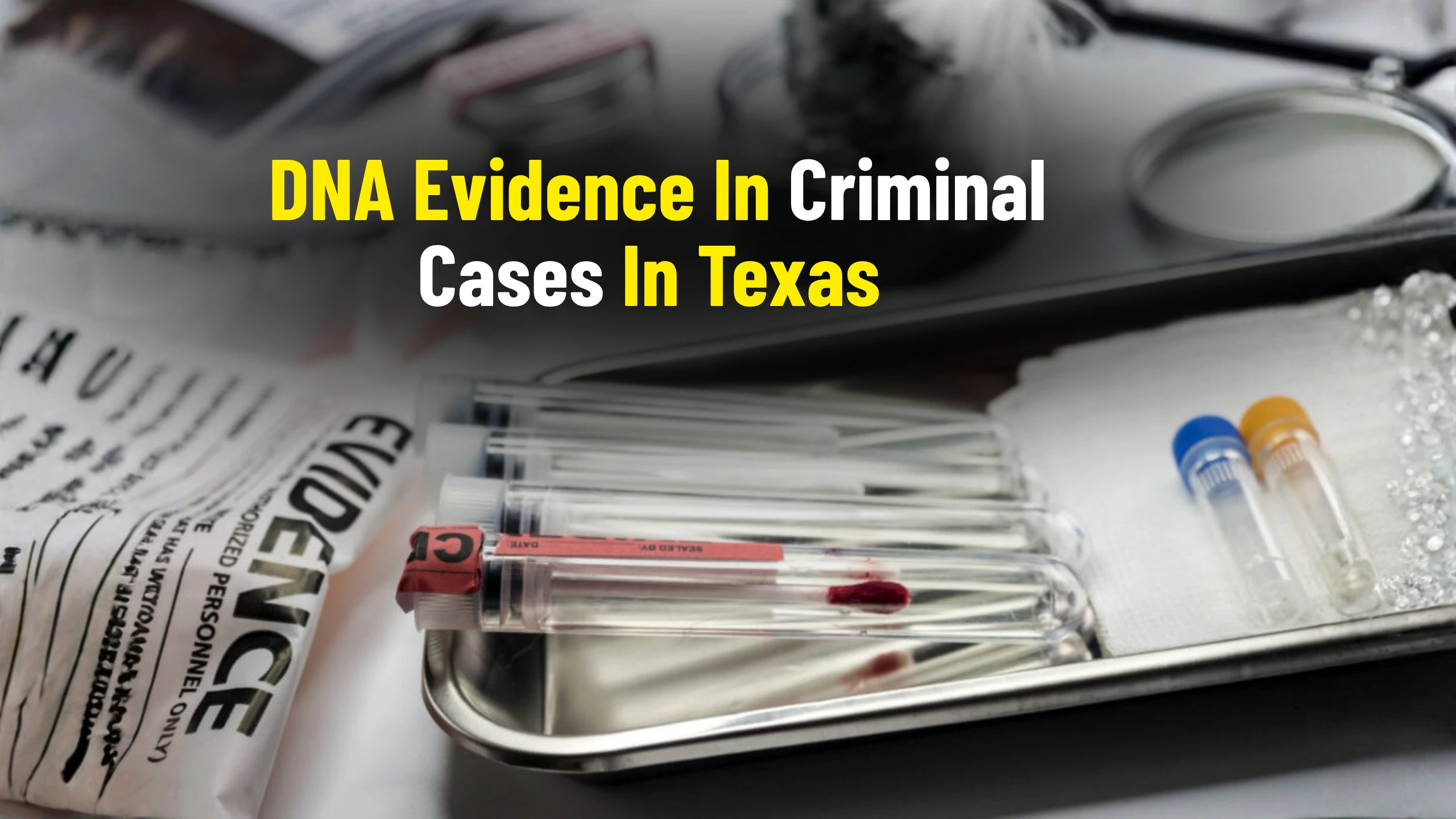
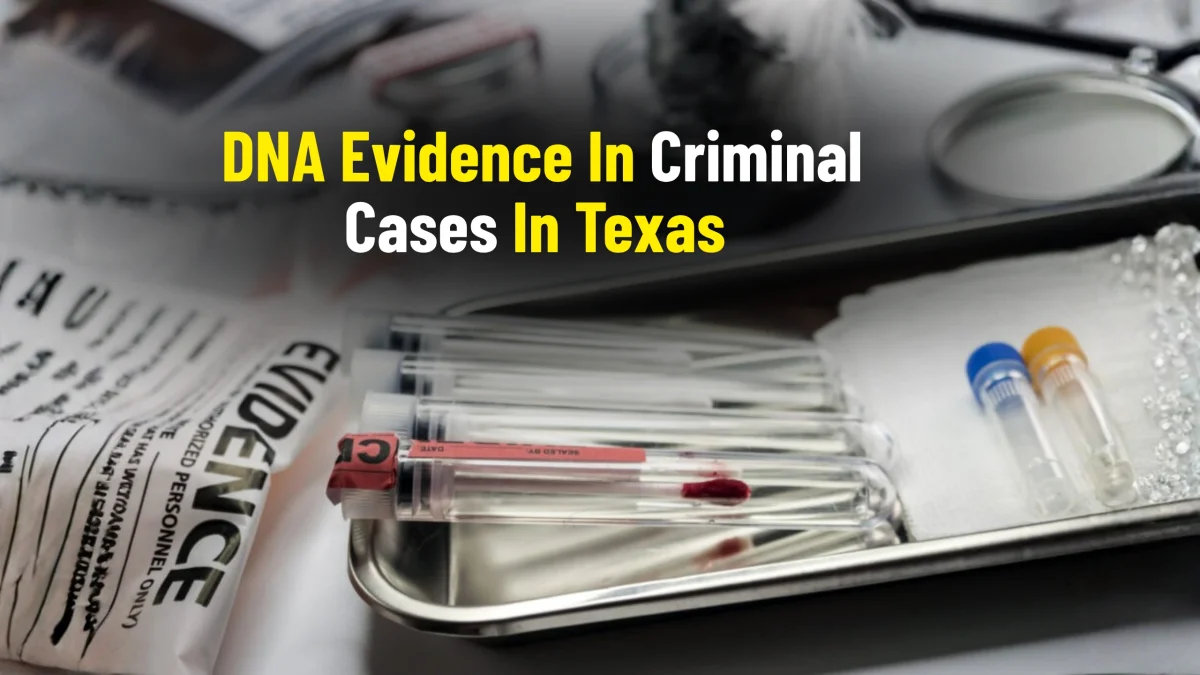
DNA evidence in criminal cases in Texas

DNA evidence in criminal cases in Texas carries immense weight with modern juries, often viewed as the “gold standard” of forensic science, a biological signature that supposedly leaves no room for doubt. This shapes many sex crime trials in Texas. Prosecutors often rely on biological samples to build their case. While the science itself is powerful, its application is subject to human error, environmental contamination, and the complex legal standards of the Texas judicial system. However, defense attorneys also challenge how labs collect, test, and interpret DNA.

In this guide, we explain how DNA Evidence in criminal cases in Texas works in sexual assault cases. We also break down legal standards, courtroom rules, and defense strategies. Furthermore, we focus on how a Texas sexual assault defense lawyer examines weaknesses in DNA reports and challenges unreliable conclusions.

How DNA Evidence Works In Texas Sex Crime Cases?

DNA evidence plays a central role in modern criminal prosecutions. Investigators collect biological samples such as blood, saliva, or skin cells. Then forensic labs analyse these samples to match them to suspects. For those understanding sex crime charges, it is clear that forensic results often dictate the direction of the entire prosecution.

In cases involving DNA Evidence in criminal cases texas, prosecutors often present match probabilities. These numbers suggest how likely a DNA profile is to match a suspect. However, defense attorneys carefully examine how investigators collect and store samples. Even a small error can change results. Therefore, legal teams question contamination risks, lab procedures, and interpretation methods.

A Texas sexual assault defense lawyer studies every step of the DNA chain. This includes collection, storage, testing, and reporting. Any weak link can create reasonable doubt.

Texas DNA Evidence And Collection Laws In Sexual Assault

The integrity of a case starts at the very beginning with the collection process, which typically centres around the Sexual Assault Forensic Exam (SAFE). DNA evidence and collection laws in sexual assault require officers and medical staff to follow very strict rules during this sensitive procedure. Usually, a nurse specifically trained in forensic evidentiary protocols collects this evidence. They must seal the samples in specific ways and document every hand that touches the kit. This creates a “chain of custody” that the state must prove in court.

If a nurse fails to follow DNA evidence and collection laws during the Sexual Assault Forensic Exam (SAFE), the sample might become contaminated. Even a small mistake, like using the same gloves for two different samples, can ruin the results. 

Consequently, a sexual assault defense lawyer will look for gaps in the paperwork. We check the logs to see whether the evidence was left in an unsealed locker or in an overheated car. If the state violated Texas DNA evidence and collection laws in sexual assault case, we fight to keep that evidence out of your trial.

Rules For DNA Evidence In Texas Criminal Trials

  • Court reviews the source of DNA evidence: First, the court checks where the DNA sample came from. Judges confirm that investigators collected the sample from a valid and traceable source. 
  • Court evaluates collection procedures: Next, the court reviews how officers collected the DNA. Investigators must follow Texas DNA evidence and collection laws in sexual assault cases. Any deviation raises concerns about reliability.
  • Court examines testing methods: Then, judges analyse the forensic testing process. Labs must follow accepted legal standards for DNA evidence. If the testing method lacks scientific support, the court may reject the evidence.
  • Court checks storage and handling: After that, the court reviews how the authorities stored and handled the sample. Proper storage prevents degradation or contamination. 
  • The court verifies the chain of custody: judges also review the chain-of-custody records. Each transfer of evidence must be documented. Missing records create doubt about authenticity.
  • Defense challenges contamination risks: Meanwhile, defense attorneys question possible contamination. They examine whether external factors could have altered the DNA sample.
  • Defense reviews delays and inconsistencies: Defense lawyers also analyse delays in testing and inconsistencies in reports. These issues often weaken prosecution claims.  
  • Defense highlights weaknesses in court: Finally, a sexual assault defense lawyer presents these issues in court. As a result, the defense can reduce the impact of forensic claims and build reasonable doubt.

DNA Evidence Legal Standards In Criminal Courts

DNA evidence in criminal cases in Texas

The rules for DNA evidence in Texas criminal trials follow the Texas Rules of Evidence and the Daubert Standard. Therefore, the court checks both law and science before admitting DNA evidence. First, the state must prove that the scientific method is reliable. Then, it must show that the lab followed proper DNA evidence legal standards.

Moreover, testing methods like PCR and STR analysis are widely accepted. So, courts often allow these methods without issue. However, problems arise when labs use new or untested software. In such cases, the results may lack reliability. Therefore, a defense lawyer can challenge the evidence and request suppression.

As a result, these challenges can strongly impact the case. In many situations, questioning the legal standards can lead to reduced charges or even an acquittal.Knowing can charges be dropped before trial is vital for anyone facing these high-stakes forensic allegations.

Common Issues In DNA Analysis And Interpretation

DNA analysis often appears reliable, but real cases reveal many issues. Contamination remains a major concern. Samples can mix during collection or transport. In DNA Evidence in criminal cases in Texas, partial DNA profiles also create problems. Labs may misinterpret incomplete data, which leads to incorrect matches.

Additionally, statistical explanations often confuse juries. Prosecutors present probability figures that seem strong but lack clarity. A defense lawyer breaks down these numbers into simple terms. This approach supports effective Defence Lawyer Strategies Against DNA Evidence and builds doubt in the prosecution’s case.

Defense Strategies Against DNA Evidence

Defense attorneys use multiple approaches to challenge forensic results. They begin by reviewing how investigators collect and store evidence. In DNA evidence cases, attorneys often request independent testing. This step helps verify or dispute lab findings. Moreover, lawyers cross-examine forensic analysts. They question training, methods, and prior mistakes.

A defense lawyer also highlights gaps in documentation. Missing records often weaken the prosecution. Any signs of tampering with evidence in Texas can lead to significant felony risks for the state’s case and provide powerful defense opportunities. These Defence Lawyer Strategies Against DNA Evidence focus on exposing errors and creating reasonable doubt.

Internal Legal Protocols And Evidence Handling

DNA evidence in criminal cases in Texas

Law enforcement agencies follow strict internal procedures when handling evidence. These guidelines explain how officers collect, label, and preserve DNA samples under the TEXAS EVIDENCE COLLECTION PROTOCOL.

These procedures play a key role in DNA Evidence in criminal cases. When officers miss any step, the reliability of the evidence decreases. A sexual assault defense lawyer carefully reviews whether officials followed each requirement. As a result, any protocol violation can support a strong defense argument in court.

Frequently Asked Questions

Can DNA Evidence Be Wrong In A Sexual Assault Case?

While DNA science itself is robust, the results presented in court can absolutely be wrong. Errors often occur during the collection or testing phases. If Texas DNA evidence and collection laws were ignored, a sample could be contaminated by another person’s biological material. Furthermore, laboratory technicians can make “clerical errors,” such as mislabeling samples or misinterpreting complex mixtures containing DNA from multiple people. A sexual assault defense lawyer will look for these inconsistencies to challenge the state’s narrative.

What Are The Rules For DNA Evidence In Texas Criminal Trials?

The rules for DNA evidence in Texas criminal trials focus on reliability and proper handling. Courts review how investigators collect, store, and test samples. Any mistake can reduce credibility. A sexual assault defense lawyer uses these rules to challenge errors and protect the accused during trial proceedings.

What Is The "Chain Of Custody" And Why Does It Matter?

The chain of custody is a record of every person who handled the evidence. Under Texas DNA evidence and collection laws in sexual assault, the state must track the sample from the moment of collection to the moment of trial. If a sample goes missing for a few hours or if a signature is missing, the evidence is compromised. A sexual assault defense lawyer looks for gaps in the chain of custody.

What Is "Touch DNA", And Can It Cause False Accusations?

Touch DNA refers to the tiny skin cells we leave behind on everything we touch. It is very easy to transfer these cells unintentionally. Because modern tests are so sensitive, they can find your DNA on an object even if someone else carried it there. This is a common problem with DNA evidence. A defense lawyer will use this fact to explain why your DNA might be present without any criminal act. We show the jury that the mere presence of cells does not prove that a crime happened.

Conclusion: Protect Your Rights With L&L Law Group

DNA evidence holds strong weight in Texas sex crime trials. However, it does not ensure a conviction. Courts demand strict compliance with legal and scientific standards. In DNA evidence in criminal cases in Texas,  even small mistakes can change the outcome. Therefore, careful legal review remains essential.

A skilled Texas sexual assault defense lawyer analyses every detail. From collection to courtroom presentation, each step matters. If you face charges involving DNA evidence, immediate legal action is necessary. Early review can uncover critical flaws and strengthen your defense.

Contact Land L Law Group today to protect your rights and build a strong defense strategy.

Section Title

Simplifying Data Breach Liability Law And Your Legal Risks

In the current digital landscape, data breach liability law makes it clear that a breach is no...

What Impacts The Role Of DNA Evidence In Criminal Cases In Texas?

DNA evidence in criminal cases in Texas carries immense weight with modern juries, often viewed as...

Possession Of Prohibited Weapons In Texas: What You Need To Know?

Possession of prohibited weapons in Texas is taken very seriously under state law, even though Texas...

Tampering With Evidence Texas: Hidden Felony Risks And Defense Strategies

Facing accusations of tampering with evidence Texas can be overwhelming, especially when the...

Cryptocurrency Fraud Charges in Frisco, Texas: What You Need to Know?

The legal landscape is shifting as the cryptocurrency fraud charges Texas residents face become a...

Wire Fraud Charges In Texas: Risks, Penalties, And Defense Strategies

Facing wire fraud charges in Texas can feel like the world is crashing down around you. The...

Kidnapping Charges In Frisco, Texas: A Defense Lawyer’s Perspective

Facing kidnapping charges in Frisco is one of the most serious legal situations an individual can...

Capital Murder Charges In Frisco, Texas: A Defense Lawyer’s Guide To High-Stakes Cases

Capital murder charges in Texas represent the most serious legal category in the state’s judicial...

How To Get Frisco Family Violence Charges Dismissed Or Dropped?

Frisco Family Violence Charges can feel overwhelming from the moment an arrest happens in North...