Categories
Criminal Defense

Legal Consequences Of Sexual Coercion In Dallas Fort Worth

Blog

Legal Consequences Of Sexual Coercion In Dallas Fort Worth

Reggie London

Reggie London

Legal Consequences Of Sexual Coercion In Dallas Fort Worth

Sexual coercion is a serious criminal offense that can have significant and long-lasting consequences for those involved. It occurs when an individual pressures, manipulates, or threatens another person into engaging in sexual activity without their full consent. Unlike rape, which typically involves physical force or violence, sexual coercion is grounded in psychological manipulation, intimidation, and emotional pressure. These tactics can range from subtle threats to more overt forms of coercion, but the result is always the same: a violation of a person’s autonomy and consent.

If you or someone you know is facing charges related to sexual coercion, it is essential to fully grasp both the immediate legal consequences and the long-term effects on personal and professional life. Navigating these charges without the guidance of an experienced attorney can be daunting and overwhelming. Professional legal representation plays a critical role in defending against sexual coercion charges, helping to protect your rights and working toward a favorable resolution.

What Sexual Coercion Means Under Texas Law

In Texas, sexual coercion has a specific legal definition outlined in the Texas Penal Code. The law generally involves using threats, extortion, or intimidation to obtain sexual conduct, intimate images, or other benefits. These threats may include threats to commit another offense or to expose someone to force compliance.

The law also recognizes that threats can occur through various forms of communication, including social media, messages, or other electronic methods. This means that even actions that occur online or through digital communication can potentially fall under sexual coercion laws in Texas.

Why Sexual Coercion Cases Are Taken Seriously In Dallas Fort Worth

Dallas–Fort Worth is one of the largest metropolitan regions in Texas, and law enforcement agencies in this area actively investigate allegations involving sexual offenses. Prosecutors typically review evidence such as digital communications, witness statements, and other records to determine whether coercion occurred.

Another important factor in Texas law is consent. If consent is obtained through threats or intimidation, it may not be considered legally valid. Courts examine whether the alleged victim freely consented or felt compelled by fear or pressure. Because many cases involve complex personal relationships and communication history, these investigations can become detailed and time-intensive.

Legal Elements Prosecutors Must Prove

To secure a conviction for sexual coercion in Texas, prosecutors generally must demonstrate several key elements:

  • The accused intentionally made threats or used coercion.
  • Threats or pressure were used to obtain sexual conduct.
  • The threats were made to obtain intimate visual material.
  • An accused sought another benefit of value through coercion.
  • The actions were done knowingly and deliberately, not accidentally.
  • There is evidence showing that intimidation or pressure was used to influence the other person.

Intent is a crucial factor in these cases:

  • Prosecutors must show the accused knowingly used intimidation or pressure.
  • They must establish that the coercion was meant to obtain something in return.
  • The prosecution must prove these elements beyond a reasonable doubt in court.

Penalties For Sexual Coercion

State Penalty for Sexual Coercion Potential Sentencing Additional Consequences
Texas
Felony
2-10 years
Lifetime registration
California
Felony
3-5 years
Probation restrictions
New York
Misdemeanor or Felony
Up to 5 years
Employment restrictions
Florida
Felony
5 years to life
Probation & therapy
Georgia
Felony
1-10 years
Monitoring upon release

Defending Against Sexual Coercion Charges

Defending Against Sexual Coercion Charges

Mistaken Identity

One of the most common defenses in sexual coercion cases is mistaken identity. The defendant may argue that they were misidentified as the perpetrator or that they were not involved in the incident. In some cases, the victim may have confused the defendant with someone else, or there may be insufficient evidence linking the defendant to the alleged offense. The defense may highlight discrepancies in the victim’s account or present alibi evidence to show the defendant was not present at the scene during the alleged event.

Lack Of Evidence

Another defense in sexual coercion cases is the lack of sufficient evidence to prove that coercion actually occurred. The prosecution has the burden of proving the defendant’s guilt beyond a reasonable doubt, and if they fail to provide concrete evidence, such as physical proof or reliable witness testimony, the defense can argue that the case is unsubstantiated. 

Consent Or Misunderstanding

The defendant may also argue that the victim consented to the sexual activity or that there was a misunderstanding about consent. In some cases, the defendant may claim that the victim willingly participated in the sexual act, and the alleged coercion was not present. The defense might argue that any perceived pressure was not coercive in nature and that the victim may have misinterpreted the situation. This defense can be particularly effective in cases where both parties were in a relationship or had previously engaged in consensual sexual activity.

Legal Strategies To Challenge The Prosecution’s Case

An experienced attorney will employ a range of strategies to challenge the prosecution’s case and protect the defendant’s rights. First, they will thoroughly analyze all the evidence presented by the prosecution, scrutinizing it for any inconsistencies or weaknesses that could undermine the case. For example, the attorney may look for contradictions in the victim’s testimony or identify any gaps in the timeline of events that could raise doubts about the defendant’s involvement.

In addition, the defense attorney will focus on questioning the victim’s credibility. They may argue that the victim’s account is inconsistent with other evidence, such as forensic evidence, witness testimony, or physical evidence in the case. By highlighting any discrepancies or inaccuracies in the victim’s story, the attorney can create reasonable doubt about the veracity of the claims.

The attorney may also challenge the prosecution’s evidence by pointing out that it does not conclusively support the allegation of sexual coercion. For example, if the prosecution relies heavily on the victim’s account with little physical or corroborative evidence, the defense might argue that the case is based on speculation rather than proven facts. By utilizing these legal strategies and challenging the prosecution’s evidence, a defense attorney can significantly improve the defendant’s chances of a favorable outcome.

How An Attorney Can Help

  • The Role of a Defense Attorney in Sexual Coercion Cases
    A defense attorney specializing in sexual coercion cases plays a crucial role in ensuring that the defendant’s rights are protected. They investigate the case thoroughly, evaluate evidence, and build a defense strategy based on the facts.
  • Investigating the Facts and Building a Defense Strategy
    Attorneys will scrutinize every detail of the case, from evidence and witness statements to potential legal flaws. By thoroughly investigating the case, an attorney can build a strategy that challenges the prosecution’s argument.
  • Importance of Early Legal Intervention to Protect Rights
    Engaging a skilled attorney as soon as possible after charges are filed can help prevent further complications and ensure that all legal avenues are explored to defend the defendant.

The Importance Of Taking Immediate Action

The Importance Of Taking Immediate Action

If someone in Dallas or Fort Worth is accused of sexual coercion, acting quickly is important. Early legal intervention can significantly affect how the case develops. Attorneys can begin gathering evidence, identifying inconsistencies, and protecting the accused person’s rights from the beginning of the investigation.

Delaying legal assistance can make the situation more difficult, especially if investigators have already started building a case.

Conclusion

Sexual coercion is a grave charge that carries serious legal and personal consequences. Understanding the legal process, defending against the charges, and seeking the help of a skilled attorney are essential to navigating these difficult circumstances. If you are facing charges related to sexual coercion, contact L&L Law Group immediately to protect your rights and secure the best possible outcome for your case.

Frequently Asked Questions

What Is Sexual Coercion, And How Does It Differ From Rape?

Sexual coercion involves pressuring someone into sexual activity without their consent through threats or manipulation. It differs from rape, which involves non-consensual sexual intercourse, often with physical force.

What Are The Legal Penalties For Sexual Coercion?

Penalties for sexual coercion vary by state but often include prison sentences, fines, probation, and mandatory counseling. Convictions can lead to long-term consequences, including sex offender registration and employment restrictions.

Can Sexual Coercion Charges Be Dismissed?

Yes, charges can be dismissed if there is insufficient evidence, a lack of consent, or if the accusations are false. A strong defense can challenge the prosecution’s evidence and lead to a favorable outcome.

What Should I Do If I’m Falsely Accused Of Sexual Coercion?

If you are falsely accused of sexual coercion, it is important to remain calm and seek immediate legal representation. Your attorney will help gather evidence, identify defenses, and work to have the charges dismissed or reduced.

How Can A Lawyer Help With Sexual Coercion Charges?

A lawyer can review the case, challenge the evidence, and negotiate with the prosecution to reduce penalties. They provide critical guidance on defending against the charges and minimizing legal consequences.

Section Title

Simplifying Data Breach Liability Law And Your Legal Risks

In the current digital landscape, data breach liability law makes it clear that a breach is no...

What Impacts The Role Of DNA Evidence In Criminal Cases In Texas?

DNA evidence in criminal cases in Texas carries immense weight with modern juries, often viewed as...

Possession Of Prohibited Weapons In Texas: What You Need To Know?

Possession of prohibited weapons in Texas is taken very seriously under state law, even though Texas...

Tampering With Evidence Texas: Hidden Felony Risks And Defense Strategies

Facing accusations of tampering with evidence Texas can be overwhelming, especially when the...

Cryptocurrency Fraud Charges in Frisco, Texas: What You Need to Know?

The legal landscape is shifting as the cryptocurrency fraud charges Texas residents face become a...

Wire Fraud Charges In Texas: Risks, Penalties, And Defense Strategies

Facing wire fraud charges in Texas can feel like the world is crashing down around you. The...

Kidnapping Charges In Frisco, Texas: A Defense Lawyer’s Perspective

Facing kidnapping charges in Frisco is one of the most serious legal situations an individual can...

Capital Murder Charges In Frisco, Texas: A Defense Lawyer’s Guide To High-Stakes Cases

Capital murder charges in Texas represent the most serious legal category in the state’s judicial...

How To Get Frisco Family Violence Charges Dismissed Or Dropped?

Frisco Family Violence Charges can feel overwhelming from the moment an arrest happens in North...
Categories
Criminal Defense

What You Need To Know About Protective Order Violation In Dallas TX

Blog

What You Need To Know About Protective Order Violation In Dallas TX

Reggie London

Reggie London

What You Need To Know About Protective Order Violation In Dallas TX

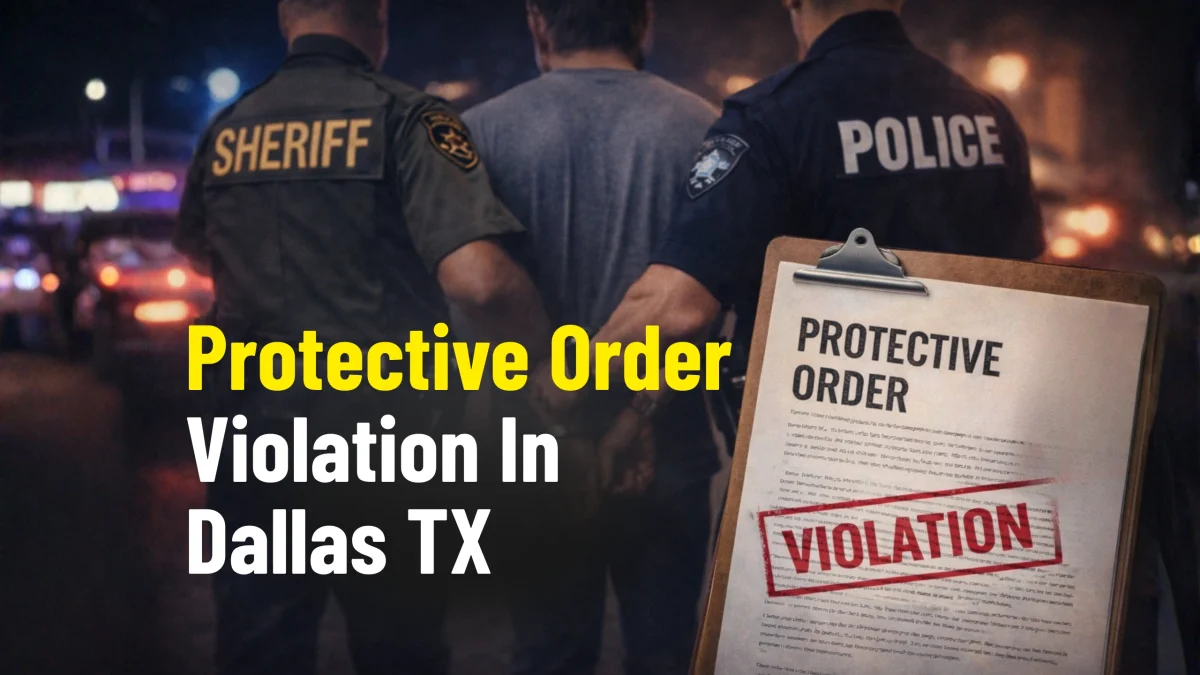
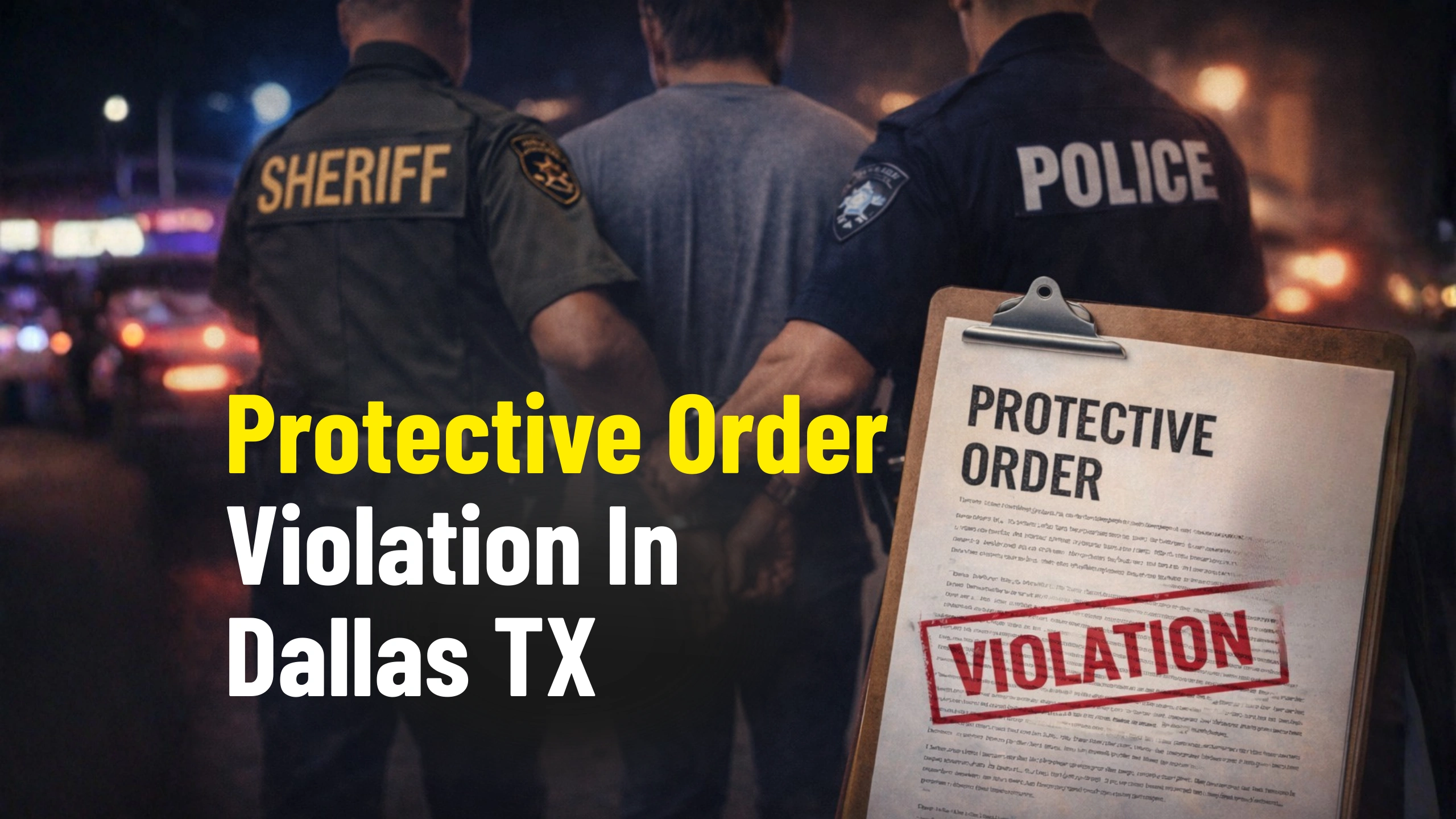
Protective orders, or restraining orders, are vital tools in protecting individuals from harm, particularly in cases involving sexual abuse, harassment, or domestic violence. When these orders are violated, the legal consequences can be severe, further complicating an already distressing situation. If you have been accused of violating a court order or protective order in a sexual abuse case, understanding the charges, potential penalties, and available defenses is crucial. In this blog, we’ll explain what a protective order is, how violations are prosecuted, and how an attorney can help protect your rights.
Protective orders can be temporary or permanent and typically impose strict restrictions on the accused, such as no-contact provisions, orders to stay away from certain places, and other behavioral restrictions.

What Is A Protective Order in Sexual Abuse Cases?

A protective order is a court-issued legal document that protects a person from potential harm or harassment. It typically prohibits the individual named in the order from contacting or approaching the person protected by the order. In sexual abuse cases, these orders are often necessary to shield the victim from further emotional and physical harm.

Types of Protective Orders 

  • Temporary Protective Orders: These orders are usually issued quickly to provide immediate relief to the victim. They last for a short time, often up to a few weeks, until a formal hearing can take place.
  • Permanent Protective Orders: After a formal hearing, a court may issue a permanent protective order, which can last for months or years. These orders are more difficult to modify or remove and provide longer-term protection to the victim.

How Violations Are Prosecuted

  • Charged Under Texas Law. Violating a protective order in Dallas Fort Worth is prosecuted under Texas Penal Code, which makes it a criminal offense to knowingly or intentionally violate a court order.

  • Proof of a Valid Order. Prosecutors must show that a valid protective order was in effect at the time of the alleged violation.

  • Proof of Awareness. The State must establish that you were properly served or otherwise aware of the protective order and its specific terms.

  • Proof of Intentional Violation. The prosecution must prove that you knowingly or intentionally violated the order’s conditions, not that the violation occurred by accident.

  • Willful Conduct Standard. Texas law focuses on “willful” violations, meaning the act must be intentional. Accidentally driving past a restricted location without knowledge may not qualify, but sending a text message, appearing at a prohibited place, or contacting the person through a third party can meet the standard.

  • Impact in Sexual Abuse Cases. In cases involving sexual abuse allegations, prosecutors often argue that any violation shows ongoing risk to the alleged victim, which can affect bond decisions, supervision conditions, and potential sentencing.

Penalties For Violating A Protective Order In Texas

Type of Violation Charge Level Potential Penalties Additional Court Consequences (Dallas–Fort Worth)
First-time violation of a protective order
Class A Misdemeanor
Up to 1 year in county jail and up to $4,000 fine
Possible stricter supervision and impact on the related case
Violation involving assault, stalking, repeated offenses, or prior convictions
Third-Degree Felony
2 to 10 years in prison and up to $10,000 fine
Increased bail, bond revocation, harsher probation terms, negative impact on underlying sexual abuse case
Repeat violations
Misdemeanor or Felony (depending on circumstances)
Enhanced sentencing within the statutory range
Judges may impose stricter conditions, revoke the bond, or treat the violation as an aggravating factor in court proceedings

How Violations Impact Sexual Abuse Charges

How Violations Impact Sexual Abuse Charges

When a protective order in sexual abuse cases is violated, prosecutors often use it to strengthen their argument. They may claim the violation shows disregard for court authority or ongoing risk to the alleged victim. For example, if a defendant contacts the alleged victim despite a no-contact order, the court may see this as intimidation or interference. 

Even if the contact appears harmless, it can still be interpreted negatively. In Dallas and Fort Worth courts, a protective order violation can influence plea negotiations and sentencing decisions. Judges may impose stricter probation conditions or higher sentences if they believe the defendant ignored court instructions.

Common Real World Scenarios

One situation involves indirect contact. A person may ask a mutual friend to pass along a message. Even though the contact was not direct, this can still count as a violation. Another situation involves public encounters. If both individuals attend the same public event and the protective order requires a specific distance to be maintained, simply remaining at the location could be considered a violation. Electronic communication also creates risk. Liking a social media post, sending a direct message, or commenting online may be viewed as prohibited contact under the order.

Steps To Take If Accused In Dallas Fort Worth

  • Act Immediately. If you are accused of violating a protective order in sexual abuse cases, time is critical because these matters move quickly through Texas courts.
  • Contact a Criminal Defense Attorney. Speak with an experienced attorney as soon as possible. Early legal guidance can protect your rights and prevent the situation from escalating.
  • Review the Protective Order Carefully. Go through the exact terms of the order to understand distance requirements, communication limits, and any specific restrictions that apply to you.
  • Gather Supporting Documentation. Collect text messages, emails, phone records, GPS data, surveillance footage, or witness information that may show a lack of intent or expose false allegations.
  • Avoid All Contact. Do not communicate with the protected person under any circumstances, even if they initiate contact. In Texas, mutual communication does not cancel or override the protective order.
  • Prepare for Court Proceedings. Be ready for hearings that may involve bond review, additional charges, or possible arrest. Proper preparation with your attorney is essential.

Possible Defenses To Protective Order Violations

Several defenses may apply depending on the facts.

  • Lack of Knowledge may apply if you were never properly served or informed of the order.
  • Lack of Intent may apply if the alleged violation was accidental and not willful.
  • False Allegations sometimes occur during emotionally charged disputes. Evidence and witness testimony can expose inconsistencies.
  • Insufficient Evidence can also be a defense. The prosecution must prove beyond a reasonable doubt that a valid order existed and that you knowingly violated it.

Each case in Dallas Fort Worth depends on the specific court order and circumstances.

How An Attorney Can Help

How An Attorney Can Help

An attorney plays a crucial role in defending against charges arising from a violation of a protective order. The first step in the process is a thorough investigation into the circumstances surrounding the alleged violation. This includes examining all available evidence, witness statements, communication records, police reports, and the victim’s account to determine the facts of the case. By carefully reviewing these elements, the attorney can identify inconsistencies or weaknesses in the prosecution’s case. 

Additionally, the attorney will challenge the prosecution’s evidence, questioning its accuracy and offering alternative explanations or evidence that may dispute the violation.

The Importance Of Taking Immediate Action

Taking swift action is crucial when facing charges for violating a protective order. The sooner you engage legal counsel, the better your chances of protecting your rights and minimizing the potential penalties.

  • Legal Actions to Prevent Long-Term Consequences
    By acting quickly, an attorney can help limit the long-term consequences, such as a criminal record or extended probation. They can also explore options to have the charges dismissed or reduced, which can significantly improve the outcome of the case.
  • Legal Advice on How to Proceed if Accused
    If you are accused of violating a protective order, it’s vital to follow your attorney’s advice carefully. This will help you understand your legal options, navigate the legal process, and protect your future.

Conclusion

Violating a protective order in a sexual abuse case is a serious offense with potentially severe consequences. From criminal penalties to long-term social and professional repercussions, it’s important to seek legal assistance as soon as possible if you are facing such charges. At L&L Law Group, our experienced attorneys are here to help you navigate these complex charges and work towards a favorable resolution. Contact us today for a consultation, and let us help protect your rights.

Frequently Asked Questions

What Happens If I Violate A Protective Order In A Sexual Abuse Case?

Violating a protective order in a sexual abuse case can lead to criminal charges, including misdemeanor or felony penalties, depending on the state. The consequences may include imprisonment, fines, and additional legal restrictions.

Can I Be Arrested For Violating A Protective Order?

Yes, violating a protective order is a criminal offense, and if proven, you can be arrested and face legal penalties. The severity of the penalty depends on whether the violation is considered a misdemeanor or a felony under state law.

What Are The Legal Consequences Of Violating A Protective Order?

Legal consequences for violating a protective order can include jail time, fines, probation, and additional restrictions on your actions. In some cases, the violation may result in a more severe sentence if the violation was intentional.

How Can I Defend Myself Against Charges Of Violating A Protective Order?

Defenses may include a lack of knowledge of the order, a misunderstanding of the situation, or evidence that the violation was not intentional. An experienced attorney can help build a strong defense strategy.

Do I Need An Attorney If I Am Accused Of Violating A Protective Order?

Yes, it’s essential to have an attorney if accused of violating a protective order. A lawyer can help understand the charges, develop a defense strategy, and work to minimize the penalties you may face.

Section Title

Simplifying Data Breach Liability Law And Your Legal Risks

In the current digital landscape, data breach liability law makes it clear that a breach is no...

What Impacts The Role Of DNA Evidence In Criminal Cases In Texas?

DNA evidence in criminal cases in Texas carries immense weight with modern juries, often viewed as...

Possession Of Prohibited Weapons In Texas: What You Need To Know?

Possession of prohibited weapons in Texas is taken very seriously under state law, even though Texas...

Tampering With Evidence Texas: Hidden Felony Risks And Defense Strategies

Facing accusations of tampering with evidence Texas can be overwhelming, especially when the...

Cryptocurrency Fraud Charges in Frisco, Texas: What You Need to Know?

The legal landscape is shifting as the cryptocurrency fraud charges Texas residents face become a...

Wire Fraud Charges In Texas: Risks, Penalties, And Defense Strategies

Facing wire fraud charges in Texas can feel like the world is crashing down around you. The...

Kidnapping Charges In Frisco, Texas: A Defense Lawyer’s Perspective

Facing kidnapping charges in Frisco is one of the most serious legal situations an individual can...

Capital Murder Charges In Frisco, Texas: A Defense Lawyer’s Guide To High-Stakes Cases

Capital murder charges in Texas represent the most serious legal category in the state’s judicial...

How To Get Frisco Family Violence Charges Dismissed Or Dropped?

Frisco Family Violence Charges can feel overwhelming from the moment an arrest happens in North...
Categories
Criminal Defense

Federal Pre-Trial Release Defense Attorney In Dallas Fort Worth

Blog

Federal Pre-Trial Release Defense Attorney In Dallas Fort Worth

Reggie London

Reggie London

Federal Pre-Trial Release Defense Attorney In Dallas Fort Worth

When someone is charged with a federal crime, one of the most urgent concerns is whether they will remain in custody while the case moves forward. Federal cases often differ from state criminal cases, and the rules governing detention can be strict. For individuals and families facing federal charges in Dallas-Fort Worth, understanding pre-trial release in federal cases is essential.

A skilled federal criminal defense attorney can play a critical role in helping a defendant seek release before trial. Early legal action can influence how the court views the case and whether conditions of release can be arranged. If you or a loved one is facing federal charges in the Dallas–Fort Worth area, learning how pre-trial release works can help you take the right steps quickly.

What Is Pre-Trial Release In Federal Criminal Cases?

Pre-trial release allows a defendant to remain out of custody while their federal criminal case is pending. Unlike in many state cases, where bail may be set automatically, federal courts typically require a detention or bond hearing to determine whether the defendant can be released before trial. During this hearing, a judge decides if the defendant should be released without conditions, released under strict supervision, or remain detained until the case proceeds.

Federal courts focus heavily on two key issues:

  • Whether the defendant is a flight risk
  • Whether the defendant poses a danger to the community

Because federal prosecutors often argue for detention, having a federal criminal defense attorney in Dallas-Fort Worth involved early can make a significant difference in presenting a strong release argument.

How Federal Courts Decide Whether To Grant Pre-Trial Release

Federal judges rely on several factors when deciding whether to grant pre-trial release. These factors help the court evaluate risk and determine whether conditions of release can ensure public safety and the defendant’s appearance at future hearings. Key considerations include:

  • Risk of Flight: The court evaluates whether the defendant may leave the jurisdiction to avoid prosecution. Evidence such as a stable residence, family ties, and steady employment can help reduce these concerns.
  • Danger to the Community: If the charges involve violence, weapons, or large-scale criminal activity, prosecutors may argue that detention is necessary to protect public safety.
  • Nature and Seriousness of the Charges: Certain federal crimes, such as drug trafficking, fraud, or conspiracy, can make pre-trial release more difficult to obtain.
  • Criminal History: A limited or non-violent criminal record may strengthen the defense argument that the defendant does not pose a significant risk.
  • Strength of the Government’s Evidence: The court may consider how strong the prosecution’s case appears during the early stages of the proceedings.
  • Ties to the Community: Long-term residence, family support, and employment can support a request for pre-trial release.

A strong federal detention hearing defense strategy should clearly address each of these factors to improve the chances of securing release.

Types Of Pre-Trial Release In Federal Cases

Federal courts may allow several types of pre-trial release depending on the circumstances of the case. These options are designed to ensure that the defendant appears in court and follows all legal requirements while the case is pending. Common types of release include:

  • Release on Personal Recognizance: The defendant promises to return to court and comply with all legal obligations without posting a bond.
  • Release With Conditions: The court may impose specific requirements such as travel restrictions, regular check-ins with pretrial services, drug testing, or limited contact with certain individuals.
  • Secured Bond: In some cases, the court may require financial security to ensure the defendant complies with court orders.
  • Third-Party Custody: A responsible individual agrees to supervise the defendant and help ensure compliance with court conditions.
  • Home Detention or Electronic Monitoring: The court may require the defendant to remain at home or use electronic monitoring, such as an ankle monitor, to track compliance.

A federal bond hearing lawyer can help propose structured release conditions that address the court’s concerns and improve the chances of obtaining pre-trial release.

Common Challenges Defendants Face In Federal Detention Hearings

Federal detention hearings can be complex and highly contested, especially when prosecutors push strongly for detention in serious federal cases. Many defendants face challenges, including strict federal detention laws, allegations of large-scale criminal activity, early-stage evidence, prior criminal history, and public safety concerns.

In addition, the government may rely on investigative reports, witness statements, or financial records when arguing against pre-trial release. Because of these factors, working with a federal criminal defense lawyer in Texas can be critical. An attorney experienced in federal detention hearings in Texas can address these issues, challenge the prosecution’s claims, and develop strong legal strategies to pursue pre-trial release in federal court.

How A Dallas Fort Worth Federal Defense Attorney Can Help

One of the most important steps after a federal arrest is contacting an attorney who handles federal criminal cases. A defense lawyer can begin building a strategy even before the detention hearing takes place by preparing a strong detention hearing strategy and gathering information that demonstrates the defendant’s stability and reliability. Legal assistance may also involve presenting evidence that supports release, such as employment records, letters of support, community ties, and housing arrangements.

In some cases, the defense can negotiate release conditions that address the court’s concerns while allowing the defendant to remain out of custody. An attorney can also challenge government arguments about flight risk or public safety and begin building the defense early in the process. For individuals facing federal charges in the Dallas–Fort Worth area, working with a federal charges lawyer can help protect their rights and present a strong case for pre-trial release.

Defense Strategies Used To Obtain Pre-Trial Release

Defense Strategies Used To Obtain Pre-Trial Release

Every case is unique, but attorneys often use several strategies to help secure pre-trial release before trial.

  • Demonstrating Strong Community Ties: Showing long-term residence, stable housing, and strong family support can help reduce concerns about flight risk.
  • Providing Employment Verification: Evidence of steady employment can demonstrate responsibility and stability to the court.
  • Presenting Family Support: Family members willing to assist or supervise the defendant may strengthen the argument for release.
  • Proposing Structured Release Conditions: Conditions such as electronic monitoring, home detention, or travel restrictions can reassure the court that the defendant will comply with requirements.
  • Challenging the Prosecution’s Evidence: Defense attorneys may question the reliability, interpretation, or completeness of the government’s claims.
  • Addressing Risk-of-Flight Concerns: Providing documentation and a clear compliance plan can demonstrate to the court that the defendant intends to appear at all required hearings.
  • Effective Federal Court Defense Strategies: These approaches are often key to improving the chances of obtaining pre-trial release.

Key Factors That Can Improve Chances Of Pre-Trial Release

Factor Why It Matters in Federal Court How a Defense Attorney Helps
Strong community ties
Shows defendant is unlikely to flee
Presents evidence of residence and family
Stable employment
Indicates responsibility
Provides employment documentation
Minimal criminal history
Reduces risk concerns
Highlights positive background
Cooperation with authorities
Builds credibility
Explains defendant’s conduct
Structured release plan
Reassures the judge
Proposes detailed conditions

What Happens During A Federal Detention Hearing?

A federal detention hearing typically takes place shortly after a defendant is arrested and appears before a judge. During this hearing, the prosecution presents reasons why the defendant should remain detained, while the defense provides arguments and evidence supporting pre-trial release. The judge then reviews the facts of the case and the legal factors involved and determines whether the defendant can be released and, if so, under what conditions.

Unlike a full trial, this hearing focuses only on whether the defendant should remain in custody while the case proceeds. Having a well-prepared defense for a federal detention hearing in advance can significantly affect the outcome.

Why Early Legal Representation Matters In Federal Cases

Time is critical after a federal arrest. The earlier an attorney becomes involved, the more opportunities there are to influence the outcome of a detention hearing. Early legal representation can help in several important ways:

  • Protect constitutional rights from the beginning of the case
  • Review the charges and available evidence to understand the situation clearly
  • Prepare strong arguments for pre-trial release during the detention hearing
  • Communicate with federal prosecutors regarding the case and potential release conditions
  • Develop a legal strategy early to strengthen the defense

Federal Crimes That Often Involve Detention Hearings

Federal Crimes That Often Involve Detention Hearings

Certain federal charges are more likely to involve contested detention hearings. These may include:

  • Drug trafficking offenses
  • Fraud and financial crimes
  • Conspiracy charges
  • Weapons offenses
  • Cybercrime allegations

Because these cases can involve significant penalties, prosecutors often seek detention while the case moves forward.

Long-Term Impact Of Pre-Trial Detention

Remaining in custody before trial can have serious consequences beyond the legal case itself. Pre-trial detention can make it more difficult for a defendant to assist in building a strong defense, affect employment and financial stability, create emotional stress for families, and limit communication with legal counsel. Because of these challenges, pursuing pre-trial release in federal cases with a clear legal strategy is often a top priority for defendants and their attorneys.

Conclusion

Facing federal charges can be overwhelming, especially when the possibility of pre-trial detention is involved. Understanding pre-trial release in federal cases in Dallas-Fort Worth can help defendants and families make informed decisions during a difficult time.

A defense attorney can play a vital role in preparing for detention hearings, presenting evidence, and advocating for release under appropriate conditions. Every case is different, but early legal guidance can make a significant difference in protecting your rights and future.

If you or a loved one is dealing with federal charges, contacting the legal team at L and L Law Group can help you understand your options. Speaking with a federal criminal defense attorney may be the first step toward pursuing pre-trial release and building a strong defense strategy.

Frequently Asked Questions

Can Everyone Get Pre-Trial Release In Federal Court?

Not every defendant qualifies for pre-trial release in federal court. Judges must consider whether the person poses a flight risk or a danger to the community. Some charges carry a presumption of detention, meaning the court may initially assume detention is appropriate. However, a defense attorney can present evidence and propose release conditions that may help the court consider alternatives to detention in certain cases.

How Long Does A Federal Detention Hearing Take?

A federal detention hearing is usually scheduled shortly after an arrest, often within a few days of the defendant’s first court appearance. The hearing itself may last anywhere from a short session to several hours, depending on the complexity of the case.

What Evidence Helps Secure Pre-Trial Release?

Several types of evidence can strengthen a request for pre-trial release. This may include proof of stable housing, employment verification, family support, and a lack of significant criminal history. Letters from community members or employers may also help demonstrate reliability. A defense attorney can gather and organize this evidence in a way that addresses the court’s concerns about safety and flight risk.

What Happens If Pre-Trial Release Is Denied?

If the court denies pre-trial release, the defendant will remain in custody while the case proceeds. However, in some situations, the defense may request a review of the detention decision or present new information that could influence the court’s ruling later.

Do I Need A Lawyer For A Federal Detention Hearing?

Having a lawyer for a federal detention hearing is highly important. Federal procedures and legal standards can be complex, and the prosecution will typically present arguments in support of detention. A defense attorney can prepare evidence, challenge claims made by prosecutors, and propose release conditions that address the court’s concerns. Legal representation can significantly influence how the judge evaluates the request for pre-trial release.

Section Title

Simplifying Data Breach Liability Law And Your Legal Risks

In the current digital landscape, data breach liability law makes it clear that a breach is no...

What Impacts The Role Of DNA Evidence In Criminal Cases In Texas?

DNA evidence in criminal cases in Texas carries immense weight with modern juries, often viewed as...

Possession Of Prohibited Weapons In Texas: What You Need To Know?

Possession of prohibited weapons in Texas is taken very seriously under state law, even though Texas...

Tampering With Evidence Texas: Hidden Felony Risks And Defense Strategies

Facing accusations of tampering with evidence Texas can be overwhelming, especially when the...

Cryptocurrency Fraud Charges in Frisco, Texas: What You Need to Know?

The legal landscape is shifting as the cryptocurrency fraud charges Texas residents face become a...

Wire Fraud Charges In Texas: Risks, Penalties, And Defense Strategies

Facing wire fraud charges in Texas can feel like the world is crashing down around you. The...

Kidnapping Charges In Frisco, Texas: A Defense Lawyer’s Perspective

Facing kidnapping charges in Frisco is one of the most serious legal situations an individual can...

Capital Murder Charges In Frisco, Texas: A Defense Lawyer’s Guide To High-Stakes Cases

Capital murder charges in Texas represent the most serious legal category in the state’s judicial...

How To Get Frisco Family Violence Charges Dismissed Or Dropped?

Frisco Family Violence Charges can feel overwhelming from the moment an arrest happens in North...
Categories
Criminal Defense

What To Do If Facing Sex Trafficking Charges In Dallas, TX

Blog

What To Do If Facing Sex Trafficking Charges In Dallas, TX

Reggie London

Reggie London

What To Do If Facing Sex Trafficking Charges In Dallas, TX

Being accused of sex trafficking in Dallas, TX, is a life-altering event. These are not mere charges; they are allegations that trigger a high-stakes legal battle with the full weight of the Texas justice system bearing down on you. In Dallas County, where prosecutors are under immense pressure to secure convictions, the line between an accusation and a life sentence can feel terrifyingly thin.

If you are facing such accusations, you are likely overwhelmed, frightened, and uncertain about the future. Your immediate actions will determine the outcome of your case. Understanding what to do if accused of sex trafficking in Dallas, TX, with a criminal defense attorney by your side is not just good advice, it is the only way to ensure your rights are defended.

This guide cuts through the noise to explain the specific laws you are facing, the potential consequences, and the strategic steps you must take immediately.

Understanding Sex Trafficking Laws In Dallas, Texas

In Texas, sex trafficking is not a crime that law enforcement or prosecutors take lightly. Dallas, in particular, has seen a significant crackdown on these offenses, with local task forces working alongside federal agencies. To build a defense, you must first understand the specific charges against you.

What Constitutes Sex Trafficking Under Texas Law?

Under the Texas Penal Code § 20A.02, a person commits sex trafficking if they knowingly:

  • Traffick another person with the intent that the victim engage in forced labor or commercial sexual activity.
  • Benefit from participating in a venture that involves trafficking.

Crucially, the prosecution must prove intent and knowledge. This means they must demonstrate you knew the nature of the activity and intended to participate. However, these cases rarely rely on a single “smoking gun.” Instead, prosecutors build complex narratives using:

  • Digital evidence (text messages, social media DMs, online ads).
  • Financial records.
  • Testimony from cooperating witnesses or alleged victims.
  • Findings from undercover operations.

Federal Vs. State Charges: The Dual Threat In North Texas

One of the most complex aspects of a Dallas sex trafficking case is the jurisdiction. Because Dallas is a major transportation and economic hub, these cases often attract federal attention.

  • State Charges (Dallas County): Handled by the Dallas County District Attorney’s office in state courts like the Frank Crowley Courts Building. These follow the Texas Penal Code.
  • Federal Charges: Investigated by the FBI, Homeland Security, or the Texas Department of Public Safety, and prosecuted by the U.S. Attorney’s Office for the Northern District of Texas. Federal charges often carry mandatory minimum sentences and stricter sentencing guidelines, making them significantly more daunting.

Knowing which jurisdiction you are facing is the first strategic step in building your defense.

The Staggering Penalties Of A Conviction

The penalties for sex trafficking in Texas are among the harshest in the nation. A conviction doesn’t just result in punishment; it results in the total destruction of your life as you know it.

Offense Type Charge Level Potential Prison Time Potential Fine

Trafficking of Persons

Second-Degree Felony
2 to 20 Years
Up to $10,000

Aggravated Trafficking

First-Degree Felony
5 to 99 Years or Life
Up to $10,000

Trafficking Involving a Minor

First-Degree Felony
5 to 99 Years or Life
Up to $10,000

Federal Trafficking

Federal Felony
Mandatory minimums, potential life
Significant fines

Beyond the prison time and fines, a conviction results in collateral consequences that are just as devastating:

  • Permanent Criminal Record: This charge follows you for life, affecting background checks for employment and housing.
  • Asset Forfeiture: The government can seize property, money, and assets allegedly connected to the crime.
  • Immigration Ruin: Non-citizens face almost certain deportation.
  • Social Stigma: The “sex trafficker” label leads to irreparable damage to your personal and professional reputation.

Immediate Steps to Take If You Are Accused In Dallas

Immediate Steps to Take If You Are Accused In Dallas

If you are under investigation or have already been charged, the “fight or flight” response is natural. However, in the legal world, these instincts can be detrimental. You must act with precision and purpose.

Here is exactly what to do:

Invoke Your Right to Remain Silent. This is non-negotiable. Do not speak to Dallas PD, DPS, or FBI agents. Do not try to “explain your side.” Even seemingly innocent statements can be twisted by prosecutors. Politely state: “I am invoking my right to remain silent and I want to speak to my attorney.”

Secure a Dallas Criminal Defense Attorney Immediately. Not just any lawyer—you need a firm with specific experience in complex felonies and sex trafficking defense in Dallas County. Your attorney is your only advocate in a system stacked against you.

Preserve All Evidence. Do not delete emails, texts, or social media accounts. Destroying evidence can lead to separate criminal charges (obstruction of justice). Let your attorney instruct you on what is relevant.

Stay Off Social Media. Posting on Facebook, Instagram, or X (Twitter) is one of the fastest ways to sabotage your defense. Assume the prosecution is watching everything you do.

How A Dallas Criminal Defense Attorney Builds Your Defense

When you hire a criminal defense law firm in Dallas, TX, you aren’t just paying for someone to “show up” to court. You are hiring a strategic partner to dismantle the prosecution’s case. The process is rigorous and methodical.

A seasoned attorney will immediately begin by:

  • Conducting an Independent Investigation: Your legal team will not rely on the police report. They will hire private investigators to interview witnesses, visit the scene, and uncover evidence the state may have missed or ignored.
  • Challenging the Validity of Evidence: In the digital age, much of the evidence in sex trafficking cases is electronic. An attorney will scrutinize whether search warrants were obtained legally, whether digital evidence was properly handled, and whether it actually proves intent.
  • Filing Pre-Trial Motions: This is where cases are often won. A defense lawyer can file motions to suppress evidence obtained illegally. If a judge rules that key evidence cannot be used, the prosecution’s case may collapse, leading to a dismissal.

Common Defense Strategies In Dallas Sex Trafficking Cases

No two cases are alike, but successful defenses often rest on a few core principles tailored to the facts of the case in Dallas:

  • Lack of Intent: The prosecution must prove you knowingly participated. If you were unaware of illegal activity or if you were misled by others, this can form a powerful defense.
  • False Allegations: Unfortunately, false accusations happen. A defense attorney can investigate the accuser’s background and motives, looking for inconsistencies in their story.
  • Mistaken Identity: In cases involving online ads or digital communications, proving that the defendant was not the person behind the keyboard is a viable strategy.
  • Unlawful Search and Seizure: If law enforcement violated your Fourth Amendment rights to gather evidence, that evidence can be thrown out.

When To Contact A Lawyer

When To Contact A Lawyer

The clock is ticking. Many people make the mistake of waiting to see if the investigation “blows over.” It won’t. In Dallas, sex trafficking investigations are intensive and almost always lead to charges.

You need to contact a lawyer immediately if:

  • Law enforcement has contacted you for questioning.
  • You have received a target letter from a prosecutor.
  • You know you are under investigation.
  • Your home or property has been searched.
  • You have been arrested.

Conclusion: Your Future Hangs In The Balance

Sex trafficking accusations in Dallas, TX, represent a fight for your very existence. The legal system moves quickly, and the penalties are severe. You cannot afford to be passive.

If you or a loved one is facing these allegations, you need a legal team that understands the stakes. The attorneys at L and L Law Group have the experience and tenacity to stand up to prosecutors and fight for your rights. Don’t face this alone.

Contact L and L Law Group today for a confidential consultation. Let us help you understand your options and begin building a defense to protect your future.

Frequently Asked Questions

What Should I Do If I Am Accused Of Sex Trafficking In Dallas, Tx?

Remain silent and contact a criminal defense attorney in Dallas immediately. Do not speak to law enforcement without your lawyer present. Every word you say can be used against you in court.

Can Sex Trafficking Charges Be Dismissed In Texas?

Yes, charges can be dismissed if the evidence against you is weak, was obtained illegally, or if the defense can successfully challenge the credibility of witnesses or the legality of the investigation.

What Is The Difference Between State And Federal Sex Trafficking Charges?

State charges are prosecuted by the Dallas County District Attorney and follow the Texas Penal Code. Federal charges are prosecuted by the U.S. Attorney’s Office, involve federal agencies, and often carry stricter mandatory minimum sentences.

How Can A Criminal Defense Attorney Help With My Case?

An attorney will investigate the facts, challenge the prosecution’s evidence, file motions to suppress illegal evidence, negotiate with prosecutors, and represent you at trial. Their goal is to protect your rights and secure the best possible outcome.

What Are The Long-Term Consequences Of A Sex Trafficking Conviction?

Beyond prison time and fines, a conviction leads to a permanent criminal record, difficulty finding employment and housing, asset forfeiture, potential deportation for non-citizens, and irreversible damage to your personal reputation.

Section Title

Simplifying Data Breach Liability Law And Your Legal Risks

In the current digital landscape, data breach liability law makes it clear that a breach is no...

What Impacts The Role Of DNA Evidence In Criminal Cases In Texas?

DNA evidence in criminal cases in Texas carries immense weight with modern juries, often viewed as...

Possession Of Prohibited Weapons In Texas: What You Need To Know?

Possession of prohibited weapons in Texas is taken very seriously under state law, even though Texas...

Tampering With Evidence Texas: Hidden Felony Risks And Defense Strategies

Facing accusations of tampering with evidence Texas can be overwhelming, especially when the...

Cryptocurrency Fraud Charges in Frisco, Texas: What You Need to Know?

The legal landscape is shifting as the cryptocurrency fraud charges Texas residents face become a...

Wire Fraud Charges In Texas: Risks, Penalties, And Defense Strategies

Facing wire fraud charges in Texas can feel like the world is crashing down around you. The...

Kidnapping Charges In Frisco, Texas: A Defense Lawyer’s Perspective

Facing kidnapping charges in Frisco is one of the most serious legal situations an individual can...

Capital Murder Charges In Frisco, Texas: A Defense Lawyer’s Guide To High-Stakes Cases

Capital murder charges in Texas represent the most serious legal category in the state’s judicial...

How To Get Frisco Family Violence Charges Dismissed Or Dropped?

Frisco Family Violence Charges can feel overwhelming from the moment an arrest happens in North...
Categories
Criminal Defense

Understanding Legal Penalties For Promoting Child Pornography

Blog

Understanding Legal Penalties For Promoting Child Pornography

Reggie London

Reggie London

Understanding Legal Penalties For Promoting Child Pornography

The promotion of child pornography is one of the most severe and alarming crimes in today’s digital landscape. This criminal act not only violates the dignity and rights of minors but also poses a significant threat to public safety. 

With the rise of digital technology, the internet has unfortunately become a breeding ground for exploitation, and child pornography is being promoted at an alarming rate across various platforms.

In this blog, we will explore what constitutes the promotion of child pornography under U.S. law, the legal penalties for such offences, and the critical role that law firms like L & L Law Group play in defending individuals accused of these crimes. As the internet becomes increasingly interconnected, the risk of exploitation grows. 

Understanding the legal framework surrounding the promotion of child pornography is crucial, whether you are a law professional, a parent, or a concerned citizen.

Child Pornography Under U.S. Law

  • Federal Legal

Child pornography, or child sexual abuse material (CSAM), is any visual depiction that involves sexually explicit content of a minor under 18 years of age. Under 18 U.S.C. § 2256, the U.S. federal law defines child pornography broadly, ensuring that all forms of illegal material are criminalized, including images, videos, and even computer-generated depictions.

The law not only criminalizes the possession of such material but also extends to promoting, distributing, or even possessing the intent to distribute child pornography. Federal laws emphasize protecting minors from exploitation by holding individuals who participate in these illegal activities accountable.

Furthermore, under U.S. law, the act of promoting child pornography can take on various forms, from selling or distributing the material to facilitating others in obtaining or viewing the material. This means that even individuals who do not directly produce the content can still face severe penalties for promoting it.

  • State vs Federal Jurisdiction

While federal law sets the standard for child pornography offences, state laws can also apply. Many states mirror federal regulations and impose additional penalties, with some states having stricter punishments for the promotion of child pornography. A person charged with such an offence may face both state and federal prosecution, depending on the nature of the crime and jurisdiction.

In some cases, state laws may cover specific aspects of the crime that federal laws do not, and conversely, federal laws might supersede state laws, especially when it comes to online and interstate trafficking of child pornography. Therefore, individuals involved in these crimes could face state and federal charges, resulting in harsher legal consequences.

What Does Promotion of Child Pornography Mean?

The promotion of child pornography under 18 U.S.C. § 2251 involves engaging in activities that facilitate the distribution or trade of child pornography. Unlike mere possession, promotion implies an active role in making the material accessible to others.

Some of the actions that are considered promotion of child pornography include:

  • Advertising or selling child pornography
  • Soliciting others to produce or share child pornography
  • Distributing links or files containing illegal material through digital platforms
  • Recruiting minors to participate in the creation or sharing of child pornography

These promotional activities can involve digital means such as online forums, social media platforms, file-sharing networks, and even the dark web. Even if the promoter does not directly create the illegal material, facilitating or encouraging others to participate is enough to meet the legal threshold for promotion.

Promotion vs Distribution vs Possession

To clarify, possession involves merely having the material, while distribution refers to sharing or transporting it to others. Promotion, however, involves more active facilitation, such as advertising or encouraging others to engage in illegal activities.

Term Meaning Key Distinction
Possession
Having CSAM files
Passive custody
Distribution
Sharing, transporting CSAM
Delivery to others
Promotion
Advertising or facilitating CSAM
Active facilitation

Primary Federal Statutes Used in Prosecution

The U.S. legal system includes multiple statutes specifically designed to combat the production, possession, and promotion of child pornography. Among these, 18 U.S.C. § § 2251 and 2252 play a pivotal role in prosecuting offenders.

18 U.S.C. § 2251 – Sexual Exploitation of Children

This statute criminalizes the production of child pornography, including the coercion or enticement of minors to engage in sexually explicit conduct. Anyone found violating this law can face 15 to 30 years in prison, depending on the specifics of the case. It also provides penalties for those who benefit financially from the exploitation of minors.

The law also applies to anyone who “uses, persuades, induces, entices, or coerces any minor” to engage in sexually explicit conduct for the purpose of creating a visual depiction, such as a video or photo. This law covers not just producers of CSAM but also those who play a role in the creation or coercion of minors for such material.

18 U.S.C. § 2252 and § 2252A – Distribution and Promotion

These statutes make it illegal to receive, distribute, or possess child pornography in any form. The penalties under these laws range from 5 to 20 years in prison. For individuals found guilty of promoting child pornography, these charges carry significant consequences.

The law focuses on those who use the internet, mail, or any form of communication to distribute or share child pornography, making it particularly relevant in the digital age. The ease with which illegal content can be shared online has made these statutes essential for curbing the spread of CSAM.

The Legal Penalties for Promoting Child Pornography

The Legal Penalties for Promoting Child Pornography
  • Federal Penalties

Under federal law, the penalties for promoting child pornography are severe. Those found guilty may face 5 to 20 years in prison for distribution or promotion, with the possibility of additional years if aggravating factors, such as the involvement of particularly young children, are present.

Convictions can also lead to large fines, supervised release, and mandatory sex offender registration, which can have lifelong consequences for those convicted. For repeat offenders, federal law allows for harsher penalties, and offenders can be sentenced to the maximum sentence of up to 40 years for certain cases of child pornography promotion.

  • State Penalties

State laws often align with federal regulations but can include additional punishments for promoting child pornography. These might include longer prison sentences, mandatory rehabilitation programs, or stricter restrictions post-release. Some states even have the ability to impose harsher penalties for offenders who are found to have committed these crimes against minors in particular.

Collateral Consequences

Beyond the legal penalties, individuals convicted of promoting child pornography face significant social and personal consequences:

  • Sex offender registry: Individuals convicted of child pornography crimes are typically required to register as sex offenders, which can affect their personal and professional lives.
  • Loss of civil rights: This includes loss of voting rights and restrictions on firearm ownership.
  • Social stigma: Convictions for crimes related to child pornography carry a heavy stigma, which can cause long-lasting social consequences, including the breakdown of personal relationships.

Enforcement Challenges in the Digital Era

As the internet becomes more advanced, it becomes increasingly difficult for law enforcement to track the promotion of child pornography. Criminals use encrypted communication, the dark web, and peer-to-peer file-sharing platforms to disseminate CSAM.

  • Anonymous Networks

The dark web is one of the most notorious platforms for promoting and sharing child pornography due to its anonymity. Criminals hide their identities, making it harder for law enforcement to identify and prosecute them. While law enforcement agencies have made strides in cracking down on dark web networks, the anonymity these platforms provide remains a significant barrier.

  • Peer‑to‑Peer and Cloud Storage

File-sharing platforms and cloud storage services allow individuals to share files across borders, making it even more difficult for law enforcement to track down offenders. Without adequate resources and international cooperation, these crimes often go unnoticed.

  • Use of Tech Tools in Enforcement

To counter these challenges, law enforcement agencies utilize cyber forensics, AI, and international cooperation. Agencies like the FBI and U.S. Immigration and Customs Enforcement (ICE) collaborate with tech companies and other countries to uncover illicit activities. They also work with online platforms to ensure that CSAM is flagged and removed promptly.

One key method for tracking down offenders is using hash values to identify known CSAM images. These digital fingerprints allow law enforcement agencies to quickly and efficiently identify illicit materials.

How Law Firms Like L & L Law Group Help

L & L Law Group, a U.S.-based criminal defence law firm, provides comprehensive legal defence for clients charged with promoting child pornography. Their team of experienced attorneys focuses on protecting the rights of individuals facing severe criminal charges, ensuring that they receive a fair trial.

Case Strategy

In defending clients, L & L Law Group employs several legal strategies, such as:

  • Challenging the legality of evidence: Ensuring that evidence obtained from illegal searches or without proper warrants is inadmissible in court.
  • Mitigating sentencing: Working to reduce penalties by focusing on mitigating factors, such as the defendant’s lack of prior criminal history or personal circumstances.
  • Negotiating plea deals: Offering clients the possibility of reduced charges or sentences in exchange for cooperation, such as providing information or testimony in other related investigations.

Client Support

For those facing serious charges like the promotion of child pornography, L & L Law Group provides a roadmap through the complicated legal system. They guide clients through every step, from legal representation during trials to post-conviction assistance. This assistance can involve appealing convictions, seeking early release on parole, or negotiating less restrictive conditions of post-incarceration supervision.

Impact of Promoting Child Pornography

  • Social and Psychological Harm

The victims of child pornography face lifelong psychological trauma. Studies show that individuals depicted in these materials suffer from significant emotional and psychological distress, including depression, anxiety, and post-traumatic stress disorder (PTSD).

For some victims, the emotional scars are so deep that they struggle with establishing healthy relationships, trust issues, and long-term stability. The psychological toll of child exploitation can be carried through adulthood.

  • Family and Community Consequences

Families of victims may face social stigma, and communities may suffer a loss of trust in their institutions. The promotion of child pornography has far-reaching consequences that extend well beyond the perpetrator.

It can lead to a breakdown in the victim’s family life, the alienation of peers, and the enduring trauma that leaves lasting scars on both the victims and the community around them. The crime is not just a legal violation; it represents a profound societal failure that demands collective action.

Prevention And Reporting

Prevention And Reporting
  • Mandatory Reporting Laws

Under both state and federal laws, individuals, particularly those in positions of authority (teachers, doctors, social workers), are required to report suspected child pornography. Failing to do so can result in criminal penalties.

The National Center for Missing & Exploited Children (NCMEC) provides a mechanism for the public to report suspicious images or online behavior, and those who report CSAM may do so anonymously. Websites that host illicit content are legally obligated to remove it upon notification.

  • Role of Schools and Parents

Parents and educators play a crucial role in educating children about the dangers of the internet. Schools should implement programs that teach students about digital safety, while parents should actively monitor their children’s online activity. Open communication between children and adults is key to preventing abuse.

  • Technology Safeguards

Technological tools such as internet filters, monitoring software, and reporting systems enable parents and educators to prevent access to illegal material and report suspicious activity. Advances in AI-powered content filtering and real-time monitoring provide additional layers of protection.

Conclusion

The promotion of child pornography is a severe criminal act that harms minors and undermines public safety. U.S. law imposes strict penalties on individuals who promote, distribute, or produce such material. Agencies like L & L Law Group play a vital role in defending those accused of these crimes, ensuring due process and fair representation in a complex legal landscape.

Preventing this form of child exploitation requires a collective effort from individuals, law enforcement, and lawmakers. It is critical to stay vigilant, report suspicious activities, and support initiatives to protect children from digital harm.

Frequently Asked Questions

What Penalties Apply To Someone Convicted Of Promotion Of Child Pornography?

Promotion of child pornography is a serious federal crime, carrying a mandatory minimum 5-year sentence, with potential for up to 20 years in prison. Convictions can also result in fines, lifetime sex offender registration, and supervised release.

Can Someone Be Charged With Child Pornography Even If They Never Possessed Images?

Yes, individuals can be charged for promoting or facilitating the distribution of child pornography without physically possessing the material. This includes advertising, sharing links, or recruiting others to engage in illegal activities.

How Does Digital Technology Impact The Prosecution Of Child Pornography Cases?

Technology makes it harder to trace criminals due to anonymous networks, encrypted communication, and file-sharing platforms. However, law enforcement agencies use cyber forensics and international cooperation to track and prosecute offenders.

What Defences Are Available In Child Pornography Promotion Cases?

Defences may include challenging the admissibility of the evidence, asserting a lack of intent, or demonstrating that the material did not meet the statutory definitions. Additionally, procedural errors, such as unlawful searches and seizures, could result in the exclusion of evidence.

How Can The Public Help Prevent The Promotion Of Child Pornography?

The public can help by reporting suspicious online activity to authorities, using parental controls and monitoring software, educating children about safe internet practices, and supporting organizations dedicated to ending child exploitation.

Section Title

Simplifying Data Breach Liability Law And Your Legal Risks

In the current digital landscape, data breach liability law makes it clear that a breach is no...

What Impacts The Role Of DNA Evidence In Criminal Cases In Texas?

DNA evidence in criminal cases in Texas carries immense weight with modern juries, often viewed as...

Possession Of Prohibited Weapons In Texas: What You Need To Know?

Possession of prohibited weapons in Texas is taken very seriously under state law, even though Texas...

Tampering With Evidence Texas: Hidden Felony Risks And Defense Strategies

Facing accusations of tampering with evidence Texas can be overwhelming, especially when the...

Cryptocurrency Fraud Charges in Frisco, Texas: What You Need to Know?

The legal landscape is shifting as the cryptocurrency fraud charges Texas residents face become a...

Wire Fraud Charges In Texas: Risks, Penalties, And Defense Strategies

Facing wire fraud charges in Texas can feel like the world is crashing down around you. The...

Kidnapping Charges In Frisco, Texas: A Defense Lawyer’s Perspective

Facing kidnapping charges in Frisco is one of the most serious legal situations an individual can...

Capital Murder Charges In Frisco, Texas: A Defense Lawyer’s Guide To High-Stakes Cases

Capital murder charges in Texas represent the most serious legal category in the state’s judicial...

How To Get Frisco Family Violence Charges Dismissed Or Dropped?

Frisco Family Violence Charges can feel overwhelming from the moment an arrest happens in North...
Categories
Criminal Defense

Indecent Exposure Laws And Penalties In Frisco TX, Criminal Defense Lawyer

Blog

Indecent Exposure Laws And Penalties In Frisco TX, Criminal Defense Lawyer

Reggie London

Reggie London

Indecent Exposure Laws

Facing an indecent exposure allegation can be overwhelming, especially when you are unsure about the law and the possible consequences. Understanding indecent exposure laws and penalties in Frisco, TX, is important for anyone who may be dealing with an accusation or criminal charge. These cases can affect your reputation, career, and future opportunities if not handled properly.

Indecent exposure is treated as a serious offence under Texas law. In many situations, people are surprised to learn how quickly a misunderstanding or allegation can lead to criminal charges. Because these charges may involve court appearances, fines, and even jail time, it is important to understand your rights and the legal process.

If you are facing allegations in Frisco, Texas or nearby communities, speaking with a Frisco TX criminal defense lawyer can help you better understand your legal options and develop a strong defense strategy. This guide explains how the law works, possible penalties, and what steps you should take if you are accused.

Understanding Indecent Exposure Laws in Texas

Indecent exposure laws are designed to address situations where someone intentionally exposes themselves in a way that could offend or alarm others. However, not every situation is as straightforward as it may seem.

What Counts As Indecent Exposure?

Under the Texas indecent exposure law, prosecutors must prove specific elements for a conviction. Generally, a person may be charged if they allegedly:

  • Expose their genitals in a public or visible setting
  • Do so with the intent to arouse or gratify sexual desire
  • Are reckless about whether another person is present who may be offended

Intent plays a major role in these cases. For example, accidental exposure or wardrobe malfunctions typically do not meet the legal standard for criminal conduct. However, misunderstandings can still lead to charges if someone reports the incident.

Because these cases rely heavily on witness accounts and interpretation of behaviour, it is important to carefully examine the evidence and circumstances involved.

Examples Of Situations That May Lead To Charges

There are many scenarios that could result in indecent exposure allegations, including:

  • Alleged public flashing incidents
  • Exposure in parks, parking lots, or public areas
  • Complaints made in stores or shopping centres
  • Misidentification by witnesses
  • False accusations or misunderstandings

In some cases, law enforcement may begin an investigation before making an arrest. This is why contacting a criminal defense law firm in Frisco, TX, early can make a significant difference in protecting your rights.

Indecent Exposure Penalties In Frisco, Texas

Understanding the penalties for indecent exposure that Texas courts may impose is essential. The severity of punishment depends on factors such as prior convictions and the circumstances of the case.

Below is a general overview of possible penalties.

Offense Type Classification Possible Jail Time Possible Fine Additional Consequences
First Offense
Class B Misdemeanour
Up to 180 days in jail
Up to $2,000
Criminal record, probation
Second Offense
Class A Misdemeanour
Up to 1 year in jail
Up to $4,000
Increased penalties, probation
Multiple Offenses
State Jail Felony
180 days to 2 years
Up to $10,000
Possible registration requirements
Aggravating Circumstances
Third-Degree Felony
2 to 10 years
Up to $10,000
Long-term criminal consequences

These penalties demonstrate why it is important to take indecent exposure charges seriously. Even a misdemeanour conviction can have long-lasting effects on your personal and professional life.

A sex crime defense attorney in Frisco, TX, may review your case to determine whether the evidence is sufficient and whether the charges can be challenged.

Long-Term Consequences

Beyond immediate penalties like jail time and fines, an indecent exposure conviction can affect several areas of your life.

One of the most significant consequences is having a permanent criminal record. A conviction may appear in background checks, which could impact employment opportunities and professional licenses.

Additionally, some cases involving repeated offences may lead to sex offender registration requirements. This can limit where a person can live or work and may create long-term restrictions.

Other potential consequences include:

  • Difficulty finding housing
  • Loss of professional opportunities
  • Damage to personal reputation
  • Impact on education or college admissions
  • Restrictions related to certain community activities

Because these outcomes can affect your future, understanding your legal options is critical if you are facing charges.

Difference Between Indecent Exposure And Public Lewdness In Texas

Difference Between Indecent Exposure And Public Lewdness In Texas

Many people confuse indecent exposure with public lewdness. Although the two offences are related, they are legally different and may carry different penalties.

Indecent exposure generally involves a person exposing themselves with the intent described by law. Public lewdness, however, typically involves engaging in sexual acts in a public place or where others may be present.

Understanding public lewdness vs indecent exposure Texas laws is important because the charges filed can significantly affect the legal consequences.

For example:

  • Public lewdness may carry more severe penalties.
  • Evidence requirements can differ.
  • Defense strategies may vary based on the specific charge.

A Frisco, TX criminal defense lawyer can evaluate the facts and determine whether the charge fits the situation or if it should be challenged.

What Happens After An Arrest In Frisco, TX

  • Investigation: When someone is accused of indecent exposure, the legal process often begins with an investigation conducted by law enforcement. After receiving a complaint, officers may interview witnesses, review surveillance footage, and collect other available evidence related to the incident. Investigators work to determine whether the situation meets the legal definition of indecent exposure under Texas law and whether there is enough information to move forward with the case.
  • Arrest or Citation: Depending on the circumstances, law enforcement may decide to make an immediate arrest or issue a citation that requires the individual to appear in court at a later date. Factors such as the nature of the allegation, the presence of witnesses, and available evidence can influence this decision. In some situations, officers may continue gathering information before taking further legal action.
  • Booking Process: If an arrest occurs, the accused is typically booked into a local detention facility. This stage may include fingerprinting, taking photographs, documenting personal details, and entering the information into official records. Booking procedures are part of standard criminal processing and help authorities track a case as it moves through the justice system.
  • Court Appearances: After booking, the case generally proceeds through the court system. This can involve several stages, including an initial hearing to address the charges, pretrial negotiations between attorneys, and motions filed to challenge or clarify aspects of the case. If the matter is not resolved through negotiations or other legal processes, it may eventually proceed to trial, where both sides present evidence and arguments.
  • Preparing for the Legal Process: Understanding what happens after an indecent exposure charge and how Texas courts handle these cases can help individuals feel more prepared and informed. Knowing the possible steps—from investigation to court proceedings—can reduce uncertainty and highlight the importance of seeking legal guidance early in the process.

Common Legal Defenses Against Indecent Exposure Charges

  • Lack of Intent: One common defense is that the act was not done intentionally. The prosecution must prove that the exposure was committed knowingly with a specific intent. If the situation was accidental, misunderstood, or misinterpreted, this may weaken the case against the accused.
  • Not a Public Place: Another defense may involve arguing that the alleged incident did not occur in a location that legally qualifies as a public place under Texas law. If this element cannot be established, the charge may be challenged.
  • Insufficient Evidence: In many cases, the defense may focus on whether the prosecution has enough evidence. The state must prove that the conduct occurred, that the defendant knowingly engaged in it, and that the location meets the legal definition required by law.
  • Mistaken Identity: In crowded environments or poorly lit areas, witnesses may misidentify someone. If the accused was wrongly identified, this could become a significant defense in the case.
  • Constitutional Violations: If law enforcement violated the accused person’s constitutional rights during the investigation or arrest, such as conducting an unlawful search or seizure, certain evidence may be challenged or excluded, which could impact the prosecution’s case.

Why Hiring A Frisco, TX Criminal Defense Lawyer Matters

Legal representation plays a crucial role in criminal cases. When facing indecent exposure charges, having a knowledgeable attorney can make a significant difference.

An attorney may help by:

  • Explaining your legal rights and options
  • Investigating the details of the case
  • Identifying weaknesses in the prosecution’s evidence
  • Representing you during court proceedings
  • Working toward reduced charges or case dismissal

In many situations, early legal guidance can prevent mistakes that could negatively impact the case.

How A Criminal Defense Law Firm Can Help Your Case

Working with a defense law firm can provide valuable resources that may strengthen your case. Legal teams typically take a comprehensive approach by carefully evaluating the case details, reviewing police reports and evidence, interviewing witnesses, and identifying procedural errors that may affect the prosecution’s claims. 

They also work on preparing a strong legal strategy and representing clients during negotiations or court proceedings. Because indecent exposure allegations can involve complex legal issues, having a dedicated legal team can offer guidance, reassurance, and support throughout the entire process.

When To Contact An Attorney In Frisco, Texas

When To Contact An Attorney In Frisco, Texas

Timing is extremely important when dealing with criminal charges. Many people wait until a court date approaches, but contacting an attorney earlier can offer significant advantages.

You should consider speaking with a defense lawyer if:

  • You have been arrested for indecent exposure
  • You are aware of an ongoing investigation
  • Law enforcement contacted you about an allegation
  • You received a court notice or citation

Early action allows a defense attorney to start protecting your rights and evaluating your legal options immediately.

Conclusion

Being accused of indecent exposure can be stressful and confusing, especially when you are unsure about the legal process. Understanding indecent exposure laws and penalties in Frisco, TX, is the first step toward protecting your future.

These cases can carry serious consequences, including criminal records, fines, and potential jail time. However, every case is unique, and legal defenses may be available depending on the circumstances.

If you or someone you know is facing indecent exposure charges in Texas, it is important to act quickly. Speaking with a Frisco, TX criminal defense lawyer can help you understand your rights, evaluate your case, and explore possible legal strategies.

Contact the team at L and L Law Group today to schedule a consultation and take the first step toward protecting your reputation, freedom, and future.

Frequently Asked Questions

Is Indecent Exposure A Felony Or A Misdemeanor In Texas?

In most cases, indecent exposure is charged as a Class B misdemeanor in Texas, which can carry jail time and fines. However, the severity of the charge may increase if the person has prior convictions or if additional circumstances are involved. Repeat offences may result in more serious charges, potentially including felony-level penalties.

Can Indecent Exposure Charges Be Dismissed?

Yes, indecent exposure charges can sometimes be dismissed depending on the circumstances of the case. A defense attorney may review evidence, witness statements, and law enforcement procedures to identify weaknesses in the prosecution’s case. If the required legal elements are not proven or if rights were violated during the investigation, it may be possible to challenge the charges and seek dismissal or reduction through legal proceedings.

Do You Have To Register As A Sex Offender For Indecent Exposure?

Sex offender registration is not always required for indecent exposure convictions, but it can apply in certain situations. Repeat offences or specific circumstances may trigger registration requirements under Texas law. The details depend on the court’s decision and the nature of the case.

What Should I Do If I’m Accused Of Indecent Exposure In Frisco?

If you are accused of indecent exposure, it is important to remain calm and avoid discussing the situation with anyone except your attorney. Statements made to law enforcement or others could be used in court. Contacting a criminal defense lawyer as soon as possible allows you to understand your rights and begin preparing a legal strategy.

How Can A Criminal Defense Lawyer Help With Indecent Exposure Charges?

A criminal defense lawyer plays an important role in protecting individuals accused of indecent exposure. They can analyse evidence, identify possible defenses, and represent clients during negotiations and court proceedings. Attorneys also help ensure that legal procedures are followed properly and that the defendant’s rights are protected.

Section Title

Simplifying Data Breach Liability Law And Your Legal Risks

In the current digital landscape, data breach liability law makes it clear that a breach is no...

What Impacts The Role Of DNA Evidence In Criminal Cases In Texas?

DNA evidence in criminal cases in Texas carries immense weight with modern juries, often viewed as...

Possession Of Prohibited Weapons In Texas: What You Need To Know?

Possession of prohibited weapons in Texas is taken very seriously under state law, even though Texas...

Tampering With Evidence Texas: Hidden Felony Risks And Defense Strategies

Facing accusations of tampering with evidence Texas can be overwhelming, especially when the...

Cryptocurrency Fraud Charges in Frisco, Texas: What You Need to Know?

The legal landscape is shifting as the cryptocurrency fraud charges Texas residents face become a...

Wire Fraud Charges In Texas: Risks, Penalties, And Defense Strategies

Facing wire fraud charges in Texas can feel like the world is crashing down around you. The...

Kidnapping Charges In Frisco, Texas: A Defense Lawyer’s Perspective

Facing kidnapping charges in Frisco is one of the most serious legal situations an individual can...

Capital Murder Charges In Frisco, Texas: A Defense Lawyer’s Guide To High-Stakes Cases

Capital murder charges in Texas represent the most serious legal category in the state’s judicial...

How To Get Frisco Family Violence Charges Dismissed Or Dropped?

Frisco Family Violence Charges can feel overwhelming from the moment an arrest happens in North...
Categories
Criminal Defense

Public Lewdness Defense Attorney In Dallas, TX And Frisco, TX

Blog

Public Lewdness Defense Attorney In Dallas, TX And Frisco, TX

Reggie London

Reggie London

Public Lewdness Defense Attorney In Dallas, TX And Frisco, TX

Facing a public lewdness charge in Texas can be overwhelming, confusing, and deeply stressful. Even a misdemeanour charge can carry serious consequences that affect your reputation, employment, and future opportunities. If you or someone you care about is facing such a charge in Texas, the primary goal should be clear: protect your rights, reduce legal consequences, and move forward with minimal long-term impact.

Understanding how Texas law defines public lewdness, what penalties may apply, and what steps to take if you are accused is critical.

This guide explains public lewdness under Texas law, outlines possible defences, and provides practical next steps if you or a loved one is facing charges.

What Is Public Lewdness Charges In Texas?

Public lewdness is governed by the Texas Penal Code. Under this statute, a person commits public lewdness if they knowingly engage in certain sexual conduct in a public place or in a place where others are present and may be offended or alarmed.

The law focuses on conduct that is sexual in nature and likely to be observed by others.

Acts That May Constitute Public Lewdness

Under Texas law, public lewdness may include:

  • Sexual intercourse
  • Deviate sexual intercourse
  • Sexual contact
  • Acts involving contact between the genitals and the mouth or anus
  • Certain acts involving animals.

Importantly, the act need not occur outdoors. It can occur in a private place if others are present and could reasonably be offended or alarmed.

What Counts As A “Public Place” In Texas?

Under Texas law, the definition of a “public place” is interpreted quite broadly, which means conduct may be considered public even in locations people might assume are private. Public places can include areas such as parks, parking lots, bars and nightclubs, movie theaters, public restrooms, vehicles parked where they are visible to the public, and common areas within apartment complexes. In certain situations, even activity that occurs inside a vehicle may be classified as public lewdness if it can be seen by others. 

Courts in Texas evaluate these cases by examining whether the location was accessible to the public or whether a reasonable person could have observed the conduct. This broad interpretation is why understanding how the law applies to specific circumstances is essential when facing such allegations.

Key Factors That Influence A Public Lewdness Case

Every public lewdness case is unique, and several important factors can influence how prosecutors and courts in Texas evaluate the allegation and determine the direction of the case. One of the most significant elements is the evidence presented by law enforcement. This may include surveillance footage, body camera recordings, police reports, witness statements, and any physical evidence collected from the scene. 

Another critical factor is witness credibility. In many public lewdness cases, testimony from witnesses plays a major role in shaping how the events are understood.. Evaluating and challenging witness reliability can be an important part of building a strong defense strategy.

The location of the incident is also a key legal issue, particularly when determining whether the area qualifies as a public place under Texas law. This analysis may involve reviewing whether the conduct was visible from public areas, how accessible the location was to others, what level of privacy could reasonably be expected, and where property boundaries were located. 

In addition, a person’s prior criminal history may influence how the case proceeds. Previous offenses can impact potential penalties, the possibility of negotiating reduced charges, and eligibility for record-clearing options such as non-disclosure or expunction. Courts and prosecutors often consider this background when deciding how to handle the case.

Finally, whether a minor was involved is a crucial factor that can significantly change the legal situation. If a minor was present or connected to the alleged incident, prosecutors may pursue additional charges, which can lead to stricter penalties and more serious legal consequences.

The Primary Goals When Facing A Public Lewdness Charge

A law firm handling these cases typically focuses on several key objectives designed to protect the client’s future and reduce legal exposure.

Legal Goal Why It Matters How It May Be Achieved
Protect constitutional rights
Prevent unlawful searches, arrests, or evidence collection
Reviewing police procedures and challenging violations
Reduce or dismiss charges
Avoid long-term criminal consequences
Identifying weaknesses in the prosecution’s case
Prevent severe penalties
Limit fines, probation, or additional charges
Negotiating with prosecutors
Protect reputation and employment
Criminal records can impact jobs and housing
Pursuing dismissal, non-disclosure, or expunction
Secure record-clearing opportunities
Remove or seal records when possible
Filing petitions after case resolution

Public Lewdness Vs. Indecent Exposure

Many people confuse public lewdness with indecent exposure. While related, they are separate offences under Texas law.

Indecent Exposure

Indecent exposure involves exposing one’s genitals with the intent to arouse or gratify sexual desire and being reckless about whether another person is present who may be offended.

Key Differences

  • Public Lewdness: Involves sexual acts.
  • Indecent Exposure: Involves exposure without necessarily engaging in sexual activity.

Both are typically charged as Class A misdemeanours in Texas.

Understanding the difference is essential because defense strategies may vary depending on the charge.

Is Public Lewdness A Felony In Texas?

In most cases, public lewdness is charged as a Class A misdemeanour.

Penalties for a Class A Misdemeanour

If convicted, penalties may include:

  • Up to 1 year in county jail
  • A fine of up to $4,000
  • Probation
  • Community service
  • Court-ordered counseling
  • A permanent criminal record

Does Public Lewdness Require Sex Offender Registration?

Does Public Lewdness Require Sex Offender Registration

In many situations, a public lewdness charge in Texas does not automatically require sex offender registration; however, the outcome depends heavily on the specific circumstances of the case. Courts typically evaluate key factors such as the detailed facts surrounding the incident, whether a minor was present or involved, and whether the defendant has any prior criminal convictions. 

Given the serious and long-lasting consequences that may follow a conviction or enhanced charge, consulting an experienced Texas criminal defense attorney is essential to fully understand your legal options, protect your rights, and pursue the most favorable resolution possible.

Common Scenarios Leading To Public Lewdness Charges

Public lewdness charges can arise in situations such as:

  • Intimate activity in a parked car
  • Sexual conduct in a public restroom
  • Behaviour at a nightclub or party
  • Public intoxication combined with inappropriate conduct
  • False accusations during a dispute

In some cases, arrests are made after complaints from bystanders. In others, undercover law enforcement operations may be involved.

Possible Defense To Public Lewdness Charges In Texas

Every case is unique, and a defense attorney will carefully evaluate the facts and circumstances under Texas law before developing a legal strategy. Potential defenses may include:

  • Lack of Intent: In indecent exposure cases, the prosecution must show that the act was committed knowingly and intentionally. If the conduct was accidental, misunderstood, or misinterpreted, it may serve as a valid defense.
  • Not a Public Place: A charge may be challenged if the alleged incident occurred in a location that does not legally qualify as a public place under Texas law.
  • Insufficient Evidence: Prosecutors must prove that the conduct occurred, that the accused knowingly engaged in it, and that the location meets the legal definition required by law. If these elements are not clearly established, the case may become weaker.
  • Mistaken Identity: In crowded or poorly lit environments, misidentification can occur, which may lead to wrongful accusations against an individual.
  • Constitutional Violations: If law enforcement violated constitutional rights during the investigation or arrest-such as conducting an unlawful search or seizure-certain evidence may be excluded, potentially weakening the prosecution’s case.

What To Do If You Are Charged With Public Lewdness In Texas?

If you are arrested or under investigation, your actions immediately after can significantly impact your case.

Below is a practical step-by-step guide.

Action Steps After a Public Lewdness Charge in Texas

Step Action Why It Matters
1
Remain calm and do not resist arrest
Resisting can lead to additional charges
2
Exercise your right to remain silent
Statements can be used against you
3
Do not discuss the case with anyone except your attorney
Conversations may be recorded or reported
4
Contact an experienced Texas criminal defense attorney immediately
Early legal intervention can protect your rights
5
Preserve evidence (texts, messages, location data)
May support your defense
6
Follow all bond conditions strictly
Violations can result in re-arrest
7
Avoid social media posts about the incident
Posts can be used in court

Taking swift, informed action can dramatically influence the outcome of your case.

The Criminal Process In Texas

Facing a public lewdness charge can feel overwhelming, especially if you are unfamiliar with how the criminal justice process works. Understanding each stage of the legal process can help reduce uncertainty and prepare you for what may happen next. While every case is different, most public lewdness cases in Texas follow a similar progression through the criminal justice system.

1. Arrest or Citation

The process typically begins with either an arrest or the issuance of a citation. In some situations, law enforcement officers may arrest a person at the scene if they believe there is probable cause that an offense occurred. In other cases, an investigation may take place first, and charges may be filed later based on witness statements, surveillance footage, or other evidence. 

2. Booking and Bond

After an arrest, the individual is taken through the booking process. This usually involves recording personal information, taking fingerprints and photographs, and entering the arrest into official records. In many cases, the person may be eligible for release on bond, which allows them to leave custody while the case moves forward in court. The amount and conditions of bond can depend on factors such as the details of the case, prior criminal history, and whether the court believes the person will appear for future hearings.

3. Arraignment

The arraignment is the first formal court appearance in which the accused individual hears the charges brought against them. During this stage, the court explains the allegations, and the defendant is asked to enter a plea, typically guilty, not guilty, or no contest. 

4. Pre-Trial Proceedings

The pre-trial stage is often one of the most important phases in a public lewdness case. During this time, attorneys review evidence, file legal motions, and begin discussions with prosecutors. Motions may challenge the legality of evidence, request dismissal of charges, or address procedural issues that could impact the case. Negotiations may also take place during this stage, which can sometimes lead to reduced charges or alternative resolutions before the case reaches trial.

5. Trial or Plea Agreement

If the case is not resolved during the pre-trial stage, it may proceed to trial, where both sides present evidence, call witnesses, and make arguments before a judge or jury. However, many misdemeanor cases, including public lewdness allegations, are resolved through plea agreements rather than going to trial. The final outcome depends on several factors, including the strength of the evidence, witness testimony, and the legal strategy developed for the case.

Overall, understanding the criminal process can help individuals navigate the legal system more confidently. With proper preparation and legal guidance, it may be possible to pursue outcomes such as reduced charges, dismissal, or other resolutions that minimize the case’s long-term impact.

Long-Term Consequences Of A Public Lewdness Conviction

Even as a misdemeanour, a conviction can have lasting consequences:

  • Employment challenges
  • Professional license issues
  • Immigration consequences
  • Damage to reputation
  • Housing application denials

In today’s digital age, criminal records are easily searchable. Protecting your record should be a priority.

Can Public Lewdness Charges Be Dismissed or Expunged In Texas?

In many cases, individuals facing public lewdness allegations in Texas may have opportunities to limit or even eliminate the long-term impact of the charge, depending on how the case is resolved. Potential outcomes can include a case dismissal, deferred adjudication, non-disclosure (record sealing), or in certain situations, expunction, which can remove the record entirely from public view. However, eligibility for these forms of relief is not automatic. Courts carefully consider several important factors, including your prior criminal history, the final outcome of the case, and whether you fully complied with all court-ordered requirements.

 A qualified lawyer can thoroughly review your circumstances, determine whether you qualify for record-clearing options, and guide you through the most effective strategy to protect your reputation and future opportunities.

The Importance Of Early Legal Representation

The Importance Of Early Legal Representation

One of the most effective ways to protect your future when facing a public lewdness allegation is to seek legal guidance as early as possible, especially in Texas, where the early stages of a case can significantly influence how it develops. Early legal representation can help prevent statements that may later be used against you, ensure that important evidence is preserved before it is lost or overlooked, and allow for the timely review of whether investigators followed proper legal procedures.

Conclusion

Facing a public lewdness charge can feel overwhelming, but the right legal approach can significantly affect the outcome of the case. From evaluating evidence and challenging procedural issues to negotiating reduced charges and pursuing record-clearing options, a structured defense strategy focuses on protecting your rights and minimizing long-term consequences.

If you are dealing with allegations in Texas, taking early action is one of the most important steps you can take. L & L law group can assess your situation, identify opportunities for dismissal or reduced penalties, and guide you through the legal process with a clear plan designed to protect your future.

Frequently Asked Questions

Is Public Lewdness A Sex Crime In Texas?

Yes. Public lewdness is classified as a sexual offence under Texas law because it involves alleged sexual conduct in a public setting. Although it is typically charged as a Class A misdemeanour, it is still considered a sex-related crime.

Can I Go To Jail For Public Lewdness?

Yes. Public lewdness is generally charged as a Class A misdemeanour, which carries a potential penalty of up to one year in county jail and a fine of up to $4,000. While not every conviction results in jail time, incarceration is legally possible.

What If No One Saw The Act?

Even if no one directly witnessed the alleged conduct, prosecutors may still pursue charges if they believe the act occurred in a public place or in a location where others were present and likely to be offended or alarmed.

Can Two Consenting Adults Be Charged?

Yes. Consent between adults does not prevent criminal charges if the conduct occurs in a public place or somewhere others could reasonably observe and be offended. Texas law focuses on the location and the potential impact on the public, rather than whether the participants agreed to the activity.

Will This Show Up On A Background Check?

A public lewdness arrest or conviction can appear on most standard background checks conducted by employers, landlords, or licensing agencies. Unless the case is dismissed and later expunged, or qualifies for an order of nondisclosure, it may remain part of your criminal record.

Section Title

Simplifying Data Breach Liability Law And Your Legal Risks

In the current digital landscape, data breach liability law makes it clear that a breach is no...

What Impacts The Role Of DNA Evidence In Criminal Cases In Texas?

DNA evidence in criminal cases in Texas carries immense weight with modern juries, often viewed as...

Possession Of Prohibited Weapons In Texas: What You Need To Know?

Possession of prohibited weapons in Texas is taken very seriously under state law, even though Texas...

Tampering With Evidence Texas: Hidden Felony Risks And Defense Strategies

Facing accusations of tampering with evidence Texas can be overwhelming, especially when the...

Cryptocurrency Fraud Charges in Frisco, Texas: What You Need to Know?

The legal landscape is shifting as the cryptocurrency fraud charges Texas residents face become a...

Wire Fraud Charges In Texas: Risks, Penalties, And Defense Strategies

Facing wire fraud charges in Texas can feel like the world is crashing down around you. The...

Kidnapping Charges In Frisco, Texas: A Defense Lawyer’s Perspective

Facing kidnapping charges in Frisco is one of the most serious legal situations an individual can...

Capital Murder Charges In Frisco, Texas: A Defense Lawyer’s Guide To High-Stakes Cases

Capital murder charges in Texas represent the most serious legal category in the state’s judicial...

How To Get Frisco Family Violence Charges Dismissed Or Dropped?

Frisco Family Violence Charges can feel overwhelming from the moment an arrest happens in North...

Section Title

Simplifying Data Breach Liability Law And Your Legal Risks

In the current digital landscape, data breach liability law makes it clear that a breach is no longer a question of "if," but "when." For businesses operating in the Lone Star State, the legal fallout...

What Impacts The Role Of DNA Evidence In Criminal Cases In Texas?

DNA evidence in criminal cases in Texas carries immense weight with modern juries, often viewed as the "gold standard" of forensic science, a biological signature that supposedly leaves no room for...

Possession Of Prohibited Weapons In Texas: What You Need To Know?

Possession of prohibited weapons in Texas is taken very seriously under state law, even though Texas is known for its generally friendly gun regulations. Texas has a reputation for very friendly gun...

Tampering With Evidence Texas: Hidden Felony Risks And Defense Strategies

Facing accusations of tampering with evidence Texas can be overwhelming, especially when the consequences include serious felony charges. Many people don't realise that the law doesn't require you to...

Cryptocurrency Fraud Charges in Frisco, Texas: What You Need to Know?

The legal landscape is shifting as the cryptocurrency fraud charges Texas residents face become a primary focus for prosecutors in North Texas. As digital assets move into the mainstream, law...

Wire Fraud Charges In Texas: Risks, Penalties, And Defense Strategies

Facing wire fraud charges in Texas can feel like the world is crashing down around you. The government takes these crimes very seriously because they involve the use of technology to steal money...

Kidnapping Charges In Frisco, Texas: A Defense Lawyer’s Perspective

Facing kidnapping charges in Frisco is one of the most serious legal situations an individual can encounter in North Texas. These charges carry not only severe legal consequences but also a lasting...

Capital Murder Charges In Frisco, Texas: A Defense Lawyer’s Guide To High-Stakes Cases

Capital murder charges in Texas represent the most serious legal category in the state’s judicial system. Unlike standard homicide cases, these charges involve specific aggravating factors that...

How To Get Frisco Family Violence Charges Dismissed Or Dropped?

Frisco Family Violence Charges can feel overwhelming from the moment an arrest happens in North Texas. In an instant, you may be facing restrictive bond conditions, an emergency protective order, and...
Categories
Criminal Defense

Promotion Of Prostitution Attorney Texas: Defense Against Charges

Blog

Promotion Of Prostitution Attorney Texas: Defense Against Charges

Reggie London

Reggie London

Promotion Of Prostitution Attorney Texas

Navigating the criminal justice system in Texas can be an overwhelming experience, especially when facing charges related to prostitution. Among these, “Promotion of Prostitution” is a particularly serious allegation that carries significant legal weight and social stigma. Under the Texas Penal Code, this crime extends far beyond the act of prostitution itself, encompassing a range of activities that support or facilitate it.

If you or a loved one has been accused, the moment to act is now. The complexities of Texas prostitution laws require the immediate and skilled navigation of a seasoned legal professional. Hiring an experienced Prostitution Promotion Attorney is not just a legal step; it’s a critical measure to protect your future, your reputation, and your freedom. This blog post will explain the specifics of these charges and outline how a strong legal defense for prostitution charges can make all the difference in your case.

What Is Promotion Of Prostitution?

Legal Definition and Elements:

In Texas, the crime of promotion of prostitution is defined by the Texas Penal Code. It involves more than personally engaging in sex work. An individual commits this offense if they knowingly:

  • Receive money or other property to facilitate a prostitution offense.
  • Direct or manage a person engaged in prostitution, essentially operating as a manager or pimp.
  • Transport or finance the transportation of a person with the intent to promote their engagement in prostitution.
  • Own, control, or manage a property (like a hotel or massage parlor) with the knowledge that it is used for prostitution.

The severity of the charge escalates with aggravating factors, particularly when a minor is involved. What might begin as a misunderstanding can quickly lead to Texas Penal Code promotion of prostitution charges, ranging from state jail felonies to first-degree felonies with life-altering consequences.

Common Scenarios and Accusations:

It’s crucial to understand that accusations can arise in ambiguous situations. For example:

  • A hotel manager might be charged for turning a blind eye to activities on their property.
  • A driver or assistant for an adult entertainer could be wrongly accused of trafficking.
  • Someone could be falsely implicated by a co-defendant seeking a lighter sentence.
  • Online communications can be misinterpreted as solicitation or promotion.

Key Legal Defenses Against Promotion Of Prostitution Charges

A successful defense strategy hinges on the specific facts of your case. Our attorneys meticulously investigate every detail to identify the strongest arguments. Common defenses we employ include:

  • Lack of Evidence: The prosecution bears the heavy burden of proving guilt beyond a reasonable doubt. We rigorously challenge the evidence, questioning its reliability, admissibility, and whether it truly proves you knowingly promoted prostitution.
  • Mistaken Identity: In cases involving online platforms or third parties, misidentification is a real possibility. We investigate to ensure the person accused is the person who actually committed the alleged act.
  • Entrapment: This defense applies when a law enforcement officer induced you to commit a crime you were not otherwise predisposed to commit. If the idea for the crime originated with the government, the charges may be dismissed.
  • False Accusations: Allegations can stem from personal disputes, revenge, or coercion. Our team investigates the accuser’s background and motives to uncover and challenge false claims, using evidence like communications, witness testimony, and forensic data to expose the truth.

Potential Penalties And Consequences

Potential Penalties And Consequences

The penalties for a conviction are severe and extend far beyond a courtroom.

Criminal Penalties:

  • State Jail Felony: For less severe promotion activities, punishable by 180 days to 2 years in a state jail and a fine of up to $10,000.
  • Second-Degree Felony: A standard promotion charge can be elevated to a second-degree felony, carrying a sentence of 2 to 20 years in prison and a fine of up to $10,000.
  • First-Degree Felony: If the promotion involves a minor, the charge becomes a first-degree felony, with a potential sentence of 5 to 99 years or life in prison and a fine of up to $10,000.

Collateral Consequences:

Beyond a prison sentence, a conviction creates a permanent criminal record. This can lead to:

  • Loss of current employment and extreme difficulty finding future work.
  • Damage to personal and professional reputation.
  • Difficulty securing housing, loans, or professional licenses.
  • Strain on family and personal relationships.
  • Steps to Take After Being Accused

If you are under investigation or have been arrested, your actions in the first few hours are critical.

Immediate Action:

  • Remain Silent: You have the right to remain silent. Exercise it. Do not try to talk your way out of the situation or explain your side to law enforcement without your attorney present.
  • Secure Legal Counsel Immediately: Your first and only call should be to a qualified Promotion of Prostitution Attorney. Do not speak to anyone else about your case.

Do’s and Don’ts:

  • Don’t consent to any searches of your person, vehicle, home, or electronic devices.
  • Don’t discuss your case on social media or with anyone other than your lawyer.
  • Do write down everything you remember about the incident and the arrest while it’s fresh in your mind, for your attorney’s eyes only.
  • Do follow your attorney’s advice precisely and keep all court dates.

How Our Firm Can Help:

From the moment you retain us, we take immediate action to protect your rights. We will secure any available evidence, review the legality of your arrest, and begin building a comprehensive defense strategy to challenge the prosecution’s case at every turn.

How We Can Help: Defense Strategy

At L&L Law Group, we understand that behind every charge is a person with a unique story. Our client-centered approach ensures you are treated with dignity and respect while we fight for the best possible outcome.

Our Approach to Defense:

  • Thorough Investigation: We leave no stone unturned. Our team meticulously reviews all police reports, witness statements, and digital evidence. We may conduct our own investigation, interview witnesses, and consult with experts to uncover weaknesses in the prosecution’s case.
  • Challenging Weak Evidence: We aggressively challenge the admissibility and credibility of evidence. If evidence was obtained illegally, we file motions to suppress it. We cross-examine witnesses to expose inconsistencies and unreliable testimony.
  • Strategic Negotiation: Where appropriate, we negotiate with prosecutors to seek reduced charges, such as a lesser felony or even a misdemeanor, or a dismissal of the case entirely. Our goal is always to minimize the impact on your life.
  • Trial-Ready: If a fair resolution cannot be reached through negotiation, our seasoned trial attorneys are fully prepared to take your case to court and fight for a “not guilty” verdict before a judge or jury.

Success Stories:

While we must protect client confidentiality, we have successfully defended individuals facing complex prostitution charges. For instance, we recently helped a client who was wrongly identified as a promoter based on a co-defendant’s unreliable statement. By presenting evidence that contradicted the accusation, we were able to have the case dismissed before trial.

Comparison Of Charges And Penalties For Promotion Of Prostitution

Charge Definition Penalty

Promotion of Prostitution (2nd Degree Felony)

Knowingly receiving funds, directing, or transporting an adult for prostitution.
2 to 20 years in state prison, up to $10,000 fine.

Promotion of Prostitution (1st Degree Felony)

Knowingly promoting prostitution of an individual younger than 18 years old.
5 to 99 years or life in prison, up to $10,000 fine.

Aggravated Promotion of Prostitution (2nd Degree Felony)

Knowingly owning or managing a property used for prostitution.
2 to 20 years in prison, up to $10,000 fine.

Solicitation of Prostitution (Class B Misdemeanor)

Requesting another person to engage in sexual conduct for a fee.
Up to 180 days in county jail, fine of up to $2,000.

Expertise In Handling Prostitution Cases

Expertise In Handling Prostitution Cases
  • Proven Experience: Our team brings decades of combined experience in Dallas criminal defense. We have successfully navigated the complexities of the Texas legal system for countless clients facing serious felonies.
  • Tailored Defense Strategy: We don’t believe in one-size-fits-all solutions. We take the time to understand the unique facts of your situation and craft a defense strategy tailored to your specific needs and goals, as highlighted in testimonials from clients who noted our “integrity and determination.”
  • Compassionate and Client-Focused Service: We understand the anxiety and stress that accompany criminal charges. We are committed to being more than just your legal representatives; we are your advocates. We handle your case with the utmost discretion, empathy, and professionalism, ensuring you are heard and your rights are protected every step of the way. As one client shared, “L and L Law Group put me at ease.”

Conclusion

Facing a promotion of prostitution charge in Texas is undoubtedly one of the most challenging experiences a person can go through. The laws are complex, the penalties are severe, and the potential for lasting damage to your life is immense. However, you do not have to face this battle alone.

Having an experienced Promotion of Prostitution Attorney from L&L Law Group by your side can mean the difference between a future defined by a conviction and one where you can move forward. We have the knowledge, dedication, and compassion to fight for your rights and challenge the charges against you.

Frequently Asked Questions

What Is The Difference Between Prostitution And Promotion Of Prostitution In Texas?

Prostitution involves a person offering or agreeing to engage in sexual conduct for a fee. Promotion of prostitution is a separate, more serious crime that involves facilitating or benefiting from another person’s prostitution. This includes managing a prostitute, transporting someone for prostitution purposes, or owning a property used for prostitution. Essentially, prostitution is the act itself, while promotion is the act of enabling or profiting from it, which carries significantly steeper penalties under Texas law.

Can I Be Charged With Promotion Of Prostitution If I Didn't Know What Was Happening?

Potentially, yes. Texas law requires that the accused “knowingly” engaged in promotion. However, prosecutors may argue that you should have known about the illegal activity, especially in cases involving property management or employment. This is where a strong legal defense is critical. Your attorney can argue a lack of knowledge, present evidence that you were unaware, and demonstrate that you did not intentionally participate in or facilitate any prostitution activity.

What Should I Do Immediately If I Am Being Investigated For Promotion Of Prostitution?

Your first and only step should be to exercise your right to remain silent and immediately contact an experienced criminal defense attorney. Do not answer questions, provide statements, or try to explain your side to law enforcement or investigators. Politely state that you are exercising your right to remain silent and want to speak with your lawyer. Anything you say can be used against you. Securing legal counsel immediately ensures your rights are protected from the very beginning of the investigation.

Is Entrapment A Valid Defense For Promotion Of Prostitution Charges?

Yes, entrapment can be a valid defense in some promotion of prostitution cases. Entrapment occurs when a law enforcement officer induces or encourages a person to commit a crime they were not otherwise predisposed to commit. For example, if an undercover officer aggressively pressures someone into a scheme they would not have considered on their own, this defense may apply. It is a complex legal argument that requires proving the government’s conduct was improper, which is why skilled legal representation is essential.

Can A Promotion Of Prostitution Charge Be Reduced Or Dismissed?

Yes, it is possible to have charges reduced or even dismissed, depending on the specific facts of your case. An experienced attorney can challenge the evidence, file motions to suppress illegally obtained information, and demonstrate weaknesses in the prosecution’s case. Your lawyer may also negotiate with prosecutors for a plea to a lesser charge, such as a misdemeanor, or for a dismissal if the evidence is weak or your rights were violated. The key is having a strong legal team to advocate on your behalf.

Section Title

Simplifying Data Breach Liability Law And Your Legal Risks

In the current digital landscape, data breach liability law makes it clear that a breach is no...

What Impacts The Role Of DNA Evidence In Criminal Cases In Texas?

DNA evidence in criminal cases in Texas carries immense weight with modern juries, often viewed as...

Possession Of Prohibited Weapons In Texas: What You Need To Know?

Possession of prohibited weapons in Texas is taken very seriously under state law, even though Texas...

Tampering With Evidence Texas: Hidden Felony Risks And Defense Strategies

Facing accusations of tampering with evidence Texas can be overwhelming, especially when the...

Cryptocurrency Fraud Charges in Frisco, Texas: What You Need to Know?

The legal landscape is shifting as the cryptocurrency fraud charges Texas residents face become a...

Wire Fraud Charges In Texas: Risks, Penalties, And Defense Strategies

Facing wire fraud charges in Texas can feel like the world is crashing down around you. The...

Kidnapping Charges In Frisco, Texas: A Defense Lawyer’s Perspective

Facing kidnapping charges in Frisco is one of the most serious legal situations an individual can...

Capital Murder Charges In Frisco, Texas: A Defense Lawyer’s Guide To High-Stakes Cases

Capital murder charges in Texas represent the most serious legal category in the state’s judicial...

How To Get Frisco Family Violence Charges Dismissed Or Dropped?

Frisco Family Violence Charges can feel overwhelming from the moment an arrest happens in North...
Categories
Criminal Defense

Burglary With Intent To Commit Sexual Assault Defense Attorney In Dallas, TX

Blog

Burglary With Intent To Commit Sexual Assault Defense Attorney In Dallas, TX

Reggie London

Reggie London

Burglary With Intent To Commit Sexual Assault

Burglary with intent to commit sexual assault is one of the most serious charges a person can face in Texas. It carries severe prison sentences, lifelong consequences, and immediate reputational damage. Even being investigated for such an offense can feel overwhelming, as law enforcement acts swiftly, and prosecutors aggressively pursue these cases. Families of the accused are often left blindsided.

If you or someone close to you is facing accusations of burglary with intent to commit sexual assault, immediate action is crucial. This guide explains Texas law, potential penalties, how these cases are built, and steps you can take right now to protect yourself.

What Is Burglary With Intent To Commit Sexual Assault Under Texas Law?

Under Texas Law, burglary occurs when someone enters a building or habitation without consent and commits or intends to commit a felony, theft, or assault. When the intended felony involves sexual abuse or assault, the charge becomes much more serious.

In most cases, prosecutors allege that the accused:

  • Entered a habitation without consent
  • Intended to commit sexual assault or another sexual offense
  • Or committed such an offense after entry

The central issue in these cases is intent. Prosecutors must prove not only that the entry was unauthorized but also that the person intended to commit a sexual crime at the time of entry.

Intent cannot be assumed; it must be proven with evidence.

Potential Criminal Penalties

Burglary with intent to commit sexual assault is typically charged as a first-degree felony in Dallas, Texas. If convicted, penalties can be severe and include:

  • Long-term imprisonment: 5–99 years or life in prison.
  • Substantial fines: Up to $10,000.
  • Mandatory sex offender registration: Lifelong registration as a sex offender.
  • Lengthy probation: Multiple years on probation.
  • Permanent criminal record: This can affect your future job prospects, housing options, and travel restrictions.

Sex offender registration alone can have lifelong consequences, impacting housing, employment, and personal relationships.

Collateral Consequences Beyond Prison

Even before a conviction, being accused of such a crime can severely damage a person’s reputation. After a conviction, the consequences extend to:

  • Employment restrictions: Job opportunities may be limited, especially in sensitive fields.
  • Professional license suspension: If you hold a professional license, it could be suspended.
  • Housing limitations: Some landlords may refuse to rent to individuals with a criminal record.
  • Social stigma: This may affect personal relationships and social standing.
  • Travel restrictions: Traveling may become more difficult with a criminal conviction.

How Prosecutors Build These Cases?

Understanding how the prosecution builds its case helps explain why immediate legal representation can make a difference. Prosecutors typically rely on a combination of evidence sources to build their case:

  • Victim statements: Testimony from the alleged victim may form the basis of the case.
  • Forensic findings and DNA testing: These may be used to support claims of a sexual assault.
  • Phone records and text messages: These can show intent or prior planning.
  • Surveillance footage: Video evidence may be used to support the prosecution’s theory.
  • Witness testimony: Other people may be called to testify about the incident.

In some cases, there may be little to no physical evidence. In these instances, the prosecution may rely heavily on circumstantial evidence, such as text messages, prior communications, and social media activity to argue intent.

Many times, law enforcement may gather months of information before making an arrest. This is why early intervention can be critical in preventing further damage.

Texas Crime Statistics Context

According to recent crime data from Texas:

  • Thousands of burglary cases are reported annually.
  • Sexual assault cases continue to be a significant focus of felony prosecutions.
  • First-degree felony convictions often result in lengthy prison sentences.
  • Understanding these statistics helps highlight the seriousness of early action when facing such charges.
Texas Crime Statistics Context

Legal Overview Of Burglary With Intent To Commit Sexual Abuse

Burglary with intent to commit sexual assault is a serious crime under Texas law. Several key elements must be proven for a conviction. The table below outlines the critical components of the offense and their implications.

Element Description Impact on Case

Unauthorized Entry

The defendant must enter a building or habitation without the consent of the property owner.
Must be proven beyond a reasonable doubt to establish the burglary charge.

Habitation

The structure must be a place adapted for overnight accommodation, such as a home or apartment.
Elevates the severity of the crime, as it involves a person’s living space.

Intent to Commit Sexual Assault

The defendant must have the specific intent to commit sexual assault or a related felony at the time of entry.
Intent is critical; if it cannot be proven, the charge may be reduced or dismissed.

First-Degree Felony

Burglary with intent to commit sexual assault is a first-degree felony under Texas law.
Penalties include 5-99 years in prison, or life, and sex offender registration.

Sex Offender Registration

Convictions often require mandatory registration as a sex offender.
This has lifelong consequences, including difficulties with housing and employment.

Each element of this crime must be proven beyond a reasonable doubt. A strong defense may focus on challenging one or more of these elements, especially intent, which is often the most difficult to prove.

The Role Of Intent In These Cases

Intent is the defining factor that separates simple burglary from burglary with intent to commit sexual assault. The prosecution must prove that the person entered without consent and had the specific intent to commit sexual assault at the time of entry.

Defense attorneys often focus on challenging the intent. This could involve questioning:

  • Whether the entry was truly unauthorized.
  • Whether the person had lawful permission to be there.
  • Whether there was a misunderstanding regarding consent.
  • Challenging the prosecution’s ability to prove intent can significantly impact the case’s outcome.

What To Do Immediately If You Are Being Investigated?

If law enforcement contacts you regarding an investigation, it is crucial to act strategically and promptly. First, do not discuss the case with anyone except your attorney. Anything you say can be used as evidence against you, so it is essential to remain silent until you have legal representation. 

Next, do not consent to any searches of your property, belongings, or person without first consulting with your attorney. You have the right to refuse, and speaking to an attorney will ensure that your rights are upheld. Additionally, it’s important to preserve your devices and records. 

Do not delete messages or alter files, as this could be seen as tampering with evidence and may harm your defense. Lastly, contact an experienced criminal defense attorney immediately. Timing is critical in these cases, and an attorney can guide you through the complex legal process. 

By acting quickly and strategically, you can significantly improve the chances of a better outcome in a sexual assault investigation in Dallas, TX.

Common Defenses In Burglary With Intent To Commit Sexual Abuse Cases

Every burglary with intent to commit sexual assault case is unique, and defense strategies vary depending on the specifics of the case. One common defense is lack of intent. If the prosecution cannot prove that the accused had the intent to commit sexual assault at the time of entry, the charges may be reduced or even dismissed. 

Another defense may involve false accusations. Unfortunately, some individuals are wrongly accused of these serious crimes, and a defense attorney can work to expose inconsistencies in the accuser’s story. Mistaken identity is also a possibility, particularly when there is no solid evidence directly linking the accused to the crime. 

If the evidence is insufficient to prove the crime beyond a reasonable doubt, the case may be dismissed. In some cases, the defense may focus on an illegal search and seizure if law enforcement violated procedures when obtaining evidence. 

Lastly, constitutional violations that occur during the investigation can significantly affect the case. Early legal review is essential to identify weaknesses and potential defenses in sexual assault cases in Dallas, TX.

The Emotional and Practical Impact on Families

Being accused of burglary with intent to commit sexual assault does not only affect the individual but can also have a profound impact on their family. The emotional toll of an arrest, the public embarrassment, job suspensions, and the social judgment that follows can put tremendous pressure on everyone involved. 

Families often face significant distress, as they deal with the consequences of the allegations. However, by taking calm, measured steps early, you can regain control of the situation and prevent further harm to yourself and your family. 

Legal intervention at the right time can mitigate some of the emotional strain, and working with a skilled defense attorney will help protect your interests throughout the process.

A Practical Action Plan You Can Follow Today

A Practical Action Plan You Can Follow Today

If you are under investigation for burglary with intent to commit sexual assault, follow these simple steps immediately to protect yourself. Pause communication about the case with friends, coworkers, or on social media, as anything you say could be misconstrued or used against you. 

Secure your devices and make sure that no messages, emails, or files are deleted. Evidence preservation is crucial in these cases. It’s also important to document a timeline of events, noting any interactions, communications, or details that may be relevant to your defense. 

Lastly, contact a criminal defense attorney as soon as possible. The sooner you get professional legal help, the better your chances of navigating the legal system and achieving a favorable outcome in your sexual assault case in Dallas, TX.

Why Immediate Action Makes A Difference?

The biggest mistake people make is waiting. Delay can result in:

  • Lost digital evidence
  • A stronger prosecution narrative
  • Missed legal challenges
  • Reduced negotiation leverage
  • By acting quickly, you preserve options and strengthen your case from the beginning.

Conclusion

Facing a charge of burglary with intent to commit sexual abuse in Texas is a life-altering event. The penalties are severe, and the collateral consequences are far-reaching. Early legal intervention can make a significant difference in the outcome of your case. Protect your rights, preserve crucial evidence, avoid casual conversations, and contact an experienced criminal defense attorney as soon as possible.

If you are facing these charges in Dallas, TX, contact L&L Law Group today. We are committed to providing dedicated legal assistance and protecting your future.

Frequently Asked Questions

What Must Prosecutors Prove For Burglary With Intent To Commit Sexual Abuse?

Prosecutors must prove that the defendant entered a property without consent and intended to commit a sexual felony, such as sexual assault, at the time of entry. Intent is a critical element and must be established beyond a reasonable doubt. If the prosecution cannot prove intent, the charge may not stand, which is why challenging intent is often key to the defense in sexual assault cases in Dallas, TX.

Can I Be Charged Even If No Sexual Assault Occurred?

Yes. Even if no sexual assault took place, the charge can still be filed if prosecutors can prove that the defendant intended to commit sexual assault at the time of entry. This focus on intent is what differentiates this offense from other burglary charges. The prosecution must demonstrate that the entry was for the purpose of committing a sexual crime, not just the entry itself.

How Serious Are First-Degree Felony Charges In Texas?

First-degree felonies in Texas are extremely serious, with penalties ranging from 5 to 99 years in prison, or even life imprisonment. Additional penalties may include a fine up to $10,000, mandatory sex offender registration, and other lasting restrictions. These charges can permanently impact your future, affecting your employment, housing, and personal relationships. The seriousness of these penalties makes legal defense critical to minimizing long-term consequences, especially in sexual assault cases.

Should I Talk To The Police If I Believe I Am Innocent?

Even if you believe you’re innocent, it’s best not to speak with police without legal representation. Anything you say can be used against you in court, and your words may be misinterpreted or misconstrued. A criminal defense attorney can help protect your rights and advise you on how to respond, ensuring that your statements are not used to strengthen the prosecution’s case, particularly in sexual assault cases where the consequences are severe.

Can Sexual Charges Be Reduced?

Yes, charges may be reduced if there is insufficient evidence to prove intent or if there are constitutional violations during the investigation. A skilled defense attorney will investigate every aspect of the case, including the evidence, to identify weaknesses. If the prosecution cannot prove the necessary elements, like intent to commit sexual assault, the charges could be reduced or dismissed, which is why early legal review is crucial.

Section Title

Simplifying Data Breach Liability Law And Your Legal Risks

In the current digital landscape, data breach liability law makes it clear that a breach is no...

What Impacts The Role Of DNA Evidence In Criminal Cases In Texas?

DNA evidence in criminal cases in Texas carries immense weight with modern juries, often viewed as...

Possession Of Prohibited Weapons In Texas: What You Need To Know?

Possession of prohibited weapons in Texas is taken very seriously under state law, even though Texas...

Tampering With Evidence Texas: Hidden Felony Risks And Defense Strategies

Facing accusations of tampering with evidence Texas can be overwhelming, especially when the...

Cryptocurrency Fraud Charges in Frisco, Texas: What You Need to Know?

The legal landscape is shifting as the cryptocurrency fraud charges Texas residents face become a...

Wire Fraud Charges In Texas: Risks, Penalties, And Defense Strategies

Facing wire fraud charges in Texas can feel like the world is crashing down around you. The...

Kidnapping Charges In Frisco, Texas: A Defense Lawyer’s Perspective

Facing kidnapping charges in Frisco is one of the most serious legal situations an individual can...

Capital Murder Charges In Frisco, Texas: A Defense Lawyer’s Guide To High-Stakes Cases

Capital murder charges in Texas represent the most serious legal category in the state’s judicial...

How To Get Frisco Family Violence Charges Dismissed Or Dropped?

Frisco Family Violence Charges can feel overwhelming from the moment an arrest happens in North...
Categories
Criminal Defense

Understanding Possession Of Child Pornography: Laws, Penalties, And Legal Defenses

Blog

Understanding Possession Of Child Pornography: Laws, Penalties, And Legal Defenses

Reggie London

Reggie London

Understanding Possession Of Child Pornography

Possession of child pornography is one of the most serious criminal offences involving visual material and minors. These cases are prosecuted aggressively because they involve protecting children and the misuse of images or videos that the law strictly prohibits. Even when there is no physical contact and no attempt to distribute the material, possession alone can result in severe felony charges.

Digital technology has dramatically changed how these cases arise. Images and videos can be stored automatically, shared without clear intent, or saved unknowingly through cloud syncing and online platforms. As a result, individuals sometimes face possession of child pornography charges without fully understanding how the material ended up on their device or account.

The legal consequences are life-altering. A conviction can result in long prison sentences, mandatory registration requirements, and permanent restrictions on employment, housing, and daily activities. This article explains how possession of child pornography involving visual material is defined under the law, how charges are brought, how investigations work, and why these cases require careful legal handling.

What Is Considered Child Pornography Under The Law

Child pornography generally refers to visual material that depicts a minor engaged in sexual conduct. The focus of the law is not the viewer’s intent but the content shown in the image or video. If the material meets the legal definition, possession may be criminal regardless of how or why the file exists.

Visual material includes photographs, videos, digital images, screen recordings, animations, and any electronically stored depiction. The law does not require that the material be professionally produced. Images created using a phone, computer, or online platform may be treated the same as any other visual content.

The image’s quality is not relevant. Low-resolution files, partial images, thumbnails, or edited content may still qualify as child pornography. Even a single image may be enough to trigger criminal charges.

Another important point is storage. The law applies equally to material stored locally on a device and material stored remotely. Files saved on phones, laptops, tablets, USB drives, external hard drives, email accounts, and cloud storage platforms may all be treated as possession under child pornography laws.

The Age Of The Minor

For purposes of child pornography laws, a minor is generally defined as a person under 18 years of age. This age limit is strict and does not depend on consent, appearance, or belief.

Courts do not rely only on file names, captions, or descriptions to determine age. Prosecutors may use visual appearance, surrounding context, metadata, and other evidence to establish that the individual depicted is a minor. In some cases, expert testimony or investigative reports are used to support this determination.

A common misunderstanding is that a person must know the exact age of the individual shown. In reality, lack of knowledge does not always prevent charges. If the court determines that the material depicts a minor, possession of child pornography charges may still apply even if the individual believed the person was over 18.

How The Law Defines Possession Of Child Pornography

Possession is a key element in these cases and is broadly defined. Many people assume possession requires deliberate downloading or saving, but the law goes much further.

Actual Possession

Actual possession exists when visual material is stored directly on a device that a person owns or controls. This includes files saved in photo galleries, video folders, download directories, or external storage devices.

If law enforcement finds child pornography on a phone or computer that a person uses, prosecutors may argue that actual possession exists. Whether the file was intentionally saved or automatically stored may be disputed, but the file’s presence often serves as the basis for the charge.

Actual possession cases often rely on forensic evidence showing when files were created, accessed, or modified. This data is used to argue for awareness and control.

Constructive Possession

Constructive possession applies when a person does not physically store the visual material on their device but still has access to or control over it.

This may include material stored in cloud-based accounts, email inboxes, messaging platforms, or shared online folders. If a person can log into an account and view or retrieve the material, prosecutors may argue that constructive possession exists.

In modern cases, constructive possession is common because many people rely on cloud storage and synced accounts. A file stored online may be treated the same as a file stored directly on a device.

Knowledge, Awareness, And Control

A central issue in many possession of child pornography cases is whether the person knew the material existed and had control over it.

Files may be downloaded automatically via messaging apps, temporarily cached in the browser, or synced across devices without user action. Malware, hacking, or unauthorized access may also result in files appearing on a device.

While knowledge is an important factor, lack of intent does not automatically prevent charges. Courts often look at access, control, and surrounding circumstances when deciding whether possession can be established.

How Possession Of Child Pornography Charges Are Filed

How Possession Of Child Pornography Charges Are Filed

Charges of possession of child pornography are usually classified as felony offences. These charges apply even in the absence of evidence of distribution, production, or direct contact with a minor.

One of the most significant factors in charging decisions is the number of images or videos involved. Each image may be charged as a separate count. This means that a single device containing multiple files can lead to multiple felony charges.

Prosecutors may also consider whether the material was organized, categorized, or repeatedly accessed. These factors may be used to argue awareness or intent, even when distribution is not alleged.

State And Federal Prosecution

Possession of child pornography may be prosecuted under state law, federal law, or both. State cases often involve material found on local devices or within state jurisdiction.

Federal charges are more likely when the case involves the internet, online platforms, or interstate communication. Because most digital data travels across state lines, federal involvement is increasingly common.

In some situations, individuals may face parallel investigations by state and federal authorities. This can increase legal complexity and potential exposure.

Child Pornography Laws Governing Possession

Most states have specific statutes that criminalize possession of child pornography. These laws define what qualifies as visual material involving a minor and outline the elements the prosecution must prove.

Federal law also prohibits possession and includes additional sentencing factors. Federal guidelines often increase penalties when computers are used, when the number of files is high, or when there is a prior history of similar offences.

Because child pornography laws vary by jurisdiction, the exact penalties and procedures depend on where the case is filed. Understanding the specific statute involved is essential in evaluating legal options.

Penalties For Possession Of Child Pornography

The penalties for possession of child pornography are severe. A conviction may result in years of incarceration, substantial fines, and long periods of probation or supervision.

Sentencing often increases based on the number of images involved. Even cases involving a relatively small number of files can result in significant prison sentences, particularly when federal charges are involved.

Judges may also consider prior convictions, compliance with sentencing guidelines, and aggravating factors when imposing punishment.

Long-Term Legal And Personal Consequences

The impact of a conviction does not end with sentencing. Many individuals are required to register as sex offenders, sometimes for life.

Registration requirements may restrict where a person can live or work. Employment opportunities are often limited, especially in fields that involve background checks or internet use. Professional licenses may be suspended or revoked.

Internet access may be restricted, affecting communication, education, and employment. Travel restrictions and community notification requirements may also apply. These long-term consequences often affect every aspect of daily life.

Penalty Overview Based On Offence Severity

Circumstance Amount of Material Charge Level Possible Consequences

First offense

Limited number of files
Felony
Prison time, fines

Multiple files

Larger quantity
Higher felony
Longer incarceration

Prior conviction

Any amount
Enhanced felony
Extended prison sentence

How Law Enforcement Investigates Possession Cases

Most possession cases begin with digital investigations. Law enforcement may receive reports from internet service providers, online platforms, or automated monitoring systems.

Once an investigation begins, officers may seek search warrants to seize electronic devices. Phones, computers, tablets, and storage devices are examined using forensic tools.

Digital forensic analysis can recover deleted files, analyze browsing history, track file access, and identify patterns of activity. Investigators may also examine cloud accounts and synced devices.

These investigations often take months and may involve multiple agencies before charges are filed.

Common Legal Defences In Possession Of Child Pornography Cases

Defences depend on the specific facts of the case and the evidence collected. Some defences focus on whether possession can be legally established, while others challenge how evidence was obtained.

A lack of knowledge defence may apply when files were downloaded automatically or stored without awareness. Shared device defences may apply when multiple individuals have access to the same device or account.

Other defences may involve illegal searches, invalid warrants, or violations of constitutional rights. If evidence was obtained unlawfully, it may be excluded from court.

Each defence requires careful review of digital evidence, search procedures, and investigative conduct.

Why These Cases Are Especially Complex

Possession of child pornography cases combine strict criminal statutes with advanced digital technology. Small technical details, such as file metadata, access logs, or device ownership, can significantly affect the outcome.

Procedural errors by law enforcement may also play a critical role. Because the penalties are severe, even early decisions can shape the entire case.

What To Do If You Are Accused

If you are accused of possession of child pornography, it is important to act carefully. Avoid speaking with law enforcement without legal counsel.

Do not delete files, devices, or online accounts. Do not attempt to explain or justify the situation to others. Preserving evidence and protecting legal rights from the beginning is essential.

The Role Of Legal Representation

The Role Of Legal Representation

Legal representation plays a central role in possession cases. Attorneys analyze evidence, review forensic reports, and challenge improper searches or procedures.

Representation also addresses long-term consequences such as registration requirements and post-conviction restrictions. Because these cases affect every aspect of life, legal strategy must consider both immediate and future impacts.

Conclusion

Possession of child pornography involving visual material is treated with extreme seriousness under the law. Advances in digital technology have expanded how possession is defined, increasing the risk of severe criminal charges even in cases involving unintentional conduct.

Understanding child pornography laws, how possession is determined, and what consequences may follow is essential. Because these cases are complex and penalties are severe, informed legal guidance plays a critical role in protecting rights and navigating the legal process. If you are facing allegations, contact L and L Law Group to discuss your case and protect your rights.

Frequently Asked Questions

Is Viewing Child Pornography The Same As Possession?

No, viewing child pornography is not always the same as possession. While viewing can lead to charges if the material is stored, cached, or downloaded onto a device, merely viewing it online without saving or storing it might not lead to possession charges. However, law enforcement can use forensic tools to detect cached images or temporary files, which could trigger possession charges, even if the individual didn’t intentionally store the material.

Can Deleted Files Still Be Used As Evidence?

Yes, deleted files can still be used as evidence in possession of child pornography cases. Digital forensic investigators use specialized tools to recover deleted files from devices, cloud storage, and other locations. Even if someone deletes the files or attempts to destroy them, law enforcement can often recover them. Data stored in a hidden or encrypted format may also be retrievable, strengthening the case against the accused.

Does Accidental Download Count As Possession?

Yes, an accidental download can lead to possession charges. If child pornography material is automatically downloaded to a device, whether through an app, a website, or file sharing, it can still be considered possession under the law. The intent behind downloading the files does not always matter. Even if the person was unaware that the content had been downloaded, the mere presence of the material on the device may lead to criminal charges.

Can Cloud Storage Lead To Possession Charges?

Yes, cloud storage can lead to possession charges for child pornography. If files containing illegal visual material are stored in cloud services, they are still considered in the possession of the individual who owns or has access to that account. Cloud storage and synced files across devices are treated the same as files stored locally on a computer or phone. Law enforcement can access cloud accounts during investigations, making it possible to charge individuals for possession.

Are Possession Charges Always Felonies?

In most jurisdictions, possession of child pornography is always treated as a felony. The seriousness of the offense and the penalties involved, such as prison time and sex offender registration, typically make this a felony charge. Even for first-time offenders, possessing even a single image or video of child pornography can result in severe consequences. The classification and penalties may vary slightly based on the number of images or past criminal history but remain a felony offense in most cases.

Section Title

Simplifying Data Breach Liability Law And Your Legal Risks

In the current digital landscape, data breach liability law makes it clear that a breach is no...

What Impacts The Role Of DNA Evidence In Criminal Cases In Texas?

DNA evidence in criminal cases in Texas carries immense weight with modern juries, often viewed as...

Possession Of Prohibited Weapons In Texas: What You Need To Know?

Possession of prohibited weapons in Texas is taken very seriously under state law, even though Texas...

Tampering With Evidence Texas: Hidden Felony Risks And Defense Strategies

Facing accusations of tampering with evidence Texas can be overwhelming, especially when the...

Cryptocurrency Fraud Charges in Frisco, Texas: What You Need to Know?

The legal landscape is shifting as the cryptocurrency fraud charges Texas residents face become a...

Wire Fraud Charges In Texas: Risks, Penalties, And Defense Strategies

Facing wire fraud charges in Texas can feel like the world is crashing down around you. The...

Kidnapping Charges In Frisco, Texas: A Defense Lawyer’s Perspective

Facing kidnapping charges in Frisco is one of the most serious legal situations an individual can...

Capital Murder Charges In Frisco, Texas: A Defense Lawyer’s Guide To High-Stakes Cases

Capital murder charges in Texas represent the most serious legal category in the state’s judicial...

How To Get Frisco Family Violence Charges Dismissed Or Dropped?

Frisco Family Violence Charges can feel overwhelming from the moment an arrest happens in North...