Categories
Criminal Defense

Education Agency Teacher License Defense

Blog

Protect Texas Teacher License Legal Strategies for Defense Against Revocation

Reggie London

Reggie London

Texas Education Agency

For educators, a teaching license is not just a piece of paper. It’s their passport to the classroom, a credential that signifies years of hard work and dedication. A Texas teacher’s license is essential for teaching in public schools and ensures that teachers meet the qualifications and standards set by the Texas Education Agency (TEA). However, even the most dedicated teachers may face serious allegations that threaten their careers and livelihoods.

If a teacher’s license is at risk, whether due to criminal accusations, professional misconduct, or failure to comply with educational standards, it can be devastating. The Texas Education Agency Teacher License Defense process provides a critical opportunity for teachers to defend their rights and ensure that their careers are not jeopardized by potential violations.

In Texas, the TEA holds educators to a high standard. Allegations of misconduct or violations of professional ethics can lead to a suspension, probation, or outright revocation of a teacher’s license. When faced with these situations, it’s vital to have a robust legal defense strategy. Understanding the process and knowing how to defend your rights is the first step toward safeguarding your future in the classroom.

Understanding Teacher Licenses In Texas

The Texas Education Agency (TEA) issues teacher licenses that authorize individuals to teach in the state’s public schools. However, not all teacher licenses are the same. There are different types of teaching certificates, each with its own eligibility requirements and standards. Here’s an overview of the most common types of teaching licenses in Texas:

  • Standard Certificate

This is the most common certification for fully qualified teachers. It is issued to those who have completed the required education, passed the necessary exams, and fulfilled any other prerequisites. The standard certificate is valid for 5 years and can be renewed upon completion of the required professional development.

  • Probationary Certificate

Teachers who are new to the profession or who have not yet completed the necessary training for a standard certificate may be granted a probationary certificate. This is a temporary certification that allows the teacher to work while they meet the requirements for the standard certification.

  • Emergency Certification

In some areas with teacher shortages, the TEA may issue an emergency certification. This temporary license is given to individuals who meet specific qualifications but have not yet completed the standard certification requirements. Emergency certifications are typically valid for only one year.

Each teacher must meet certain criteria, including educational requirements, background checks, and examinations, to obtain and maintain their license. As important as obtaining the license is, educators must also maintain their credentials by adhering to TEA regulations and completing the required professional development throughout their careers.

Reasons For License Revocation Or Suspension

A teacher’s license can be suspended or revoked for several reasons. While some of these causes are clear-cut, others may be less obvious. Below are some of the most common reasons a teacher might face disciplinary action from the Texas Education Agency:

  • Criminal Offences

Criminal convictions, particularly those involving serious crimes such as drug offences, assault, or abuse, can lead to immediate suspension or revocation of a teaching license. Texas law holds teachers to a high standard, and any criminal offence, whether it occurs inside or outside the classroom, can raise questions about a teacher’s suitability to continue in the profession. Even minor infractions, if they involve dishonesty or a breach of trust, can jeopardize a teacher’s career.

  • Professional Misconduct

Teachers are held accountable for their behaviour both in and out of the classroom. Professional misconduct can include actions such as:

  • Abuse of students or colleagues (physical, emotional, or verbal)
  • Inappropriate or unethical relationships with students
  • Insubordination or refusal to comply with administrative directives
  • Fraudulent behaviour, such as falsifying student records or grades

These actions can harm not only students and the school community but also severely damage a teacher’s reputation and career. The TEA takes allegations of misconduct very seriously, and teachers found guilty of such violations may face disciplinary action ranging from suspension to complete revocation of their license.

Failure To Meet Continuing Education Requirements

Teachers in Texas must complete a certain number of continuing education hours to maintain their certification. Failing to meet these professional development requirements can result in a probationary period or suspension of the license. The TEA ensures that teachers stay up to date on the latest educational practices, technology, and laws, and neglecting these obligations can lead to serious consequences.

  • Ethical Violations

Ethical violations are a significant concern in the teaching profession. The TEA’s Code of Ethics and Standard Practices sets clear guidelines on professional conduct. Violations such as dishonesty, bribery, or discriminatory practices can lead to suspension or revocation of a teaching license.

  • Non-Compliance With TEA Regulations

Teachers must adhere to all TEA regulations, including those related to licensure, classroom management, and the teaching of certain subjects. Non-compliance, whether intentional or accidental, can result in the suspension of a teaching license or a hold on its renewal.

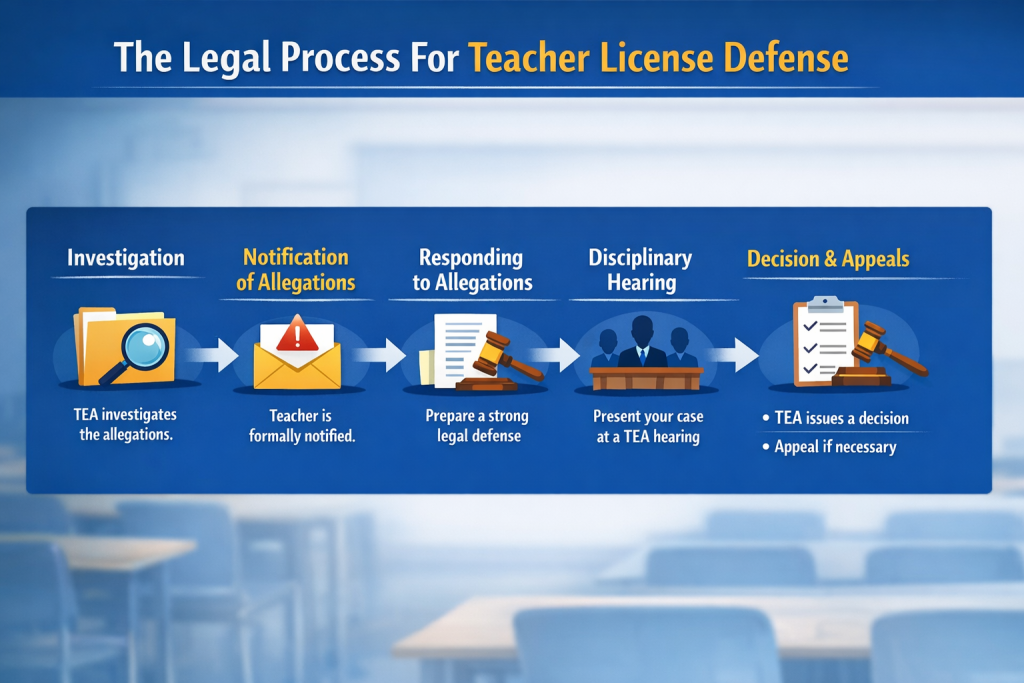
The Legal Process For Teacher License Defense

The process of defending a teacher’s license when faced with allegations begins as soon as the Texas Education Agency takes notice of a potential violation. Here’s how the process generally works:

  • Investigation

The process typically begins when a complaint is filed against the teacher, or if the TEA becomes aware of a potential violation through other means (such as a criminal conviction). Once the TEA receives the complaint, an investigation is launched. The agency will gather evidence, interview witnesses, and review any relevant documents. It’s important to note that the investigation process can be lengthy and complex.

  • Notification Of Allegations

If the TEA determines that there is sufficient evidence to pursue disciplinary action, the teacher will be notified of the allegations. This is a formal step, and teachers should take it seriously. The notification may include information about the nature of the violation and the evidence that supports it.

  • Response To Allegations

Once notified, the teacher has the right to respond to the allegations. This is where having legal representation becomes critical. A Texas Education Agency teacher license defense attorney will help the teacher understand their rights, evaluate the evidence against them, and build a strong defense.

  • Disciplinary Hearing

If the case is not resolved at the initial stages, a disciplinary hearing will be scheduled. The teacher will have the opportunity to present evidence and argue their case before a TEA panel. The teacher’s attorney can represent them at this hearing, cross-examine witnesses, present their own evidence, and argue the case.

  • Decision And Appeals

After the hearing, the TEA will issue a decision regarding the teacher’s license. The decision could range from dismissing the case to suspending or revoking the license. If the teacher disagrees with the decision, they may appeal to a higher authority, such as the State Office of Administrative Hearings.

Strategies For Defending Against License Suspension Or Revocation

There are several legal strategies that a teacher can use to defend their teaching license. These strategies depend on the nature of the allegations and the evidence available, but here are some of the most effective methods:

  • Challenge The Evidence

In many cases, the evidence presented by the TEA may not be as strong as it seems. A skilled defense attorney can review the evidence, challenge its validity, or demonstrate that it does not support the allegations. For example, if the evidence consists of witness testimony, the defense may point out inconsistencies or biases in the statements.

  • Prove Compliance With Professional Standards

Teachers who have violated professional standards but have since taken corrective measures may be able to use this as part of their defense. If a teacher has completed rehabilitation programs, undergone counselling, or engaged in other corrective actions, this can demonstrate their commitment to upholding the profession’s ethical standards.

  • Demonstrate A History Of Good Conduct

Teachers with a long history of exemplary classroom service can use their clean record as part of their defense. A teacher who has consistently demonstrated professionalism, commitment to students, and ethical behaviour can argue that a single mistake should not result in the loss of their career.

  • Engage In Settlement Or Mediation

Not every case needs to go to a formal hearing. In some situations, it may be possible to reach a settlement or mediate with the TEA. This allows both parties to negotiate a resolution without going through a lengthy hearing process. This can often result in reduced penalties or a favourable outcome for the teacher.

Case Studies: Successful Teacher License Defenses

  • Case Study 1: Criminal Allegations Dismissed

A high school teacher in Texas was accused of a criminal offence outside of the classroom. The teacher’s defense lawyer worked tirelessly to show that the charges were unfounded. After presenting character references, evidence of the teacher’s positive relationship with students, and evidence that the offence had no bearing on the teacher’s professional conduct, the TEA decided to dismiss the case and retain the teacher’s license.

  • Case Study 2: Ethics Violation and Rehabilitation

Another teacher faced allegations of unprofessional conduct after an emotional outburst in the classroom. The teacher’s defense lawyer argued that the incident was an isolated event and that the teacher had taken steps to address their behaviour, including enrolling in anger management classes and attending professional development courses. As a result, the TEA decided to suspend the license for a short time, allowing the teacher to continue their career after demonstrating their commitment to professionalism.

How To Prevent Issues With Your Teacher License?

The best defense is a good offence. Here’s how teachers can prevent issues with their license before they arise:

  • Continuing Education

Texas teachers must complete continuing education requirements to renew their certification. This keeps teachers updated on best practices, new teaching methodologies, and changes in state laws. Staying on top of professional development ensures teachers remain in compliance with TEA regulations.

  • Follow Ethical Guidelines

The TEA’s Code of Ethics and Standard Practices outlines the expected behaviour for educators. Teachers should adhere to these guidelines at all times, both in and out of the classroom, to avoid allegations of misconduct. This includes maintaining appropriate boundaries with students, acting professionally, and avoiding any behaviour that could be perceived as unethical.

  • Be Informed On Regulations

Laws and regulations change frequently. Teachers should stay informed about any changes in the law, particularly those that impact their certification. Teachers should read official TEA communications, attend workshops, and consult with legal professionals to ensure compliance with all current regulations.

Common Reasons For Teacher License Suspension Or Revocation In Texas

Reason Impact on License Defensive Action
Criminal Offences (e.g., drug-related)
Immediate Suspension/Revocation
Legal Defense and Rehabilitation
Unprofessional Conduct (e.g., abuse)
Investigation, Possible Revocation
Evidence of Corrective Action
Failure to Complete Required CE
Probation or License Hold
Completing Required Continuing Ed
Non-compliance with TEA Guidelines
Suspension or Revocation
Appeal and Compliance Demonstration

How To Choose The Right Legal Defense Team For Your Teacher License Case?

When facing allegations, choosing the right legal representation is critical. Here are some tips to help you select the best lawyer for your teacher license defense:

Texas Education Agency
  • Experience In Education Law

Look for a lawyer who specializes in education law, particularly one with experience in defending teacher licenses. They will understand the nuances of TEA regulations and be better equipped to navigate the legal process.

  • Proven Success In Similar Cases

Choose a lawyer with a track record of successfully defending teachers in licensing matters. A proven history of positive outcomes can give you confidence in their abilities.

  • Personalized Strategy

Every case is different. The right lawyer will take the time to understand your situation and craft a defense strategy tailored to your specific needs.

Conclusion

Defending a teacher’s license is a serious matter that requires careful attention to detail, legal expertise, and a well-thought-out strategy. Whether facing criminal charges, allegations of misconduct, or failure to meet continuing education requirements, the consequences of losing your license can be dire. However, with the right defense, many teachers can retain their teaching credentials and continue their careers.

If you are facing the possibility of losing your teacher license, it is crucial to act quickly. Seeking experienced legal counsel to help guide you through the Texas Education Agency Teacher License Defense process can make all the difference. Protect your career by ensuring you have a strong, effective defense from L and L Law Group that helps you stay in the classroom.

Frequently Asked Questions

Q1. What Is The Texas Education Agency (TEA), And What Role Does It Play In Teacher Licensing?

The Texas Education Agency (TEA) is the state agency responsible for overseeing the certification and regulation of teachers in Texas. TEA issues teaching licenses, sets educational standards, and ensures that educators comply with state laws and professional ethics. If a teacher is accused of misconduct or violating professional regulations, the TEA conducts investigations and has the authority to suspend or revoke teaching licenses.

Q2. What Are The Common Reasons For A Teacher’s License To Be Revoked Or Suspended In Texas?

A teacher’s license may be revoked or suspended in Texas for a variety of reasons, including:

  • Criminal offences (e.g., drug-related crimes, assault)
  • Professional misconduct (e.g., abuse of students, inappropriate behaviour)
  • Failure to meet continuing education requirements
  • Ethical violations, such as dishonesty or fraud
  • Non-compliance with TEA regulations, such as teaching outside the scope of certification
  • Teachers facing any of these allegations should seek immediate legal advice.

Q3. How Can I Defend My Teaching License If It Is Under Threat Of Suspension?

A teacher can defend their license by challenging the evidence presented, showing compliance with professional standards, and demonstrating corrective actions if the allegations are true. Other defense strategies may include:

  • Providing rehabilitation for past mistakes
  • Gathering character references and testimonials from colleagues
  • Engaging in settlement or mediation to reach a resolution outside of a hearing
  • It’s essential to have an experienced attorney who specializes in education law to help guide you through this process.

Q4. What Should I Do If I Receive A Notification That My Teacher’s License Is Being Investigated?

If you receive a notification that your license is under investigation, you should:

  • Take the matter seriously and seek legal representation immediately.
  • Review the allegations carefully and gather any supporting evidence or documentation that can defend your case.
  • Follow all procedures outlined by the TEA, including responding to any requests for information or attending hearings as required.
  • A legal expert in teacher licence defense can provide critical support to ensure you navigate the investigation process effectively.

Q5. How Can I Prevent Issues With My Texas Teaching License?

To prevent issues with your teaching license, ensure that you:

  • Complete the required continuing education courses to maintain your certification.
  • Follow the TEA’s ethical guidelines and avoid any conduct that could be considered unethical or unprofessional.
  • Stay updated on changes to TEA regulations and laws that could impact your certification.
  • Maintain professional behaviour both inside and outside of the classroom, adhering to the standards set by the TEA.

Section Title

Simplifying Data Breach Liability Law And Your Legal Risks

In the current digital landscape, data breach liability law makes it clear that a breach is no...

What Impacts The Role Of DNA Evidence In Criminal Cases In Texas?

DNA evidence in criminal cases in Texas carries immense weight with modern juries, often viewed as...

Possession Of Prohibited Weapons In Texas: What You Need To Know?

Possession of prohibited weapons in Texas is taken very seriously under state law, even though Texas...

Tampering With Evidence Texas: Hidden Felony Risks And Defense Strategies

Facing accusations of tampering with evidence Texas can be overwhelming, especially when the...

Cryptocurrency Fraud Charges in Frisco, Texas: What You Need to Know?

The legal landscape is shifting as the cryptocurrency fraud charges Texas residents face become a...

Wire Fraud Charges In Texas: Risks, Penalties, And Defense Strategies

Facing wire fraud charges in Texas can feel like the world is crashing down around you. The...

Kidnapping Charges In Frisco, Texas: A Defense Lawyer’s Perspective

Facing kidnapping charges in Frisco is one of the most serious legal situations an individual can...

Capital Murder Charges In Frisco, Texas: A Defense Lawyer’s Guide To High-Stakes Cases

Capital murder charges in Texas represent the most serious legal category in the state’s judicial...

How To Get Frisco Family Violence Charges Dismissed Or Dropped?

Frisco Family Violence Charges can feel overwhelming from the moment an arrest happens in North...
Categories
Criminal Defense

Federal Lawyer in Counterfeit Money Cases

Blog

The Role of a Federal Lawyer in Counterfeit Money Cases

Reggie London

Reggie London

Federal Lawyer

Facing counterfeit money charges in Dallas Fort Worth is a serious legal challenge that demands expert legal representation. A federal lawyer specializing in counterfeiting cases plays a crucial role in protecting your rights and crafting a strong defense strategy. These cases are often prosecuted aggressively by federal agencies such as the U.S. Secret Service and Homeland Security Investigations (HSI), making it essential to understand the complexities of the charges. 

From the production of counterfeit currency to the distribution and possession of related tools, these offenses carry severe consequences. A skilled federal attorney is vital in navigating the complexities of federal law, providing crucial insights into how the case might unfold, and helping you take informed steps in your defense.

Understanding Federal Counterfeiting

Federal counterfeiting refers to the illegal act of producing, altering, or distributing counterfeit U.S. currency, securities, or government-issued obligations. The key statutes governing these offenses are found in 18 U.S.C. §§ 471-478, which criminalize the creation of fake money, its circulation as genuine currency, and the possession of tools intended for counterfeiting. To secure a conviction, the government must prove intent to defraud. This means that mere accidental possession of counterfeit items typically does not lead to prosecution, as it is the deliberate intent to deceive that constitutes a crime.

Typical Federal Counterfeiting Offenses in Texas

Federal counterfeiting charges in Texas cover a range of illegal activities related to producing or using fake currency and government-related documents. Understanding these offenses is critical for anyone facing allegations or seeking to prevent legal trouble.

Making Counterfeit Currency

One of the most common federal counterfeiting offenses is creating fake U.S. bills or obligations. This includes producing currency from scratch, altering genuine bills, or using printing equipment to reproduce money. In Dallas Fort Worth, federal authorities such as the U.S. Secret Service actively investigate such activities, as producing counterfeit currency threatens financial institutions, businesses, and the public. A guilty verdict can result in significant jail time along with heavy fines.

Passing or Distributing Fake Money

Another serious offense is passing counterfeit currency. This occurs when someone knowingly uses fake money in transactions, whether at businesses, banks, or private exchanges. 

Possessing Counterfeiting Tools or Plates

Federal law also criminalizes possessing tools, plates, or digital files used to create counterfeit currency. This includes printing presses, engraving tools, or software designed for forgery. In Dallas Fort Worth, authorities treat possession as seriously as passing counterfeit money, especially if the intent to use the tools for fraudulent purposes is evident. 

Forging Government Documents or Credentials

A related offense is forging official government documents or credentials, such as passports, visas, identification cards, or government-issued checks. These crimes often occur alongside currency counterfeiting in local investigations. Forgery can lead to federal charges, as it poses a significant risk to public safety and government operations. In North Texas, law enforcement agencies aggressively pursue such offenses, often using multi-agency task forces.

Why are Federal Counterfeiting Cases Serious?

Federal counterfeiting charges come with severe penalties, and the prosecution is often aggressive due to the high stakes involved. These offenses not only threaten the financial system but also undermine public trust. Below is a summary of the key factors that make these cases particularly serious:

Texas Embezzlement Penalties by Value

Factor Details
Severe Federal Penalties
Convictions can result in 20 years in prison and fines up to $250,000 for producing counterfeit currency. Possessing counterfeiting tools may lead to 25 years in prison.
Aggressive Local Enforcement
Federal agencies like the U.S. Secret Service and HSI, along with local law enforcement, conduct thorough investigations using undercover operations, surveillance, and forensic analysis.
Real-Life Consequences
Beyond prison, a conviction can severely impact employment opportunities, reputation, and access to federal benefits. The long-term effects are often devastating.

The Importance of Early Legal Intervention in Counterfeiting Cases

When facing federal counterfeiting charges, the importance of early legal intervention cannot be overstated. These cases are often intricate and involve multiple agencies such as the U.S. Secret Service and Homeland Security Investigations (HSI), which work diligently to build a strong case. The sooner you involve a skilled federal lawyer, the more effectively they can help protect your rights and navigate the complexities of the investigation and prosecution.

Preventing Procedural Mistakes

Federal investigations can be extensive, with law enforcement agencies gathering evidence over weeks or even months. Early legal intervention allows your lawyer to immediately assess the investigation and ensure that it is being conducted lawfully. 

They can spot potential procedural errors or violations in how evidence is collected, which may later be used to challenge the admissibility of evidence in court. An experienced lawyer can ensure that no steps are skipped in the legal process, helping to avoid costly mistakes that could negatively affect your case.

Analyzing Evidence Early

One of the critical aspects of defending against federal counterfeiting charges is understanding the evidence the prosecution will present. Early intervention gives your lawyer time to thoroughly examine all the materials, from counterfeit currency to printing tools and digital files. 

By reviewing the evidence early on, your lawyer can identify weaknesses in the prosecution’s case, such as errors in the chain of custody, inconsistencies in witness testimony, or questionable forensic analysis. This gives your defense team a head start in building a strategy that can challenge the evidence and potentially lead to reduced charges or even a dismissal.

Building a Strong Defense from the Start

When a federal counterfeiting case is opened, the government often moves quickly to gather evidence and pursue charges. The earlier you bring in a lawyer, the better they can help you strategize for a successful defense. 

Whether it involves disputing the intent to defraud, challenging the authenticity of the evidence, or negotiating a plea deal, having a legal expert by your side from the beginning is crucial. A lawyer can advise you on the best course of action, whether it’s cooperating with law enforcement or asserting your rights during questioning.

Reducing Penalties and Securing Alternative Sentencing

In many counterfeiting cases, a skilled lawyer may be able to negotiate a favorable outcome through plea negotiations or alternative sentencing options. Federal sentencing guidelines are strict, but an experienced lawyer can advocate for a reduction in charges or push for lighter penalties such as probation, community service, or house arrest. 

Early legal intervention is especially valuable when it comes to negotiating a plea deal, as the earlier your lawyer gets involved, the better the chances of securing a more lenient sentence.

Protecting Your Long-Term Future

The consequences of a federal counterfeiting conviction go far beyond the immediate criminal penalties. A conviction can severely affect your professional life, reputation, and future opportunities. Early intervention by a federal lawyer ensures that you have the best possible chance of minimizing the impact on your career, family, and financial stability. 

By addressing the case early on, your lawyer can help you explore options to protect your rights and, in some cases, even prevent a conviction from tarnishing your future.

In conclusion, early legal intervention is a critical factor in successfully defending against federal counterfeiting charges. From preventing procedural errors to securing more favorable sentencing, having an experienced federal lawyer involved from the outset can make all the difference in the outcome of your case.

How an Experienced Federal Lawyer Defends Against Federal Counterfeiting Charges?

Defending against federal counterfeiting charges requires a multifaceted approach, as these cases often involve complex legal principles and high-stakes penalties. An experienced federal lawyer can implement various legal strategies to challenge the charges and protect the rights of their client. Here are some of the key defense strategies that might be employed in a federal counterfeiting case:

Challenging the Intent to Defraud

One of the core elements of a federal counterfeiting charge is proving the defendant’s intent to defraud. To secure a conviction, the prosecution must establish that the defendant knowingly and intentionally engaged in counterfeiting to deceive others. A skilled lawyer can challenge this crucial element by arguing that the defendant lacked the necessary intent. 

For example, if the defendant was unaware that the currency was counterfeit or if there was no clear evidence showing intent to use or distribute fake money, a defense lawyer could argue that the charge does not meet the federal definition of counterfeiting. Without intent, the case may fall apart, leading to a dismissal or reduced charges.

Questioning the Authenticity of the Evidence

In any criminal case, the prosecution’s evidence must be both authentic and credible. A defense lawyer can attack the authenticity of the evidence presented by the government. This might involve disputing the legitimacy of the counterfeit currency, forging tools, or digital files that were seized as evidence. 

The defense could call into question the methods used to identify the counterfeit bills or challenge forensic analysis. For example, they may argue that the currency was not proven to be counterfeit beyond a reasonable doubt or that the materials seized are not directly linked to the defendant.

Federal Lawyer

Contesting the Legality of Evidence Collection

Another common defense strategy is to challenge how the evidence was obtained. If law enforcement agents violated the defendant’s rights during the investigation or evidence collection process, such as by conducting an illegal search or seizure, any evidence obtained unlawfully could be inadmissible in court. 

A lawyer can file a motion to suppress the evidence, arguing that the improper gathering of evidence should result in the case being dismissed. If the defense can prove that evidence was gathered without a valid warrant or reasonable cause, the case against the defendant could be significantly weakened.

Arguing for Mistaken Identity or Lack of Knowledge

Mistaken identity is a defense that may be applicable if the defendant is falsely accused of being involved in a counterfeiting operation. A defense lawyer might present evidence showing that the defendant was not involved in the alleged criminal activity or that they did not have the counterfeit money or tools. 

Additionally, the defendant may not have known that the items they possessed were counterfeit. In cases where the defendant was unaware that they had counterfeit money or counterfeit-making tools, this lack of knowledge could serve as a strong defense.

Attacking the Credibility of Witnesses

Federal counterfeiting cases sometimes rely on testimony from co-conspirators or witnesses who claim to have seen or heard incriminating actions. A skilled defense lawyer can challenge the credibility of these witnesses by pointing out inconsistencies in their statements or questioning their motives for cooperating with law enforcement. 

For instance, if a co-defendant has been promised leniency in exchange for testimony, their reliability could be called into question. If the jury doubts the credibility of these witnesses, it could significantly undermine the prosecution’s case.

Negotiating a Plea Deal or Alternative Sentencing

In many federal counterfeiting cases, especially those involving first-time offenders, a defense lawyer may work with prosecutors to negotiate a plea deal or seek alternative sentencing options. This might involve pleading guilty to lesser charges in exchange for a reduced sentence or seeking sentencing alternatives such as probation or community service instead of jail time. 

A skilled lawyer can assess the strengths and weaknesses of the case early on and advise the defendant on whether accepting a plea deal or negotiating for alternative sentencing might be the best course of action.

Challenging Federal Jurisdiction

Finally, in some cases, a defense lawyer may challenge the jurisdiction of the federal court. Federal courts handle crimes that cross state lines or involve national security, but if the offense was entirely local and did not meet the criteria for federal jurisdiction, the defense could argue that the case should be moved to a state court. This strategy could potentially reduce the severity of the charges or change the way the case is prosecuted.

A federal lawyer can challenge the prosecution’s evidence, question the defendant’s intent, and explore various legal defenses to secure a favorable outcome. By investigating evidence, questioning witnesses, and scrutinizing legal procedures, a skilled attorney gives the defendant the best chance of success.

Conclusion

Federal counterfeiting charges in Dallas Fort Worth carry high stakes, including prison, fines, and lasting impacts on employment and finances. A federal lawyer can examine evidence, identify defenses, and guide you through federal procedures in the Northern District of Texas. Experienced local representation can significantly influence the outcome of your case. Early action is crucial for protecting your rights. Contact L & L Law Group for skilled advocacy and guidance tailored to Dallas Fort Worth clients.

Frequently Asked Questions

Q1. What Qualifies As A Federal Counterfeiting Charge?

A federal counterfeiting charge arises when someone knowingly creates, circulates, or possesses fake U.S. currency, government securities, or financial instruments with the intent to defraud. This includes producing counterfeit bills, altering currency, or possessing tools used for counterfeiting. 

In Dallas Fort Worth, federal agencies like the U.S. Secret Service investigate these offenses, and while accidental possession may not lead to prosecution, any intent to use or distribute counterfeit money can result in severe penalties, including lengthy prison sentences and hefty fines.

Q2. What Are the Common Penalties for Federal Counterfeiting in Dallas Fort Worth?

Penalties for federal counterfeiting depend on the offense type, criminal history, and the amount of counterfeit currency involved. Convictions in Dallas Fort Worth federal courts can result in 20 to 25 years of imprisonment and fines up to $250,000. Possession of tools, printing plates, or digital files used to create counterfeit bills may lead to additional charges and longer sentences.

Q3. How Does Intent Affect The Case?

Intent is a critical element in federal counterfeiting cases. Prosecutors must prove that the defendant knowingly and deliberately engaged in counterfeiting to defraud others. In Dallas Fort Worth, demonstrating intent is often central to building the government’s case, using evidence such as communications, possession of counterfeiting equipment, or co-conspirator testimony.

Q4. Can Possession Alone Result In Federal Charges?

Yes, federal law considers possession of counterfeiting tools, plates, or digital files intended to create fake currency as a prosecutable offense. Even if no counterfeit money has been distributed, the intent to defraud can trigger federal charges.

Section Title

Simplifying Data Breach Liability Law And Your Legal Risks

In the current digital landscape, data breach liability law makes it clear that a breach is no...

What Impacts The Role Of DNA Evidence In Criminal Cases In Texas?

DNA evidence in criminal cases in Texas carries immense weight with modern juries, often viewed as...

Possession Of Prohibited Weapons In Texas: What You Need To Know?

Possession of prohibited weapons in Texas is taken very seriously under state law, even though Texas...

Tampering With Evidence Texas: Hidden Felony Risks And Defense Strategies

Facing accusations of tampering with evidence Texas can be overwhelming, especially when the...

Cryptocurrency Fraud Charges in Frisco, Texas: What You Need to Know?

The legal landscape is shifting as the cryptocurrency fraud charges Texas residents face become a...

Wire Fraud Charges In Texas: Risks, Penalties, And Defense Strategies

Facing wire fraud charges in Texas can feel like the world is crashing down around you. The...

Kidnapping Charges In Frisco, Texas: A Defense Lawyer’s Perspective

Facing kidnapping charges in Frisco is one of the most serious legal situations an individual can...

Capital Murder Charges In Frisco, Texas: A Defense Lawyer’s Guide To High-Stakes Cases

Capital murder charges in Texas represent the most serious legal category in the state’s judicial...

How To Get Frisco Family Violence Charges Dismissed Or Dropped?

Frisco Family Violence Charges can feel overwhelming from the moment an arrest happens in North...
Categories
Criminal Defense

Types of Child Indecency Allegations

Blog

Understanding The Types Of Child Indecency Allegations

Reggie London

Reggie London

Child Indecency Allegations

When child indecency allegations arise, the consequences extend far beyond the courtroom. These allegations carry severe legal penalties, devastating social stigma, and life-altering consequences that can affect employment, family relationships, and personal freedom. Texas law takes these matters extremely seriously, with prosecutors pursuing charges aggressively and courts imposing harsh sentences upon conviction.

Facing child indecency allegations requires immediate action and experienced legal representation. The complexity of Texas statutes governing these offenses, combined with the emotional nature of cases involving minors, makes it essential to understand what you’re up against. Whether you’re under investigation or already facing charges, knowing the different types of allegations and their potential consequences is the first step toward mounting an effective defense.

What Constitutes Child Indecency Under Texas Law?

Texas Penal Code outlines specific offenses related to child indecency, each with distinct elements and penalties. The state defines these crimes based on the nature of the conduct, the age of the alleged victim, and the circumstances surrounding the incident. Unlike some jurisdictions, Texas law creates separate categories for different types of inappropriate behavior involving minors.

The primary statute governing these allegations is Texas Penal Code Section 21.11, which addresses indecency with a child. This law criminalizes both exposure and contact offenses. The distinction between these categories significantly impacts the severity of charges and available defenses. Additionally, Texas law considers the age difference between the accused and the alleged victim when determining the appropriate charge level.

Overview Of Child Indecency Offenses In Texas

Offense Type Texas Penal Code Felony Classification Potential Prison Sentence Age of Victim Sex Offender Registration
Indecency with a Child by Exposure
Section 21.11
Third-Degree Felony
2-10 years
Under 17
Required
Indecency with a Child by Contact
Section 21.11
Second-Degree Felony (victim under 14) Third-Degree Felony (victim 14-16)
2-20 years (2nd degree) 2-10 years (3rd degree)
Under 17
Required
Continuous Sexual Abuse of a Young Child
Section 21.02
First-Degree Felony
25 years to Life
Under 14
Required
Sexual Performance by a Child
Section 43.25
Second-Degree Felony
2-20 years
Under 18
Required
Online Solicitation of a Minor
Section 33.021
Second or Third-Degree Felony
2-20 years (2nd degree) 2-10 years (3rd degree)
Under 17
Required
Possession of Child Pornography
Section 43.26
Third-Degree Felony
2-10 years
Under 18 depicted
Required
Promotion of Child Pornography
Section 43.27
Second-Degree Felony
2-20 years
Under 18 depicted
Required

Indecency With A Child By Exposure

This offense involves exposing one’s genitals to a child under 17 years of age with the intent to arouse or gratify sexual desire. Texas law treats this as a third-degree felony, punishable by two to ten years in prison and fines up to $10,000. The prosecution must prove that the exposure was intentional and occurred with specific sexual intent.

Common scenarios leading to these charges include allegations arising from:

  • Accusations involving household members or family friends
  • Incidents alleged to have occurred during childcare situations
  • Claims stemming from neighborhood disputes
  • Allegations related to online video communications
  • Accusations involving changing rooms or bathroom facilities

The exposure offense doesn’t require physical contact with the child. However, the state must establish that the accused intended the child to see the exposure and that it was done for sexual purposes. This element of intent becomes crucial in building a defense strategy, as innocent circumstances can sometimes be misconstrued or misrepresented.

Indecency With A Child By Contact

Contact offenses involve touching specific body parts of a child under 17 years old with sexual intent, or causing a child to touch the accused person’s body in a similar manner. This charge is also classified as a second-degree felony if the victim is younger than 14, carrying a potential sentence of two to twenty years in prison. When the alleged victim is 14 or older, the offense remains a third-degree felony.

The law defines contact as touching the genitals, breast, or anus of the child, or causing the child to touch those areas on another person. The prosecution must prove the touching occurred and that it was done with the intent to arouse or gratify sexual desire. This intent element distinguishes criminal conduct from innocent touching that might occur during medical care, diaper changing, or other legitimate activities.

These allegations frequently arise in the following contexts:

  • Babysitting or childcare situations
  • Teacher-student relationships
  • Sports coaching or mentoring activities
  • Family gatherings or visits
  • Therapy or counseling sessions

The accused often faces additional challenges when the alleged victim is very young, as young children may have difficulty articulating what happened or may provide inconsistent accounts. Conversely, older children might have clearer memories but could also have motivations to fabricate or exaggerate claims.

Sexual Performance By A Child

Texas Penal Code Section 43.25 criminalizes employing, authorizing, or inducing a child under 18 to engage in sexual conduct or performance. This offense also includes possessing or promoting material depicting a child engaged in sexual conduct. The law treats these offenses as second-degree felonies, with enhanced penalties when the child is younger than 14.

Sexual performance charges often involve:

  • Allegations of photographing or recording minors in sexual situations
  • Claims of producing or distributing explicit materials involving children
  • Accusations related to online activities and digital content
  • Charges involving coercing minors to create sexual content

These cases frequently involve digital evidence, including computers, smartphones, cloud storage, and social media accounts. Law enforcement agencies employ sophisticated forensic techniques to recover deleted files and trace online activities. The technical complexity of digital evidence creates opportunities for defense attorneys to challenge the chain of custody, authentication, and interpretation of electronic materials.

Online Solicitation Of A Minor

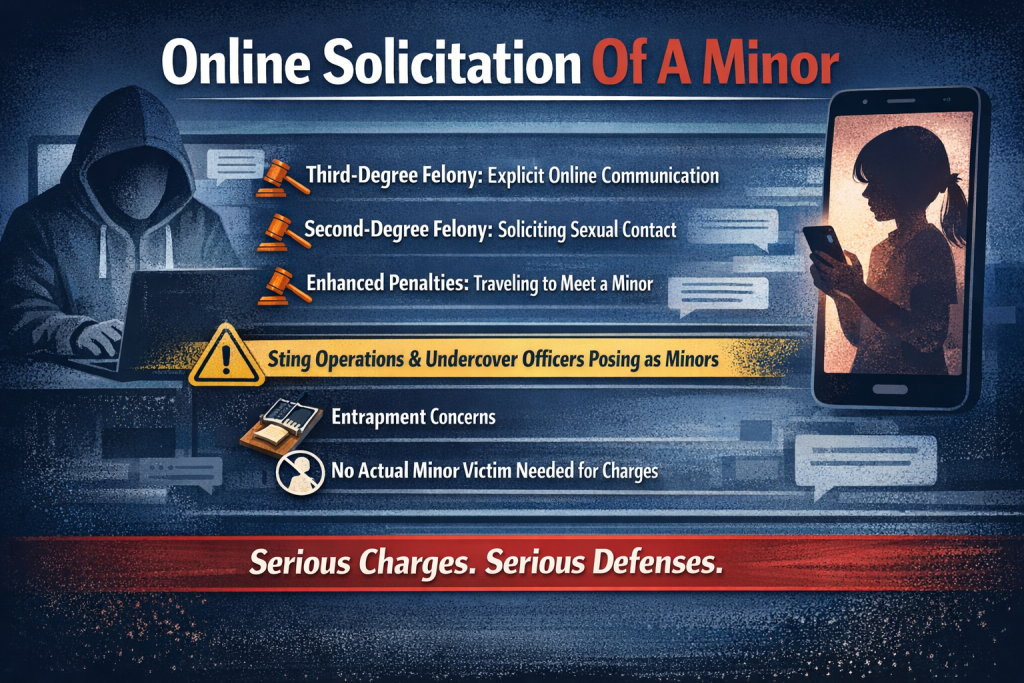
Texas Penal Code Section 33.021 addresses online solicitation, making it illegal to communicate with a minor in a sexually explicit manner or to solicit sexual contact with someone the accused believes to be under 17. This offense encompasses internet communications, text messages, social media interactions, and other electronic communications.

The statute creates multiple tiers of offenses:

  • Third-degree felony for communicating in a sexually explicit manner with intent to arouse
  • Second-degree felony for soliciting sexual contact or conduct
  • Enhanced penalties when the accused travels to meet the minor

Online solicitation cases present unique challenges because they often involve undercover law enforcement officers posing as minors. These sting operations raise important entrapment defenses and questions about whether the accused would have committed the offense without government inducement. The lack of an actual minor victim doesn’t prevent prosecution under Texas law.

Continuous Sexual Abuse Of A Young Child

Texas law recognizes a specific offense for ongoing abuse, codified in Penal Code Section 21.02. This charge applies when someone commits two or more acts of sexual abuse against a child under 14 during a period of 30 days or more. Classified as a first-degree felony, this offense carries a minimum sentence of 25 years in prison, with a maximum of life imprisonment.

The prosecution doesn’t need to prove the exact dates of each incident, only that two or more qualifying acts occurred within the specified timeframe. Qualifying acts include sexual assault, aggravated sexual assault, and indecency with a child by contact. This makes the offense particularly serious and challenging to defend, as the state has significant latitude in presenting its case.

These charges commonly arise in situations involving:

  • Allegations by children living in the same household as the accused
  • Claims made during family law proceedings
  • Accusations from children in foster care or adoption situations
  • Delayed disclosures of alleged historical abuse

The delayed nature of many such allegations complicates defense efforts, as witnesses’ memories fade, physical evidence disappears, and alibi evidence becomes harder to establish. However, the passage of time can also create inconsistencies in the accuser’s account and raise questions about why the allegations emerged when they did.

Possession And Promotion Of Child Pornography

Separate from contact offenses, Texas law criminalizes possessing, promoting, or distributing visual material depicting children engaged in sexual conduct. Penal Code Sections 43.26 and 43.27 establish these offenses, with penalties ranging from third-degree felonies to first-degree felonies depending on the circumstances and the number of images involved.

Possession charges require proof that the accused knowingly or intentionally possessed the prohibited material. Promotion offenses involve distribution, sale, or production of such materials. Federal charges may also apply in these cases, potentially resulting in concurrent state and federal prosecutions with devastating cumulative penalties.

Common scenarios leading to these charges include:

  • Forensic examination of electronic devices during unrelated investigations
  • Reports from internet service providers or technology companies
  • Discoveries made during divorce proceedings or family disputes
  • Investigations triggered by tips from acquaintances or family members

Defense of these charges often requires technical expertise to examine how files came to be on a device, whether the accused had knowledge of their presence, and whether proper forensic protocols were followed. Issues such as malware, unwanted downloads, and shared computer access can be relevant to establishing reasonable doubt.

Why Do You Need A Child Indecency Defense Lawyer Immediately?

The moment you learn of an investigation or allegation, time becomes your enemy. Law enforcement may already be building a case, collecting evidence, and interviewing witnesses. Anything you say can and will be used against you, even statements made in an attempt to explain or defend yourself. Many people inadvertently make damaging admissions before consulting with an attorney.

A skilled child indecency defense lawyer serves several critical functions from the outset. First, your attorney can intervene in the investigation phase, potentially preventing charges from being filed. Second, legal counsel protects your constitutional rights during questioning and searches. Third, an experienced defense attorney begins building your case immediately, identifying witnesses, preserving evidence, and developing defense strategies.

Common Defenses To Child Indecency Allegations

Several defense strategies may be available depending on the specific facts of your case. False accusations represent one of the most common scenarios, whether arising from misunderstandings, manipulation of children by adults with ulterior motives, or intentional fabrication. In custody disputes, allegations sometimes surface as a tactic to gain advantage in family court proceedings.

Lack of intent provides another potential defense, particularly in exposure cases where innocent conduct is mischaracterized. Medical professionals, parents, and caregivers regularly engage in conduct that might appear inappropriate when viewed without proper context. Demonstrating that touching occurred for legitimate, non-sexual purposes can be essential to your defense.

The Investigation And Charging Process

Child indecency investigations typically begin when a child makes a disclosure to a parent, teacher, counselor, or other mandatory reporter. Texas law requires certain professionals to report suspected child abuse to authorities. Once a report is made, law enforcement and Child Protective Services may become involved.

The investigation often includes a forensic interview of the alleged victim at a Child Advocacy Center. These interviews are conducted by specially trained professionals and are typically recorded. The interviewer asks open-ended questions designed to elicit information without suggesting answers. However, the quality and propriety of these interviews vary, and they remain subject to criticism and legal challenge.

Sex Offender Registration Requirements

Conviction for most child indecency offenses triggers mandatory sex offender registration under Texas law. The registration period varies from 10 years to lifetime, depending on the specific offense and the age of the victim. Registered sex offenders must comply with numerous reporting requirements and face significant restrictions on where they can live and work.

Registration obligations include:

  • Providing updated addresses within seven days of moving
  • Reporting employment and education information
  • Submitting to periodic in-person verification of information
  • Notifying authorities before traveling
  • Allowing publication of personal information on public databases

The collateral consequences of sex offender registration often prove more devastating than incarceration itself. Registered offenders face barriers to employment, housing, and education. They may be prohibited from living near schools, parks, or daycare facilities, effectively excluding them from large portions of many cities. Family relationships suffer when registered offenders cannot attend school functions or participate in activities involving children.

How These Allegations Affect Your Life Beyond Criminal Court?

Even before a conviction, child indecency allegations create a cascade of consequences. Employers often terminate workers upon learning of charges, particularly in fields involving children or positions requiring professional licenses. Professional licensing boards may suspend or revoke credentials based solely on pending charges.

Family courts respond swiftly to allegations involving children. If you have children of your own, the other parent may seek emergency custody orders restricting or eliminating your parenting time. Child Protective Services may open an investigation and place your name on the central registry of reported abuse. These parallel civil proceedings move independently of the criminal case and require separate legal attention.

Why Choose An Experienced Child Indecency Defense Lawyer?

The attorney you choose can determine whether you spend decades in prison or successfully defend against the charges. These cases require specific knowledge and skills that general practice criminal attorneys may lack. Your lawyer must understand the forensic interview process, know how to cross-examine child witnesses effectively, and be familiar with expert witnesses who can challenge the prosecution’s evidence.

An established defense lawyer will have relationships with experts in child psychology, forensic interviewing techniques, and digital forensics. These professionals can provide critical testimony to explain how false allegations develop, why interview techniques may produce unreliable information, and how digital evidence may be misinterpreted.

Building Your Defense Strategy

Every case is different, requiring a tailored approach based on the specific allegations and evidence. The first step involves a thorough investigation of the facts, including reviewing all discovery materials provided by the prosecution, interviewing potential witnesses, and examining any physical or digital evidence.

Your attorney will scrutinize the forensic interview of the alleged victim, looking for leading questions, suggestive techniques, or inconsistencies in the child’s account. Expert witnesses can evaluate whether the interview was conducted properly and whether the information obtained is reliable. In many cases, problems with the interview process provide the foundation for reasonable doubt.

The Importance Of Acting Quickly

Every day that passes without legal representation puts you at greater risk. Witnesses’ memories fade, evidence may be lost, and opportunities to prevent charges from being filed diminish. Once you know you’re under investigation or have been accused, contacting a child indecency defense lawyer should be your first priority.

Early intervention sometimes prevents charges from being filed at all. Your attorney can communicate with investigators, provide context that might not otherwise be considered, and demonstrate weaknesses in the case that persuade prosecutors not to proceed. Even if charges cannot be avoided, early involvement allows your lawyer to shape the narrative and protect your rights from the beginning.

Final Thoughts

Allegations of child indecency threaten everything you’ve built and everything you care about. The path forward requires experienced legal guidance, strategic planning, and aggressive advocacy. At L & L Law Group, our attorneys focus on defending individuals facing these serious charges throughout the Dallas Fort Worth area. We recognize what’s at stake and commit ourselves fully to protecting your rights, your freedom, and your future. Contact us today for a confidential consultation to discuss your case and learn how we can help you fight these allegations.

Frequently Asked Questions

Q1. Can I Be Charged With Child Indecency Even If The Allegations Are False?

Yes, unfortunately, charges can be filed based solely on a child’s accusation, even without physical evidence or corroborating witnesses. Texas prosecutors often move forward with cases that rely entirely on the testimony of the alleged victim. This makes it absolutely essential to have an experienced defense attorney who knows how to challenge the reliability of such testimony and expose inconsistencies or motives for fabrication.

Q2. What Should I Do If Police Want To Question Me About Child Indecency Allegations?

Politely decline to answer any questions and immediately request an attorney. Anything you say can be misinterpreted or taken out of context and used against you. Even if you believe you can clear up a misunderstanding, speaking with investigators without legal representation is extremely dangerous and can result in statements that significantly harm your defense.

Q3. How Long Does A Child Indecency Case Typically Take To Resolve?

The timeline varies considerably depending on the complexity of the case, the court’s schedule, and whether the case goes to trial. Simple cases might resolve in a few months, while complex cases involving extensive evidence and expert witnesses can take a year or longer. Your attorney can provide a more specific timeline based on the particular circumstances of your case.

Q4. Will I Automatically Have To Register As A Sex Offender If Convicted?

Most child indecency convictions in Texas do trigger mandatory sex offender registration, though the duration and specific requirements depend on the offense level and the victim’s age. Some convictions require lifetime registration, while others may allow deregistration after 10 years. Avoiding conviction or negotiating a plea to a non-registerable offense should be primary goals of your defense strategy.

Q5. Can Charges Be Dropped If The Alleged Victim Recants The Accusation?

While recantation by an alleged victim may strengthen your defense, it doesn’t automatically result in dropped charges. Prosecutors may continue to pursue the case, arguing that the child was pressured to recant or is protecting the accused. However, a recantation significantly undermines the prosecution’s case and increases the likelihood of dismissal or a favorable plea agreement.

Section Title

Simplifying Data Breach Liability Law And Your Legal Risks

In the current digital landscape, data breach liability law makes it clear that a breach is no...

What Impacts The Role Of DNA Evidence In Criminal Cases In Texas?

DNA evidence in criminal cases in Texas carries immense weight with modern juries, often viewed as...

Possession Of Prohibited Weapons In Texas: What You Need To Know?

Possession of prohibited weapons in Texas is taken very seriously under state law, even though Texas...

Tampering With Evidence Texas: Hidden Felony Risks And Defense Strategies

Facing accusations of tampering with evidence Texas can be overwhelming, especially when the...

Cryptocurrency Fraud Charges in Frisco, Texas: What You Need to Know?

The legal landscape is shifting as the cryptocurrency fraud charges Texas residents face become a...

Wire Fraud Charges In Texas: Risks, Penalties, And Defense Strategies

Facing wire fraud charges in Texas can feel like the world is crashing down around you. The...

Kidnapping Charges In Frisco, Texas: A Defense Lawyer’s Perspective

Facing kidnapping charges in Frisco is one of the most serious legal situations an individual can...

Capital Murder Charges In Frisco, Texas: A Defense Lawyer’s Guide To High-Stakes Cases

Capital murder charges in Texas represent the most serious legal category in the state’s judicial...

How To Get Frisco Family Violence Charges Dismissed Or Dropped?

Frisco Family Violence Charges can feel overwhelming from the moment an arrest happens in North...
Categories
Criminal Defense

Texas Deepfake Porn Criminal Defense

Blog

Deepfake Porn Defenses Used by Criminal Lawyer in Texas

Reggie London

Reggie London

Criminal Defense Lawyer

If you’re facing deepfake pornography charges, engaging a skilled criminal defense lawyer is crucial. The rise of artificial intelligence and digital editing tools has made it alarmingly easy to create convincing but entirely fake images or videos depicting people in intimate or sexual acts. 

This misuse of technology can lead to significant harm, including reputational damage and emotional distress. Texas Penal Code § 21.165 criminalizes the non-consensual creation or distribution of such media, and defending against these charges requires navigating complex digital evidence and procedural protections. 

This article explains why having an experienced lawyer is essential for protecting your rights and achieving the best possible outcome in deepfake cases.

Understanding Texas Penal Code § 21.165

In response to the growing threat posed by deepfake technology, Texas passed a law aimed at addressing the non-consensual creation or sharing of deepfake sexual media.

Key Points of the Law

What is Deepfake Media?
Deepfake media refers to digital content, such as videos, images, or photos, that has been manipulated using AI or other software to make it look like a real person is doing something they never actually did.

When Does it Become a Crime?
It is illegal for someone to knowingly create or share deepfake media, especially if it involves sexual or intimate content, without the consent of the person depicted.

2025 Updates
The law was updated in 2025 to cover all types of visual media, not just videos. New definitions were introduced for both “visual depiction” and “deepfake media.”

New Offense
It is now a crime to threaten to create or distribute deepfake media with the intent to coerce, extort, harass, or intimidate someone.

What Counts as Valid Consent?
Consent must be explicit, documented in writing, and clearly describe the deepfake media being created. Even if someone agrees to participate, failure to properly document consent can still make the media and its distribution illegal.

Penalties Under the Law

Understanding the possible penalties under § 21.165 is crucial if you face allegations.

Type of Offense / Circumstance Classification / Penalty Under § 21.165
Producing or distributing deep fake media (without consent)
Class A misdemeanor (default)
Producing/distributing deep fake media when the depicted person is under 18, or a prior §21.165 conviction exists
Third-degree felony (enhanced penalty)
Threatening to produce or distribute deep fake media to extort, harass, or intimidate another person
Class B misdemeanor (default); upgraded to Class A if prior §21.165 conviction or victim is a minor
Restitution ordered to the victim for psychological, financial, or reputational harm (on conviction)
Mandatory under statute for harm caused by offense

Also, while the statute became effective September 1, 2023, the amended version (with broader definitions) took effect September 1, 2025. It’s worth noting that the law does not require registration as a sex offender under current registration statutes, but the legislature may change that in the future. 

In short, depending on circumstances, charges may range from misdemeanors to serious felonies with long-term consequences.

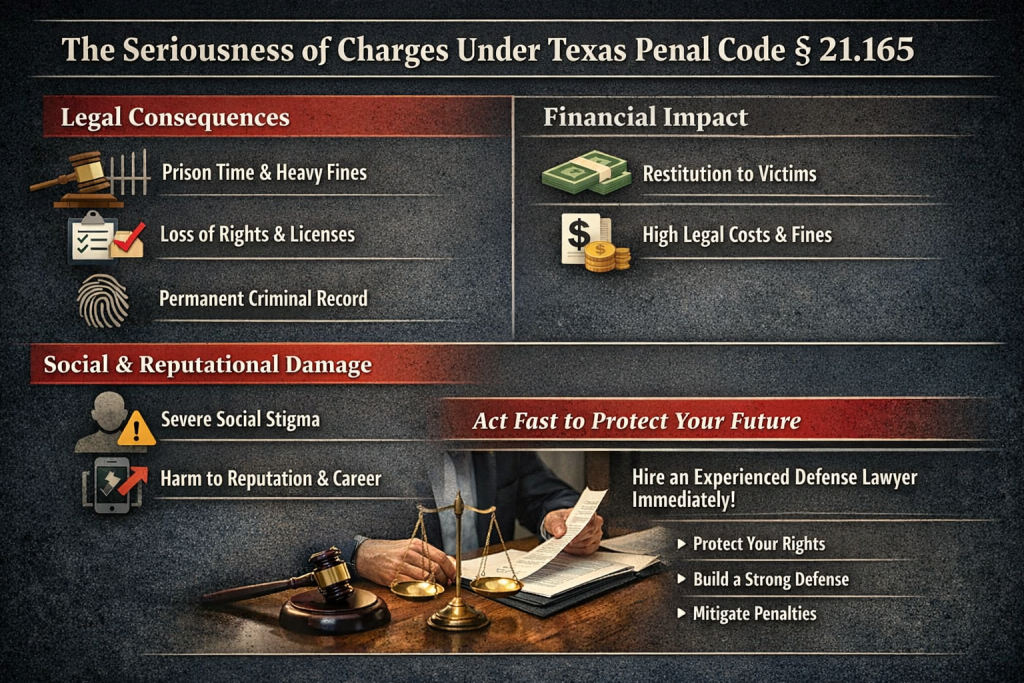
The Seriousness of Charges Under Texas Penal Code § 21.165

Being convicted under Texas Penal Code § 21.165 for deepfake pornography can lead to severe consequences that extend far beyond fines or jail time. The impact on your legal status, financial situation, and personal life can be long-lasting and potentially life-altering.

Criminal Defense Lawyer

Legal Consequences

  • Prison Time and Fines: A conviction for a third-degree felony may result in several years of prison time and hefty fines.
  • Long-Term Legal Restrictions: Felony convictions can lead to significant limitations on your rights, including restrictions on voting rights, professional licenses, and firearm ownership.
  • Permanent Criminal Record: Even a misdemeanor conviction will leave a permanent criminal record, which can create obstacles when seeking employment, housing, or loans.

Financial Consequences

  • Restitution to Victims: Courts may order restitution to victims for emotional distress, reputational harm, and other damages caused by deepfake content.
  • Significant Financial Burden: In addition to fines, defendants may face substantial monetary obligations that could affect their long-term financial stability and personal finances.

Social and Reputational Damage

  • Social Stigma: Deepfake pornography charges come with a strong social stigma, and being publicly associated with such accusations can damage personal and professional relationships.
  • Impact on Reputation: The negative reactions from friends, family, and colleagues can be profound, and any online records or media coverage may persist indefinitely, impacting your career and social standing for years to come.

Immediate Action is Crucial

Given the serious legal, financial, and personal risks involved, it is vital to take immediate action if facing such charges. Retaining a skilled criminal defense lawyer can help protect your rights, preserve evidence, and build a strong defense strategy to mitigate these consequences. The sooner you act, the better your chances of minimizing penalties and avoiding long-term repercussions.

Why Do Deepfake Cases Need a Criminal Defense Lawyer?

The Complexity of Digital Evidence

Deepfake cases hinge on digital files, metadata, IP addresses, device logs, and online communications. Prosecutors may present video or image files and claim they show you sharing or creating the content. But digital evidence can be altered, misattributed, or planted. A criminal defense lawyer can:

  • Engage a digital forensic review to examine the integrity of media files, timestamps, metadata, and the chain of custody
  • Challenge whether the “visual depiction” truly meets the statute’s definition of deep fake, or whether there was genuine consent

Without professional review and a robust defense, defendants risk being convicted on possibly flawed evidence.

Procedural Protections and Constitutional Rights

A qualified criminal defense lawyer will also ensure:

  • Your rights were respected during the search, seizure, and investigation
  • Law enforcement followed correct procedures when gathering electronic evidence or obtaining communications
  • Any admissions or statements you made were legal and voluntary

Procedural errors or violations of constitutional rights may lead to suppression of evidence or dismissal of charges.

Strategic Defense and Negotiation

Given the broad scope of § 21.165, a defense lawyer can assess the full record and consider alternative outcomes:

  • Reduced charges or lesser offense
  • Deferred adjudication or plea deals (where allowed)
  • Negotiated restitution, if appropriate
  • Preparing a strong defense for trial, if necessary

Challenging Digital Forensics

In addition to reviewing metadata, IP addresses, and device logs, a defense lawyer can work with digital forensics experts to uncover evidence that may have been overlooked or misinterpreted. For instance, they can investigate whether the deepfake content was altered after it was shared or if it was sourced from a legitimate platform.

Exploring Intent and Knowledge

A lawyer can argue that the defendant lacked knowledge or intent to commit the crime. This defense could be particularly useful if the distribution of the deepfake media was accidental, through hacking, or without the defendant’s knowledge.

Addressing Hacking or Unauthorized Access

If the deepfake media was created or shared due to unauthorized access to a device or social media account, a defense lawyer can explore the possibility of hacking and protect the defendant from any liability associated with the unauthorized use of their accounts.

Negotiating Charges in a Favorable Way

A skilled defense lawyer may also be able to negotiate lesser charges or explore options for reduced sentences, such as a deferred adjudication or a plea deal, to minimize the defendant’s exposure to penalties.

Especially in Dallas Fort Worth, where courts may see multiple such cases, having local legal representation familiar with jurisdictional practices can be an advantage.

Defense Strategies a Criminal Defense Lawyer Uses

Criminal defense lawyers utilize various strategies to challenge deepfake pornography charges. Depending on the specifics of the case, one or more of the following defenses may be employed:

Challenging the Authenticity of Media

A key defense involves disputing the authenticity of the media itself. The lawyer may argue that the files presented by the prosecution have been fabricated, manipulated, or do not accurately represent the events in question. For example, they might bring in digital forensic experts to highlight discrepancies or point out that the video or image is a product of deepfake technology.

Lack of Consent or Invalid Consent

The defense might argue that the victim did not give valid written consent for the creation or distribution of the media, as required by the statute. Alternatively, they could argue that any consent provided was invalid or later withdrawn. Establishing that the consent was not properly given can be a strong defense in cases involving claims of non-consensual deepfake pornography.

Mistaken Identity or Misattribution

A defense based on mistaken identity may involve showing that the defendant was not the person who created or distributed the content, or that the content does not depict the accused in any way. This could include arguing that the video or image has been altered to make it appear as though it features the defendant, when in fact it does not.

Procedural Violations

If there were errors in the investigation that affected the validity of the evidence, the defense might argue that procedural violations occurred. This could include unlawful search and seizure or problems with the chain of custody for digital evidence, making the evidence inadmissible in court. Highlighting such violations can weaken the prosecution’s case.

No Intent to Distribute or Lack of Knowledge

A defense lawyer might also argue that the defendant did not intend to distribute the content or was unaware of its existence. If the distribution was accidental, such as through hacking or a compromised device, the defense could show that the defendant did not have control over the situation. In cases where the defendant did not know the content being shared, this can significantly undermine the prosecution’s case.

Conclusion

The rise of deepfake technology has introduced a new and serious level of criminal liability in Texas. Under Penal Code § 21.165, producing or distributing non-consensual deepfake sexual media can lead to severe consequences, ranging from misdemeanors to third-degree felonies. These cases often involve complex digital evidence, making the need for a skilled criminal defense lawyer even more critical. For those in the Dallas Fort Worth area, L & L Law Group offers comprehensive defense strategies, including forensic analysis, consent evaluation, and customized approaches to negotiating charges, seeking dismissals, or defending in court. Taking swift action is key to protecting your rights and increasing your chances of a favorable outcome.

Frequently Asked Questions

Q1. What Exactly Counts as “Deep Fake Media” Under Texas Law?

Under Texas Penal Code § 21.165, “deep fake media” refers to any visual depiction, such as photos, digital images, videos, or other recordings, that has been created or altered through software, AI, or similar means to depict a real person in a way that never actually occurred. 

Even if the media is computer-generated rather than recorded from reality, if it appears indistinguishable from a real person to a reasonable viewer, it qualifies.

Q2. Can I Be Charged Even If I Only Shared a Deepfake But Did Not Create It?

Yes, The statute prohibits both production and distribution. If you knowingly share or distribute deepfake media without consent, that alone can be sufficient for prosecution under § 21.165.

Q3. Does “Consent” Ever Make It Legal to Share Deepfake Media?

The law allows consent only if the person depicted gave effective consent via a written, plain-language agreement that describes the media and, if applicable, the final audiovisual work. Verbal consent or an informal agreement does not meet the requirement.

Q4. If I Were Previously Convicted Under § 21.165, Are Penalties Worse Now?

Yes, A second offense (or subsequent offense) under § 21.165, or any offense involving a depicted person under 18, may be charged as a third‑degree felony rather than a misdemeanor.

Q5. Does a Conviction Under the Deepfake Pornography Law Require Me to Register as a Sex Offender?

Not at present. The statute does not currently list § 21.165 offenses among those requiring sex-offender registration under Chapter 62 of the Code of Criminal Procedure. However, legislators could change that in the future, so having a conviction may carry additional long-term risks.

Q6. Is Deepfake Media Always Considered Harmful?

No, not all deepfake media is harmful or illegal. The legality of deepfake media depends on whether it was created or distributed without the consent of the person depicted and whether it involves intimate or sexual content. Legal deepfake media may exist in the context of parody, art, or entertainment, as long as it does not violate consent laws.

Section Title

Simplifying Data Breach Liability Law And Your Legal Risks

In the current digital landscape, data breach liability law makes it clear that a breach is no...

What Impacts The Role Of DNA Evidence In Criminal Cases In Texas?

DNA evidence in criminal cases in Texas carries immense weight with modern juries, often viewed as...

Possession Of Prohibited Weapons In Texas: What You Need To Know?

Possession of prohibited weapons in Texas is taken very seriously under state law, even though Texas...

Tampering With Evidence Texas: Hidden Felony Risks And Defense Strategies

Facing accusations of tampering with evidence Texas can be overwhelming, especially when the...

Cryptocurrency Fraud Charges in Frisco, Texas: What You Need to Know?

The legal landscape is shifting as the cryptocurrency fraud charges Texas residents face become a...

Wire Fraud Charges In Texas: Risks, Penalties, And Defense Strategies

Facing wire fraud charges in Texas can feel like the world is crashing down around you. The...

Kidnapping Charges In Frisco, Texas: A Defense Lawyer’s Perspective

Facing kidnapping charges in Frisco is one of the most serious legal situations an individual can...

Capital Murder Charges In Frisco, Texas: A Defense Lawyer’s Guide To High-Stakes Cases

Capital murder charges in Texas represent the most serious legal category in the state’s judicial...

How To Get Frisco Family Violence Charges Dismissed Or Dropped?

Frisco Family Violence Charges can feel overwhelming from the moment an arrest happens in North...
Categories
Criminal Defense

Penal Code 22.021 Aggravated Sexual Assault

Blog

How Penal Code 22.021 Defines Aggravated Sexual Assault?

Reggie London

Reggie London

Aggravated Sexual Assault

Aggravated sexual assault represents one of the most serious criminal offenses under Texas law, carrying severe penalties that can forever alter a person’s life. When facing such grave accusations, understanding the legal framework becomes critical for anyone involved in the Texas criminal justice system. Texas Penal Code Section 22.021 lays out specific elements that distinguish aggravated sexual assault from other sexual offenses, creating a complex legal landscape that demands careful examination.

The stakes couldn’t be higher. Convictions under this statute result in mandatory prison sentences, lifetime sex offender registration, and devastating personal consequences. Whether you’re seeking to understand the law for educational purposes or need clarity during a legal crisis, grasping what sets aggravated sexual assault apart from standard sexual assault charges helps illuminate why these cases require specialized legal representation.

What Makes Sexual Assault "Aggravated" Under Texas Law?

Texas law draws a sharp distinction between sexual assault and its aggravated form. While both involve non-consensual sexual contact, aggravated sexual assault includes additional factors that elevate the severity of the offense.

Under Penal Code 22.021, sexual assault becomes aggravated when certain circumstances exist during the commission of the crime. These aggravating factors transform what would be a second-degree felony into a first-degree felony with harsher consequences. The law identifies specific conditions that automatically upgrade the charge, reflecting the legislature’s view that these situations create greater harm or danger.

The Core Elements of Section 22.021

The statute establishes that aggravated sexual assault occurs when someone commits sexual assault as defined in Section 22.011 and one or more aggravating circumstances are present. The prosecution must prove both the underlying sexual assault and the aggravating factor beyond a reasonable doubt.

Sexual assault itself involves intentionally or knowingly causing sexual contact with another person without that person’s consent or with someone incapable of consenting. The aggravating elements then layer additional severity onto this foundation.

Aggravating Factors That Elevate the Charge

Texas law identifies several specific circumstances that transform sexual assault into aggravated sexual assault. Each factor reflects situations lawmakers deemed particularly dangerous or harmful.

Use of a Deadly Weapon

When the accused uses or exhibits a deadly weapon during the sexual assault, the offense becomes aggravated. A deadly weapon includes anything designed to cause death or serious bodily injury, or anything used in a manner capable of causing death or serious harm. This category extends beyond firearms to include knives, blunt objects, or even vehicles in certain contexts.

Causing Serious Bodily Injury

Sexual assault that results in serious bodily injury to the victim automatically qualifies as aggravated. Texas law defines serious bodily injury as harm that creates a substantial risk of death or causes permanent disfigurement or protracted loss or impairment of any bodily member or organ.

Threats of Death or Serious Bodily Injury

Making threats that place the victim in fear of death or serious bodily injury for themselves or another person constitutes an aggravating factor. The victim must reasonably believe the threat could be carried out for this element to apply.

Understanding Aggravated Sexual Assault Under Penal Code 22.021

When someone administers a substance without the victim’s knowledge or consent, intending to impair their ability to appraise the nature of the act or resist, the assault becomes aggravated. This provision targets scenarios involving date rape drugs or other incapacitating substances.

Age of the Victim

Perhaps the most frequently prosecuted aggravating factor involves the victim’s age. Sexual assault of a child younger than fourteen years old automatically qualifies as aggravated sexual assault, regardless of other circumstances.

Texas law also provides enhanced penalties when victims are particularly young. Recent legislative changes have strengthened protections for the youngest victims, reflecting the state’s commitment to protecting children from sexual exploitation.

Penalties and Consequences Under Section 22.021

The criminal penalties for aggravated sexual assault in Texas rank among the harshest in the state’s penal code. These punishments reflect society’s condemnation of these acts and aim to incapacitate offenders for extended periods.

Prison Sentences

Aggravated sexual assault is a first-degree felony carrying substantial prison time. Unlike many other offenses, probation or community supervision is not an option for aggravated sexual assault convictions.

Financial Penalties

Beyond imprisonment, convicted individuals face substantial fines. While this financial penalty pales in comparison to the loss of freedom, it adds another layer of consequences that can burden defendants and their families for years.

Sex Offender Registration

Conviction under Section 22.021 requires lifetime registration as a sex offender. This obligation extends far beyond the prison sentence, affecting where someone can live, work, and travel for the remainder of their life. Sex offender registration in Texas is public, meaning anyone can access this information online. The registry includes the person’s name, photograph, address, and details of the offense. This public stigma creates barriers to employment, housing, and social integration that persist indefinitely.

Civil Commitment

Texas law allows for civil commitment of sexually violent predators after they complete their prison sentences. If authorities determine someone is likely to commit future sex offenses, they can be confined to a treatment facility indefinitely, even after serving their full criminal sentence. This additional layer of confinement operates outside the criminal justice system and can extend detention for many years beyond the original sentence.

How These Cases Are Investigated and Prosecuted?

Law enforcement and prosecutors in Texas treat aggravated sexual assault cases with utmost seriousness. Understanding the investigation and prosecution process reveals why early legal intervention proves critical.

The Investigation Phase

Sexual assault investigations typically begin when a victim reports the incident to police or a medical professional. Law enforcement agencies across Texas maintain specialized units trained in sensitive interview techniques and evidence collection. Investigators gather physical evidence through forensic examinations, often conducted at specialized facilities. They collect witness statements, review surveillance footage, and examine electronic communications.  

Grand Jury Proceedings

Felony charges in Texas, including aggravated sexual assault, require grand jury indictment. Prosecutors present evidence to grand jurors who decide whether probable cause exists to charge the accused. Grand jury proceedings are secret, and the accused typically has no opportunity to present their side at this stage. The relatively low burden of proof at this phase means grand juries indict in the vast majority of cases presented to them.

Trial Strategies and Defenses

Defending against aggravated sexual assault charges demands a sexual assault attorney with specific experience in these complex cases. Common defense strategies include challenging the credibility of witnesses, questioning the chain of custody for physical evidence, and presenting alternative explanations for the evidence.

Texas-Specific Legal Considerations

Texas law includes particular provisions and interpretations that shape how Section 22.021 cases proceed through the courts. Understanding these unique aspects helps clarify why Texas approaches these cases differently than many other states.

Statute of Limitations

Texas has eliminated the statute of limitations for many sex crimes, including aggravated sexual assault. Prosecutors can file charges regardless of how much time has passed since the alleged offense. This change reflects recognition that victims often delay reporting for various reasons including trauma, fear, or not understanding what happened to them.

Parole Considerations

Despite mandatory prison sentences, parole eligibility varies depending on the specific circumstances of the offense and when it occurred. Texas classifies aggravated sexual assault as a “3g offense,” which means special rules apply regarding how much of the sentence must be served before parole consideration.

Romeo and Juliet Provisions

Texas law provides limited affirmative defenses for consensual sexual conduct between young people close in age. However, these protections don’t apply to aggravated sexual assault charges involving very young victims or cases involving force, threats, or other aggravating factors. The age gap and circumstances must fall within narrow parameters for these defenses to apply.

Penalties and Consequences Under Section 22.021

The criminal penalties for aggravated sexual assault in Texas rank among the harshest in the state’s penal code. These punishments reflect society’s condemnation of these acts and aim to incapacitate offenders for extended periods.

Prison Sentences

Aggravated sexual assault is a first-degree felony. The standard sentencing range spans from 5 to 99 years or life in prison. Unlike many other offenses, probation (community supervision) is not an option for aggravated sexual assault convictions, prison time is mandatory.

Victim Age/Circumstance Maximum Sentence Potential Penalty Probation Eligible
Standard (14+ years)
5 years
99 years or life
No
Under 14 years
5 years
99 years or life
No
Under 6 years
25 years
No
Under 14 with weapon/injury
25 years
99 years or life
No

Why Specialized Legal Representation Matters?

The complexity of aggravated sexual assault cases demands attorneys with focused experience in this area of criminal defense. Several factors make these cases particularly challenging and require sophisticated legal knowledge.

Pretrial Advocacy

Skilled defense attorneys begin working long before trial. They investigate the allegations independently, interview witnesses, consult professionals, and scrutinize the prosecution’s evidence for weaknesses or constitutional violations that could lead to suppression of evidence or dismissal.Pretrial motions can shape the entire case. Motions to suppress evidence obtained through illegal searches, motions to exclude prejudicial testimony, and motions for favorable jury instructions all require detailed legal knowledge and persuasive advocacy skills developed through years of practice.

Negotiation Skills

While many people envision trials when thinking about criminal defense, most cases resolve through plea negotiations. An experienced sexual assault attorney understands how to negotiate from a position of strength, identifying weaknesses in the prosecution’s case that create leverage for favorable plea agreements.

Trial Experience

When cases proceed to trial, courtroom experience becomes invaluable. Jury selection in sexual assault cases requires particular skill, as many potential jurors bring strong preconceptions about these charges that can make fair consideration difficult. Cross-examination of the complaining witness demands sensitivity balanced with effective advocacy.

Impact on Accused Individuals and Families

Facing aggravated sexual assault charges creates immediate and far-reaching consequences that extend well beyond potential criminal penalties. Understanding these collateral impacts helps explain why early legal intervention matters so much.

Immediate Consequences

Arrest on aggravated sexual assault charges typically results in high bail amounts or no bail at all. Many accused individuals remain jailed throughout the pretrial process, sometimes for months or even years while cases proceed through the system. Employment termination often follows arrest, even before conviction. Professional licenses may be suspended or revoked based solely on the charges.  

Social Stigma

The accusation alone carries enormous social consequences. Friends distance themselves, family relationships strain, and community standing evaporates. In the age of internet search engines and social media, arrest records follow people indefinitely, appearing in background checks for employment, housing, and educational opportunities.

Immigration Consequences

For non-citizens, aggravated sexual assault convictions carry particularly severe consequences. These offenses qualify as aggravated felonies under immigration law, making deportation virtually certain and eliminating most forms of relief that might otherwise be available. Even lawful permanent residents with decades of residence in the United States face mandatory removal following convictions.

Prevention and Community Safety Measures

Texas employs various strategies aimed at preventing sexual violence and protecting potential victims. Understanding these measures provides context for the broader legal framework surrounding Section 22.021.

Educational Programs

Schools, universities, and community organizations conduct sexual assault prevention education throughout Texas. These programs focus on consent, bystander intervention, and recognizing warning signs of potentially dangerous situations before they escalate. Texas law requires colleges and universities to implement specific policies addressing sexual assault, including prevention programs for students and employees.  

Offender Monitoring

The sex offender registration system serves multiple purposes beyond public notification. Law enforcement monitors registered offenders, verifying addresses and enforcing restrictions on living near schools or playgrounds through regular compliance checks. Some offenders wear GPS monitoring devices that track their movements continuously. Conditions of parole or probation often include treatment programs, polygraph testing, and restrictions on internet use or contact with children designed to prevent reoffending.

Recent Legal Developments and Trends

Texas law regarding sexual assault continues evolving as legislators respond to changing social attitudes and emerging issues related to sexual violence prevention and prosecution.

Expansion of Protections

Recent legislative sessions have strengthened penalties, eliminated limitation periods, and expanded victim protections. The definition of consent has been clarified in jury instructions to address common misconceptions that previously complicated prosecutions. Funding has increased for testing sexual assault evidence kits, reducing backlogs that previously left thousands of kits unexamined for years.  

Increased Focus on Vulnerable Populations

Texas law now provides enhanced protections for victims with disabilities and elderly victims. Recognition that vulnerable populations face increased risk has prompted lawmakers to address gaps in previous statutes that didn’t adequately account for these specific circumstances. Training for law enforcement and prosecutors has improved, particularly regarding trauma-informed interview techniques and handling cases involving victims with intellectual disabilities who may have difficulty communicating what happened to them.

Understanding Your Rights When Accused

Anyone facing allegations under Section 22.021 must understand their constitutional rights and how to protect them during the investigation and prosecution process.

Right to Remain Silent

The Fifth Amendment protects individuals from self-incrimination. Despite what many people believe from television shows, talking to police without an attorney present rarely helps and often causes significant harm to the defense. Law enforcement officers are trained interrogators who know how to elicit statements that can be used against suspects.

Aggravated Sexual Assault

Right to Legal Counsel

The Sixth Amendment guarantees the right to an attorney. This protection applies from the moment formal charges are filed, and practically speaking, individuals should exercise this right even earlier during the investigation stage. For those who cannot afford private counsel, the court appoints an attorney. However, many defendants who qualify for appointed counsel still choose to hire private attorneys because of the additional resources and individual attention private representation often provides.

Right to Confront Witnesses

The confrontation clause of the Sixth Amendment gives defendants the right to cross-examine witnesses against them. This fundamental protection allows defense attorneys to challenge the credibility and accuracy of testimony, potentially revealing inconsistencies or biases that create reasonable doubt.

Conclusion

Texas Penal Code Section 22.021 establishes the legal framework for one of the most serious criminal offenses in the state, defining aggravated sexual assault through specific elements that separate it from other charges. The mandatory prison sentences, lifetime registration requirements, and permanent social consequences make these allegations among the most consequential anyone can face in the criminal justice system. Early consultation with qualified legal counsel who understands both the technical legal requirements and the human dimensions of these cases becomes essential when confronting such life-altering accusations. L & L Law Group provides the experience and dedicated advocacy that can make the critical difference between devastating outcomes and the best possible resolution under difficult circumstances.

Frequently Asked Questions

Q1. What Are The Penalties For Aggravated Sexual Assault Under Penal Code 22.021?

The penalties for aggravated sexual assault are severe. It is classified as a first-degree felony, and convictions may result in 5 to 99 years or life in prison, substantial fines, mandatory lifetime sex offender registration, and possible civil commitment.

Q2. What Are The Aggravating Factors In Aggravated Sexual Assault Cases?

Aggravating factors include using a deadly weapon, causing serious bodily injury, administering drugs to impair the victim, making threats of death or serious injury, or committing the offense against a child under 14.

Q3. How Does The Age Of The Victim Affect Aggravated Sexual Assault Charges?

If the victim is a child under 14 years old, the offense automatically qualifies as aggravated sexual assault. In some cases, enhanced penalties apply for very young victims.

Q4. Can The Use Of A Deadly Weapon Lead To Aggravated Sexual Assault Charges?

Yes, if a deadly weapon is used or exhibited during the sexual assault, it elevates the charge to aggravated sexual assault. A deadly weapon can be any object capable of causing death or serious bodily injury.

Q5. What Is The Impact Of A Serious Bodily Injury In Aggravated Sexual Assault?

If the sexual assault results in serious bodily injury, the charge becomes aggravated. Serious bodily injury includes harm that creates a substantial risk of death, causes permanent disfigurement, or leads to the protracted loss of any bodily member or organ.

Section Title

Simplifying Data Breach Liability Law And Your Legal Risks

In the current digital landscape, data breach liability law makes it clear that a breach is no...

What Impacts The Role Of DNA Evidence In Criminal Cases In Texas?

DNA evidence in criminal cases in Texas carries immense weight with modern juries, often viewed as...

Possession Of Prohibited Weapons In Texas: What You Need To Know?

Possession of prohibited weapons in Texas is taken very seriously under state law, even though Texas...

Tampering With Evidence Texas: Hidden Felony Risks And Defense Strategies

Facing accusations of tampering with evidence Texas can be overwhelming, especially when the...

Cryptocurrency Fraud Charges in Frisco, Texas: What You Need to Know?

The legal landscape is shifting as the cryptocurrency fraud charges Texas residents face become a...

Wire Fraud Charges In Texas: Risks, Penalties, And Defense Strategies

Facing wire fraud charges in Texas can feel like the world is crashing down around you. The...

Kidnapping Charges In Frisco, Texas: A Defense Lawyer’s Perspective

Facing kidnapping charges in Frisco is one of the most serious legal situations an individual can...

Capital Murder Charges In Frisco, Texas: A Defense Lawyer’s Guide To High-Stakes Cases

Capital murder charges in Texas represent the most serious legal category in the state’s judicial...

How To Get Frisco Family Violence Charges Dismissed Or Dropped?

Frisco Family Violence Charges can feel overwhelming from the moment an arrest happens in North...
Categories
Criminal Defense

Role Of Drug Crime Attorney In Constructive Possession

Blog

Role Of Drug Crime Attorney In Constructive Possession Of Substances

Reggie London

Reggie London

Drug Crime Attorney

When drugs are found in your car, you may be wondering if you could be charged with possession even if you didn’t physically have the drugs on you. This is where constructive possession comes into play. 

Constructive possession in Texas law refers to situations where an individual can be charged with possession of illegal drugs, even if they weren’t physically holding or carrying them. If drugs are discovered in your vehicle, you might face charges under constructive possession laws if the prosecution believes you had control over the drugs or the area where they were found.

In such cases, hiring a drug crime attorney is critical to protect your rights and ensure that the charges are handled properly. A skilled lawyer can help clarify the facts, challenge evidence, and evaluate whether there is enough proof to hold you accountable for the drugs found in your car.

What is Constructive Possession?

Constructive possession refers to a legal concept where an individual is accused of possessing drugs without physically having them on their person. Unlike actual possession, which involves physically holding or carrying a controlled substance, constructive possession occurs when a person has access to an area where drugs are located and is presumed to have control over them. 

For example, if drugs are found in the glove compartment of your car and you have access to that compartment, the prosecution may argue that you were in constructive possession of those drugs, even if they weren’t physically on you.

How Constructive Possession Differs from Actual Possession?

To understand constructive possession, it’s important to distinguish it from actual possession. Actual possession means that the person is directly holding, carrying, or having immediate control over drugs. In contrast, constructive possession implies that a person has access to drugs, and based on this access, the law presumes they knew the drugs were present and had control over them, even if they weren’t physically handling the substances.

Proving Constructive Possession

Prosecutors often rely on circumstantial evidence to prove constructive possession. This can include situations where drugs are found in a car you’re driving, in a shared living space, or within an area that you can access and control. Even if you didn’t physically hold the drugs, the prosecution may argue that you had control over the space where they were discovered.

To successfully prove constructive possession, several factors come into play:

  1. Knowledge of the Drugs’ Existence: The prosecution must show that you were aware that the drugs were in the area in question. If you did not know, you cannot be held accountable under constructive possession laws.
  2. Control Over the Area: You must have had access to the location where the drugs were found. This could be your car, your home, or a personal space where you have the ability to control the environment.

Ability to Control the Drugs: Even if you didn’t physically handle the drugs, the law may assume that you could exercise control over the area where the drugs were found. This could be based on your ownership of the vehicle or room, or your regular use of that space.

To understand constructive possession, it’s important to distinguish it from actual possession. Actual possession means that the person is directly holding, carrying, or having immediate control over drugs. In contrast, constructive possession implies that a person has access to drugs, and based on this access, the law presumes they knew the drugs were present and had control over them, even if they weren’t physically handling the substances.

Proving Constructive Possession

Prosecutors often rely on circumstantial evidence to prove constructive possession. This can include situations where drugs are found in a car you’re driving, in a shared living space, or within an area that you can access and control. Even if you didn’t physically hold the drugs, the prosecution may argue that you had control over the space where they were discovered.

To successfully prove constructive possession, several factors come into play:

  1. Knowledge of the Drugs’ Existence: The prosecution must show that you were aware that the drugs were in the area in question. If you did not know, you cannot be held accountable under constructive possession laws.
  2. Control Over the Area: You must have had access to the location where the drugs were found. This could be your car, your home, or a personal space where you have the ability to control the environment.

Ability to Control the Drugs: Even if you didn’t physically handle the drugs, the law may assume that you could exercise control over the area where the drugs were found. This could be based on your ownership of the vehicle or room, or your regular use of that space.

Penalties for Constructive Possession in Texas

In Texas, possession of illegal drugs, even through constructive possession, is treated seriously. The penalties depend on the type and amount of drugs involved, and the following general penalties may apply:

Charge Type Jail Time Fines
Class B Misdemeanor
Up to 180 days
Up to $2,000
State Jail Felony
180 days to 2 years
Up to $10,000
Third-Degree Felony
2 to 10 years
Up to $10,000
Second-Degree Felony
2 to 20 years
Up to $10,000

How is Constructive Possession Proven?

To convict someone of constructive possession, the prosecution must prove two key elements: knowledge (the defendant must be aware of the drugs’ presence) and control (the defendant must have access or control over the area where the drugs were found, even if they didn’t physically hold them).

Prosecutors often rely on circumstantial evidence, such as:

  • Proximity: The defendant’s closeness to the drugs (e.g., in a shared space like a car or apartment) may imply control.
  • Ownership or Control of Property: If the drugs are found in a space or vehicle registered to the defendant, they are assumed to have control over them.
  • Suspicious Behavior: Actions like fleeing or attempting to hide something may be used as evidence of constructive possession.
  • Statements or Admissions: Any admissions made by the defendant, such as “That’s my stuff,” may link them to the drugs.
  • Other Circumstantial Evidence: Factors like fingerprints, drug-related behavior, or patterns of possession may also be used to establish control.

The law focuses more on knowledge and control rather than intent to possess. The defendant’s access to or control over the space where drugs are found is crucial, even without direct physical handling.

Defenses to Challenge Constructive Possession Charges

Being accused of constructive possession doesn’t automatically mean guilt. Several defenses can be used to dispute the charges and weaken the prosecution’s case.

Lack of Knowledge

If you were unaware of the drugs’ presence, it’s difficult to prove that you had control over them.

No Control Over the Drugs

If you didn’t have access to or the ability to control the drugs, the charge may not be valid.

Access by Other Individuals

If others had the same or greater access to the area or vehicle, it creates reasonable doubt about your ownership or control over the drugs.

Violation of Your Rights

If the drugs were found due to an illegal search, violating your Fourth Amendment rights, the evidence may be dismissed.

Mistaken or False Identification

In some cases, drugs are planted, or an innocent person is wrongfully accused, leading to a case of mistaken identity.

Each defense requires a careful review of the evidence, witness accounts, police conduct, and any other relevant details to craft a strong defense strategy.

Why Constructive Possession Cases Are Frequently Challenged in Court?

Constructive possession charges are often vulnerable to legal challenges because they hinge on assumptions rather than solid, irrefutable evidence. In Frisco, courts have dismissed or overturned many convictions when the prosecution failed to prove both the defendant’s knowledge of and control over the drugs.

Several factors contribute to the weakness of these cases:

  • The drugs were not found in a location directly tied to the defendant.
  • Other individuals had access to the area or the container where the drugs were found.
  • There was no forensic evidence linking the defendant to the drugs.
  • The defendant lacked any prior criminal record or apparent motive.
  • Police actions or procedures were improper or violated rights.

Given these weaknesses, the defense must conduct a comprehensive investigation, challenge any assumptions made by the prosecution, and highlight any gaps in the evidence.

What to Expect During the Legal Process?

If you’re facing a charge of constructive possession of drugs in Michigan, the legal process typically unfolds in several key stages:

Initial Arrest and Processing

Upon arrest, you’ll be taken into custody, booked, and formally charged with a drug-related offense.

Bail Hearing

At this stage, a judge will decide if you can be released on bail while awaiting trial, setting any necessary conditions for your release.

Preliminary Hearing

The court will assess whether the evidence presented is sufficient to move forward with the case.

Pre-Trial Motions and Evidence Review

Your drug crime attorney may file motions to suppress certain pieces of evidence or seek the dismissal of charges altogether.

Plea Bargaining or Trial

Depending on the strength of the prosecution’s evidence, you may opt for a plea agreement or choose to fight the charges in court.

At each stage, it’s vital to have a knowledgeable drug crime attorney who specializes in Frisco’s drug laws. A skilled drug crime attorney can challenge improper evidence, negotiate with the prosecution, and craft a defense strategy that aligns with the specifics of your case.

How a Drug Crime Attorney Can Assist with Drug Possession Charges?

If you’re facing constructive possession charges, having a knowledgeable drug crime attorney by your side is crucial. A drug crime attorney experienced in drug offenses can provide a strong defense by offering several key services:

Clarifying the Charges

A skilled drug crime attorney will help you understand the legal implications of constructive possession. This includes explaining the specific charges, potential penalties, and how the law applies to your case. They will break down the complex legal terms and offer clarity on what you’re up against.

Reviewing Evidence

One of the most important roles an attorney plays is examining the evidence that the prosecution intends to use against you. They will assess whether the evidence is sufficient to support the charge and identify any weaknesses or inconsistencies in the case. This can be crucial in building a defense or challenging the evidence in court.

Advising on Legal Strategies

After reviewing the case, an attorney will suggest the best approach for your situation. This could include negotiating a plea deal, which might result in reduced charges or a lighter sentence. Alternatively, if a plea deal isn’t appropriate, your attorney can strategize ways to fight the charges in court, including disputing the evidence or challenging the prosecution’s claims.

Drug Crime Attorney

Providing Legal Representation

Throughout the legal process, an experienced attorney will represent you in hearings, trials, and plea negotiations. They will act as your advocate, ensuring your rights are protected and that you have the best chance of achieving a favorable outcome. Whether you’re negotiating with prosecutors or presenting your case before a judge, an attorney will provide the expertise needed to navigate the complexities of the legal system.

Familiarity with Local Law Enforcement and Courts

If you’re in Frisco, it’s beneficial to have an attorney who is familiar with local courts and law enforcement practices. Local attorneys understand the specific nuances of the area’s legal system, which can help in developing a more effective defense strategy tailored to local rules and precedents.

By hiring a skilled drug crime attorney, you ensure that you’re well-equipped to face constructive possession charges. They can provide clarity, identify opportunities for defense, and guide you through the process with a well-planned strategy for the best possible result.

Conclusion

Facing constructive possession charges in Texas is serious, and the consequences can be far-reaching. Whether drugs are found in your car or elsewhere, proving constructive possession relies on various factors, including knowledge, control, and intent. Hiring a skilled drug crime attorney is crucial to protecting your rights and fighting the charges against you. With professional legal representation, you can challenge the evidence and work toward a favorable outcome. If you need experienced legal help in Frisco, L & L Law Group is here to guide you through the process and provide the defense you need.

Frequently Asked Questions

Q1. Can I Be Charged With Constructive Possession If The Drugs Are Not Mine?

Yes, if you had control over the location where the drugs were found and knew they were there, you could be charged with constructive possession.

Q2. What Happens If I Didn’t Know About The Drugs In My Car?

Lack of knowledge can be a defense to constructive possession charges. A skilled attorney can argue that you were unaware of the drugs’ presence.

Q3. How Can An Attorney Help In A Constructive Possession Case?

An attorney can examine the evidence, challenge the prosecution’s case, negotiate plea deals, and represent you in court.

Q4. What Is The Penalty For Constructive Possession In Texas?

Penalties range from jail time and fines, with the severity depending on the type and quantity of drugs involved.

Q5. How Do Police Determine Constructive Possession?

Police typically look at evidence such as proximity to the drugs, ownership of the vehicle, and any other behaviors suggesting control over the drugs.

Section Title

Simplifying Data Breach Liability Law And Your Legal Risks

In the current digital landscape, data breach liability law makes it clear that a breach is no...

What Impacts The Role Of DNA Evidence In Criminal Cases In Texas?

DNA evidence in criminal cases in Texas carries immense weight with modern juries, often viewed as...

Possession Of Prohibited Weapons In Texas: What You Need To Know?

Possession of prohibited weapons in Texas is taken very seriously under state law, even though Texas...

Tampering With Evidence Texas: Hidden Felony Risks And Defense Strategies

Facing accusations of tampering with evidence Texas can be overwhelming, especially when the...

Cryptocurrency Fraud Charges in Frisco, Texas: What You Need to Know?

The legal landscape is shifting as the cryptocurrency fraud charges Texas residents face become a...

Wire Fraud Charges In Texas: Risks, Penalties, And Defense Strategies

Facing wire fraud charges in Texas can feel like the world is crashing down around you. The...

Kidnapping Charges In Frisco, Texas: A Defense Lawyer’s Perspective

Facing kidnapping charges in Frisco is one of the most serious legal situations an individual can...

Capital Murder Charges In Frisco, Texas: A Defense Lawyer’s Guide To High-Stakes Cases

Capital murder charges in Texas represent the most serious legal category in the state’s judicial...

How To Get Frisco Family Violence Charges Dismissed Or Dropped?

Frisco Family Violence Charges can feel overwhelming from the moment an arrest happens in North...
Categories
Criminal Defense

Federal Defense Lawyer For Wire Fraud

Blog

Federal Defense Lawyer Strategies for Wire Fraud Charges

Reggie London

Reggie London

Federal Defense Lawyer

Being accused of wire fraud in the Dallas Fort Worth area is a serious matter, and having an experienced federal defense lawyer can make all the difference in protecting your rights. Wire fraud is a federal offense that involves using interstate electronic communications, such as emails, phone calls, or online transactions, to deceive others for financial gain. With severe penalties including long prison sentences and hefty fines, it’s crucial to have skilled legal representation when facing these charges. 

A federal defense lawyer can navigate the complexities of federal law, challenge the evidence, and work towards securing the best possible outcome for you. Given the serious nature of federal wire fraud charges, having an attorney who understands the legal landscape and knows how to build an effective defense is key to avoiding devastating consequences.

What Wire Fraud Means Under Federal Law?

The Federal Crime Defined

Wire fraud involves intentionally defrauding someone using interstate wire communications (e.g., email, phone, texts, or online transfers). Under 18 U.S.C. § 1343, the government must prove the following elements:

  • A scheme to defraud: There must be a plan or scheme aimed at deceiving someone to obtain money or property.
  • Intent to deceive: The defendant must act to deceive or mislead someone.
  • Use of interstate electronic communication: The scheme must involve the use of electronic communication across state or national lines (e.g., phone calls, emails, or online transactions).
  • A material misrepresentation: There must be a false statement or omission of material facts that is critical to the fraudulent scheme.

Federal vs. State Jurisdiction

Let’s explore the key differences between federal and state jurisdiction in wire fraud cases, with a focus on federal law under 18 U.S.C. § 1343.

Aspect Federal Jurisdiction State Jurisdiction
Wire Fraud as a Crime
Wire fraud is a federal crime due to the involvement of interstate communication.
States, including Texas, have their own fraud laws, but wire fraud charges specifically fall under federal jurisdiction.
Jurisdiction
The federal government has jurisdiction over all wire fraud cases involving interstate communications.
State laws, including those in Texas, do not have a specific statute for wire fraud, so state courts cannot prosecute these cases.
Relevant Law
18 U.S.C. § 1343 governs wire fraud at the federal level.
Texas does not have a separate statute for wire fraud; federal law applies.
Prosecution Location
Federal prosecution occurs when the fraud involves interstate or international communications.
Fraud cases may be prosecuted at the state level, but wire fraud specifically is under federal jurisdiction due to interstate communication.
Scope
Applies to wire fraud schemes that cross state lines or affect interstate commerce.
Does not address wire fraud specifically; fraud cases are handled under general state fraud statutes.

Why Wire Fraud Cases Are Serious?

Federal wire fraud cases are particularly serious in the Dallas Fort Worth area for several reasons:

Severe Penalties

Federal wire fraud charges carry harsh penalties, including lengthy prison sentences (up to 20 years per count) and substantial fines. The federal government tends to pursue more aggressive prosecution compared to state courts, making the consequences far-reaching.

Increased Federal Resources

Federal authorities, such as the FBI and U.S. Attorney’s Office, have extensive resources to investigate and prosecute wire fraud cases. They use advanced technology, financial forensics, and coordination across state lines, which can make it harder for defendants to escape scrutiny.

Jurisdictional Reach

Because wire fraud involves interstate or international communication, it falls under federal jurisdiction. In Dallas Fort Worth, which is a major business and tech hub, the scope of these cases can involve large-scale fraud schemes that cross state or national borders. This broad jurisdiction adds complexity and seriousness to cases.

Corporate and Financial Impact

Dallas Fort Worth is home to major corporations, financial institutions, and tech companies. When wire fraud involves large sums of money or impacts high-profile businesses, federal authorities often step in due to the magnitude of the crime, which can attract public attention and media coverage.

No Plea Bargaining Leeway

Federal prosecutors are known for being tough on white-collar crime, and there’s often less flexibility for plea deals compared to state courts. This can lead to long trials, hefty penalties, and greater risk for defendants facing federal charges.

Reputation and Career Risks

Beyond the legal consequences, being charged with federal wire fraud can tarnish a person’s reputation, especially in a business-centric area like Dallas Fort Worth. Professionals may face job loss, career setbacks, and damage to their personal and corporate reputation, adding to the seriousness of the charges.

All these factors combined make federal wire fraud cases a serious matter in the Dallas Fort Worth area, as the legal, financial, and personal consequences are far-reaching.

Common Scenarios That Lead to Wire Fraud Charges

Wire fraud charges typically arise when someone allegedly uses interstate electronic communications (like email, text messages, or online transfers) to carry out a deceptive scheme for financial gain. The following are some of the most frequent situations that can trigger federal investigations:

Fake Investment Opportunities

This scenario occurs when someone promotes fraudulent investment schemes, often promising high returns with little risk, but the primary goal is to trick investors into sending money. Examples include Ponzi schemes, phony real estate deals, or fake cryptocurrency ventures. Victims may send funds electronically, which provides federal authorities with the “wire” element needed to pursue wire fraud charges.

Business Email Compromise (BEC) Scams

BEC scams are increasingly common in corporate environments. In these cases, fraudsters impersonate executives, vendors, or business partners via email to convince employees to transfer money or sensitive information. Even a single fraudulent email that crosses state lines can trigger a federal wire fraud investigation. For businesses in Dallas Fort Worth, these schemes can cause significant financial loss and legal exposure.

Misrepresentations in Loan or Grant Applications

Wire fraud charges often appear when individuals or businesses submit false information to obtain loans, grants, or government funding. Examples include exaggerating income, falsifying supporting documents, or claiming eligibility for programs they do not qualify for. Since loan and grant applications are frequently submitted electronically, these misrepresentations can easily involve interstate communications, which brings them under federal jurisdiction.

Deceptive Online Offers or Job Scams

This category includes scams where people are tricked into paying for products, services, or employment opportunities that do not exist or are misrepresented. Common tactics involve fake job listings, fraudulent online stores, or phony service offers. Because payments and communications typically occur via email, websites, or other electronic channels that cross state lines, these situations meet the criteria for wire fraud under federal law.

How a Federal Defense Lawyer Helps You?

Early Case Evaluation

A skilled federal defense lawyer assesses your situation as soon as possible, reviewing:

  • Communications in question,
  • Whether the government can prove intent,
  • The timing and content of alleged wire transmissions.

Identifying weaknesses in the government’s theories early can shape a more effective defense strategy.

Challenging Key Elements of the Case

Lack of Intent to Defraud

Wire fraud convictions require that the government prove you knowingly and intentionally sought to deceive. A federal defense lawyer may challenge whether you had specific intent, especially if communications were misunderstood or lacked deliberate deceit.

Disconnect Between Communication and Fraud

Your attorney can argue that the alleged wire communications did not actually further a fraudulent scheme or were routine transactional messages. Showing that your actions were not connected to deception can weaken the prosecution’s case. 

Issues With Evidence

Federal prosecutors rely on electronic records, financial data, and witness testimony. A defense lawyer can:

  • Scrutinize how evidence was collected,
  • Challenge improperly obtained communications,
  • Question the chain of custody of digital files.

Suppressing key evidence can significantly affect a case.

Negotiating With Prosecutors

A federal defense lawyer may negotiate reduced charges or alternative resolutions, especially when intent is genuinely ambiguous or your role in the events is minimal.

Preparing for Trial

If your case reaches trial, your attorney will take the following actions:

  • Build a tailored defense narrative,
  • Present evidence & witnesses,
  • Argue legal theories such as insufficient intent or misattribution,
  • Protect your constitutional rights throughout the proceedings.

Steps to Take If You’re Investigated or Charged

Contact a Federal Defense Lawyer Immediately

If you are under investigation or have been charged with wire fraud, contacting a federal defense lawyer as soon as possible is crucial. Acting quickly to obtain legal guidance can strongly impact the resolution of your case.

Prevent Self-Incriminating Statements

Federal investigators may contact you directly for interviews or statements. Anything you say, whether in person, over the phone, or in writing, can be used against you in court. A federal defense lawyer will advise you on how to communicate safely, ensuring that you do not unintentionally provide evidence that could strengthen the prosecution’s case.

Help Preserve Critical Evidence

Your lawyer can guide you on how to secure and preserve all communications, financial records, and electronic files relevant to the case. Proper handling of evidence ensures that nothing is lost, altered, or compromised, which is essential for building a strong defense.

Ensure a Timely Legal Strategy

Early consultation allows your attorney to analyze the facts, assess potential charges, and plan the defense before the government moves forward with indictments or arrests. Acting quickly also allows your lawyer to negotiate with prosecutors when appropriate and prepare for pre-trial motions that may reduce or dismiss charges.

Do Not Talk to Law Enforcement Without Counsel

Anything you say or do can be used in federal cases. Having counsel present during questioning protects your rights.

Preserve All Relevant Communications

Keep all emails, texts, and call logs intact. Deleting or altering this information can harm your defense.

Be Honest With Your Attorney

Full transparency with your defense lawyer is vital for crafting the strongest representation possible.

Conclusion

If you’re facing allegations of wire fraud in Texas, especially around the Dallas Fort Worth area, getting knowledgeable legal help from a federal defense lawyer can protect your future and safeguard your rights. With potential decades of imprisonment and significant fines at stake, the right representation provides clarity and strength during one of the most challenging legal experiences you may face. Turn to L & L Law Group for experienced advocacy and strong legal support.

Frequently Asked Questions

Q1. What Exactly Must the Government Prove for Federal Wire Fraud?

To secure a federal wire fraud conviction, prosecutors must prove beyond a reasonable doubt that you participated in a scheme to defraud someone of money or property, acted with specific intent to deceive, and used interstate wire communications in furtherance of that scheme. The communication does not need to succeed in defrauding anyone; intent and use of an electronic medium across state or national lines are key. Evidence often includes emails, calls, and financial transmissions. This high burden means experienced legal defense can critically examine how these elements are established in your specific case.

Q2. Can Wire Fraud Charges Be Dropped Before Trial?

Yes, In some cases, charges may be dismissed or reduced if your federal defense lawyer identifies legal deficiencies in the prosecution’s case, such as a lack of intent, misclassification of communications, or problems with evidence collection. Defense counsel can also negotiate with federal prosecutors for reduced charges based on mitigating factors. Seeking timely legal representation increases the likelihood of exploring pre‑trial resolutions that can avoid a full trial and potentially severe penalties.

Q3. Is Actual Financial Loss Required for a Wire Fraud Conviction?

No, Federal wire fraud statutes do not require proof of actual loss to a victim. The government only needs to show that the defendant intended to use interstate wire communications to carry out a deceptive scheme; the presence or absence of financial damage is not necessary for a conviction. That’s why wire fraud charges can still carry heavy sentences even when no victim loses money.

Q4. How Does a Federal Court Decide the Punishment for Wire Fraud?

Sentencing in federal wire fraud cases depends on factors such as the amount of money involved, the number of counts, whether a financial institution was affected, your criminal history, and other offense characteristics. Federal sentencing guidelines provide a framework that judges use, but each case is unique. A federal defense lawyer analyzes these aspects to argue for reduced penalties when possible.

Q5. Can Wire Fraud Involve Multiple Charges for the Same Conduct?

Yes, Each distinct use of interstate communication that furthers the alleged scheme, such as separate emails or phone calls, can be charged as a separate count of wire fraud. This can significantly increase potential prison time and fines, making early and strategic defense crucial.

Q6. What Defenses Might Apply to a Wire Fraud Charge in Texas?

Common defenses challenge whether the government can show specific intent to deceive, whether the communication was related to a fraudulent scheme, or whether the prosecution has properly linked the accused to the alleged acts. Attorneys also evaluate whether evidence was properly obtained and may argue that what occurred did not amount to intentional fraud. Defense strategies vary by case and require thorough factual and legal analysis.

Section Title

Simplifying Data Breach Liability Law And Your Legal Risks

In the current digital landscape, data breach liability law makes it clear that a breach is no...

What Impacts The Role Of DNA Evidence In Criminal Cases In Texas?

DNA evidence in criminal cases in Texas carries immense weight with modern juries, often viewed as...

Possession Of Prohibited Weapons In Texas: What You Need To Know?

Possession of prohibited weapons in Texas is taken very seriously under state law, even though Texas...

Tampering With Evidence Texas: Hidden Felony Risks And Defense Strategies

Facing accusations of tampering with evidence Texas can be overwhelming, especially when the...

Cryptocurrency Fraud Charges in Frisco, Texas: What You Need to Know?

The legal landscape is shifting as the cryptocurrency fraud charges Texas residents face become a...

Wire Fraud Charges In Texas: Risks, Penalties, And Defense Strategies

Facing wire fraud charges in Texas can feel like the world is crashing down around you. The...

Kidnapping Charges In Frisco, Texas: A Defense Lawyer’s Perspective

Facing kidnapping charges in Frisco is one of the most serious legal situations an individual can...

Capital Murder Charges In Frisco, Texas: A Defense Lawyer’s Guide To High-Stakes Cases

Capital murder charges in Texas represent the most serious legal category in the state’s judicial...

How To Get Frisco Family Violence Charges Dismissed Or Dropped?

Frisco Family Violence Charges can feel overwhelming from the moment an arrest happens in North...
Categories
Criminal Defense

Sexual Assault Attorney Texas Law Evolution

Blog

A Sexual Assault Attorney’s Take on Texas Law Evolution

Reggie London

Reggie London

Sexual Assault Attorney

Sexual assault attorneys in Texas have seen the law evolve significantly over the years, making it essential for those facing allegations to fully understand the current legal landscape. In particular, in the Dallas Fort Worth area, where these cases are often more complex, knowing how the law has changed can make a critical difference. 

To that end, this article explores the history of Texas sexual assault laws, major statutory changes, and the evolving definitions of consent and age in criminal cases. Furthermore, for anyone accused of sexual assault, having an experienced attorney who understands these shifts in the law is absolutely crucial. 

Ultimately, by gaining a clear understanding of how Texas law applies today, potential defendants can better navigate their legal options and protect their rights.

Understanding Texas Sexual Offense Law-Basics

Under Texas law, sexual offenses are governed primarily by provisions in the Texas Penal Code, especially §§ 22.011 (Sexual Assault), 22.021 (Aggravated Sexual Assault), and § 21.11 (Indecency With a Child), among others. 

Important Features:

  • For adult-adult sexual assault, consent must generally be absent.
  • For sexual activity involving minors, consent is legally meaningless: minors under 17 (or 18, depending on statute) are treated as unable to consent.
  • Statutes vary depending on the nature of the act (penetration, sexual contact, exposure), the age of the victim, and other aggravating circumstances (force, incapacitation, drugs, etc.).

Because of this complexity, over time, the legislature and courts have amended laws to clarify definitions, adjust penalties, and reflect evolving societal standards.

Key Changes & Developments Over the Years

Laws are not static, and in Texas, there have been multiple amendments that changed how sexual assault and related offenses are prosecuted. Here are some of the important developments:

  • The definition of “child” for offenses like indecency with a child (§ 21.11) and sexual assault of a child (§ 22.011) includes minors younger than 17 years of age, and statutory defenses such as the “close‑in‑age” exception have been codified. 
  • In 2017, the legislature updated statutes to clarify that certain offenses apply regardless of whether the defendant knew the victim was underage, removing a potential defense of ignorance of age.
  • The list of aggravating circumstances (such as use of date-rape drugs, force, victim incapacitation, etc.) that elevate a charge to more serious offenses (e.g., first-degree felony under § 22.021) has been expanded.
  • Legislators have also created separate provisions for repeated abuse (e.g., continuous sexual abuse of a young child under § 21.02), to address cases involving patterns of behavior rather than single incidents.

Overall, changes reflect a stricter, more protective statutory framework, particularly towards minors, and aim to reduce ambiguity over consent, age, and the seriousness of actions.

Recent Developments and Legislative Trends

Texas law continues to evolve. Legislatures and interest groups periodically propose amendments to sexual offense statutes, updating definitions, consent thresholds, ages, aggravating factors, and procedures. Recent amendments (like the 2017 changes) have focused on clarifying age/consent rules and expanding the definitions of aggravated offenses. 

Courts also play a role. Case law interpreting statutes influences how laws are applied. For example, decisions on whether intoxication or incapacity constitutes lack of consent, or whether evidence (digital communications, videos) is admissible, shape prosecutorial strategies and defense practices.

For someone in Dallas Fort Worth today, it is essential to have legal counsel familiar with current statutes, recent case law, and local prosecutorial practices.

How Current Law Defines Consent and Age Rules?

One of the most confusing areas for many people is understanding when consent matters, and when it does not, especially in sexual acts involving minors. Here’s how Texas law currently works:

  • For general sexual assault (adult‑adult), consent (or lack thereof) is fundamental: if consent is absent because of force, intoxication, incapacity, threat, or inability to resist, the act is a crime under § 22.011.
  • When the other party is a minor (under 17), consent is legally irrelevant. Sexual acts with minors are prohibited even if the minor appears to agree.
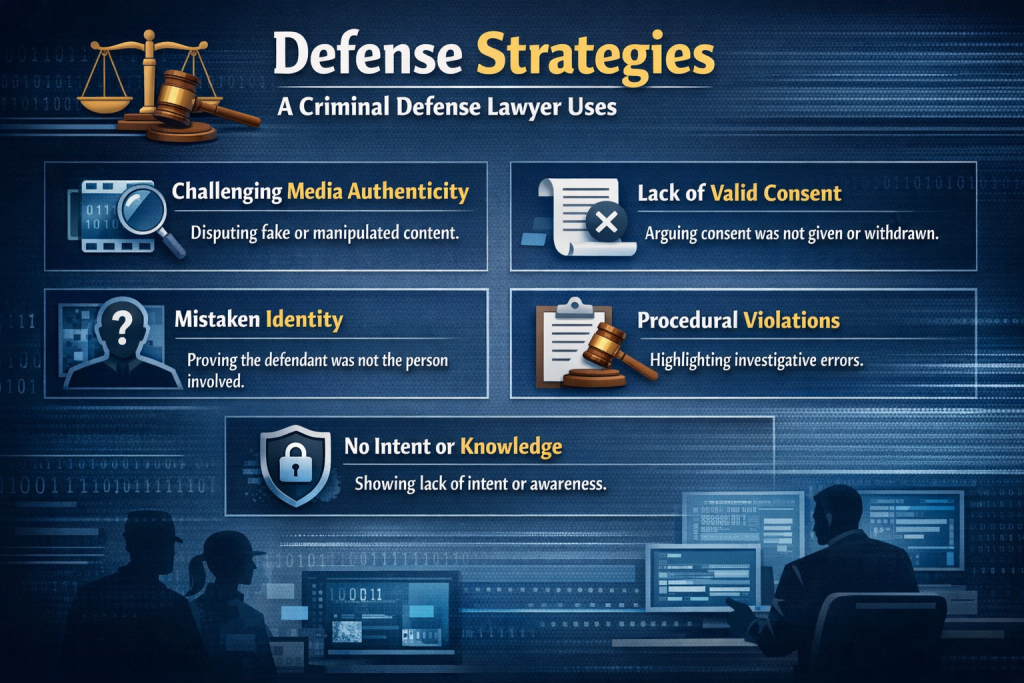
  • For “statutory rape” or “sexual assault of a child,” the law penalizes sexual organ penetration or contact, regardless of consent or knowledge of age.
  • For other sexual misconduct involving minors (non-penetrative sexual contact, exposure, etc.), offenses are covered under § 21.11 (Indecency With a Child).

These rules create a strict liability standard in many minor‑involved cases, meaning even “consensual” teen relationships may be criminal under Texas law if age thresholds are not met.

Major Statutes and Their Applications

Here is a simplified table summarizing key statutes, when they apply, and typical penalties or classifications under current law:

Statute & Section Description / Applies When Typical Penalty or Classification
§ 22.011- Sexual Assault / Sexual Assault of a Child
Penetrative sexual act without consent (adult) or with a child under 17 (regardless of consent)
Felony: 2nd degree normally; 1st degree or more severe in aggravating circumstances or when marriage/prohibited relation applies.
§ 22.021-Aggravated Sexual Assault
Sexual assault with aggravating factors: force, incapacitation, weapon, drugging, serious injury, very young victim, etc.
First-degree felony; for child victims, mandatory severe sentences including high minimums or life sentences depending on facts.
§ 21.11- Indecency With a Child
Non‑penetrative sexual contact or exposure with a minor under 17 (regardless of consent/knowledge of age)
Felony (lesser than sexual assault but serious), sex offender registration, and long-term consequences.
§ 21.02 (or amendments under continuous abuse statutes)
Repeated acts of sexual abuse over time (multiple acts over a period) against a child under predefined age thresholds.
Felony, often enhanced due to a pattern of abuse; severe sentencing range.

These statutes form the backbone of Texas’s sexual offense laws. Their meanings, applications, and interpretations have shifted over time, which is why an experienced sexual assault attorney in Dallas Fort Worth is often essential.

Why the Evolution Matters: Risks for Defendants?

Changes in law and statutory definitions mean that actions once considered ambiguous or borderline may now clearly constitute crimes. For example:

  • A “close-in-age” consensual relationship between teens may previously have faced lighter scrutiny; under current law, a minor under 17 cannot legally consent, so even consensual acts can lead to serious charges.
  • Ignorance of the minor’s exact age is not a valid defense — statutes now clarify that the defendant’s knowledge of age is irrelevant in many cases.
  • Use of incapacitating substances (alcohol, drugs, etc.) or circumstances that impair consent are more likely to trigger aggravated sexual assault charges.
  • Repeat offenses or patterns of abuse may be prosecuted under continuous sexual abuse statutes, which carry enhanced penalties.

For people living in urban, populous regions such as Dallas Fort Worth where law enforcement is active, and prosecutors have extensive caseloads, these changes significantly increase the stakes.

Challenges & Misconceptions in Texas Sexual Assault Cases

Because the laws and social attitudes are in flux, there are common misunderstandings that can lead to serious legal problems. Some of the most frequent include:

  • “But it was consensual”-even if both parties agree, if one is under 17, it’s a crime under Texas law. Consent does not override age restrictions in many statutes.
  • “We didn’t know the age”-not a defense. Many statutes were amended to remove knowledge-of-age as a defense.
  • “It was just a mistake, a one-time thing”-repeated or single acts may still lead to serious felonies. Even non-penetrative contact may constitute a crime under indecency statutes.
  • **“Because we’re close in age, it’s okay”- close-in-age (Romeo-and-Juliet) exceptions are very limited and do not apply to all offenses, especially those requiring sex-offender registration or involving prohibited relationships.
  • “We just made a mistake”-ignorance or regret does not nullify criminal liability once an offense is committed.

Because of these misunderstandings, many people facing charges are shocked to learn how serious the legal consequences can be.

How a Sexual Assault Attorney Can Help?

Given the complexity and severity of Texas sexual offense statutes, representation by an experienced sexual assault attorney can be critical. Here is how a lawyer’s role matters:

  • Statutory Interpretation and Strategy

A skilled attorney knows the details of Texas Penal Code statutes, how courts have interpreted them, and which defenses may apply (e.g., close-in-age defense, challenge to evidence, procedural issues).

  • Evaluating Consent, Age, And Evidence

In many cases, evidence about age, consent, or communication may be ambiguous. An attorney analyzes facts, cross-examines evidence, and identifies weaknesses or constitutional violations (improper search, coercion, improper procedure, etc.).

  • Negotiation With Prosecutors

Prosecutors may offer plea deals, reduced charges, or diversion in some cases, especially first-time or borderline cases. A good attorney can negotiate aggressively and secure more favorable outcomes.

  • Safeguarding Long-Term Consequences

Convictions under sexual offense statutes often lead to sex-offender registration, record stigma, and lifelong consequences. A defense attorney works not just to avoid conviction, but to minimize collateral damage or, where possible, seek dismissal, lesser charges, or alternative resolutions.

  • Protecting Your Rights & Due Process

From arrest to trial to sentencing, procedural errors, law enforcement overreach, or violations of constitutional rights (search and seizure, Miranda, due process) may arise.

In the fast-changing legal landscape of Texas, an experienced attorney also stays updated on new laws, case law, and statutory amendments, which could make a real difference in the outcome of a case.

What Residents in Dallas Fort Worth Should Know?

For residents of Dallas Fort Worth, a large, diverse, and rapidly growing metropolitan region, the implications are especially important:

Sexual Assault Attorney
  • Cases involving minors may arise in high schools, colleges, social settings, and digital communication contexts. Allegations may stem from consensual but underage relationships or from mistakes about age or consent.
  • Because local campuses, social environments, and enforcement are more visible, accusations often lead to serious legal action, not just school discipline.
  • Prosecutors in urban counties may be more inclined to pursue serious charges; a local sexual assault attorney will know which courts, judges, and prosecutors are handling such cases.
  • Because of volume, plea bargains, diversion programs, or probation may be available, but only with strong legal representation to navigate offers, waivers, or negotiations.

If you live in Dallas Fort Worth and find yourself involved in a sexual offense allegation, whether consensual, mistaken, or otherwise, it is critical to secure competent legal representation immediately.

Conclusion

The evolution of Texas sexual assault laws with expanded definitions, stricter age and consent rules, and heavier penalties makes facing charges without experienced counsel extremely risky. A skilled sexual assault attorney can protect your rights, provide strategic defense, and help mitigate long-term consequences like sex‑offender registration or criminal records. IWith deep knowledge of the Dallas Fort Worth legal landscape, L & L Law Group delivers experienced representation, crafting defense strategies that protect your freedom, reputation, and future.

Frequently Asked Questions

Q1. What Is the Legal “Age of Consent” in Texas, and How Does That Impact Sexual Assault Charges?

In Texas, the relevant laws treat minors under 17 years old as children in many sexual offense statutes. This means that sexual activity with anyone under 17 may be prosecuted as statutory sexual assault or indecency with a child, regardless of whether the minor consented or the adult knew their age. 

There are limited exceptions (such as a narrow “close-in-age” defense when both are minors or within a small age gap), but these do not apply universally and may not protect against registration as a sex offender.

Q2. Can Consensual Sex Ever Be Legal If One Person Is Under 17 in Texas?

Generally no. Under Texas law, consent does not matter when the other person is under 17. Sexual activity is prohibited. There is a narrow “close-in-age” exception for some offenses when both individuals are minors, and their age difference is small (not more than three years). However, it does not apply in all cases, particularly those requiring sex‑offender registration or where aggravating factors exist.

Q3. What’s the Difference Between Sexual Assault, Aggravated Sexual Assault, and Indecency With a Child in Texas?

In Texas, sexual assault refers to non-consensual sexual acts, including penetration or contact with minors under 17, regardless of consent. Aggravated sexual assault involves factors like force or intoxication, leading to more severe penalties. 

Indecency with a child covers non-penetrative acts or exposure with minors under 17, and all these offenses can result in felony charges.

Q4. If I’m Accused, Can a Sexual Assault Attorney Help With Evidence or Procedural Defenses?

Yes. A qualified sexual assault attorney can examine how evidence was gathered (searches, communications, witness statements), challenge improper procedures or constitutional violations, and assess the strength of the state’s case. They can argue that consent, age, or other defenses apply, or negotiate plea deals when appropriate. 

Attorneys also consider long-term consequences, such as sex‑offender registration or record sealing, and may pursue reduced charges or diversion depending on the facts.

Q5. Are Texas Sexual Assault Laws Likely to Change Again in the Next Few Years?

Legal reform is always a possibility. Lawmakers periodically revisit definitions, consent standards, age thresholds, and sentencing guidelines. The 2017 amendments show that the state responds to social changes and concerns about clarity. Courts also influence how statutes are applied through interpretation. 

For anyone in Dallas Fort Worth or elsewhere in Texas, using a sexual assault attorney who stays updated on recent and proposed changes is vital to ensure a robust defense under evolving laws.

Section Title

Simplifying Data Breach Liability Law And Your Legal Risks

In the current digital landscape, data breach liability law makes it clear that a breach is no...

What Impacts The Role Of DNA Evidence In Criminal Cases In Texas?

DNA evidence in criminal cases in Texas carries immense weight with modern juries, often viewed as...

Possession Of Prohibited Weapons In Texas: What You Need To Know?

Possession of prohibited weapons in Texas is taken very seriously under state law, even though Texas...

Tampering With Evidence Texas: Hidden Felony Risks And Defense Strategies

Facing accusations of tampering with evidence Texas can be overwhelming, especially when the...

Cryptocurrency Fraud Charges in Frisco, Texas: What You Need to Know?

The legal landscape is shifting as the cryptocurrency fraud charges Texas residents face become a...

Wire Fraud Charges In Texas: Risks, Penalties, And Defense Strategies

Facing wire fraud charges in Texas can feel like the world is crashing down around you. The...

Kidnapping Charges In Frisco, Texas: A Defense Lawyer’s Perspective

Facing kidnapping charges in Frisco is one of the most serious legal situations an individual can...

Capital Murder Charges In Frisco, Texas: A Defense Lawyer’s Guide To High-Stakes Cases

Capital murder charges in Texas represent the most serious legal category in the state’s judicial...

How To Get Frisco Family Violence Charges Dismissed Or Dropped?

Frisco Family Violence Charges can feel overwhelming from the moment an arrest happens in North...
Categories
Criminal Defense

Drug Possession and Intent to Distribute

Blog

Difference Between Drug Possession and Intent to Distribute

Reggie London

Reggie London

Drug Lawyer

Many people in North Texas are often confused about the difference between possession and intent to distribute and how Texas law distinguishes the two. Arrests that begin as routine encounters can quickly escalate if law enforcement believes there is intent to distribute. 

Understanding Possession and Intent to distribute is critical because the distinction determines whether a case remains manageable or turns into a serious felony matter. Once intent is alleged, the role of a drug lawyer becomes especially important. Prosecutors frequently rely on assumptions, patterns, and circumstantial evidence rather than proof of an actual sale. 

Because Frisco sits within Collin and Denton Counties, cases involving Possession and Intent to distribute in Frisco are often prosecuted aggressively at the state level. This article explains how Texas law defines possession, how intent is inferred, why penalties differ, and why early legal guidance from a drug lawyer can shape the outcome.

How Texas Law Defines Drug Possession?

Under Texas law, possession means having care, custody, or control of a controlled substance while knowing the substance is present. In cases involving Possession and Intent to distribute in Frisco, this definition becomes the foundation for every charging decision. Prosecutors must prove both control and knowledge, not mere proximity.

Actual Possession

Actual possession applies when drugs are found directly on a person, such as in clothing or personal belongings. 

Constructive Possession

Constructive possession applies when drugs are found in vehicles, homes, or shared spaces. Prosecutors rely heavily on constructive possession theories in Possession and Intent to distribute in Frisco cases. 

Common Possession Charges in Frisco

Possession cases in Frisco commonly involve marijuana, prescription drugs without valid prescriptions, and controlled substances classified under Texas penalty groups. Even without intent allegations, possession charges can still carry serious consequences in Possession and Intent to distribute cases in Frisco.

What Is Intent to Distribute Under Texas Law?

The intent to distribute means possessing drugs to deliver them to another person. Texas law does not require an actual sale. In Frisco, prosecutors often argue intent based on packaging, quantity, or surrounding circumstances.

Why Intent Charges Are Treated More Harshly?

Intent allegations suggest involvement beyond personal use. As a result, Possession and Intent to distribute cases involving intent are almost always prosecuted as felonies. A drug lawyer will often focus on breaking the link between possession and alleged intent.

Texas Penalty Groups and Distribution Allegations

Drugs are classified into penalty groups, with Penalty Group 1 carrying the most severe punishments. Even small quantities of certain substances can result in felony charges when intent is alleged.

Key Differences Between Possession and Intent to Distribute

The legal differences between possession and intent go beyond terminology. In Possession and Intent to Distribute in Frisco, these differences shape every stage of a case.

Charge Classification

Possession may be charged as a misdemeanor or felony, depending on the substance and amount. Intent charges are almost always felonies in Possession and Intent to distribute in Frisco cases. A drug lawyer often evaluates whether escalation was justified.

Evidence Threshold

Possession requires proof of control and knowledge. Intent relies on circumstantial indicators. In Possession and Intent to Distribute in Frisco, prosecutors may point to:

  • Quantity inconsistent with personal use
  • Packaging materials
  • Cash patterns
  • Digital communications

Sentencing Exposure

Possession penalties may involve jail, probation, or diversion. Intent charges in Possession and Intent to distribute cases can result in state jail or prison time. This gap in exposure makes early involvement of a drug lawyer critical.

How Prosecutors Attempt to Prove Intent to Distribute in Frisco?

Prosecutors rarely rely on a single fact to support an intent-to-distribute charge. Instead, they build these cases by combining multiple pieces of evidence to suggest that the drugs were meant for distribution rather than personal use.

Quantity of Drugs

The amount of drugs recovered is often the first factor prosecutors highlight. However, quantity alone does not establish intent under Texas law. In Possession and Intent to distribute cases, a drug lawyer may point to personal use patterns, tolerance levels, or shared use situations to challenge assumptions based solely on volume.

Packaging Materials

Items such as multiple baggies or pre-measured dosage units are commonly presented as signs of distribution. At the same time, a drug lawyer may explain that these materials can have innocent explanations, particularly in the cases of Possession and Intent to Distribute in Frisco cases where no other indicators of sales are present.

Cash and Financial Indicators

Prosecutors often cite small denominations of cash as evidence of drug sales. Without a direct connection to a transaction, however, these claims can be challenged. A drug lawyer may question whether the money is truly linked to distribution activity in Possession and Intent to distribute in Frisco matters.

Digital Evidence

Text messages, call logs, and social media content are frequently reviewed for signs of drug-related communication. Context is critical, and a drug lawyer often disputes how messages are interpreted in Possession and Intent to distribute in Frisco cases, especially when language is vague or open to multiple meanings.

Surveillance and Informants

In some cases, law enforcement relies on surveillance, controlled buys, or confidential informants. A drug lawyer may closely examine the reliability and motivations of informants, particularly in Possession and Intent to distribute in Frisco prosecutions, where credibility plays a central role.

The Role of Law Enforcement in Frisco Drug Arrests

Most cases of Possession and Intent to distribute in Frisco cases begin with traffic stops or searches. Law enforcement actions during these encounters can significantly affect case strength.

Traffic Stops and Searches

Officers may expand stops based on observations. A drug lawyer often examines whether the stop and search complied with constitutional limits in Possession and Intent to distribute in Frisco cases.

Jurisdictional Overlap

While Frisco police make arrests, cases often move to county prosecutors. This transition can increase exposure in Possession and Intent to distribute in Frisco cases, making early involvement of a drug lawyer valuable.

Common Arrest Errors

Unlawful searches and weak probable cause frequently appear in Possession and Intent to distribute in Frisco cases. These issues often become central defense points.

Why Early Legal Representation Matters?

The time immediately after arrest is critical in Possession and Intent to distribute in Frisco cases. Statements made without counsel can be misinterpreted. Bond conditions can limit daily life.

A drug lawyer reviews evidence early, files motions, and challenges unlawful searches. In many Possession and Intent to distribute in Frisco cases, early legal action prevents escalation and opens the door to reduced charges.

Penalties for Possession vs. Intent to Distribute in Texas

Possession Penalties

Possession penalties range from misdemeanors to low-level felonies. In Possession and Intent to Distribute in Frisco, even simple possession can carry lasting consequences.

Intent to Distribute Penalties

Intent charges significantly increase sentencing exposure. State jail and higher-degree felonies are common in Possession and Intent to distribute in Frisco cases. A drug lawyer often focuses on limiting this exposure.

Long-Term Consequences

Convictions affect employment, housing, and professional licenses. These effects are often more severe in cases of Possession and Intent to distribute in Frisco involving intent.

Drug Charge Trends and Enforcement in Frisco

Category Trend Local Impact
Drug Arrests
Mostly possession-based
Reflects enforcement priorities
Intent Allegations
Often tied to packaging
Common escalation tactic
Felony Cases
Prosecuted at the county level
Higher stakes
Search Issues
Vehicle stops common
Defense opportunity

Common Defenses to Intent to Distribute Allegations

Defenses in Possession and Intent to distribute in Frisco cases often focus on intent assumptions rather than denying possession.

  • Lack of Intent Evidence: Personal use explanations
  • Illegal Searches: Fourth Amendment violations
  • Ownership Disputes: Shared vehicles or residences
  • Evidence Handling: Chain-of-custody issues

A drug lawyer evaluates how each defense applies based on the case facts.

How These Charges Affect Frisco Residents Differently?

Drug charges do not affect everyone in Frisco in the same way, especially in Possession and Intent to Distribute in Frisco cases, where penalties and long-term consequences can vary widely. Personal circumstances often shape how serious the impact becomes and what is at stake beyond the courtroom.

College students and young adults may face consequences that extend beyond criminal penalties. Even a first offense can lead to academic discipline, loss of scholarships, or limitations on future educational and career opportunities. These outcomes can follow students long after the case ends.

Working professionals often face risks tied to employment and licensing. A conviction may trigger background check issues, disciplinary action from professional boards, or job loss, particularly in regulated industries.

For non-citizens, drug-related charges can raise serious immigration concerns, including admissibility issues or removal proceedings. Because of these risks, a drug lawyer often considers personal background when shaping a defense strategy in Frisco cases.

Conclusion

The line between possession and intent is not always clear, especially in Possession and Intent to distribute in Frisco cases, where circumstantial evidence plays a major role. Early decisions by law enforcement and prosecutors can shape the entire case. Acting quickly allows weaknesses to be addressed before charges escalate. Experienced legal guidance can reduce exposure and protect your future opportunities. Contact L & L Law Group’s defense team to defend your rights under Texas law.

Frequently Asked Questions

Q1. Can I Be Charged With Intent to Distribute in Frisco Without Selling Drugs?

Yes, under Texas law, a person can be charged with intent to distribute even if no actual sale took place. In Possession and Intent to distribute in Frisco, prosecutors are allowed to rely on circumstantial evidence rather than proof of a completed transaction. 

Factors such as drug quantity, packaging methods, cash, or digital communications may be used to infer intent. This often surprises people who believe selling drugs is required for such charges.

Q2. Does Drug Quantity Alone Prove Intent to Distribute?

No, drug quantity alone does not automatically prove intent to distribute under Texas law. While larger quantities of drugs may raise suspicion, courts in Frisco possession and intent-to-distribute cases require more than volume alone to prove intent. 

Prosecutors typically rely on additional indicators, such as packaging materials, cash, or alleged communications, to support their claims. Evidence of personal use, established tolerance, or shared access to the substance can weaken arguments based solely on quantity.

Q3. Are Possession Charges Always Misdemeanors in Texas?

No, possession charges in Texas are not always misdemeanors. In Possession and Intent to Distribute in Frisco, the severity of a possession charge depends on the type of substance and the amount involved. 

Some possession offenses are classified as misdemeanors, but others are charged as felonies, even without intent allegations. Certain controlled substances and higher quantities increase legal exposure significantly.

Q4. How Do Frisco Police Decide Whether to Pursue Intent Charges?

In Frisco, police officers document their observations during traffic stops, searches, and arrests, but it is ultimately the prosecutors who decide whether to file intent charges. In possession and intent-to-distribute cases, officers may record factors such as packaging, cash, or statements made during the encounter. 

Prosecutors later review these details to determine whether intent allegations are justified. Because these decisions often involve interpretation, a drug lawyer can challenge whether the police observations were sufficient, legally obtained, or accurately recorded before any intent charges are filed.

Q5. Can Intent-To-Distribute Charges be Reduced to Possession?

Yes, intent-to-distribute charges can sometimes be reduced to possession, depending on the evidence. In Possession and Intent to distribute cases, reductions often occur when prosecutors cannot clearly establish intent beyond personal use. Challenging circumstantial indicators such as packaging, cash, or digital evidence may weaken the state’s case. 

A drug lawyer may negotiate reductions by highlighting gaps in proof, unlawful searches, or alternative explanations for the evidence. Early legal involvement increases the likelihood of preventing intent allegations from driving the case forward.

Q6. Do Drug Charges in Frisco Affect Immigration Status?

Yes, drug charges can carry serious immigration consequences. In Frisco, both possession and intent-to-distribute convictions may affect admissibility, residency status, or future immigration applications. 

Intent-to-distribute charges are particularly concerning, as they are often classified as felonies under Texas law. Even reduced charges can still trigger an immigration review. Working with a drug lawyer in coordination with immigration counsel can help assess these risks early and determine how the outcome of a criminal case may impact your immigration status under federal law.

Section Title

Simplifying Data Breach Liability Law And Your Legal Risks

In the current digital landscape, data breach liability law makes it clear that a breach is no...

What Impacts The Role Of DNA Evidence In Criminal Cases In Texas?

DNA evidence in criminal cases in Texas carries immense weight with modern juries, often viewed as...

Possession Of Prohibited Weapons In Texas: What You Need To Know?

Possession of prohibited weapons in Texas is taken very seriously under state law, even though Texas...

Tampering With Evidence Texas: Hidden Felony Risks And Defense Strategies

Facing accusations of tampering with evidence Texas can be overwhelming, especially when the...

Cryptocurrency Fraud Charges in Frisco, Texas: What You Need to Know?

The legal landscape is shifting as the cryptocurrency fraud charges Texas residents face become a...

Wire Fraud Charges In Texas: Risks, Penalties, And Defense Strategies

Facing wire fraud charges in Texas can feel like the world is crashing down around you. The...

Kidnapping Charges In Frisco, Texas: A Defense Lawyer’s Perspective

Facing kidnapping charges in Frisco is one of the most serious legal situations an individual can...

Capital Murder Charges In Frisco, Texas: A Defense Lawyer’s Guide To High-Stakes Cases

Capital murder charges in Texas represent the most serious legal category in the state’s judicial...

How To Get Frisco Family Violence Charges Dismissed Or Dropped?

Frisco Family Violence Charges can feel overwhelming from the moment an arrest happens in North...
Categories
Criminal Defense

IP Theft Federal Defense Attorney

Blog

Insights on IP Theft from a Federal Defense Attorney

Reggie London

Reggie London

Federal Defense Attorney

A federal defense attorney plays a critical role in defending businesses and individuals in Dallas Fort Worth against the serious consequences of IP theft. As intellectual property becomes an increasingly valuable asset, the risk of theft, whether it’s trade secrets, trademarks, or copyrights, has never been higher. Businesses in the region need to understand the legal implications of IP theft, which can lead to severe penalties, including fines, imprisonment, and significant damage to reputation. This article explores the various types of IP theft, federal statutes governing these crimes in Texas, and why having a skilled federal defense attorney is essential for protecting your intellectual property.

What Constitutes Intellectual Property Theft?

Intellectual property theft occurs when someone intentionally uses, copies, or misappropriates protected creations without permission. IP theft can take various forms, and federal law recognizes several categories:

Trade Secret Theft

Trade secrets include formulas, business processes, customer lists, strategies, or manufacturing methods that provide a competitive advantage. Theft occurs when an individual acquires or uses these secrets without authorization, typically for economic gain. Under 18 U.S.C. § 1832, trade secret theft can result in up to 10 years of imprisonment for individuals and fines of up to $250,000. Businesses may face fines reaching $5 million.

In Dallas Fort Worth, companies rely heavily on proprietary technologies, especially in manufacturing, energy, and tech sectors.

Trademark Theft and Counterfeiting

Trademark theft occurs when someone uses a registered mark or a confusingly similar mark to mislead consumers. Federal law, 18 U.S.C. § 2320, criminalizes counterfeiting, including fake merchandise and unauthorized branding. Penalties can include up to 10 years in prison for individuals and fines of up to $2 million, with corporations potentially liable for $5 million or more. Businesses in Dallas Fort Worth often face challenges protecting their brand in a market with high consumer visibility. 

Copyright Infringement

Copyright infringement involves reproducing, distributing, or performing copyrighted works without permission. Protected works include software, music, literature, and digital content. Federal law under 17 U.S.C. § 506(a) and 18 U.S.C. § 2319 treats willful infringement for commercial gain as a criminal offense, punishable by up to 5 years in prison for a first offense, increasing to 10 years for repeat violations. In Dallas Fort Worth, copyright issues often arise in tech startups, music production, publishing, and digital marketing. 

Federal IP Theft Statutes in Texas

Texas follows federal IP theft statutes, meaning that offenses are prosecuted under the same laws that apply nationwide. Dallas Fort Worth, as a major business hub, sees both civil disputes and criminal investigations under these laws.

IP Type Statute Maximum Penalty Notes
Trade Secret
18 U.S.C. § 1832
$250,000 fine, 10 yrs prison (individuals); $5M (businesses)
Must prove intent and knowledge of theft
Trademark/Counterfeit
18 U.S.C. § 2320
$2M fine, 10 yrs prison (individuals); $5M (businesses)
Use of a counterfeit mark with the intent to deceive
Copyright
17 U.S.C. § 506(a) / 18 U.S.C. § 2319
$250,000 fine, 5 years in prison for first offense
Increased penalties for repeat offenses

These statutes are strictly enforced in Dallas Fort Worth federal courts. Violations can lead to criminal charges, civil lawsuits, or both, highlighting the importance of legal guidance for businesses and individuals.

The Impact of IP Theft on Businesses

Federal Defense Attorney

Intellectual property theft can have serious consequences for businesses operating in Dallas Fort Worth, affecting finances, reputation, and competitiveness. Understanding these impacts highlights why federal legal protection is essential.

Financial Loss

When trade secrets, copyrighted material, or trademarks are stolen or misused, businesses can lose significant revenue. For example, a competitor using a company’s proprietary manufacturing process may produce cheaper or similar products, undercutting sales. The financial implications can be particularly severe for small to mid-sized companies in the Dallas Fort Worth area that rely heavily on unique products or services for market advantage.

Brand Damage

Trademark or copyright violations can lead to customer confusion, eroding brand trust and loyalty. If counterfeit products are sold under a company’s brand, customers may associate poor quality with the legitimate business, damaging its reputation. For businesses in a competitive market like Dallas Fort Worth, even temporary brand harm can result in long-term setbacks.

Competitive Disadvantage

Theft of trade secrets or strategic information can place a company at a disadvantage compared to rivals. Misappropriated information may enable competitors to replicate products, launch similar services, or target the same clients. This can hinder growth and reduce market share, making legal defense against IP theft vital for sustaining business operations.

Legal and Compliance Costs

Responding to IP theft often involves engaging attorneys, conducting internal investigations, and addressing federal or civil claims. These expenses add up quickly and can strain business resources, particularly for smaller enterprises in Dallas Fort Worth that may not have in-house legal teams.

Federal statistics show that businesses involved in IP theft cases in Texas experience an average loss of $1.2 million per incident, emphasizing the significant financial stakes. Engaging a federal defense attorney early can help mitigate these losses, defend the company in legal proceedings, and guide businesses in protecting their intellectual property moving forward.

The Role of a Federal Defense Attorney in IP Theft Cases

A federal defense attorney plays a crucial role in representing clients who are accused of intellectual property (IP) theft. Their job is to ensure that the client’s rights are upheld throughout the legal process, from reviewing the charges to providing strategic guidance on potential defenses. Below are the key responsibilities and strategies used by federal defense attorneys in IP theft cases.

Reviewing Charges and Evidence

One of the first tasks a federal defense attorney undertakes is thoroughly reviewing the federal charges and criminal complaints filed against the client. This involves examining all the evidence the government plans to use in the case, such as documents, communications, and other materials related to the alleged IP theft. The attorney carefully analyzes the quality, scope, and credibility of the evidence to understand the strengths and weaknesses of the case.

Evaluating Potential Defenses Under Federal Statutes

After reviewing the evidence, the attorney identifies potential defenses that may be available under federal law. These include examining whether the alleged actions truly violate laws concerning trade secrets, trademarks, or copyrights. The attorney also looks at whether the prosecution can prove key elements of the crime, such as the defendant’s intent or knowledge. Defenses could include arguing that the defendant did not act willfully or intentionally in violating IP laws.

Representing Clients in Legal Proceedings

Federal defense attorneys represent clients at every stage of the legal process, from pre-trial negotiations to court hearings and trials. They serve as the main point of contact with prosecutors, negotiate plea deals, argue motions, and represent the client in court. Their role is to present evidence, challenge the prosecution’s case, and provide a professional legal defense throughout the proceedings. A key part of this representation is ensuring the client’s interests are defended in all legal matters.

Advising on Risk Management

Beyond defending against the current charges, a federal defense attorney provides guidance on preventing future legal exposure. This includes advising clients on how to handle sensitive IP, interact with potential witnesses, and comply with federal regulations to reduce the risk of additional legal issues. This proactive advice helps clients avoid further legal trouble and ensures that they remain compliant with relevant laws moving forward.

Common Defense Strategies in IP Theft Cases

Federal defense attorneys use a variety of strategies to challenge accusations of IP theft. The goal is to undermine the prosecution’s case and protect the defendant’s rights. Below are some of the most common defense strategies used in IP theft cases:

Lack of Intent

One of the most common defenses in IP theft cases is to argue that the defendant lacked the intent to steal or misuse intellectual property. The attorney may argue that the defendant did not act with malicious intent or that the use of the intellectual property was accidental or unintentional.

Authorization

Another potential defense is proving that the defendant had authorization or a valid license to use the intellectual property in question. If the defendant can show that they had permission to use the property, it can negate the charge of theft.

Insufficient Evidence

Challenging the prosecution’s evidence is a vital part of the defense strategy. The defense attorney scrutinizes the quality, admissibility, and legality of all evidence presented by the government. If the evidence is weak or improperly obtained, the attorney can argue that it should not be admissible in court, potentially leading to a dismissal of the charges.

Mistaken Identity

In some cases, the defendant may not have been involved in the alleged IP theft at all. The attorney may argue mistaken identity, providing evidence that someone else committed the act or that the defendant was wrongly identified. This defense seeks to protect the client from being wrongfully convicted of a crime they did not commit.

By utilizing these strategies, a federal defense attorney ensures that their client receives a robust and thorough defense, protecting their legal rights and interests throughout the legal process.

Conclusion

IP theft is more than just a legal challenge; it’s a threat that can have lasting consequences on your business, reputation, and financial stability. With federal law at play, the stakes are high, and defending against such allegations requires the expertise of a seasoned federal defense attorney in Dallas Fort Worth. Navigating the complexities of trade secret theft, trademark violations, or copyright infringement requires more than just legal knowledge; it demands a strategic approach to protect your interests and ensure compliance. For businesses and individuals facing IP theft accusations, having the right defense attorney can make all the difference. At L & L Law Group, we offer professional, tailored defense strategies that align with Texas law and local practices. The sooner you consult with us, the better the chances of securing a favorable outcome. Don’t let an IP theft allegation jeopardize what you’ve worked so hard to build. Take the first step towards protecting your future today.

Frequently Asked Questions

Q1. What Qualifies As Intellectual Property Theft Under Federal Law?

IP theft includes the unauthorized use of trade secrets, copyrighted works, or trademarks with the intent for financial gain. Federal statutes criminalize such acts to protect innovation and business interests. In Dallas Fort Worth, courts enforce these laws rigorously, and violations can lead to imprisonment, fines, or civil liability. Legal counsel helps clients understand the evidence, assess defenses, and navigate both federal and local court procedures.

Q2. How Can A Federal Defense Attorney Help In IP Theft Cases?

A federal defense attorney evaluates the charges, investigates evidence, and creates a tailored defense strategy. They may challenge intent, prove authorization, or negotiate settlements. In Dallas Fort Worth, attorneys understand both federal law and local business norms, enabling effective representation throughout trials or pre-trial proceedings. Early intervention often improves outcomes and protects client rights.

Q3. What Are The Penalties For Trade Secret Theft In Texas?

Under 18 U.S.C. § 1832, individuals face up to 10 years in prison and fines of $250,000, while businesses may be fined up to $5 million. Penalties depend on intent, value of the stolen information, and scope of the theft. A federal defense attorney can challenge evidence, negotiate penalties, or provide mitigating arguments.

Q4. How Does Trademark Theft Differ From Copyright Infringement?

Trademark theft involves confusing consumers by using a registered or counterfeit mark, while copyright infringement concerns the unauthorized use of creative works. Federal prosecution applies to both, but the legal focus differs: trademarks protect brands, copyrights protect creative content. Attorneys in Dallas Fort Worth evaluate cases and design defenses appropriate for the specific IP type.

Q5. Can A Business Be Held Liable For Employee IP Theft?

Yes, corporations can be held accountable if employees misuse trade secrets or intellectual property. Liability depends on the company’s knowledge, policies, and oversight. Federal defense attorneys advise businesses on mitigating exposure, defending against fines, and complying with IP laws in Dallas Fort Worth.

Q6. When Should I Contact A Federal Defense Attorney For IP Theft?

Immediate consultation is crucial if accused or under investigation. Early legal guidance preserves evidence, prevents escalation, and protects rights. A Dallas Fort Worth attorney can assess charges, explain legal options, and begin building a robust defense to minimize potential consequences.

Section Title

Simplifying Data Breach Liability Law And Your Legal Risks

In the current digital landscape, data breach liability law makes it clear that a breach is no...

What Impacts The Role Of DNA Evidence In Criminal Cases In Texas?

DNA evidence in criminal cases in Texas carries immense weight with modern juries, often viewed as...

Possession Of Prohibited Weapons In Texas: What You Need To Know?

Possession of prohibited weapons in Texas is taken very seriously under state law, even though Texas...

Tampering With Evidence Texas: Hidden Felony Risks And Defense Strategies

Facing accusations of tampering with evidence Texas can be overwhelming, especially when the...

Cryptocurrency Fraud Charges in Frisco, Texas: What You Need to Know?

The legal landscape is shifting as the cryptocurrency fraud charges Texas residents face become a...

Wire Fraud Charges In Texas: Risks, Penalties, And Defense Strategies

Facing wire fraud charges in Texas can feel like the world is crashing down around you. The...

Kidnapping Charges In Frisco, Texas: A Defense Lawyer’s Perspective

Facing kidnapping charges in Frisco is one of the most serious legal situations an individual can...

Capital Murder Charges In Frisco, Texas: A Defense Lawyer’s Guide To High-Stakes Cases

Capital murder charges in Texas represent the most serious legal category in the state’s judicial...

How To Get Frisco Family Violence Charges Dismissed Or Dropped?

Frisco Family Violence Charges can feel overwhelming from the moment an arrest happens in North...