


Blog
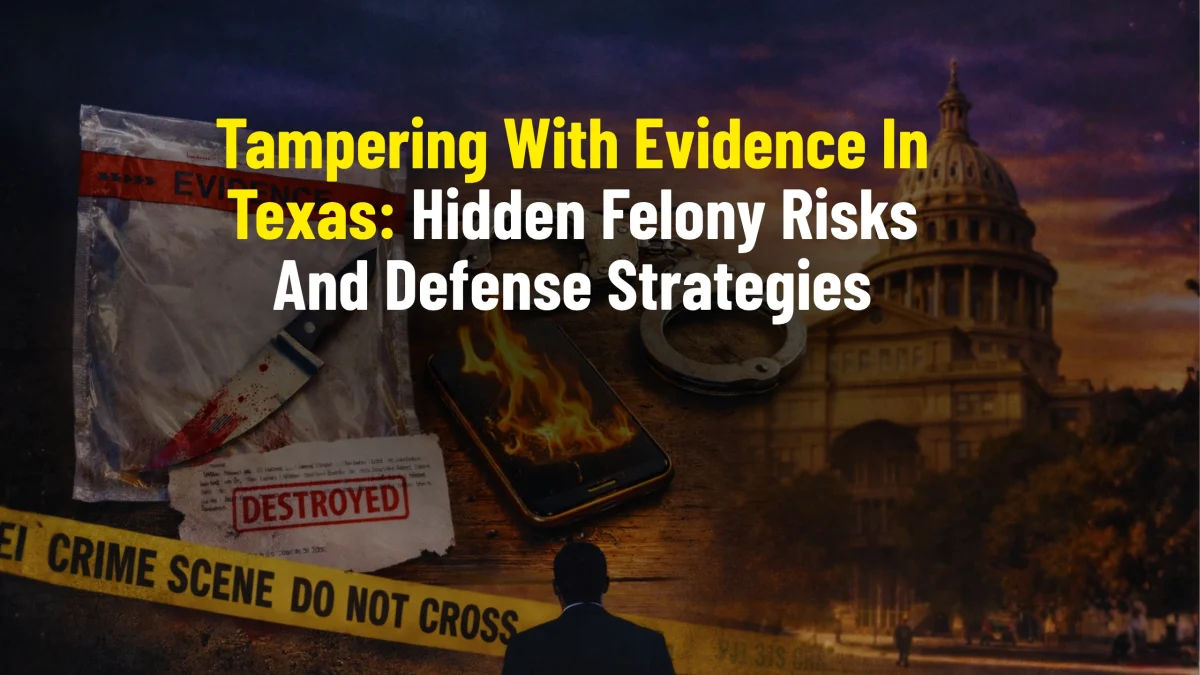
Tampering With Evidence Texas: Hidden Felony Risks And Defense Strategies
Facing accusations of tampering with evidence Texas can be overwhelming, especially when the consequences include serious felony charges. Many people don’t realise that the law doesn’t require you to be the primary suspect in a crime to be charged. Whether it’s deleting a text thread, tossing a small object out a car window during a routine Frisco traffic stop, or moving a physical item before a search warrant is even served, the state views these actions as a direct assault on the integrity of the judicial process.
In Texas, prosecutors aggressively pursue these cases because they directly impact the integrity of the justice system. If you are dealing with allegations related to tampering with evidence, understanding your rights and legal options is critical.
Our experts see how these cases frequently arise not from a desire to “thwart justice,” but from a split-second, instinctual reaction often born of panic that the law later interprets as calculated criminal intent.This guide breaks down the law, penalties, and most importantly, the legal defense for evidence tampering that can help protect your future.
Table Of Content
◆ What Is Tampering With Evidence Texas Law?
◆ Understanding Sec 37.09 Of The Texas Penal Code
◆ Common Examples Of Evidence Tampering
◆ Tampering With Evidence Charge In Texas Explained
◆ Penalties For Tampering With Evidence In Texas Explained
◆ Hidden Felony Risks You May Not Expect
◆ Defense Strategies That Can Protect You
What Is Tampering With Evidence Texas Law?
Under tampering with evidence in Texas law, a person commits an offense if they knowingly alter, destroy, or conceal evidence with the intent to impair its availability in an investigation or official proceeding.
This applies to both physical and digital evidence. Whether it’s deleting text messages, hiding documents, or disposing of objects, these actions may qualify as hiding evidence criminal charge Texas. Because intent plays a key role, prosecutors must prove that the accused knowingly interfered with an investigation. In many instances, this charge is brought alongside other serious allegations, such as Wire Fraud Charges In Texas, where digital records are central to the case.
Understanding Sec 37.09 Of The Texas Penal Code
The law governing tampering with evidence cases is set out in Texas Penal Code Sec. 37.09, which clearly defines what actions may constitute illegal interference with evidence. Under this statute, offenses include knowingly destroying evidence, altering documents or physical objects, concealing items relevant to an investigation, or presenting false or fabricated evidence to authorities.
The law applies to both physical and digital materials, meaning actions such as deleting files or modifying records may also fall within its scope. Because intent to impair an investigation is a key element, violations of this statute can quickly lead to a tampering with evidence charge often escalating into a serious felony with significant legal consequences.
Common Examples Of Evidence Tampering
Many people charged with tampering with evidence are surprised to learn that their actions constitute criminal conduct. Common examples include:
- Deleting incriminating messages or emails
- Disposing of drugs or weapons during a traffic stop
- Altering financial or legal documents
- Hiding objects connected to a crime
- Encouraging someone else to conceal evidence
Even actions taken in panic can result in a hiding evidence criminal charge in Texas, especially if law enforcement believes there was intent to obstruct justice.
Tampering With Evidence Charge In Texas Explained
A tampering with evidence charge in Texas, as defined under Texas Penal Code Sec. 37.09 is typically classified as a third-degree felony, but certain factors can significantly increase its severity. For example, if the case involves a human body, the charges may be elevated, while involvement in organized criminal activity can lead to enhanced penalties.
Additionally, a prior criminal history can negatively impact sentencing outcomes. Because of these risks, anyone facing tampering with evidence allegations should take the situation seriously and seek immediate legal guidance to protect their rights and future. This is especially true when charges overlap with other high-stakes crimes, such as Capital Murder Charges In Frisco, Texas.
Penalties For Tampering With Evidence In Texas Explained
The tampering with evidence can be severe, typically involving a third-degree felony with 2 to 10 years in prison and fines up to $10,000, along with possible enhanced penalties in serious cases. Beyond legal consequences, a conviction may lead to a permanent criminal record, limited job opportunities, and loss of professional licenses, making the penalty for tampering with evidence a long-term burden on your future.
Hidden Felony Risks You May Not Expect
One of the most dangerous aspects of tampering with evidence charges is how easily they can arise. Many individuals do not realise they are committing a crime. Hidden risks include:
- Throwing away an item during a police stop
- Asking someone else to hide evidence
- Modifying digital files or social media content
- Attempting to “clean up” a scene
These actions can quickly lead to a tampering with evidence charge in Texas, even if no underlying crime was committed. This charge is technically a subset of the broader category of Obstruction of Justice, which can carry heavy federal implications as well.
Defense Strategies That Can Protect You
A tailored legal defense for evidence tampering can make a critical difference when facing tampering with evidence in Texas allegations. Effective strategies often focus on challenging the prosecution’s ability to prove intent, including arguments such as a lack of intent to impair, insufficient proof of knowledge, unlawful police conduct (such as illegal searches or seizures), mistaken identity, misinterpretation of actions, or even false accusations.
Because these cases rely heavily on establishing intent, a well-structured defense can significantly weaken the prosecution’s case and improve the chances of a favorable outcome.
Why Early Legal Representation Matters?
If you are arrested for tampering with evidence, your immediate actions are critical to protecting your rights and minimising potential consequences. It is important to remain silent, avoid discussing the case with anyone, and contact a defense attorney as soon as possible.
Seeking legal help early allows you to preserve favourable evidence, challenge improper law enforcement procedures, and negotiate with prosecutors from a stronger position, potentially avoiding formal charges before a grand jury review.
To secure a conviction, prosecutors must prove the existence of an investigation, the defendant’s knowledge of it, and intentional actions to impair evidence, often relying on surveillance footage, witness testimony, digital records, and law enforcement reports.
Frequently Asked Questions
What Is The Penalty For Tampering With Evidence?
The penalty for tampering with evidence in Texas typically includes a third-degree felony charge, which carries a prison term of 2 to 10 years and a fine of up to $10,000. However, penalties may increase depending on the circumstances, such as involvement in serious crimes or prior convictions. Beyond legal consequences, individuals may also face long-term challenges, including employment barriers and reputational damage. Understanding the severity of tampering with evidence Texas punishment is essential when facing charges.
Can Deleting Text Messages Be Considered Evidence Tampering?
Yes, deleting text messages can qualify as tampering with evidence if done with the intent to prevent their use in an investigation. Digital evidence is treated the same as physical evidence under the law. Prosecutors often use forensic tools to recover deleted data, making it easier to build a case. This type of action can lead to a hiding evidence criminal charge, even if the original offense was minor or unrelated.
What Defenses Are Available For Evidence Tampering Charges?
A strong legal defense for evidence tampering may include proving a lack of intent, unlawful police conduct, or insufficient evidence. Since intent is a key element, demonstrating that the accused did not knowingly attempt to interfere with an investigation can be highly effective. Each case is unique, so defense strategies should be tailored based on the facts, available evidence, and procedural issues involved in the tampering with evidence case.
Is Tampering With Evidence Always A Felony In Texas?
In most cases, a tampering with evidence charge in Texas is classified as a third-degree felony. However, certain situations can lead to enhanced charges, especially if the offense involves serious criminal activity or attempts to conceal major evidence. Even when the underlying offense is minor, tampering charges can still result in significant penalties, making it critical to address tampering with evidence allegations promptly.
Conclusion
Being accused of tampering with evidence Texas is not something to take lightly. What may seem like a small or impulsive action can quickly turn into a serious felony with long-term consequences. Under Texas Penal Code Sec. 37.09, these offenses are clearly defined and aggressively prosecuted, making it essential to understand the law and navigate complex legal procedures with the right strategy.
If you or a loved one is facing a tampering with evidence charge, now is the time to act. A strong legal defense for evidence tampering can help protect your rights, challenge the prosecution’s case, and work toward the best possible outcome.
Contact L&L Law Group today to discuss your case and take the first step toward protecting your future.