




Categories
Criminal Defense

Burglary Of Habitation In Texas: Laws and Penalties 2026

Blog

Burglary Of Habitation In Texas: Laws and Penalties 2026

Reggie London

Reggie London

Burglary Of Habitation In Texas Laws and Penalties 2026

Being accused of burglary of a habitation in Texas can be frightening and confusing, especially for individuals who have never faced criminal charges before. In Texas, burglary offenses involving homes are treated very seriously because they involve entering a residence without permission with the intent to commit a crime. Law enforcement and prosecutors aggressively pursue these cases, and the consequences can be severe. A conviction can lead to significant prison time, heavy fines, and a permanent criminal record that affects employment, housing, and other aspects of life.

Understanding how Texas burglary laws work is important for anyone facing accusations or for helping a loved one navigate the criminal justice system. Knowing the legal definition of burglary, the potential penalties, and the possible defenses can help individuals better understand what to expect. If you are facing criminal allegations, consulting a criminal defense attorney in Texas as early as possible can help protect your rights and build a strong defense strategy.

Understanding Burglary Of Habitation In Texas

Under Texas law, burglary occurs when a person enters a building or residence without the owner’s consent and intends to commit a crime inside. When the property involved is a residence or living space, the offense is classified as burglary of habitation. Texas law treats crimes involving homes differently from other property offenses because residences are considered private living spaces where individuals expect safety and privacy.

The offense does not always require that a theft actually occur. In many cases, simply entering a residence with the intent to commit a felony, theft, or assault may be enough for prosecutors to file charges. Individuals facing these allegations should speak with a Texas burglary defense lawyer to understand their legal options.

Legal Definition Under Texas Law

Burglary of habitation is defined under  Texas Penal Code § 30.02 and refers to the unlawful entry into a residence with the intent to commit a crime. A person may be charged with burglary of habitation if they enter a residence without the owner’s consent and attempt to commit theft, assault, or another felony inside the property. The offense may also apply if someone remains concealed within the residence with criminal intent, even if the intended crime is not completed. 

Under Texas law, the term “habitation” is broadly defined and can include various types of living spaces, such as houses, apartments, condominiums, and mobile homes. It may also apply to any structure that is designed or adapted for overnight accommodation. This means that even temporary living spaces or areas used for sleeping may qualify as a habitation under the law. Because these locations are considered private living environments, burglary offenses involving habitations are treated more seriously than many other property crimes in Texas.

Elements Prosecutors Must Prove

To secure a conviction for burglary of a habitation, prosecutors must prove several legal elements beyond a reasonable doubt. They must show that the defendant entered a habitation, that the entry occurred without the owner’s consent, and that the defendant intended to commit a crime inside the property. To support these claims, prosecutors may rely on evidence such as surveillance footage, eyewitness testimony, fingerprints, DNA found at the scene, property recovered after the incident, and statements made to law enforcement during the investigation.

Because these cases often rely on circumstantial evidence, an experienced criminal defense lawyer in Dallas can evaluate the evidence and identify weaknesses in the prosecution’s case.

Penalties For Burglary Of Habitation In Texas

Burglary of habitation is typically charged as a second-degree felony in Texas. In some situations, burglary of a habitation can be upgraded to a first-degree felony, which carries much harsher penalties under Texas law. Below is an overview of potential penalties.

Charge Level Circumstances Possible Prison Sentence Fine Additional Consequences

Second-Degree Felon

Standard burglary of a habitation without additional violent factors
2 to 20 years in prison
Up to $10,000
Permanent felony record and long-term legal consequences

First-Degree Felony

Burglary involving violence, use of a weapon, or another felony, such as assault
5 to 99 years in prison or life
Up to $10,000
Severe criminal penalties and long-term impact on employment, housing, and civil rights

Common Defense Strategies

Burglary of Habitation in Texas

Every burglary of a habitation case is different, and several legal defenses may apply depending on the facts. Defense attorneys often challenge the prosecution by arguing that there was no intent to commit a crime, that the defendant was mistakenly identified, or that there is insufficient evidence linking the defendant to the incident. In some cases, the defense may show that the defendant had consent to enter the property or that law enforcement obtained evidence through an unlawful search or other police misconduct. Depending on the strength of the evidence and the circumstances of the case, attorneys may also negotiate with prosecutors to seek reduced charges or alternative outcomes.

Difference Between Burglary And Criminal Trespass

Many people confuse burglary with criminal trespass, but the two offenses are different under Texas law.

  • Criminal trespass occurs when a person knowingly enters or remains on someone else’s property without the owner’s consent but does not intend to commit any additional crime. For example, someone may be accused of trespassing if they enter private property after being told to leave or if they ignore posted warning signs. While this offense remains illegal, it is generally treated as a less serious offense than burglary.
  • Burglary, however, involves a much more serious situation. In burglary cases, prosecutors must show that the individual entered the property without permission and, once inside, intended to commit a crime, such as theft, assault, or another felony. The presence of criminal intent distinguishes burglary from simple trespass. Because burglary often involves plans to commit additional crimes and may threaten the safety of people inside a home or building, Texas law imposes significantly harsher penalties for burglary offenses than for trespassing.

Long-Term Consequences Of A Conviction

A conviction for burglary of a habitation can create serious long-term consequences beyond prison time. Individuals may face difficulty finding employment because many employers conduct background checks and hesitate to hire someone with a felony record. Housing opportunities can also become limited, as landlords often deny rental applications from people with criminal histories. In addition, certain civil rights may be affected, and background check issues can continue to create obstacles for years. A felony conviction may also limit eligibility for certain professional licenses, making it harder to pursue careers in fields that require certification or government approval. Long-term consequences make it critical to fight charges aggressively with the help of an experienced Texas criminal defense attorney.

How A Texas Criminal Defense Attorney Can Help?

Burglary of Habitation in Texas

Facing burglary charges can be overwhelming, especially when dealing with complex legal procedures and aggressive prosecutors. A           defense attorney can help by:

  • Reviewing the evidence against the defendant
  • Identifying weaknesses in the prosecution’s case
  • Protecting constitutional rights during investigations
  • Negotiating possible plea agreements
  • Representing the defendant in court proceedings

The attorneys at L&L Law Group assist individuals facing serious criminal charges throughout Texas. Early legal representation can help protect a defendant’s rights and improve the chances of a favorable outcome.

Frequently Asked Questions

What Is Burglary Of Habitation In Texas?

Burglary of a habitation in Texas occurs when a person enters a residence or living space without the owner’s consent and intends to commit a crime inside. A habitation includes houses, apartments, mobile homes, or any structure used for overnight accommodation.

Is Burglary Of Habitation A Felony In Texas?

Yes. The offense is typically charged as a second-degree felony but may be upgraded to a first-degree felony under certain circumstances. Because felony convictions carry severe penalties and long-term consequences, anyone facing this charge should seek legal guidance as soon as possible.

What Is The Prison Sentence For Burglary Of Habitation?

A second-degree felony can carry a sentence of 2 to 20 years in prison and fines up to $10,000. If the charge is upgraded to a first-degree felony, the penalties become much more severe, potentially including 5 to 99 years in prison or even life imprisonment.

Can Burglary Charges Be Reduced?

In some cases, charges may be reduced depending on the evidence, criminal history, and negotiations between attorneys and prosecutors.

What Evidence Is Used In Burglary Cases?

Evidence may include surveillance footage, witness statements, fingerprints, and physical evidence found at the scene. In some cases, statements made by the accused to law enforcement officers may also be used as evidence.

Speak With A Defense Attorney

Being charged with burglary of a habitation in Texas can have life-changing consequences. Understanding the law and taking the right steps early can significantly affect the outcome of your case. If you or a loved one is facing burglary charges, speaking with a defense attorney as soon as possible is critical. The legal team at L&L Law Group helps individuals facing serious criminal allegations throughout Texas and protects their rights at every stage of the legal process. Contact a qualified attorney today to discuss your situation and explore your legal options.

Section Title

How To Identify And Avoid AI Scams In Texas, USA?

AI Scams in Texas are rising as cities like Frisco continue to grow and adopt new technology. The...

Legal Defense Strategies For Grooming Allegations In Texas

Grooming allegations in Texas carry serious legal weight. These cases move fast. They also involve...

What To Know When Facing Continuous Sexual Abuse Charges In Texas?

Continuous sexual abuse charges in Texas are taken very seriously under state law. In fact, these...

Drug Trafficking Charges In Texas: Legal Risks And Defense Strategies

Drug trafficking charges in Texas cases place you on the front line of federal and state drug...

Penalties And Legal Defense Strategies For Texas Federal RICO Charges

Facing federal RICO charges feels like a nightmare. Although Congress created these laws to target...

What to Do If Facing Embezzlement Charges in Texas?

Facing embezzlement charges in Texas is a serious and often life-altering situation. These cases...
Simplifying Data Breach Liability Law And Your Legal Risks

In the current digital landscape, data breach liability law makes it clear that a breach is no...
What Impacts The Role Of DNA Evidence In Criminal Cases In Texas?

DNA evidence in criminal cases in Texas carries immense weight with modern juries, often viewed as...

Possession Of Prohibited Weapons In Texas: What You Need To Know?

Possession of prohibited weapons in Texas is taken very seriously under state law, even though Texas...

Section Title

How To Identify And Avoid AI Scams In Texas, USA?

AI Scams in Texas are rising as cities like Frisco continue to grow and adopt new technology. The rapid development brings many benefits, but it also attracts more advanced cybercrime. Local law...

Legal Defense Strategies For Grooming Allegations In Texas

Grooming allegations in Texas carry serious legal weight. These cases move fast. They also involve sensitive evidence. Therefore, you need clear information from the start. Even a small mistake early...

What To Know When Facing Continuous Sexual Abuse Charges In Texas?

Continuous sexual abuse charges in Texas are taken very seriously under state law. In fact, these are some of the most severe sex crime allegations because they involve repeated acts over time. As a...

Drug Trafficking Charges In Texas: Legal Risks And Defense Strategies

Drug trafficking charges in Texas cases place you on the front line of federal and state drug enforcement. Texas treats drug-related crimes seriously. However, cartel-linked allegations and...

Penalties And Legal Defense Strategies For Texas Federal RICO Charges

Facing federal RICO charges feels like a nightmare. Although Congress created these laws to target the mob, prosecutors now apply them to various groups, including businesses and street gangs. If the...

What to Do If Facing Embezzlement Charges in Texas?

Facing embezzlement charges in Texas is a serious and often life-altering situation. These cases fall under complex white-collar crime laws, where the prosecution must prove not just that money or...

Simplifying Data Breach Liability Law And Your Legal Risks

In the current digital landscape, data breach liability law makes it clear that a breach is no longer a question of "if," but "when." For businesses operating in the Lone Star State, the legal fallout...

What Impacts The Role Of DNA Evidence In Criminal Cases In Texas?

DNA evidence in criminal cases in Texas carries immense weight with modern juries, often viewed as the "gold standard" of forensic science, a biological signature that supposedly leaves no room for...

Possession Of Prohibited Weapons In Texas: What You Need To Know?

Possession of prohibited weapons in Texas is taken very seriously under state law, even though Texas is known for its generally friendly gun regulations. Texas has a reputation for very friendly gun...

Categories
Criminal Defense

Federal Detention Hearings In Dallas: What To Expect In The Northern District

Blog

Federal Detention Hearings In Dallas: What To Expect In The Northern District

Reggie London

Reggie London

Federal Detention Hearings In Dallas What To Expect In The Northern District

Federal detention hearings are often one of the first and most critical steps after someone is arrested on federal charges. For many people in Dallas, this part of the legal process can feel unfamiliar and intimidating. Federal cases move quickly, and shortly after an arrest, a judge must decide whether the accused will remain in custody or be allowed to return home while the case proceeds. These hearings are important because they determine a person’s status before trial and can influence how the rest of the case unfolds. Facing a federal arrest can be overwhelming, especially for individuals who have never dealt with the federal criminal justice system before. 

Federal charges typically involve serious allegations and often result from lengthy investigations by national law enforcement agencies. Understanding how federal detention hearings work can help individuals and families prepare for what comes next and take steps to protect their rights. Legal representation is also critical at this stage. The attorneys at L&L Law Group assist individuals who are navigating federal criminal charges in Dallas and throughout the Northern District of Texas. From the moment of arrest through detention hearings and beyond, legal guidance can help defendants understand their options and prepare a strong defense.

Understanding Federal Detention Hearings

A federal detention hearing is a court proceeding where a judge decides whether a person charged with a federal crime will remain in custody or be released while the case moves forward. Unlike state courts that often rely on bail schedules, federal courts focus on whether release is appropriate based on factors such as the seriousness of the charges, criminal history, and risk to the community or flight risk. These hearings are governed by the Bail Reform Act of 1984  and are typically handled by a federal magistrate judge shortly after the arrest. The judge reviews arguments from both the prosecution and defense before deciding whether the defendant will remain detained or be released under specific conditions.

Step 1- Arrest By Federal Authorities

Federal criminal cases often begin with an arrest carried out by national law enforcement agencies. These arrests are typically the result of extensive investigations that may last months or even years before charges are filed.

Several federal agencies may be involved in  federal criminal investigations, including:

  • Federal Bureau of Investigation (FBI)
  • Drug Enforcement Administration (DEA)
  • Bureau of Alcohol, Tobacco, Firearms, and Explosives (ATF)
  • Homeland Security Investigations (HSI)
  • Internal Revenue Service Criminal Investigation (IRS-CI)

These agencies work together to investigate violations of federal law, such as drug trafficking, financial crimes, firearms offenses, cybercrime, and other serious criminal activity. Federal arrests can happen in several ways, including after a grand jury indictment, through a federal arrest warrant, or following a criminal complaint filed during an ongoing investigation. After the arrest, the individual is usually taken to a federal detention facility for booking, which includes recording personal information, fingerprinting, and processing the charges. Once this process is complete, the defendant typically remains in custody until appearing before a federal judge for the initial court appearance.

Step 2- Initial Appearance In Federal Court

After a federal arrest, the defendant must be brought before a judge for an initial appearance in federal court. In most cases, this hearing takes place within 48 hours of the arrest, although the exact timing can vary depending on weekends, holidays, or court scheduling.

During this hearing, the defendant appears before a United States Magistrate Judge in the federal district court. For individuals arrested in Dallas, these proceedings typically take place in the Northern District of Texas. The purpose of this appearance is to formally notify the defendant of the charges and explain the legal process moving forward.

At the initial appearance, the judge will explain several important matters, including:

  • The specific charges filed against the defendant
  • The defendant’s constitutional rights, including the right to remain silent
  • The right to legal counsel and the option to request a court-appointed attorney if the defendant cannot afford one

Step 3- The Federal Detention Hearing Process

A federal detention hearing determines whether a defendant will remain in custody or be released pending the outcome of the case. During the hearing, both the prosecution and defense present arguments to a judge. Prosecutors may request detention if they believe the defendant poses a flight risk or a danger to the community, often pointing to the seriousness of the charges, the strength of the evidence, and the defendant’s criminal history. Defense attorneys argue for release by presenting evidence that the defendant will comply with court orders and appear for future hearings. Evidence considered during the hearing may include:

  • Witness testimony
  • The defendant’s criminal history
  • Investigation summaries
  • Financial records or employment information
  • Rules of evidence are more flexible than in a trial, allowing investigative reports or summaries to be presented.
  • The hearing usually occurs within three to five days after the arrest, though either side may request additional preparation time.

Factors Judges Consider In Federal Release Decisions

The following table summarizes the main considerations used by federal courts.

Factor Considered What the Judge Evaluates
Nature of the offense
Whether the crime involved violence, drugs, weapons, or other serious allegations
Weight of the evidence
The strength of the prosecution’s case against the defendant
Criminal history
Prior convictions, previous arrests, or a history of failing to appear in court
Risk to the community or flight risk
Whether the defendant poses a danger to others or may attempt to flee

Finally, the court considers whether the defendant poses a risk to the community or a risk of flight. If the judge believes the person may attempt to avoid future court appearances or could present a danger to others, detention may be ordered.

Differences Between Federal And State Bail Hearings

Many people assume that federal detention hearings work the same way as state bail hearings, but the two systems operate differently. In state criminal courts, judges often rely on bail schedules that suggest standard bail amounts for certain offenses. Defendants may be released after paying a set bail amount or posting a bond through a bail bondsman. 

In contrast, Federal courts follow a different approach. Instead of relying on fixed bail schedules, federal judges focus on whether the defendant should be detained or released under supervision. If release is granted, it often includes strict conditions designed to ensure court compliance and public safety. These conditions may include GPS monitoring, travel restrictions, home confinement, drug testing, or supervision by a third-party custodian.

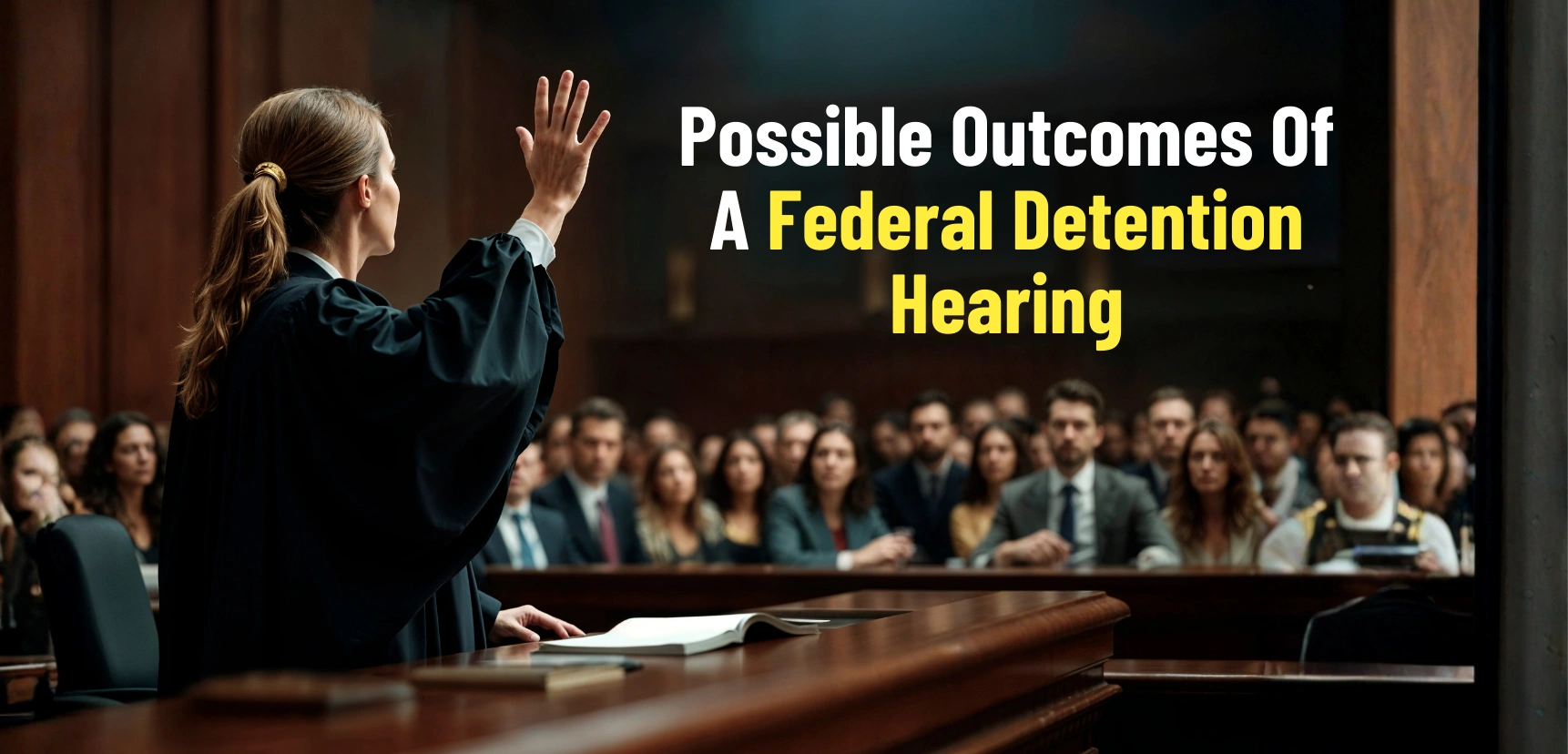
Possible Outcomes Of A Federal Detention Hearing

Possible Outcomes Of A Federal Detention Hearing

After reviewing the arguments and evidence, the judge decides the defendant’s status before trial. The three possible outcomes of a federal detention hearing include:

  • Release on Personal Recognizance (ROR)
    The defendant is released without paying bail and promises to appear at all future court hearings. This usually applies when the defendant has strong community ties, little or no criminal history, and faces less-serious charges.
  • Release With Conditions
    The court allows release under Federal Pretrial Services supervision. Conditions may include travel restrictions, home confinement, electronic monitoring, or other requirements.
  • Pretrial Detention
    The defendant remains in custody until trial. This often occurs in cases involving serious allegations such as drug trafficking, firearms offenses, financial crimes, or violent offenses where the court believes release may pose a risk.

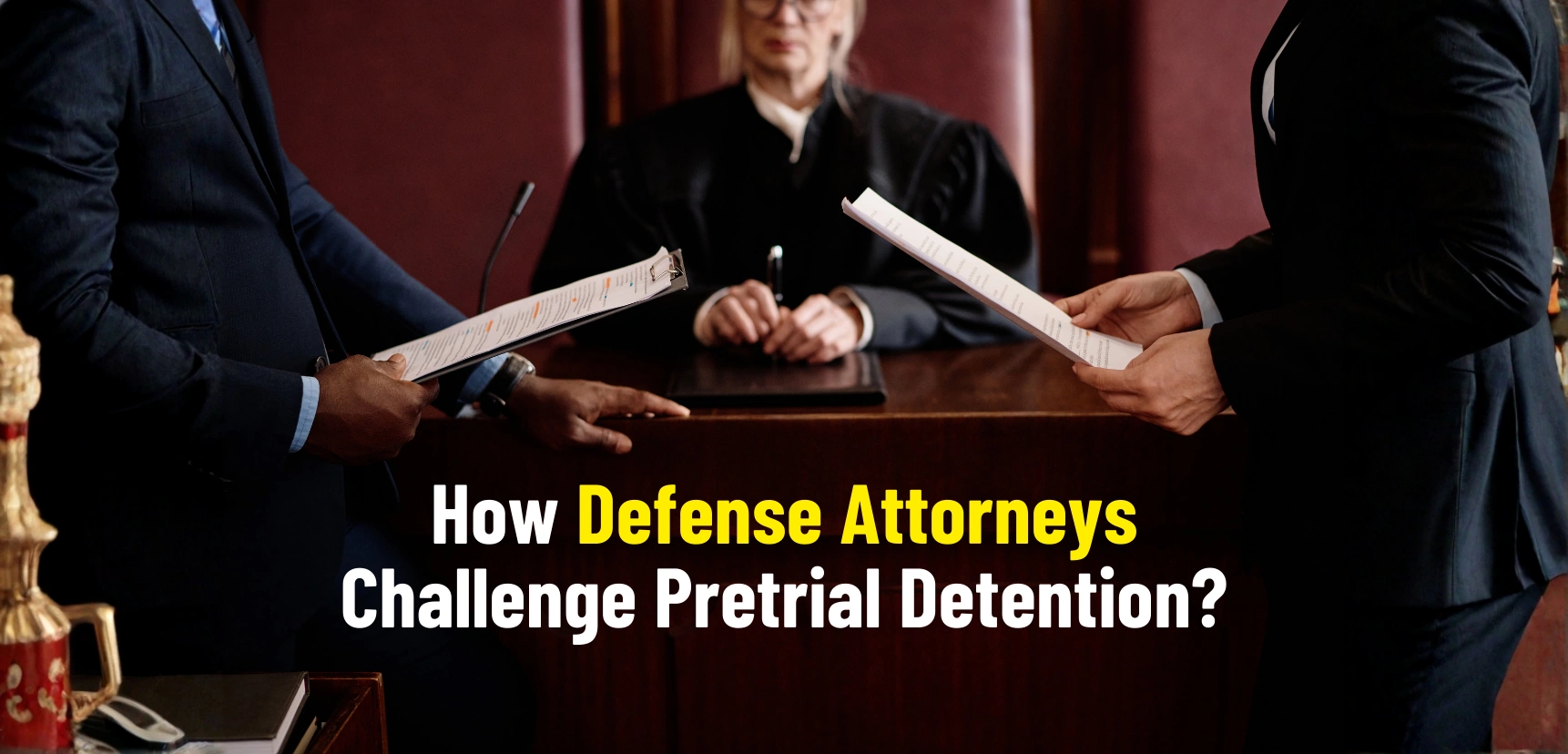
How Defense Attorneys Challenge Pretrial Detention?

How Defense Attorneys Challenge Pretrial Detention

Defense attorneys play an important role in detention hearings by presenting evidence and arguments that support the defendant’s release. They may demonstrate strong community ties, such as family relationships, stable employment, or long-term residence, to show that the defendant is unlikely to flee. Attorneys may also challenge the government’s claims if the evidence does not justify detention. In many cases, they propose alternatives like electronic monitoring, home detention, or third-party supervision to address the court’s concerns. Early legal representation allows attorneys time to gather documents, review evidence, and prepare arguments that support pretrial release.

Common Mistakes After A Federal Arrest

Certain mistakes can weaken a defense or create additional legal risks. Avoiding these mistakes and seeking legal guidance early can help protect a defendant’s rights and strengthen their position during the detention hearing. Common errors include:

  • Speaking to federal agents without legal counsel
  • Discussing the case with friends, family, or other detainees
  • Posting about the arrest or investigation on social media
  • Ignoring court orders or legal instructions
  • Violating conditions of release

How A Dallas Federal Defense Attorney Can Help?

The actions a person takes after a federal arrest can affect the outcome of a detention hearing. Mistakes such as speaking to federal agents without a lawyer, discussing the case with others, posting online about the arrest, ignoring court orders, or violating release conditions can weaken a defense and be used as evidence in court. Seeking legal guidance early is important. A  criminal defense lawyer in Dallas can explain the federal court process, represent the defendant during detention hearings, challenge detention arguments, and negotiate possible release conditions. The attorneys at L&L Law Group assist individuals facing federal charges in Dallas and the Northern District of Texas, helping protect their rights and prepare for the next stages of their case.

Frequently Asked Questions

What Is A Federal Detention Hearing In Dallas?

A federal detention hearing is a court proceeding where a judge determines whether a person charged with a federal crime will remain in custody or be released while the case proceeds. The court considers factors such as the seriousness of the charges, the defendant’s criminal history, and whether the individual poses a danger to the community.

How Soon Does A Detention Hearing Occur After A Federal Arrest?

In most federal criminal cases, the detention hearing takes place within three to five days after the defendant’s initial appearance in court. The exact timing may vary depending on scheduling or if the defense requests additional time to prepare arguments regarding release.

Can Someone Be Released After A Federal Detention Hearing?

Yes. A judge may order release if the court determines the defendant does not pose a significant flight risk or danger to the community. Release may include conditions such as electronic monitoring, travel restrictions, or supervision by federal pretrial services.

What Happens If The Judge Orders Detention?

If the court orders detention, the defendant remains in a federal detention facility while the case proceeds through the legal process. In some situations, a defense attorney may request a reconsideration hearing if new evidence or circumstances arise that support release.

Do All Federal Cases Involve Detention Hearings?

Most federal criminal cases involve detention hearings, especially when prosecutors request pretrial detention. These hearings are common in cases involving drug trafficking, firearms offenses, financial crimes, or other serious violations of federal law.

Protect Your Rights-Take Action Today

Facing federal charges can have serious and long-lasting consequences. The outcome of a federal detention hearing may determine whether a defendant can return home while preparing for trial or must remain in custody during the legal process. If you or a loved one is facing federal charges in Dallas, speaking with a defense attorney as soon as possible can help protect your rights. The legal team at L&L Law Group assists individuals navigating federal detention hearings and complex criminal cases in the Northern District of Texas. Contact us today to discuss your situation.

Section Title

How To Identify And Avoid AI Scams In Texas, USA?

AI Scams in Texas are rising as cities like Frisco continue to grow and adopt new technology. The...

Legal Defense Strategies For Grooming Allegations In Texas

Grooming allegations in Texas carry serious legal weight. These cases move fast. They also involve...

What To Know When Facing Continuous Sexual Abuse Charges In Texas?

Continuous sexual abuse charges in Texas are taken very seriously under state law. In fact, these...

Drug Trafficking Charges In Texas: Legal Risks And Defense Strategies

Drug trafficking charges in Texas cases place you on the front line of federal and state drug...

Penalties And Legal Defense Strategies For Texas Federal RICO Charges

Facing federal RICO charges feels like a nightmare. Although Congress created these laws to target...

What to Do If Facing Embezzlement Charges in Texas?

Facing embezzlement charges in Texas is a serious and often life-altering situation. These cases...

Simplifying Data Breach Liability Law And Your Legal Risks

In the current digital landscape, data breach liability law makes it clear that a breach is no...

What Impacts The Role Of DNA Evidence In Criminal Cases In Texas?

DNA evidence in criminal cases in Texas carries immense weight with modern juries, often viewed as...

Possession Of Prohibited Weapons In Texas: What You Need To Know?

Possession of prohibited weapons in Texas is taken very seriously under state law, even though Texas...
Categories
Criminal Defense

Facing Federal Tax Evasion Charges In Frisco? Defense Strategies & Penalties

Blog

Facing Federal Tax Evasion Charges In Frisco? Defense Strategies & Penalties

Reggie London

Reggie London

Facing Federal Tax Evasion Charges In Frisco Defense Strategies & Penalties

Being accused of federal tax evasion can be one of the most serious financial crimes a person may face. In Frisco and throughout Texas, federal authorities actively investigate individuals and businesses suspected of intentionally avoiding tax obligations. Federal tax crimes are handled very differently from routine tax disputes or filing errors. When the government believes a taxpayer intentionally concealed income, falsified financial records, or attempted to avoid paying required taxes, the matter may escalate from a civil issue into a criminal investigation.

Understanding how federal tax evasion charges in Frisco work is important for protecting your rights and preparing a defense. These cases may involve significant financial penalties and possible prison sentences. Given the serious consequences, individuals facing these allegations should seek legal guidance from a Frisco criminal defense attorney as early as possible.

Understanding Federal Tax Evasion Charges

Facing federal tax evasion charges in Frisco is a life-altering event. In Texas, federal authorities like the IRS Criminal Investigation (IRS-CI) and the  Department of Justice (DOJ) have significantly ramped up enforcement. In fiscal year 2025, IRS-CI identified over $10.59 billion in financial crimes—a nearly 16% increase from the previous year. Understanding the legal framework, specifically  26 U.S. Code § 7201, is the first step in protecting your future.

Federal tax evasion occurs when a person intentionally attempts to avoid paying taxes owed to the federal government. Unlike simple filing errors or accounting mistakes, tax evasion involves deliberate actions meant to hide income, falsify financial records, or mislead tax authorities. These cases are prosecuted under federal law and often result from lengthy investigations. Federal authorities may spend months or even years examining financial records, tax filings, and business transactions before filing criminal charges. 

Because of the complexity of financial evidence involved in these cases, federal prosecutors often pursue tax evasion charges only after building a substantial body of proof.

Step 1- Understanding Federal Tax Evasion?

Federal tax evasion generally involves intentionally avoiding tax obligations through deceptive or fraudulent conduct. The government must usually show that the taxpayer knowingly attempted to evade or defeat a legally owed tax.

Examples of actions that may lead to tax evasion charges include:

  • Hiding income from the Internal Revenue Service (IRS)
  • Failing to report offshore bank accounts
  • Creating false deductions or inflated expenses
  • Maintaining secret financial records
  • Using shell companies or other entities to conceal assets

When investigators believe these actions were performed intentionally, the matter may result in criminal charges rather than civil penalties.

Step 2- Common Examples Of Tax Evasion Cases

Tax evasion cases can involve individuals, professionals, and business owners in a wide range of industries. In many situations, these cases begin when irregularities appear in financial records or tax filings.

Common examples of tax evasion cases include:

  • Business owners underreporting income to reduce tax liability
  • Individuals failing to file tax returns for multiple years
  • Claiming false deductions or inflating business expenses
  • Maintaining hidden offshore bank accounts
  • Failing to pay payroll taxes collected from employees

When authorities believe these actions were intentional and designed to avoid paying taxes, the situation may escalate into a criminal tax investigation.

Step 3- How Federal Tax Evasion Investigations Begin?

Most federal tax evasion cases begin with an  IRS Criminal Investigation Division. These investigations often start when authorities detect irregularities in tax filings, financial records, or reported income. Federal agencies closely monitor financial activity and tax compliance, and unusual patterns may trigger further review. Investigations can begin due to factors such as suspicious or inconsistent tax returns, evidence found during an FBI investigation into other felonies or misdemeanour charges, or financial institution reports of unusual transactions, whistleblower complaints from employees or business partners, or large unexplained financial transfers. 

When investigators believe there may be evidence of intentional wrongdoing, the case may be referred to the IRS Criminal Investigation Division, which handles potential criminal tax violations.

Step 4- Agencies Involved In Federal Tax Crime Cases

A single agency rarely handles federal tax crimes. Instead, several federal authorities often work together to investigate and prosecute these cases.

Common agencies involved in federal tax crime investigations include:

  • Internal Revenue Service Criminal Investigation (IRS-CI)
  • Federal Bureau of Investigation (FBI)
  • Department of Justice Tax Division
  • U.S. Attorney’s Office

These agencies may conduct detailed financial investigations, review years of tax filings, analyze business records, and interview witnesses before determining whether to file criminal charges.

Step 5- Evidence Used In Tax Evasion Prosecutions

Federal prosecutors rely heavily on financial evidence when building tax evasion cases. Because these cases often involve complex financial transactions, investigators carefully analyze documents that may show attempts to conceal income or avoid paying taxes. Evidence may include bank records and financial statements, tax returns and filing histories, accounting and bookkeeping records, business financial documents, emails or other digital communications related to financial activity, and testimony from witnesses or financial professionals. Investigators may also review financial transactions over several years to identify patterns that could indicate intentional tax evasion.

Step 6- Federal Tax Evasion Penalties In Texas

A conviction for a felony tax offense carries severe weight and may include both financial and criminal consequences. Because tax evasion is considered a federal felony, individuals convicted of this offence may face significant legal penalties. The penalties for a conviction under § 7201 are severe:

  • Prison: Up to 5 years per count.
  • Fines: Up to $100,000 for individuals ($500,000 for corporations).
  • Costs of Prosecution: You may be ordered to pay the government’s legal and investigative costs.
  • Restitution: Full repayment of taxes owed, plus a 75% civil fraud penalty.

Step 7 – Civil vs Criminal Tax Violations

Civil Tax Violations Criminal Tax Violations
Filing tax returns late
Intentional attempt to evade paying taxes
Reporting incorrect deductions due to an error
Deliberately falsifying tax records or financial information
Accounting mistakes in financial statements
Concealing income or assets from tax authorities
Unintentional underpayment of taxes
Evidence of deliberate fraud or tax evasion

Not every tax issue leads to criminal prosecution. Civil tax violations typically result in financial penalties or corrective action, while criminal tax cases usually involve clear evidence that a taxpayer intentionally attempted to evade tax obligations. The classification often depends on the taxpayer’s actions and the evidence discovered during the investigation.

Defense Strategies For Federal Tax Evasion Charges

Defense Strategies For Federal Tax Evasion Charges

Several defense strategies may be used in federal tax evasion cases, depending on the facts and circumstances involved. Because these cases often rely on complex financial records and lengthy investigations, the defense process typically involves a detailed review of documents, transactions, and investigative procedures. A strategic defense focuses on negating “willfulness.” Common strategies used by a Frisco criminal lawyer include:

  • Lack of intent to evade taxes
  • Accounting mistakes or financial misunderstandings
  • Reliance on professional tax or accounting advice
  • Insufficient evidence of fraudulent conduct
  • Violations of constitutional rights during the investigation

Every tax evasion case is unique. A strong defense often requires careful examination of financial records, tax filings, and the methods investigators used to gather evidence.

Why Early Legal Representation Matters?

Federal tax investigations frequently begin long before formal charges are filed. In many situations, individuals may not realize they are under investigation until federal agents request financial records, conduct interviews, or issue subpoenas.

Seeking legal representation early in the process can help individuals protect their rights and respond appropriately to investigators. Early legal guidance may help individuals:

  • Protect their constitutional rights during questioning
  • Avoid making statements that could be used against them
  • Respond properly to requests from federal investigators
  • Review financial records and evidence carefully

Addressing the situation early can influence how the investigation develops and how the case proceeds.

How A Frisco Criminal Defense Attorney Can Help?

Facing federal tax evasion charges can be overwhelming, especially because these cases often involve complex financial records and federal legal procedures. A  Frisco criminal defense attorney can help individuals understand the allegations against them and develop a legal strategy based on the specific circumstances of the case.

Legal representation may involve:

  • Reviewing IRS investigation procedures
  • Analyzing financial and accounting records
  • Representing clients during federal court proceedings
  • Negotiating with prosecutors when appropriate
  • Preparing a defense strategy for trial if necessary

Common Mistakes People Make During IRS Investigations

Certain actions can complicate a federal tax investigation and may negatively affect a defence case. Understanding what to avoid can help protect legal rights during the investigation process.

Common mistakes include:

  • Speaking with investigators without legal guidance
  • Providing incomplete or inaccurate financial records
  • Destroying or altering financial documents
  • Ignoring IRS notices or subpoenas

Certain actions can complicate a federal tax investigation and may negatively affect a defence case. Understanding what to avoid can help protect legal rights during the investigation process.

Common mistakes include:

  • Speaking with investigators without legal guidance
  • Providing incomplete or inaccurate financial records
  • Destroying or altering financial documents
  • Ignoring IRS notices or subpoenas

Frequently Asked Questions

What Is Federal Tax Evasion?

Federal tax evasion occurs when someone intentionally attempts to avoid paying taxes owed to the federal government. This may involve hiding income, falsifying financial records, or misleading tax authorities. These offenses are prosecuted under federal law and may result in serious penalties.

What Penalties Can Occur For Tax Evasion In Texas?

Federal tax evasion penalties may include significant financial fines, repayment of unpaid taxes, and possible prison sentences. The severity of penalties often depends on factors such as the amount of unpaid taxes, the duration of the alleged conduct, and whether additional criminal violations occurred.

Can Tax Evasion Charges Be Resolved Without A Trial?

In some cases, tax evasion charges may be resolved through negotiations with federal prosecutors. The outcome depends on the evidence presented and the specific circumstances of the case. Legal counsel can help determine the most appropriate strategy given the facts.

How Long Do Federal Tax Investigations Last?

Federal tax investigations can last several months or even years. Investigators typically review financial records, tax filings, and business documents over extended periods before determining whether to file criminal charges.

Protect Your Rights – Speak With A Defense Attorney

Federal tax evasion charges can carry serious legal and financial consequences. Individuals facing these allegations should take prompt steps to understand their rights and available legal options. Your words can and will be used against you. 

The legal team at L&L Law Group assists individuals facing federal investigations by reviewing financial evidence, evaluating investigative procedures, and developing defense strategies tailored to each case.

Section Title

How To Identify And Avoid AI Scams In Texas, USA?

AI Scams in Texas are rising as cities like Frisco continue to grow and adopt new technology. The...

Legal Defense Strategies For Grooming Allegations In Texas

Grooming allegations in Texas carry serious legal weight. These cases move fast. They also involve...

What To Know When Facing Continuous Sexual Abuse Charges In Texas?

Continuous sexual abuse charges in Texas are taken very seriously under state law. In fact, these...

Drug Trafficking Charges In Texas: Legal Risks And Defense Strategies

Drug trafficking charges in Texas cases place you on the front line of federal and state drug...

Penalties And Legal Defense Strategies For Texas Federal RICO Charges

Facing federal RICO charges feels like a nightmare. Although Congress created these laws to target...

What to Do If Facing Embezzlement Charges in Texas?

Facing embezzlement charges in Texas is a serious and often life-altering situation. These cases...

Simplifying Data Breach Liability Law And Your Legal Risks

In the current digital landscape, data breach liability law makes it clear that a breach is no...

What Impacts The Role Of DNA Evidence In Criminal Cases In Texas?

DNA evidence in criminal cases in Texas carries immense weight with modern juries, often viewed as...

Possession Of Prohibited Weapons In Texas: What You Need To Know?

Possession of prohibited weapons in Texas is taken very seriously under state law, even though Texas...

Section Title

How To Identify And Avoid AI Scams In Texas, USA?

AI Scams in Texas are rising as cities like Frisco continue to grow and adopt new technology. The rapid development brings many benefits, but it also attracts more advanced cybercrime. Local law...

Legal Defense Strategies For Grooming Allegations In Texas

Grooming allegations in Texas carry serious legal weight. These cases move fast. They also involve sensitive evidence. Therefore, you need clear information from the start. Even a small mistake early...

What To Know When Facing Continuous Sexual Abuse Charges In Texas?

Continuous sexual abuse charges in Texas are taken very seriously under state law. In fact, these are some of the most severe sex crime allegations because they involve repeated acts over time. As a...

Drug Trafficking Charges In Texas: Legal Risks And Defense Strategies

Drug trafficking charges in Texas cases place you on the front line of federal and state drug enforcement. Texas treats drug-related crimes seriously. However, cartel-linked allegations and...

Penalties And Legal Defense Strategies For Texas Federal RICO Charges

Facing federal RICO charges feels like a nightmare. Although Congress created these laws to target the mob, prosecutors now apply them to various groups, including businesses and street gangs. If the...

What to Do If Facing Embezzlement Charges in Texas?

Facing embezzlement charges in Texas is a serious and often life-altering situation. These cases fall under complex white-collar crime laws, where the prosecution must prove not just that money or...

Simplifying Data Breach Liability Law And Your Legal Risks

In the current digital landscape, data breach liability law makes it clear that a breach is no longer a question of "if," but "when." For businesses operating in the Lone Star State, the legal fallout...

What Impacts The Role Of DNA Evidence In Criminal Cases In Texas?

DNA evidence in criminal cases in Texas carries immense weight with modern juries, often viewed as the "gold standard" of forensic science, a biological signature that supposedly leaves no room for...

Possession Of Prohibited Weapons In Texas: What You Need To Know?

Possession of prohibited weapons in Texas is taken very seriously under state law, even though Texas is known for its generally friendly gun regulations. Texas has a reputation for very friendly gun...

Item #1
  • Understanding Federal Tax Evasion Charges
  • What Is Federal Tax Evasion?
  • Common Examples of Tax Evasion Cases
  • How Federal Tax Evasion Investigations Begin
  • Agencies Involved in Federal Tax Crime Cases
  • Evidence Used in Tax Evasion Prosecutions
  • Federal Tax Evasion Penalties in Texas
  • Civil vs Criminal Tax Violations
  • Defense Strategies for Federal Tax Evasion Charges
  • Why Early Legal Representation Matters
  • How a Frisco Criminal Defense Attorney Can Help
  • Common Mistakes People Make During IRS Investigations
  • Frequently Asked Questions
  • Protect Your Rights – Speak With a Defense Attorney
Categories
Criminal Defense

Can You Get Bail In Federal Court? Pre-Trial Release Rules In Dallas & Frisco

Blog

Can You Get Bail In Federal Court? Pre-Trial Release Rules In Dallas & Frisco

Reggie London

Reggie London

Can You Get Bail In Federal Court Pre-Trial Release Rules In Dallas & Frisco

Can you get bail in federal court for cases involving Federal bail in Dallas? This is one of the first questions individuals and families ask after a federal arrest. Federal arrests can be confusing, and many people assume bail works the same way in federal court as it does in state criminal cases. However, the federal bail system operates differently, focusing heavily on pre-trial release decisions rather than on traditional bail bonds. Courts in Dallas and Frisco follow federal rules that determine whether someone can be released or must remain in custody while the case moves forward. Understanding how federal bail in Dallas works can help individuals prepare for the legal process. Speaking with a federal criminal defense attorney early may also help protect legal rights and freedom.

Understanding Federal Criminal Charges

What Makes a Case Federal?

Federal criminal cases involve offenses that fall under federal law and are typically investigated by federal agencies and prosecuted in federal court. These cases often include crimes such as drug trafficking across state lines, federal fraud and financial offenses, firearm violations under federal law, immigration-related offenses, and large-scale conspiracy charges. Because these crimes may cross state borders or involve federal statutes, they are handled by the federal criminal justice system rather than state courts.

Investigations in these cases are often conducted by agencies such as the Federal Bureau of Investigation (FBI), Drug Enforcement Administration (DEA), Bureau of Alcohol, Tobacco, Firearms, and Explosives (ATF), or Homeland Security Investigations (HSI).

Federal Courts In The Dallas Frisco Area

Federal criminal cases in the Dallas and Frisco region are typically handled in the U.S. District Court for the Northern District of Texas. This federal court oversees a wide range of criminal matters brought under federal law. Unlike state courts, federal courts follow different procedures when determining whether a person may be released or detained before trial, particularly when addressing bail and pre-trial release decisions.

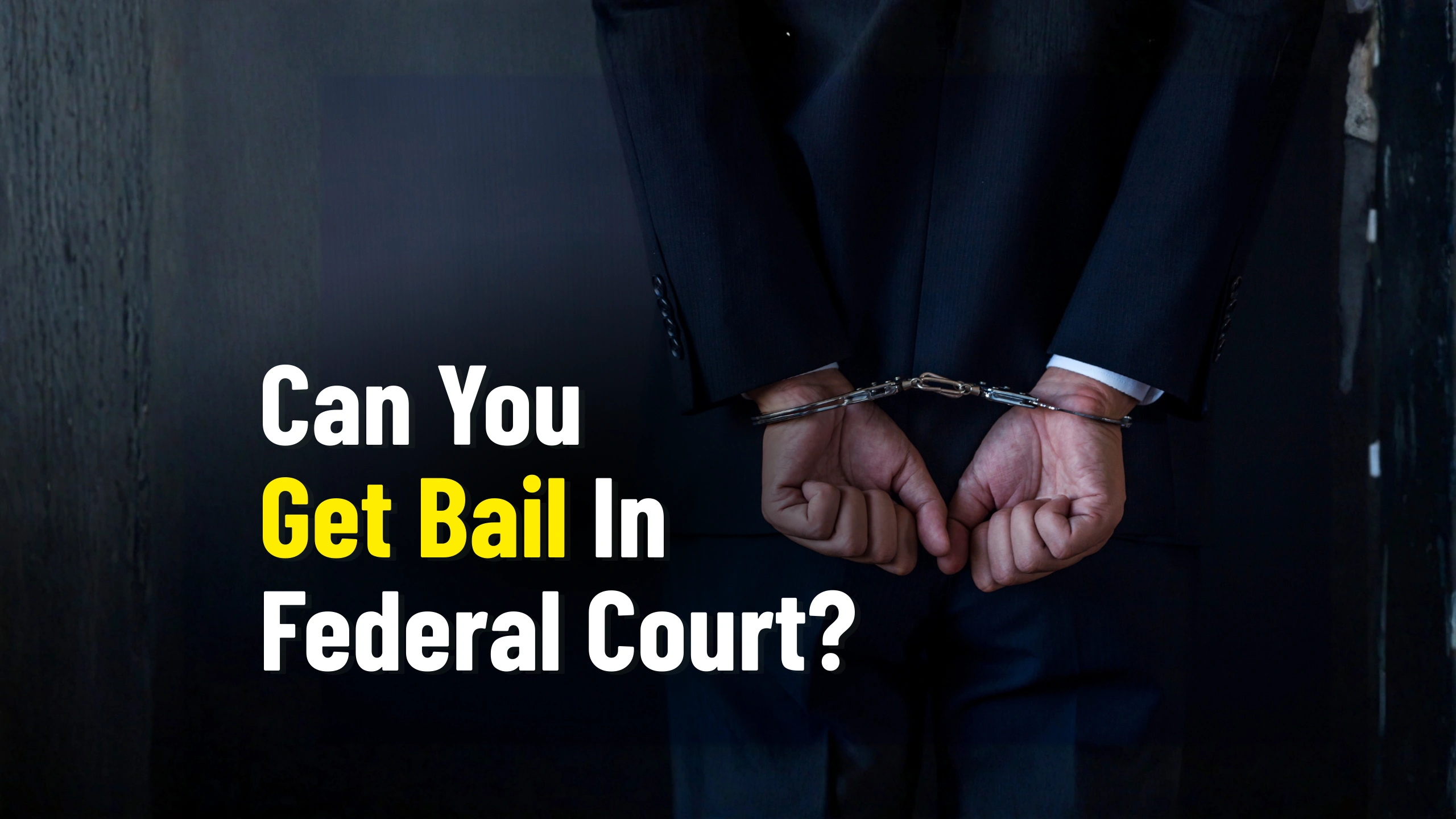
Can You Get Bail In Federal Court?

Many people ask whether bail exists in federal cases. In reality, federal courts rarely use traditional bail the way state courts do. Instead of relying primarily on money bonds, federal courts focus on pre-trial release decisions under the Federal Bail Reform Act. A judge decides whether a person can be released before trial, must follow strict release conditions, or must remain detained until the case is resolved. In many federal cases, the court focuses on whether the individual poses a flight risk or a danger to the community.

How The Federal Bail Process Works In Dallas?

The federal bail process usually begins shortly after a person is arrested on federal charges. The process generally follows several steps. First, the individual may be arrested or formally charged through a federal indictment. Next, the person appears before a federal magistrate judge for an initial appearance. After that, the court may hold a detention or bail hearing to evaluate whether the individual should remain in custody. Finally, the judge determines whether the person will be released with conditions or detained until trial. During the initial appearance, the judge also explains the charges and reviews possible release conditions.

Federal Pre-Trial Release Vs Federal Detention

Federal courts decide whether a person should remain in custody or be released under supervision before trial.

Pre-Trial Release

If the court allows release, the individual must follow strict conditions such as:

  • Regular check-ins with a pretrial services officer
  • Travel restrictions
  • Electronic monitoring
  • Drug testing requirements

Pre-Trial Detention

In some cases, the court may order detention until trial if it believes:

  • The individual may attempt to flee
  • The individual poses a safety risk to the community.
  • The charges are extremely serious.

Factors Judges Consider In Federal Bail Decisions

Federal judges consider several factors when deciding whether to release someone before trial. These considerations help determine whether federal bail in Dallas may be granted. Judges typically evaluate the seriousness of the alleged offense, the individual’s criminal history, ties to the community, employment stability, prior compliance with court orders, and whether the person may pose a danger to others. These factors help the court assess the likelihood that the individual will appear for future court proceedings.

Common Federal Pre-Trial Release Conditions

Common Federal Pre-Trial Release Conditions

If release is granted, the court may impose strict conditions of supervision. These conditions are intended to ensure that the individual appears in court and complies with all legal requirements.

Common conditions may include:

  • Reporting regularly to pretrial services
  • Surrendering passports
  • Limiting travel outside certain areas
  • Home confinement or electronic monitoring
  • Avoiding contact with certain individuals

Violating these conditions can result in immediate detention and possible additional legal consequences.

Comparison Of Federal Release vs Detention Outcomes

Situation Court Decision Example
Low flight risk
Pre-trial release with conditions
Non-violent offense
Moderate concern
Strict supervision
Travel limits and monitoring
High risk
Pre-trial detention
Serious drug trafficking charge

What Happens During A Federal Detention Hearing?

A federal detention hearing is one of the most important stages early in a federal criminal case. During this hearing, prosecutors may argue that the defendant should remain detained until trial. At the same time, defense attorneys present arguments and evidence in support of release. This may include information about employment, community ties, or other factors that reduce the risk of flight. After reviewing the arguments and evidence, the judge decides whether release is appropriate or whether detention will continue.

How Do Federal Cases Differ From State Bail Cases?

Federal bail rules differ significantly from state criminal cases. In federal court, the focus is not primarily on money bail but on evaluating risk and supervision needs.

Key differences include:

  • Federal courts rely less on traditional money bail
  • Pretrial services officers evaluate each defendant.
  • Detention is more common in federal cases.
  • Strict supervision conditions are often required.

Possible Conditions Of Federal Pre-Trial Release

Possible Conditions Of Federal Pre-Trial Release

If a judge approves release, several conditions may apply depending on the circumstances of the case. These conditions are designed to ensure compliance with the court process.

Examples include:

  • Electronic monitoring
  • Home confinement
  • Third-party supervision
  • Employment requirements
  • Restrictions on internet use

How a Dallas Federal Defense Attorney Can Help?

Federal cases can move quickly after an arrest, and early legal representation can play an important role. A defense attorney may argue for pre-trial release, present evidence during detention hearings, negotiate reasonable release conditions, and protect constitutional rights throughout the process. Legal counsel can also begin preparing a defense strategy early in the case, which may influence whether the individual remains detained or is released.

Steps To Take After A Federal Arrest In Dallas Or Frisco

If someone is arrested on federal charges, taking immediate action can help protect legal rights and strengthen the defense.

Important steps may include:

  • Contacting a federal criminal defense attorney immediately
  • Avoiding statements without legal advice
  • Gathering documents that show community ties
  • Preparing for the detention hearing

These steps support a request for federal pre-trial release and demonstrate stability to the court.

Why Federal Bail Decisions Are Critical?

Federal detention decisions can affect the entire criminal case. When someone remains detained before trial, preparing a legal defense becomes more difficult. Work obligations and family responsibilities may also be disrupted, creating additional stress during legal proceedings. Because of these factors, detention hearings are often the most critical stage in a federal case.

Conclusion

Facing federal charges can be overwhelming, especially when families are unsure whether bail is possible. Unlike state criminal cases, federal courts focus on pre-trial release decisions rather than traditional bail bonds. Judges carefully evaluate factors such as flight risk, ties to the community, and the seriousness of the alleged offense before deciding whether a person may be released. Understanding how federal bail in Dallas works can help individuals and families prepare for detention hearings and navigate the legal process more effectively. If you or a loved one is facing federal charges in the Dallas or Frisco area, seeking legal guidance quickly can make an important difference.

Contact L&L Law Group today to discuss your case and explore your legal options.

Frequently Asked Questions

Can You Get Bail In Federal Court?

Yes, it is possible to be released before trial in federal court, although the process differs from state bail systems. Federal judges focus on whether pre-trial release is appropriate based on factors such as flight risk, criminal history, and potential danger to the community. Instead of traditional bail bonds, courts may impose supervision conditions such as monitoring or travel restrictions.

What Happens At A Federal Detention Hearing?

A federal detention hearing determines whether the accused person should remain in custody or be released before trial. During the hearing, prosecutors may argue that detention is necessary while the defense presents reasons supporting release. The judge reviews evidence such as criminal history, employment, and community ties before deciding whether the person will remain detained or be released with conditions.

Why Are Federal Defendants Often Denied Bail?

Federal courts place a heavy emphasis on public safety and the risk of flight when making release decisions. In cases involving serious charges such as drug trafficking, firearm offenses, or financial crimes, prosecutors may request detention. If the judge believes the accused person could flee or pose a danger to others, the court may order detention until the case proceeds further.

How Long Can Someone Be Held Before A Federal Trial?

Federal criminal cases often take several months or longer before reaching trial. If the court orders pre-trial detention, the individual may remain in custody during that period. However, the defense may request reconsideration of release conditions or challenge detention decisions depending on the circumstances and evidence presented to the court.

Section Title

How To Identify And Avoid AI Scams In Texas, USA?

AI Scams in Texas are rising as cities like Frisco continue to grow and adopt new technology. The...

Legal Defense Strategies For Grooming Allegations In Texas

Grooming allegations in Texas carry serious legal weight. These cases move fast. They also involve...

What To Know When Facing Continuous Sexual Abuse Charges In Texas?

Continuous sexual abuse charges in Texas are taken very seriously under state law. In fact, these...

Drug Trafficking Charges In Texas: Legal Risks And Defense Strategies

Drug trafficking charges in Texas cases place you on the front line of federal and state drug...

Penalties And Legal Defense Strategies For Texas Federal RICO Charges

Facing federal RICO charges feels like a nightmare. Although Congress created these laws to target...

What to Do If Facing Embezzlement Charges in Texas?

Facing embezzlement charges in Texas is a serious and often life-altering situation. These cases...

Simplifying Data Breach Liability Law And Your Legal Risks

In the current digital landscape, data breach liability law makes it clear that a breach is no...

What Impacts The Role Of DNA Evidence In Criminal Cases In Texas?

DNA evidence in criminal cases in Texas carries immense weight with modern juries, often viewed as...

Possession Of Prohibited Weapons In Texas: What You Need To Know?

Possession of prohibited weapons in Texas is taken very seriously under state law, even though Texas...

Section Title

How To Identify And Avoid AI Scams In Texas, USA?

AI Scams in Texas are rising as cities like Frisco continue to grow and adopt new technology. The...

Legal Defense Strategies For Grooming Allegations In Texas

Grooming allegations in Texas carry serious legal weight. These cases move fast. They also involve...

What To Know When Facing Continuous Sexual Abuse Charges In Texas?

Continuous sexual abuse charges in Texas are taken very seriously under state law. In fact, these...

Drug Trafficking Charges In Texas: Legal Risks And Defense Strategies

Drug trafficking charges in Texas cases place you on the front line of federal and state drug...

Penalties And Legal Defense Strategies For Texas Federal RICO Charges

Facing federal RICO charges feels like a nightmare. Although Congress created these laws to target...

What to Do If Facing Embezzlement Charges in Texas?

Facing embezzlement charges in Texas is a serious and often life-altering situation. These cases...

Simplifying Data Breach Liability Law And Your Legal Risks

In the current digital landscape, data breach liability law makes it clear that a breach is no...

What Impacts The Role Of DNA Evidence In Criminal Cases In Texas?

DNA evidence in criminal cases in Texas carries immense weight with modern juries, often viewed as...

Possession Of Prohibited Weapons In Texas: What You Need To Know?

Possession of prohibited weapons in Texas is taken very seriously under state law, even though Texas...
Categories
Criminal Defense

Evading vs. Resisting Arrest In Texas: Knowing Your Rights During A Police Encounter

Blog

Evading vs. Resisting Arrest In Texas: Knowing Your Rights During A Police Encounter

Reggie London

Reggie London

Evading vs. Resisting Arrest In Texas: Knowing Your Rights During A Police Encounter

A police encounter can escalate faster than many people expect. What begins as a routine traffic stop in Dallas can quickly become stressful if communication breaks down or emotions rise. Officers may give commands that feel sudden or unclear, and in the moment, a person may react out of fear, confusion, or frustration. These reactions sometimes lead to criminal charges even when the original stop involved a minor issue.

During these situations, confusion about what the officer is asking can lead to charges such as evading arrest or resisting arrest. However, evading arrest and resisting arrest are not the same offense under Texas law. Each charge has its own legal definition, elements, and potential penalties. Resisting arrest generally involves using force to prevent an officer from making an arrest, while evading arrest usually involves fleeing from an officer who is attempting to detain or arrest someone. 

Understanding your rights during a police stop in Dallas can make a significant difference. If you or someone you care about is facing charges related to evading or resisting arrest in Texas, it is important to seek legal guidance as soon as possible. A criminal defense attorney in Dallas can review the details and help protect your rights throughout the legal process.

Understanding Police Stops In Texas

Police stops happen every day across Texas, especially in busy cities like Dallas. Many of these encounters begin with routine situations such as a traffic violation or a brief investigation. However, even a simple stop can become stressful if a person does not understand why they were stopped or what their rights are during the interaction. Knowing the legal reasons officers can stop someone and understanding your rights can help prevent situations from escalating unnecessarily.

1. Why Police Can Stop You

Under Texas law, police officers must have a legal reason to stop someone. This reason is often referred to as reasonable suspicion or probable cause, depending on the situation. Some of the most common reasons include:

  • Traffic Violations
    Traffic stops are one of the most common police encounters. Officers may stop a vehicle for speeding, running a red light, failing to signal, expired registration, or other traffic-related issues. Even minor violations can legally justify a stop.
  • Suspicion of a Crime
    Police may stop someone if they reasonably suspect the person is involved in criminal activity. This could involve matching a suspect description, behaving suspiciously in a certain area, or being connected to a reported incident.
  • Warrants or Investigations
    Officers may also stop someone if there is an outstanding arrest warrant or if they are investigating a specific crime. In these situations, the stop may lead to questioning or detention while officers gather information.

2. Your Basic Rights During A Police Stop

Even though police officers have the authority to stop individuals under certain circumstances, people still have important constitutional rights. Being aware of these rights can help protect you during a police encounter.

  • Right to Remain Silent: You have the right to remain silent when questioned by law enforcement. While you may need to provide identification in certain situations, you are not required to answer questions about where you were going, what you were doing, or other details that could potentially be used against you.
  • Right to Refuse Consent to Searches: Police may ask for permission to search your vehicle, belongings, or property. In many situations, you have the right to refuse consent. Unless officers have a warrant or another legal justification, they typically cannot conduct a search without permission.
  • Right to Ask if You Are Free to Leave: During a police encounter, you can respectfully ask the officer whether you are being detained or if you are free to leave. If the officer says you are free to go, you may calmly leave the scene.

Key Differences Between Evading And Resisting Arrest

Although the terms are often used together, “evading” and “resisting arrest” in Texas refer to two separate criminal offenses. The difference mainly comes down to how a person reacts to the police. One involves using force against an officer, while the other involves attempting to escape or flee from police.

Factor Resisting Arrest Evading Arrest

Legal Definition

Using force to prevent an arrest
Fleeing from the police

Texas Penal Code

Section 38.03
Section 38.04

Common Behavior

Struggling with officers
Running or driving away

Typical Charge Level

Class A misdemeanor
Misdemeanor or felony

Example

Pulling arms away from the officer
Driving off during a traffic stop

Common Situations That Lead To These Charges In Dallas

Common Situations That Lead To These Charges In Dallas

Many evading arrest or resisting arrest in Texas cases begin with ordinary situations that escalate quickly. Routine encounters such as traffic stops, confusion about whether someone is being detained, fear or panic during police interactions, or miscommunication with officers can lead to these charges. For example, leaving during a traffic stop, walking away because a person believes the encounter is over, or reacting incorrectly to police commands may be interpreted as fleeing or resisting. In many Dallas cases, these situations arise from stress or misunderstanding rather than intentional wrongdoing, but they can still result in serious criminal charges.

Legal Defenses To Evading Or Resisting Arrest Charges

Being charged with evading arrest or resisting arrest in Texas does not automatically lead to a conviction. In many cases, the circumstances of the police encounter may create legal issues that weaken the prosecution’s case. Some common defense strategies include:

  • Unlawful Arrest – Police must have probable cause or reasonable suspicion to detain or arrest someone. If the stop or arrest was not legally justified, the charges may be challenged in court.
  • Lack of Intent – Both offenses require proof that the person intentionally resisted or fled. If the individual did not realize officers were attempting to detain or arrest them, intent may be difficult to prove.
  • Mistaken Identity – In fast-moving situations, officers may mistakenly accuse the wrong person. Evidence such as surveillance footage or witness statements can help challenge identification.
  • Violation of Constitutional Rights – If officers conducted illegal searches, used excessive force, or violated legal procedures, the defense may challenge the validity of the evidence.

What To Do If You Are Stopped By Police In Dallas?

Police encounters can be stressful, but how you respond during the interaction can significantly affect the outcome. Taking a calm, respectful approach can help prevent misunderstandings and reduce the risk of additional charges.

Here are some practical steps to follow if you are stopped by police in Dallas.

  • Stay Calm and Avoid Sudden Movements
    Remain calm and avoid making quick or unexpected movements. Sudden actions can make officers feel threatened and may escalate the situation.
  • Keep Your Hands Visible
    Keeping your hands visible helps officers feel more secure during the encounter. If you are in a vehicle, placing your hands on the steering wheel is often recommended until the officer gives further instructions.
  • Do Not Argue With the Officer
    Even if you believe the stop is unfair, arguing with the officer at the scene rarely helps. Disagreements about the legality of the stop are typically addressed later in court.
  • Ask If You Are Being Detained
    You have the right to politely ask whether you are being detained or free to leave. This question can clarify the nature of the interaction without escalating the situation.
  • Do Not Run or Resist
    Running away or physically resisting an officer can quickly lead to additional charges. Actions like fleeing or struggling with officers may result in allegations of evading arrest in Texas or violations of resisting arrest in Texas law.

Why These Charges Should Be Taken Seriously?

Why These Charges Should Be Taken Seriously?​

Charges related to evading or resisting arrest in Texas may seem minor at first, but they can carry serious legal consequences. Even misdemeanor charges can affect a person’s record, finances, and future opportunities.

  • Permanent Criminal Record
    A conviction may become part of a person’s criminal history. This record can appear during background checks conducted by employers, landlords, and other organizations.
  • Jail Time
    Resisting arrest is typically charged as a Class A misdemeanor, which may carry penalties of up to one year in jail and significant fines. In some situations, evading arrest can also be charged as a felony.
  • Impact on Employment
    Many employers conduct background checks before hiring. A criminal conviction may make it more difficult to obtain certain jobs or professional licenses.
  • Effects on Immigration Status
    For non-citizens, criminal charges can create immigration concerns. Certain convictions may affect visa status, residency applications, or other immigration matters.

How A Dallas Criminal Defense Attorney Can Help?

Facing charges for evading arrest or resisting arrest in Texas can be overwhelming, especially when the incident happened quickly during a stressful police encounter. A criminal defense attorney in Dallas can carefully review police reports, body camera footage, and other evidence to understand what actually occurred. They may identify constitutional violations, challenge whether officers had probable cause, and work to negotiate reduced charges when possible. If the case goes to court, the attorney can present evidence, question witnesses, and highlight weaknesses in the prosecution’s case. Seeking legal guidance early is important when dealing with an evading arrest charge in Texas, as timely legal action can help protect your rights and strengthen your defense.

Conclusion

Understanding the difference between evading and resisting arrest in Texas is important for anyone involved in a police encounter. While both charges may arise during an arrest situation, they involve different types of actions under Texas law. Resisting arrest generally involves using force against an officer, while evading arrest usually involves fleeing from police who are attempting to detain or arrest someone. Even actions that happen in a matter of seconds—such as pulling away from an officer or driving off during a traffic stop—can result in serious criminal charges. These situations often occur during stressful encounters where confusion, fear, or miscommunication plays a role.

If you or a loved one has been charged with evading arrest or resisting arrest in Texas, the legal team at L&L Law Group helps individuals in Dallas and surrounding areas understand their rights and build strong defense strategies.

Frequently Asked Questions

Can Resisting Arrest Charges Be Dropped In Texas?

Yes, resisting arrest charges can sometimes be dismissed or reduced depending on the circumstances of the arrest. Courts often examine whether the officer had probable cause, whether force was actually used, and whether proper procedures were followed during the arrest. A criminal defense attorney in Dallas can review the details of the incident and determine whether the charges may be challenged or negotiated.

Is Running Away From Police Always Considered Evading Arrest In Texas?

Not necessarily. For a conviction, prosecutors must usually show that the individual intentionally fled from someone they knew was a police officer attempting to detain or arrest them. If the person did not realize that the officer was attempting to stop them, the situation may not meet the legal definition required under Texas law.

Can Evading Arrest Be Charged As A Felony In Texas?

Yes. Evading arrest can sometimes be charged as a felony depending on the circumstances. For example, if a person attempts to flee from police while driving, the charge may be elevated to a state jail felony. Additional factors, such as prior convictions or situations involving injury to another person, may also increase the severity of the charge.

What Should I Do If I Am Accused Of Resisting Arrest In Dallas?

If you are accused of resisting arrest, it is important to remain calm and avoid discussing the incident with anyone other than your attorney. Statements made to police or others could potentially be used during the legal process. Instead, contact a criminal defense attorney in Dallas as soon as possible. An attorney can review the facts of the case and advise you on the best steps to protect your rights and address the charges.

Section Title

How To Identify And Avoid AI Scams In Texas, USA?

AI Scams in Texas are rising as cities like Frisco continue to grow and adopt new technology. The...

Legal Defense Strategies For Grooming Allegations In Texas

Grooming allegations in Texas carry serious legal weight. These cases move fast. They also involve...

What To Know When Facing Continuous Sexual Abuse Charges In Texas?

Continuous sexual abuse charges in Texas are taken very seriously under state law. In fact, these...

Drug Trafficking Charges In Texas: Legal Risks And Defense Strategies

Drug trafficking charges in Texas cases place you on the front line of federal and state drug...

Penalties And Legal Defense Strategies For Texas Federal RICO Charges

Facing federal RICO charges feels like a nightmare. Although Congress created these laws to target...

What to Do If Facing Embezzlement Charges in Texas?

Facing embezzlement charges in Texas is a serious and often life-altering situation. These cases...

Simplifying Data Breach Liability Law And Your Legal Risks

In the current digital landscape, data breach liability law makes it clear that a breach is no...

What Impacts The Role Of DNA Evidence In Criminal Cases In Texas?

DNA evidence in criminal cases in Texas carries immense weight with modern juries, often viewed as...

Possession Of Prohibited Weapons In Texas: What You Need To Know?

Possession of prohibited weapons in Texas is taken very seriously under state law, even though Texas...
Categories
Criminal Defense

How To Get Out Of Jail: The Collin & Dallas County Bail Bond Process

Blog

How To Get Out Of Jail: The Collin & Dallas County Bail Bond Process

Reggie London

Reggie London

How To Get Out Of Jail The Collin & Dallas County Bail Bond Process

An arrest can happen without warning, leaving families unsure about what steps to take next. In stressful situations like these, many people are left searching for clear answers about the legal process and available options. The uncertainty surrounding jail procedures, court timelines, and bail requirements often makes the situation even more overwhelming. After an arrest in Dallas or Collin County, one of the first questions families ask is how to get out of jail. 

In many cases, the legal system allows a person to secure temporary release while their case moves forward through the courts. This process typically involves bail, a financial guarantee that the accused will return for future court appearances. Understanding the Dallas and Collin County bail bond process can help individuals and families make informed decisions during a difficult time. Knowing how bail works, how long the process may take, and what steps must be completed can make the situation easier to manage.

What Happens Immediately After An Arrest?

When someone is arrested in Dallas or Collin County, several steps must be completed before they can be released from jail. First, the individual goes through the booking process, during which personal details are recorded, fingerprints and photographs are taken, and charges are entered into the law enforcement system. After booking, the person is placed in a holding area while jail staff complete paperwork and wait for bail to be set. The next step is the initial court appearance before a magistrate judge, who reviews the arrest, informs the person of the charges, and sets bail. This step is critical in the Texas bail process because it decides whether the person may be released and under what conditions.

Understanding How Bail Works In Texas

Bail plays an important role in the Texas criminal justice system because it allows a person to be released from jail while their case continues in court. Instead of remaining in custody until trial, an individual can secure temporary release by meeting the conditions set by the court.

Purpose of Bail

  • Ensures court appearance: Bail acts as a financial guarantee that the accused person will return for all required court hearings. If they fail to appear, the bail amount may be forfeited, and additional legal consequences may follow.
  • Allows release before trial: Bail allows individuals to continue working, supporting their families, and preparing their legal defense while the case moves through the legal system.

How Bail Amounts Are Determined

In Texas, bail is typically set during a magistrate hearing shortly after an arrest. Judges consider several factors when deciding the amount:

  • Seriousness of the charge: More serious offenses usually lead to higher bail amounts.
  • Criminal history: Prior arrests or convictions may influence the judge’s decision.
  • Risk of flight: The court evaluates whether the person is likely to appear for future hearings.
  • Public safety concerns: If the accused is considered a risk to the community, bail may be increased or additional conditions imposed.

The goal of the Texas bail hearing process is to set a reasonable amount that ensures the person returns to court while still allowing the possibility of release.

Types Of Bail Available In Dallas And Collin County

Types Of Bail Available In Dallas And Collin County

In Dallas and Collin County, several types of bail may be used to secure release from jail.  

  • Cash Bail: Cash bail requires the full bail amount to be paid directly to the court. Once the payment is made, the individual may be released from jail while the case proceeds.
  • Surety Bail Bond: A surety bail bond is one of the most common methods used to secure release from jail. Instead of paying the full bail amount, the individual works with a licensed bail bond company that posts the bond on their behalf. In exchange, the defendant or their family typically pays a non-refundable fee to the bail bond company.  
  • Personal Recognizance Bond: A personal recognizance bond, often called a PR bond, allows an individual to be released without having to pay money upfront. Instead, the person signs an agreement promising to return to court as required.
  • Property Bond: A property bond allows a person to use property as collateral to secure release. In this situation, real estate or other valuable assets are pledged to the court as collateral to ensure the individual appears for future court dates. If the person fails to appear in court, the collateral property may be subject to forfeiture.

Comparison of Bail Options in Texas

Different bail options may be available depending on the circumstances of the arrest and the judge’s decision. Understanding these options can help families decide the best way to secure release while a criminal case moves forward.

Bail Type How It Works Cost Common Use

Cash Bail

Full bail amount paid directly to the court
Full amount upfront
Serious cases

Surety Bond

A bail bond company posts bail on behalf of the defendant
Usually, a 10–15% fee
Most common

Personal Bond

Release based on a written promise to appear in court
Often minimal cost
Low-risk cases

Property Bond

Property used as collateral for the bail amount
Varies
Less common

In Dallas County bail bond cases, the most commonly used option is a surety bail bond. Many families cannot afford to pay the full cash bail amount, so they work with a licensed bail bond company that posts the bond for a percentage of the total bail.

Step-By-Step Guide To The Dallas And Collin County Bail Bond Process

The Dallas and Collin County bail bond process typically follows several steps. Understanding this process can help families act quickly when someone has been arrested.

  • Arrest and Booking
    The process begins when a person is arrested and taken to the county jail. During booking, personal information is recorded, fingerprints and photographs are taken, and charges are entered into the system.
  • Bail Amount Set by Magistrate
    Shortly after the arrest, the individual appears before a magistrate judge. The judge reviews the charges and determines the bail amount required for release.
  • Contacting a Bail Bond Company
    If the bail amount is too high to pay in cash, families often contact a licensed bail bond company. The company agrees to post bail on the defendant’s behalf.
  • Payment of Bond Fee
    The defendant or their family pays a percentage of the bail amount to the bail bond company as a fee. This fee is typically non-refundable.
  • Bail Posted With the Court
    Once payment is arranged, the bail bond company submits the bond to the court or jail facility.
  • Release From Jail
    After the bond is accepted and the paperwork is processed, the individual is released from custody.

How Long Does It Take To Get Out Of Jail In Dallas Or Collin County?

One of the most common questions families ask is how long it will take for someone to be released after bail is posted. The timeline can vary depending on several factors, including jail processing time, court workload, and the time needed to arrange bail. County jails must complete administrative steps such as verifying bail documents, updating system records, confirming payment, and processing the release order. Delays may also occur during busy court periods, weekends, or holidays. 

In many cases, individuals in Dallas or Collin County may be released within a few hours after bail is posted, although the process can take longer depending on the jail’s workload and verification procedures.

What Happens After Someone Is Released On Bail?

What Happens After Someone Is Released On Bail?

Being released on bail does not mean the legal process is finished. It allows the accused person to remain out of jail while the case continues in court, but certain responsibilities must be followed. The individual must attend all scheduled court dates, comply with any bond conditions set by the judge, and comply with any travel restrictions. They must also avoid committing any new offenses while the case is pending. Failing to appear in court or violating release conditions can lead to the revocation of bail, the issuance of an arrest warrant, and the loss of any money paid toward the bond.

Why Legal Representation Matters During The Bail Process?

Having legal representation during the bail process can significantly affect how quickly and effectively someone is released from jail. A criminal defense attorney can evaluate the circumstances of the arrest and advocate for fair bail conditions. An attorney may be able to:

  • Request a bail reduction if the amount set by the judge is excessively high
  • Argue for a personal bond, which may allow release without paying bail
  • Challenge excessive bail amounts that may violate legal standards
  • Guide families through the release process and explain available options

Contacting a Dallas criminal defense attorney early can help ensure that the bail process is handled properly and that the accused person’s rights are protected from the start.

Common Mistakes Families Make During The Bail Process

Families often feel pressure to act quickly after an arrest, leading to mistakes during the bail process. Waiting too long to contact a lawyer may limit options for reducing bail or securing release. Misunderstanding bail conditions can result in violations that create additional legal problems. Missing a required court date may lead to an arrest warrant and forfeiture of the bail bond. In addition, working with unlicensed or unreliable bail services can expose families to financial and legal risks. Understanding these issues can help avoid unnecessary complications.

Conclusion

Arrest situations can be stressful and confusing for both the accused person and their family. The legal procedures that follow an arrest often move quickly, and many people are unsure how the bail system works or what steps they should take next. Understanding the Dallas and Collin County bail bond process helps families act quickly and avoid costly mistakes. Knowing how bail works in Texas can make it easier to secure release from jail and prepare for the next stage of the legal case.

If you or a loved one has been arrested in Dallas or Collin County, understanding your legal options is critical. The attorneys at L&L Law Group help individuals navigate the bail process, protect their rights, and prepare a strong legal defense.

Frequently Asked Questions

How Soon Can Someone Be Released After Posting Bail In Dallas County?

Once bail is posted, the release time depends on how quickly the jail processes the paperwork. In Dallas County, the process often takes several hours but can sometimes take longer depending on the jail’s workload. Verification of payment, identification checks, and administrative processing all affect the timeline. Having legal guidance can help families understand the steps and reduce delays during the release process.

What Happens If Someone Cannot Afford Bail In Texas?

If someone cannot afford the full bail amount, they may work with a licensed bail bond company that posts bail for a percentage fee. In certain situations, a defense attorney may request a personal recognizance bond, allowing release without payment. Attorneys may also ask the court to reduce the bail amount during a hearing. These options can make release possible even when the full bail amount is unaffordable.

Can Bail Be Reduced In Dallas Or Collin County?

Yes, bail can sometimes be reduced depending on the circumstances of the case. A defense attorney may request a bail reduction hearing and present evidence that the amount set is excessive. Judges may consider factors such as community ties, employment history, family responsibilities, and lack of criminal history when deciding whether to lower bail.

What Happens If Someone Misses A Court Date After Posting Bail?

Missing a required court appearance can lead to serious consequences. The judge may issue a warrant for the person’s arrest and revoke the bail bond. This may also result in the loss of any money paid for the bond and additional criminal charges. To avoid these problems, it is important to attend every scheduled court hearing and follow all conditions set by the court.

Section Title

How To Identify And Avoid AI Scams In Texas, USA?

AI Scams in Texas are rising as cities like Frisco continue to grow and adopt new technology. The...

Legal Defense Strategies For Grooming Allegations In Texas

Grooming allegations in Texas carry serious legal weight. These cases move fast. They also involve...

What To Know When Facing Continuous Sexual Abuse Charges In Texas?

Continuous sexual abuse charges in Texas are taken very seriously under state law. In fact, these...

Drug Trafficking Charges In Texas: Legal Risks And Defense Strategies

Drug trafficking charges in Texas cases place you on the front line of federal and state drug...

Penalties And Legal Defense Strategies For Texas Federal RICO Charges

Facing federal RICO charges feels like a nightmare. Although Congress created these laws to target...

What to Do If Facing Embezzlement Charges in Texas?

Facing embezzlement charges in Texas is a serious and often life-altering situation. These cases...

Simplifying Data Breach Liability Law And Your Legal Risks

In the current digital landscape, data breach liability law makes it clear that a breach is no...

What Impacts The Role Of DNA Evidence In Criminal Cases In Texas?

DNA evidence in criminal cases in Texas carries immense weight with modern juries, often viewed as...

Possession Of Prohibited Weapons In Texas: What You Need To Know?

Possession of prohibited weapons in Texas is taken very seriously under state law, even though Texas...
Categories
Criminal Defense

Legal Consequences Of Sexual Coercion In Dallas Fort Worth

Blog

Legal Consequences Of Sexual Coercion In Dallas Fort Worth

Reggie London

Reggie London

Legal Consequences Of Sexual Coercion In Dallas Fort Worth

Sexual coercion is a serious criminal offense that can have significant and long-lasting consequences for those involved. It occurs when an individual pressures, manipulates, or threatens another person into engaging in sexual activity without their full consent. Unlike rape, which typically involves physical force or violence, sexual coercion is grounded in psychological manipulation, intimidation, and emotional pressure. These tactics can range from subtle threats to more overt forms of coercion, but the result is always the same: a violation of a person’s autonomy and consent.

If you or someone you know is facing charges related to sexual coercion, it is essential to fully grasp both the immediate legal consequences and the long-term effects on personal and professional life. Navigating these charges without the guidance of an experienced attorney can be daunting and overwhelming. Professional legal representation plays a critical role in defending against sexual coercion charges, helping to protect your rights and working toward a favorable resolution.

What Sexual Coercion Means Under Texas Law

In Texas, sexual coercion has a specific legal definition outlined in the Texas Penal Code. The law generally involves using threats, extortion, or intimidation to obtain sexual conduct, intimate images, or other benefits. These threats may include threats to commit another offense or to expose someone to force compliance.

The law also recognizes that threats can occur through various forms of communication, including social media, messages, or other electronic methods. This means that even actions that occur online or through digital communication can potentially fall under sexual coercion laws in Texas.

Why Sexual Coercion Cases Are Taken Seriously In Dallas Fort Worth

Dallas–Fort Worth is one of the largest metropolitan regions in Texas, and law enforcement agencies in this area actively investigate allegations involving sexual offenses. Prosecutors typically review evidence such as digital communications, witness statements, and other records to determine whether coercion occurred.

Another important factor in Texas law is consent. If consent is obtained through threats or intimidation, it may not be considered legally valid. Courts examine whether the alleged victim freely consented or felt compelled by fear or pressure. Because many cases involve complex personal relationships and communication history, these investigations can become detailed and time-intensive.

Legal Elements Prosecutors Must Prove

To secure a conviction for sexual coercion in Texas, prosecutors generally must demonstrate several key elements:

  • The accused intentionally made threats or used coercion.
  • Threats or pressure were used to obtain sexual conduct.
  • The threats were made to obtain intimate visual material.
  • An accused sought another benefit of value through coercion.
  • The actions were done knowingly and deliberately, not accidentally.
  • There is evidence showing that intimidation or pressure was used to influence the other person.

Intent is a crucial factor in these cases:

  • Prosecutors must show the accused knowingly used intimidation or pressure.
  • They must establish that the coercion was meant to obtain something in return.
  • The prosecution must prove these elements beyond a reasonable doubt in court.

Penalties For Sexual Coercion

State Penalty for Sexual Coercion Potential Sentencing Additional Consequences
Texas
Felony
2-10 years
Lifetime registration
California
Felony
3-5 years
Probation restrictions
New York
Misdemeanor or Felony
Up to 5 years
Employment restrictions
Florida
Felony
5 years to life
Probation & therapy
Georgia
Felony
1-10 years
Monitoring upon release

Defending Against Sexual Coercion Charges

Defending Against Sexual Coercion Charges

Mistaken Identity

One of the most common defenses in sexual coercion cases is mistaken identity. The defendant may argue that they were misidentified as the perpetrator or that they were not involved in the incident. In some cases, the victim may have confused the defendant with someone else, or there may be insufficient evidence linking the defendant to the alleged offense. The defense may highlight discrepancies in the victim’s account or present alibi evidence to show the defendant was not present at the scene during the alleged event.

Lack Of Evidence

Another defense in sexual coercion cases is the lack of sufficient evidence to prove that coercion actually occurred. The prosecution has the burden of proving the defendant’s guilt beyond a reasonable doubt, and if they fail to provide concrete evidence, such as physical proof or reliable witness testimony, the defense can argue that the case is unsubstantiated. 

Consent Or Misunderstanding

The defendant may also argue that the victim consented to the sexual activity or that there was a misunderstanding about consent. In some cases, the defendant may claim that the victim willingly participated in the sexual act, and the alleged coercion was not present. The defense might argue that any perceived pressure was not coercive in nature and that the victim may have misinterpreted the situation. This defense can be particularly effective in cases where both parties were in a relationship or had previously engaged in consensual sexual activity.

Legal Strategies To Challenge The Prosecution’s Case

An experienced attorney will employ a range of strategies to challenge the prosecution’s case and protect the defendant’s rights. First, they will thoroughly analyze all the evidence presented by the prosecution, scrutinizing it for any inconsistencies or weaknesses that could undermine the case. For example, the attorney may look for contradictions in the victim’s testimony or identify any gaps in the timeline of events that could raise doubts about the defendant’s involvement.

In addition, the defense attorney will focus on questioning the victim’s credibility. They may argue that the victim’s account is inconsistent with other evidence, such as forensic evidence, witness testimony, or physical evidence in the case. By highlighting any discrepancies or inaccuracies in the victim’s story, the attorney can create reasonable doubt about the veracity of the claims.

The attorney may also challenge the prosecution’s evidence by pointing out that it does not conclusively support the allegation of sexual coercion. For example, if the prosecution relies heavily on the victim’s account with little physical or corroborative evidence, the defense might argue that the case is based on speculation rather than proven facts. By utilizing these legal strategies and challenging the prosecution’s evidence, a defense attorney can significantly improve the defendant’s chances of a favorable outcome.

How An Attorney Can Help

  • The Role of a Defense Attorney in Sexual Coercion Cases
    A defense attorney specializing in sexual coercion cases plays a crucial role in ensuring that the defendant’s rights are protected. They investigate the case thoroughly, evaluate evidence, and build a defense strategy based on the facts.
  • Investigating the Facts and Building a Defense Strategy
    Attorneys will scrutinize every detail of the case, from evidence and witness statements to potential legal flaws. By thoroughly investigating the case, an attorney can build a strategy that challenges the prosecution’s argument.
  • Importance of Early Legal Intervention to Protect Rights
    Engaging a skilled attorney as soon as possible after charges are filed can help prevent further complications and ensure that all legal avenues are explored to defend the defendant.

The Importance Of Taking Immediate Action

The Importance Of Taking Immediate Action

If someone in Dallas or Fort Worth is accused of sexual coercion, acting quickly is important. Early legal intervention can significantly affect how the case develops. Attorneys can begin gathering evidence, identifying inconsistencies, and protecting the accused person’s rights from the beginning of the investigation.

Delaying legal assistance can make the situation more difficult, especially if investigators have already started building a case.

Conclusion

Sexual coercion is a grave charge that carries serious legal and personal consequences. Understanding the legal process, defending against the charges, and seeking the help of a skilled attorney are essential to navigating these difficult circumstances. If you are facing charges related to sexual coercion, contact L&L Law Group immediately to protect your rights and secure the best possible outcome for your case.

Frequently Asked Questions

What Is Sexual Coercion, And How Does It Differ From Rape?

Sexual coercion involves pressuring someone into sexual activity without their consent through threats or manipulation. It differs from rape, which involves non-consensual sexual intercourse, often with physical force.

What Are The Legal Penalties For Sexual Coercion?

Penalties for sexual coercion vary by state but often include prison sentences, fines, probation, and mandatory counseling. Convictions can lead to long-term consequences, including sex offender registration and employment restrictions.

Can Sexual Coercion Charges Be Dismissed?

Yes, charges can be dismissed if there is insufficient evidence, a lack of consent, or if the accusations are false. A strong defense can challenge the prosecution’s evidence and lead to a favorable outcome.

What Should I Do If I’m Falsely Accused Of Sexual Coercion?

If you are falsely accused of sexual coercion, it is important to remain calm and seek immediate legal representation. Your attorney will help gather evidence, identify defenses, and work to have the charges dismissed or reduced.

How Can A Lawyer Help With Sexual Coercion Charges?

A lawyer can review the case, challenge the evidence, and negotiate with the prosecution to reduce penalties. They provide critical guidance on defending against the charges and minimizing legal consequences.

Section Title

How To Identify And Avoid AI Scams In Texas, USA?

AI Scams in Texas are rising as cities like Frisco continue to grow and adopt new technology. The...

Legal Defense Strategies For Grooming Allegations In Texas

Grooming allegations in Texas carry serious legal weight. These cases move fast. They also involve...

What To Know When Facing Continuous Sexual Abuse Charges In Texas?

Continuous sexual abuse charges in Texas are taken very seriously under state law. In fact, these...

Drug Trafficking Charges In Texas: Legal Risks And Defense Strategies

Drug trafficking charges in Texas cases place you on the front line of federal and state drug...

Penalties And Legal Defense Strategies For Texas Federal RICO Charges

Facing federal RICO charges feels like a nightmare. Although Congress created these laws to target...

What to Do If Facing Embezzlement Charges in Texas?

Facing embezzlement charges in Texas is a serious and often life-altering situation. These cases...

Simplifying Data Breach Liability Law And Your Legal Risks

In the current digital landscape, data breach liability law makes it clear that a breach is no...

What Impacts The Role Of DNA Evidence In Criminal Cases In Texas?

DNA evidence in criminal cases in Texas carries immense weight with modern juries, often viewed as...

Possession Of Prohibited Weapons In Texas: What You Need To Know?

Possession of prohibited weapons in Texas is taken very seriously under state law, even though Texas...
Categories
Criminal Defense

What You Need To Know About Protective Order Violation In Dallas TX

Blog

What You Need To Know About Protective Order Violation In Dallas TX

Reggie London

Reggie London

What You Need To Know About Protective Order Violation In Dallas TX

Protective orders, or restraining orders, are vital tools in protecting individuals from harm, particularly in cases involving sexual abuse, harassment, or domestic violence. When these orders are violated, the legal consequences can be severe, further complicating an already distressing situation. If you have been accused of violating a court order or protective order in a sexual abuse case, understanding the charges, potential penalties, and available defenses is crucial. In this blog, we’ll explain what a protective order is, how violations are prosecuted, and how an attorney can help protect your rights.
Protective orders can be temporary or permanent and typically impose strict restrictions on the accused, such as no-contact provisions, orders to stay away from certain places, and other behavioral restrictions.

What Is A Protective Order in Sexual Abuse Cases?

A protective order is a court-issued legal document that protects a person from potential harm or harassment. It typically prohibits the individual named in the order from contacting or approaching the person protected by the order. In sexual abuse cases, these orders are often necessary to shield the victim from further emotional and physical harm.

Types of Protective Orders 

  • Temporary Protective Orders: These orders are usually issued quickly to provide immediate relief to the victim. They last for a short time, often up to a few weeks, until a formal hearing can take place.
  • Permanent Protective Orders: After a formal hearing, a court may issue a permanent protective order, which can last for months or years. These orders are more difficult to modify or remove and provide longer-term protection to the victim.

How Violations Are Prosecuted

  • Charged Under Texas Law. Violating a protective order in Dallas Fort Worth is prosecuted under Texas Penal Code, which makes it a criminal offense to knowingly or intentionally violate a court order.

  • Proof of a Valid Order. Prosecutors must show that a valid protective order was in effect at the time of the alleged violation.

  • Proof of Awareness. The State must establish that you were properly served or otherwise aware of the protective order and its specific terms.

  • Proof of Intentional Violation. The prosecution must prove that you knowingly or intentionally violated the order’s conditions, not that the violation occurred by accident.

  • Willful Conduct Standard. Texas law focuses on “willful” violations, meaning the act must be intentional. Accidentally driving past a restricted location without knowledge may not qualify, but sending a text message, appearing at a prohibited place, or contacting the person through a third party can meet the standard.

  • Impact in Sexual Abuse Cases. In cases involving sexual abuse allegations, prosecutors often argue that any violation shows ongoing risk to the alleged victim, which can affect bond decisions, supervision conditions, and potential sentencing.

Penalties For Violating A Protective Order In Texas

Type of Violation Charge Level Potential Penalties Additional Court Consequences (Dallas–Fort Worth)
First-time violation of a protective order
Class A Misdemeanor
Up to 1 year in county jail and up to $4,000 fine
Possible stricter supervision and impact on the related case
Violation involving assault, stalking, repeated offenses, or prior convictions
Third-Degree Felony
2 to 10 years in prison and up to $10,000 fine
Increased bail, bond revocation, harsher probation terms, negative impact on underlying sexual abuse case
Repeat violations
Misdemeanor or Felony (depending on circumstances)
Enhanced sentencing within the statutory range
Judges may impose stricter conditions, revoke the bond, or treat the violation as an aggravating factor in court proceedings

How Violations Impact Sexual Abuse Charges

How Violations Impact Sexual Abuse Charges

When a protective order in sexual abuse cases is violated, prosecutors often use it to strengthen their argument. They may claim the violation shows disregard for court authority or ongoing risk to the alleged victim. For example, if a defendant contacts the alleged victim despite a no-contact order, the court may see this as intimidation or interference. 

Even if the contact appears harmless, it can still be interpreted negatively. In Dallas and Fort Worth courts, a protective order violation can influence plea negotiations and sentencing decisions. Judges may impose stricter probation conditions or higher sentences if they believe the defendant ignored court instructions.

Common Real World Scenarios

One situation involves indirect contact. A person may ask a mutual friend to pass along a message. Even though the contact was not direct, this can still count as a violation. Another situation involves public encounters. If both individuals attend the same public event and the protective order requires a specific distance to be maintained, simply remaining at the location could be considered a violation. Electronic communication also creates risk. Liking a social media post, sending a direct message, or commenting online may be viewed as prohibited contact under the order.

Steps To Take If Accused In Dallas Fort Worth

  • Act Immediately. If you are accused of violating a protective order in sexual abuse cases, time is critical because these matters move quickly through Texas courts.
  • Contact a Criminal Defense Attorney. Speak with an experienced attorney as soon as possible. Early legal guidance can protect your rights and prevent the situation from escalating.
  • Review the Protective Order Carefully. Go through the exact terms of the order to understand distance requirements, communication limits, and any specific restrictions that apply to you.
  • Gather Supporting Documentation. Collect text messages, emails, phone records, GPS data, surveillance footage, or witness information that may show a lack of intent or expose false allegations.
  • Avoid All Contact. Do not communicate with the protected person under any circumstances, even if they initiate contact. In Texas, mutual communication does not cancel or override the protective order.
  • Prepare for Court Proceedings. Be ready for hearings that may involve bond review, additional charges, or possible arrest. Proper preparation with your attorney is essential.

Possible Defenses To Protective Order Violations

Several defenses may apply depending on the facts.

  • Lack of Knowledge may apply if you were never properly served or informed of the order.
  • Lack of Intent may apply if the alleged violation was accidental and not willful.
  • False Allegations sometimes occur during emotionally charged disputes. Evidence and witness testimony can expose inconsistencies.
  • Insufficient Evidence can also be a defense. The prosecution must prove beyond a reasonable doubt that a valid order existed and that you knowingly violated it.

Each case in Dallas Fort Worth depends on the specific court order and circumstances.

How An Attorney Can Help

How An Attorney Can Help

An attorney plays a crucial role in defending against charges arising from a violation of a protective order. The first step in the process is a thorough investigation into the circumstances surrounding the alleged violation. This includes examining all available evidence, witness statements, communication records, police reports, and the victim’s account to determine the facts of the case. By carefully reviewing these elements, the attorney can identify inconsistencies or weaknesses in the prosecution’s case. 

Additionally, the attorney will challenge the prosecution’s evidence, questioning its accuracy and offering alternative explanations or evidence that may dispute the violation.

The Importance Of Taking Immediate Action

Taking swift action is crucial when facing charges for violating a protective order. The sooner you engage legal counsel, the better your chances of protecting your rights and minimizing the potential penalties.

  • Legal Actions to Prevent Long-Term Consequences
    By acting quickly, an attorney can help limit the long-term consequences, such as a criminal record or extended probation. They can also explore options to have the charges dismissed or reduced, which can significantly improve the outcome of the case.
  • Legal Advice on How to Proceed if Accused
    If you are accused of violating a protective order, it’s vital to follow your attorney’s advice carefully. This will help you understand your legal options, navigate the legal process, and protect your future.

Conclusion

Violating a protective order in a sexual abuse case is a serious offense with potentially severe consequences. From criminal penalties to long-term social and professional repercussions, it’s important to seek legal assistance as soon as possible if you are facing such charges. At L&L Law Group, our experienced attorneys are here to help you navigate these complex charges and work towards a favorable resolution. Contact us today for a consultation, and let us help protect your rights.

Frequently Asked Questions

What Happens If I Violate A Protective Order In A Sexual Abuse Case?

Violating a protective order in a sexual abuse case can lead to criminal charges, including misdemeanor or felony penalties, depending on the state. The consequences may include imprisonment, fines, and additional legal restrictions.

Can I Be Arrested For Violating A Protective Order?

Yes, violating a protective order is a criminal offense, and if proven, you can be arrested and face legal penalties. The severity of the penalty depends on whether the violation is considered a misdemeanor or a felony under state law.

What Are The Legal Consequences Of Violating A Protective Order?

Legal consequences for violating a protective order can include jail time, fines, probation, and additional restrictions on your actions. In some cases, the violation may result in a more severe sentence if the violation was intentional.

How Can I Defend Myself Against Charges Of Violating A Protective Order?

Defenses may include a lack of knowledge of the order, a misunderstanding of the situation, or evidence that the violation was not intentional. An experienced attorney can help build a strong defense strategy.

Do I Need An Attorney If I Am Accused Of Violating A Protective Order?

Yes, it’s essential to have an attorney if accused of violating a protective order. A lawyer can help understand the charges, develop a defense strategy, and work to minimize the penalties you may face.

Section Title

How To Identify And Avoid AI Scams In Texas, USA?

AI Scams in Texas are rising as cities like Frisco continue to grow and adopt new technology. The...

Legal Defense Strategies For Grooming Allegations In Texas

Grooming allegations in Texas carry serious legal weight. These cases move fast. They also involve...

What To Know When Facing Continuous Sexual Abuse Charges In Texas?

Continuous sexual abuse charges in Texas are taken very seriously under state law. In fact, these...

Drug Trafficking Charges In Texas: Legal Risks And Defense Strategies

Drug trafficking charges in Texas cases place you on the front line of federal and state drug...

Penalties And Legal Defense Strategies For Texas Federal RICO Charges

Facing federal RICO charges feels like a nightmare. Although Congress created these laws to target...

What to Do If Facing Embezzlement Charges in Texas?

Facing embezzlement charges in Texas is a serious and often life-altering situation. These cases...

Simplifying Data Breach Liability Law And Your Legal Risks

In the current digital landscape, data breach liability law makes it clear that a breach is no...

What Impacts The Role Of DNA Evidence In Criminal Cases In Texas?

DNA evidence in criminal cases in Texas carries immense weight with modern juries, often viewed as...

Possession Of Prohibited Weapons In Texas: What You Need To Know?

Possession of prohibited weapons in Texas is taken very seriously under state law, even though Texas...
Categories
Criminal Defense

Federal Pre-Trial Release Defense Attorney In Dallas Fort Worth

Blog

Federal Pre-Trial Release Defense Attorney In Dallas Fort Worth

Reggie London

Reggie London

Federal Pre-Trial Release Defense Attorney In Dallas Fort Worth

When someone is charged with a federal crime, one of the most urgent concerns is whether they will remain in custody while the case moves forward. Federal cases often differ from state criminal cases, and the rules governing detention can be strict. For individuals and families facing federal charges in Dallas-Fort Worth, understanding pre-trial release in federal cases is essential.

A skilled federal criminal defense attorney can play a critical role in helping a defendant seek release before trial. Early legal action can influence how the court views the case and whether conditions of release can be arranged. If you or a loved one is facing federal charges in the Dallas–Fort Worth area, learning how pre-trial release works can help you take the right steps quickly.

What Is Pre-Trial Release In Federal Criminal Cases?

Pre-trial release allows a defendant to remain out of custody while their federal criminal case is pending. Unlike in many state cases, where bail may be set automatically, federal courts typically require a detention or bond hearing to determine whether the defendant can be released before trial. During this hearing, a judge decides if the defendant should be released without conditions, released under strict supervision, or remain detained until the case proceeds.

Federal courts focus heavily on two key issues:

  • Whether the defendant is a flight risk
  • Whether the defendant poses a danger to the community

Because federal prosecutors often argue for detention, having a federal criminal defense attorney in Dallas-Fort Worth involved early can make a significant difference in presenting a strong release argument.

How Federal Courts Decide Whether To Grant Pre-Trial Release

Federal judges rely on several factors when deciding whether to grant pre-trial release. These factors help the court evaluate risk and determine whether conditions of release can ensure public safety and the defendant’s appearance at future hearings. Key considerations include:

  • Risk of Flight: The court evaluates whether the defendant may leave the jurisdiction to avoid prosecution. Evidence such as a stable residence, family ties, and steady employment can help reduce these concerns.
  • Danger to the Community: If the charges involve violence, weapons, or large-scale criminal activity, prosecutors may argue that detention is necessary to protect public safety.
  • Nature and Seriousness of the Charges: Certain federal crimes, such as drug trafficking, fraud, or conspiracy, can make pre-trial release more difficult to obtain.
  • Criminal History: A limited or non-violent criminal record may strengthen the defense argument that the defendant does not pose a significant risk.
  • Strength of the Government’s Evidence: The court may consider how strong the prosecution’s case appears during the early stages of the proceedings.
  • Ties to the Community: Long-term residence, family support, and employment can support a request for pre-trial release.

A strong federal detention hearing defense strategy should clearly address each of these factors to improve the chances of securing release.

Types Of Pre-Trial Release In Federal Cases

Federal courts may allow several types of pre-trial release depending on the circumstances of the case. These options are designed to ensure that the defendant appears in court and follows all legal requirements while the case is pending. Common types of release include:

  • Release on Personal Recognizance: The defendant promises to return to court and comply with all legal obligations without posting a bond.
  • Release With Conditions: The court may impose specific requirements such as travel restrictions, regular check-ins with pretrial services, drug testing, or limited contact with certain individuals.
  • Secured Bond: In some cases, the court may require financial security to ensure the defendant complies with court orders.
  • Third-Party Custody: A responsible individual agrees to supervise the defendant and help ensure compliance with court conditions.
  • Home Detention or Electronic Monitoring: The court may require the defendant to remain at home or use electronic monitoring, such as an ankle monitor, to track compliance.

A federal bond hearing lawyer can help propose structured release conditions that address the court’s concerns and improve the chances of obtaining pre-trial release.

Common Challenges Defendants Face In Federal Detention Hearings

Federal detention hearings can be complex and highly contested, especially when prosecutors push strongly for detention in serious federal cases. Many defendants face challenges, including strict federal detention laws, allegations of large-scale criminal activity, early-stage evidence, prior criminal history, and public safety concerns.

In addition, the government may rely on investigative reports, witness statements, or financial records when arguing against pre-trial release. Because of these factors, working with a federal criminal defense lawyer in Texas can be critical. An attorney experienced in federal detention hearings in Texas can address these issues, challenge the prosecution’s claims, and develop strong legal strategies to pursue pre-trial release in federal court.

How A Dallas Fort Worth Federal Defense Attorney Can Help

One of the most important steps after a federal arrest is contacting an attorney who handles federal criminal cases. A defense lawyer can begin building a strategy even before the detention hearing takes place by preparing a strong detention hearing strategy and gathering information that demonstrates the defendant’s stability and reliability. Legal assistance may also involve presenting evidence that supports release, such as employment records, letters of support, community ties, and housing arrangements.

In some cases, the defense can negotiate release conditions that address the court’s concerns while allowing the defendant to remain out of custody. An attorney can also challenge government arguments about flight risk or public safety and begin building the defense early in the process. For individuals facing federal charges in the Dallas–Fort Worth area, working with a federal charges lawyer can help protect their rights and present a strong case for pre-trial release.

Defense Strategies Used To Obtain Pre-Trial Release

Defense Strategies Used To Obtain Pre-Trial Release

Every case is unique, but attorneys often use several strategies to help secure pre-trial release before trial.

  • Demonstrating Strong Community Ties: Showing long-term residence, stable housing, and strong family support can help reduce concerns about flight risk.
  • Providing Employment Verification: Evidence of steady employment can demonstrate responsibility and stability to the court.
  • Presenting Family Support: Family members willing to assist or supervise the defendant may strengthen the argument for release.
  • Proposing Structured Release Conditions: Conditions such as electronic monitoring, home detention, or travel restrictions can reassure the court that the defendant will comply with requirements.
  • Challenging the Prosecution’s Evidence: Defense attorneys may question the reliability, interpretation, or completeness of the government’s claims.
  • Addressing Risk-of-Flight Concerns: Providing documentation and a clear compliance plan can demonstrate to the court that the defendant intends to appear at all required hearings.
  • Effective Federal Court Defense Strategies: These approaches are often key to improving the chances of obtaining pre-trial release.

Key Factors That Can Improve Chances Of Pre-Trial Release

Factor Why It Matters in Federal Court How a Defense Attorney Helps
Strong community ties
Shows defendant is unlikely to flee
Presents evidence of residence and family
Stable employment
Indicates responsibility
Provides employment documentation
Minimal criminal history
Reduces risk concerns
Highlights positive background
Cooperation with authorities
Builds credibility
Explains defendant’s conduct
Structured release plan
Reassures the judge
Proposes detailed conditions

What Happens During A Federal Detention Hearing?

A federal detention hearing typically takes place shortly after a defendant is arrested and appears before a judge. During this hearing, the prosecution presents reasons why the defendant should remain detained, while the defense provides arguments and evidence supporting pre-trial release. The judge then reviews the facts of the case and the legal factors involved and determines whether the defendant can be released and, if so, under what conditions.

Unlike a full trial, this hearing focuses only on whether the defendant should remain in custody while the case proceeds. Having a well-prepared defense for a federal detention hearing in advance can significantly affect the outcome.

Why Early Legal Representation Matters In Federal Cases

Time is critical after a federal arrest. The earlier an attorney becomes involved, the more opportunities there are to influence the outcome of a detention hearing. Early legal representation can help in several important ways:

  • Protect constitutional rights from the beginning of the case
  • Review the charges and available evidence to understand the situation clearly
  • Prepare strong arguments for pre-trial release during the detention hearing
  • Communicate with federal prosecutors regarding the case and potential release conditions
  • Develop a legal strategy early to strengthen the defense

Federal Crimes That Often Involve Detention Hearings

Federal Crimes That Often Involve Detention Hearings

Certain federal charges are more likely to involve contested detention hearings. These may include:

  • Drug trafficking offenses
  • Fraud and financial crimes
  • Conspiracy charges
  • Weapons offenses
  • Cybercrime allegations

Because these cases can involve significant penalties, prosecutors often seek detention while the case moves forward.

Long-Term Impact Of Pre-Trial Detention

Remaining in custody before trial can have serious consequences beyond the legal case itself. Pre-trial detention can make it more difficult for a defendant to assist in building a strong defense, affect employment and financial stability, create emotional stress for families, and limit communication with legal counsel. Because of these challenges, pursuing pre-trial release in federal cases with a clear legal strategy is often a top priority for defendants and their attorneys.

Conclusion

Facing federal charges can be overwhelming, especially when the possibility of pre-trial detention is involved. Understanding pre-trial release in federal cases in Dallas-Fort Worth can help defendants and families make informed decisions during a difficult time.

A defense attorney can play a vital role in preparing for detention hearings, presenting evidence, and advocating for release under appropriate conditions. Every case is different, but early legal guidance can make a significant difference in protecting your rights and future.

If you or a loved one is dealing with federal charges, contacting the legal team at L and L Law Group can help you understand your options. Speaking with a federal criminal defense attorney may be the first step toward pursuing pre-trial release and building a strong defense strategy.

Frequently Asked Questions

Can Everyone Get Pre-Trial Release In Federal Court?

Not every defendant qualifies for pre-trial release in federal court. Judges must consider whether the person poses a flight risk or a danger to the community. Some charges carry a presumption of detention, meaning the court may initially assume detention is appropriate. However, a defense attorney can present evidence and propose release conditions that may help the court consider alternatives to detention in certain cases.

How Long Does A Federal Detention Hearing Take?

A federal detention hearing is usually scheduled shortly after an arrest, often within a few days of the defendant’s first court appearance. The hearing itself may last anywhere from a short session to several hours, depending on the complexity of the case.

What Evidence Helps Secure Pre-Trial Release?

Several types of evidence can strengthen a request for pre-trial release. This may include proof of stable housing, employment verification, family support, and a lack of significant criminal history. Letters from community members or employers may also help demonstrate reliability. A defense attorney can gather and organize this evidence in a way that addresses the court’s concerns about safety and flight risk.

What Happens If Pre-Trial Release Is Denied?

If the court denies pre-trial release, the defendant will remain in custody while the case proceeds. However, in some situations, the defense may request a review of the detention decision or present new information that could influence the court’s ruling later.

Do I Need A Lawyer For A Federal Detention Hearing?

Having a lawyer for a federal detention hearing is highly important. Federal procedures and legal standards can be complex, and the prosecution will typically present arguments in support of detention. A defense attorney can prepare evidence, challenge claims made by prosecutors, and propose release conditions that address the court’s concerns. Legal representation can significantly influence how the judge evaluates the request for pre-trial release.

Section Title

How To Identify And Avoid AI Scams In Texas, USA?

AI Scams in Texas are rising as cities like Frisco continue to grow and adopt new technology. The...

Legal Defense Strategies For Grooming Allegations In Texas

Grooming allegations in Texas carry serious legal weight. These cases move fast. They also involve...

What To Know When Facing Continuous Sexual Abuse Charges In Texas?

Continuous sexual abuse charges in Texas are taken very seriously under state law. In fact, these...

Drug Trafficking Charges In Texas: Legal Risks And Defense Strategies

Drug trafficking charges in Texas cases place you on the front line of federal and state drug...

Penalties And Legal Defense Strategies For Texas Federal RICO Charges

Facing federal RICO charges feels like a nightmare. Although Congress created these laws to target...

What to Do If Facing Embezzlement Charges in Texas?

Facing embezzlement charges in Texas is a serious and often life-altering situation. These cases...

Simplifying Data Breach Liability Law And Your Legal Risks

In the current digital landscape, data breach liability law makes it clear that a breach is no...

What Impacts The Role Of DNA Evidence In Criminal Cases In Texas?

DNA evidence in criminal cases in Texas carries immense weight with modern juries, often viewed as...

Possession Of Prohibited Weapons In Texas: What You Need To Know?

Possession of prohibited weapons in Texas is taken very seriously under state law, even though Texas...
Categories
Criminal Defense

What To Do If Facing Sex Trafficking Charges In Dallas, TX

Blog

What To Do If Facing Sex Trafficking Charges In Dallas, TX

Reggie London

Reggie London

What To Do If Facing Sex Trafficking Charges In Dallas, TX

Being accused of sex trafficking in Dallas, TX, is a life-altering event. These are not mere charges; they are allegations that trigger a high-stakes legal battle with the full weight of the Texas justice system bearing down on you. In Dallas County, where prosecutors are under immense pressure to secure convictions, the line between an accusation and a life sentence can feel terrifyingly thin.

If you are facing such accusations, you are likely overwhelmed, frightened, and uncertain about the future. Your immediate actions will determine the outcome of your case. Understanding what to do if accused of sex trafficking in Dallas, TX, with a criminal defense attorney by your side is not just good advice, it is the only way to ensure your rights are defended.

This guide cuts through the noise to explain the specific laws you are facing, the potential consequences, and the strategic steps you must take immediately.

Understanding Sex Trafficking Laws In Dallas, Texas

In Texas, sex trafficking is not a crime that law enforcement or prosecutors take lightly. Dallas, in particular, has seen a significant crackdown on these offenses, with local task forces working alongside federal agencies. To build a defense, you must first understand the specific charges against you.

What Constitutes Sex Trafficking Under Texas Law?

Under the Texas Penal Code § 20A.02, a person commits sex trafficking if they knowingly:

  • Traffick another person with the intent that the victim engage in forced labor or commercial sexual activity.
  • Benefit from participating in a venture that involves trafficking.

Crucially, the prosecution must prove intent and knowledge. This means they must demonstrate you knew the nature of the activity and intended to participate. However, these cases rarely rely on a single “smoking gun.” Instead, prosecutors build complex narratives using:

  • Digital evidence (text messages, social media DMs, online ads).
  • Financial records.
  • Testimony from cooperating witnesses or alleged victims.
  • Findings from undercover operations.

Federal Vs. State Charges: The Dual Threat In North Texas

One of the most complex aspects of a Dallas sex trafficking case is the jurisdiction. Because Dallas is a major transportation and economic hub, these cases often attract federal attention.

  • State Charges (Dallas County): Handled by the Dallas County District Attorney’s office in state courts like the Frank Crowley Courts Building. These follow the Texas Penal Code.
  • Federal Charges: Investigated by the FBI, Homeland Security, or the Texas Department of Public Safety, and prosecuted by the U.S. Attorney’s Office for the Northern District of Texas. Federal charges often carry mandatory minimum sentences and stricter sentencing guidelines, making them significantly more daunting.

Knowing which jurisdiction you are facing is the first strategic step in building your defense.

The Staggering Penalties Of A Conviction

The penalties for sex trafficking in Texas are among the harshest in the nation. A conviction doesn’t just result in punishment; it results in the total destruction of your life as you know it.

Offense Type Charge Level Potential Prison Time Potential Fine

Trafficking of Persons

Second-Degree Felony
2 to 20 Years
Up to $10,000

Aggravated Trafficking

First-Degree Felony
5 to 99 Years or Life
Up to $10,000

Trafficking Involving a Minor

First-Degree Felony
5 to 99 Years or Life
Up to $10,000

Federal Trafficking

Federal Felony
Mandatory minimums, potential life
Significant fines

Beyond the prison time and fines, a conviction results in collateral consequences that are just as devastating:

  • Permanent Criminal Record: This charge follows you for life, affecting background checks for employment and housing.
  • Asset Forfeiture: The government can seize property, money, and assets allegedly connected to the crime.
  • Immigration Ruin: Non-citizens face almost certain deportation.
  • Social Stigma: The “sex trafficker” label leads to irreparable damage to your personal and professional reputation.

Immediate Steps to Take If You Are Accused In Dallas

Immediate Steps to Take If You Are Accused In Dallas

If you are under investigation or have already been charged, the “fight or flight” response is natural. However, in the legal world, these instincts can be detrimental. You must act with precision and purpose.

Here is exactly what to do:

Invoke Your Right to Remain Silent. This is non-negotiable. Do not speak to Dallas PD, DPS, or FBI agents. Do not try to “explain your side.” Even seemingly innocent statements can be twisted by prosecutors. Politely state: “I am invoking my right to remain silent and I want to speak to my attorney.”

Secure a Dallas Criminal Defense Attorney Immediately. Not just any lawyer—you need a firm with specific experience in complex felonies and sex trafficking defense in Dallas County. Your attorney is your only advocate in a system stacked against you.

Preserve All Evidence. Do not delete emails, texts, or social media accounts. Destroying evidence can lead to separate criminal charges (obstruction of justice). Let your attorney instruct you on what is relevant.

Stay Off Social Media. Posting on Facebook, Instagram, or X (Twitter) is one of the fastest ways to sabotage your defense. Assume the prosecution is watching everything you do.

How A Dallas Criminal Defense Attorney Builds Your Defense

When you hire a criminal defense law firm in Dallas, TX, you aren’t just paying for someone to “show up” to court. You are hiring a strategic partner to dismantle the prosecution’s case. The process is rigorous and methodical.

A seasoned attorney will immediately begin by:

  • Conducting an Independent Investigation: Your legal team will not rely on the police report. They will hire private investigators to interview witnesses, visit the scene, and uncover evidence the state may have missed or ignored.
  • Challenging the Validity of Evidence: In the digital age, much of the evidence in sex trafficking cases is electronic. An attorney will scrutinize whether search warrants were obtained legally, whether digital evidence was properly handled, and whether it actually proves intent.
  • Filing Pre-Trial Motions: This is where cases are often won. A defense lawyer can file motions to suppress evidence obtained illegally. If a judge rules that key evidence cannot be used, the prosecution’s case may collapse, leading to a dismissal.

Common Defense Strategies In Dallas Sex Trafficking Cases

No two cases are alike, but successful defenses often rest on a few core principles tailored to the facts of the case in Dallas:

  • Lack of Intent: The prosecution must prove you knowingly participated. If you were unaware of illegal activity or if you were misled by others, this can form a powerful defense.
  • False Allegations: Unfortunately, false accusations happen. A defense attorney can investigate the accuser’s background and motives, looking for inconsistencies in their story.
  • Mistaken Identity: In cases involving online ads or digital communications, proving that the defendant was not the person behind the keyboard is a viable strategy.
  • Unlawful Search and Seizure: If law enforcement violated your Fourth Amendment rights to gather evidence, that evidence can be thrown out.

When To Contact A Lawyer

When To Contact A Lawyer

The clock is ticking. Many people make the mistake of waiting to see if the investigation “blows over.” It won’t. In Dallas, sex trafficking investigations are intensive and almost always lead to charges.

You need to contact a lawyer immediately if:

  • Law enforcement has contacted you for questioning.
  • You have received a target letter from a prosecutor.
  • You know you are under investigation.
  • Your home or property has been searched.
  • You have been arrested.

Conclusion: Your Future Hangs In The Balance

Sex trafficking accusations in Dallas, TX, represent a fight for your very existence. The legal system moves quickly, and the penalties are severe. You cannot afford to be passive.

If you or a loved one is facing these allegations, you need a legal team that understands the stakes. The attorneys at L and L Law Group have the experience and tenacity to stand up to prosecutors and fight for your rights. Don’t face this alone.

Contact L and L Law Group today for a confidential consultation. Let us help you understand your options and begin building a defense to protect your future.

Frequently Asked Questions

What Should I Do If I Am Accused Of Sex Trafficking In Dallas, Tx?

Remain silent and contact a criminal defense attorney in Dallas immediately. Do not speak to law enforcement without your lawyer present. Every word you say can be used against you in court.

Can Sex Trafficking Charges Be Dismissed In Texas?

Yes, charges can be dismissed if the evidence against you is weak, was obtained illegally, or if the defense can successfully challenge the credibility of witnesses or the legality of the investigation.

What Is The Difference Between State And Federal Sex Trafficking Charges?

State charges are prosecuted by the Dallas County District Attorney and follow the Texas Penal Code. Federal charges are prosecuted by the U.S. Attorney’s Office, involve federal agencies, and often carry stricter mandatory minimum sentences.

How Can A Criminal Defense Attorney Help With My Case?

An attorney will investigate the facts, challenge the prosecution’s evidence, file motions to suppress illegal evidence, negotiate with prosecutors, and represent you at trial. Their goal is to protect your rights and secure the best possible outcome.

What Are The Long-Term Consequences Of A Sex Trafficking Conviction?

Beyond prison time and fines, a conviction leads to a permanent criminal record, difficulty finding employment and housing, asset forfeiture, potential deportation for non-citizens, and irreversible damage to your personal reputation.

Section Title

How To Identify And Avoid AI Scams In Texas, USA?

AI Scams in Texas are rising as cities like Frisco continue to grow and adopt new technology. The...

Legal Defense Strategies For Grooming Allegations In Texas

Grooming allegations in Texas carry serious legal weight. These cases move fast. They also involve...

What To Know When Facing Continuous Sexual Abuse Charges In Texas?

Continuous sexual abuse charges in Texas are taken very seriously under state law. In fact, these...

Drug Trafficking Charges In Texas: Legal Risks And Defense Strategies

Drug trafficking charges in Texas cases place you on the front line of federal and state drug...

Penalties And Legal Defense Strategies For Texas Federal RICO Charges

Facing federal RICO charges feels like a nightmare. Although Congress created these laws to target...

What to Do If Facing Embezzlement Charges in Texas?

Facing embezzlement charges in Texas is a serious and often life-altering situation. These cases...

Simplifying Data Breach Liability Law And Your Legal Risks

In the current digital landscape, data breach liability law makes it clear that a breach is no...

What Impacts The Role Of DNA Evidence In Criminal Cases In Texas?

DNA evidence in criminal cases in Texas carries immense weight with modern juries, often viewed as...

Possession Of Prohibited Weapons In Texas: What You Need To Know?

Possession of prohibited weapons in Texas is taken very seriously under state law, even though Texas...