
Categories
Criminal Defense

How To Identify And Avoid AI Scams In Texas, USA?

Blog

How To Identify And Avoid AI Scams In Texas, USA?

Reggie London

Reggie London

AI Scams in Texas

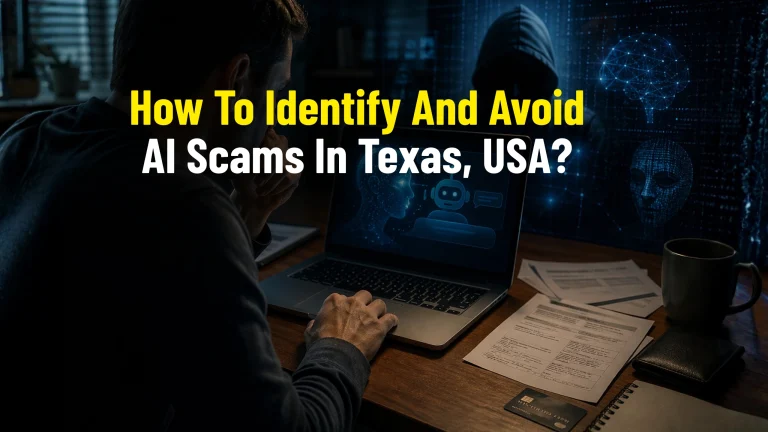
AI Scams in Texas are rising as cities like Frisco continue to grow and adopt new technology. The rapid development brings many benefits, but it also attracts more advanced cybercrime. Local law enforcement now reports an increase in deepfake scams and automated phishing attacks. At the same time, these evolving methods are changing how fraud happens. Today, AI scams are more complex and harder to detect. Because of this, both investigators and courts face new challenges in identifying and prosecuting these offenses.

Moreover, these scams often involve multiple people, tools, and systems. So, determining responsibility becomes difficult. In many cases, questions arise about intent, control, and knowledge. That is why understanding AI fraud legal consequences in the USA is now more important than ever. This guide explains how AI scams work. It also breaks down liability, penalties, and defense strategies in simple terms.

What Constitutes AI Scams In Texas?

In simple terms, AI scams use artificial intelligence to trick people for financial gain. These scams can create fake voices, emails, or even full identities. For example, someone may use voice cloning to pretend to be a family member. Others may use AI to create fake legal documents or investment offers. Because of this, victims often trust the scam without realizing it. As a result, AI scams now look more real and convincing than older fraud methods.

At the same time, the law focuses on intent, not just the tool. If the state believes you planned to defraud someone, it will file charges. That is why AI fraud legal consequences in the USA are becoming stricter as courts try to handle new technology. 

However, these tools are still new, so mistakes can happen. In some cases, prosecutors may treat a simple error as fraud. Therefore, understanding your rights is very important if you face such accusations.

How AI Fraud Works In Texas?

AI fraud usually follows a clear pattern. First, scammers collect personal or financial data. Next, they use AI tools to manipulate that data and make it look real. Then, they carry out the fraud through calls, emails, or transactions. Because of this process, the scam often appears genuine.

As a result, identifying the main offender becomes difficult. Many people may handle different roles, so AI-enabled fraud crimes in the USA often involve organized groups instead of one person.

Additionally, digital evidence plays a key role. Investigators rely on IP addresses, logs, and transaction records. However, these do not always clearly identify the suspect, which can create challenges in proving the case.

Criminal Liability In AI Scam Cases

AI Scams in Texas

Criminal liability in AI scams in Texas cases depends heavily on each person’s level of involvement. Not everyone connected to a scheme carries the same responsibility, yet the law can still reach multiple participants. A common question arises: who is actually to blame when an algorithm plays a role in the crime? 

Texas Penal Code Chapter 7.01, commonly known as the “Law of Parties,” expands this liability. In many situations, several people contribute in different ways. For example, one person may write the code, another may supply the data, and someone else may handle the payouts. This law allows courts in Texas to hold a person accountable for another’s actions if they intended to promote or assist the offense. 

Because of this, legal responsibility in  AI cases becomes broader and more complex. Even technical support or indirect involvement can lead to serious charges if intent exists. However, courts still examine whether the accused had a clear intent to commit fraud, which is a key factor in determining legal responsibility in organized AI fraud cases.

Legal Consequences Of AI Fraud In Texas

When you face allegations related to AI scams in Texas, you may deal with both state and federal laws. This happens because many AI-enabled fraud crimes in the USA cross state lines through the internet. State authorities handle cases under Texas Penal Code Chapter 32 and Chapter 33, while federal agencies like the FBI investigate offenses such as wire fraud under 18 U.S.C. § 1343.

Because of this, AI fraud legal consequences in the USA can vary significantly. State charges may lead to jail or felony penalties based on the scale of the fraud. Meanwhile, federal charges can bring much harsher sentences, including up to 20–30 years in prison, along with heavy fines and restitution. Similarly, the AI fraud legal consequences in the USA depend on financial loss and the victims involved, ranging from state jail felonies to first-degree felonies. 

Moreover, courts may increase penalties if the crime involves vulnerable victims or organized activity. So, early legal action becomes critical.

Organized AI Fraud And Responsibility

Many AI scams in Texas involve organized groups that operate like structured networks. In these setups, each member handles a specific task. For example, one person may collect personal or financial data, while another develops or manages AI tools used in the scheme. Meanwhile, other members may carry out the actual fraud through calls, messages, or transactions.  

Prosecutors often treat these operations as coordinated efforts. As a result, they may charge all individuals involved, even if their roles appear minor or indirect. In addition, conspiracy laws allow courts to hold each participant accountable for the actions of the entire group. 

Therefore, even limited involvement, such as sharing data or assisting with tools, can lead to serious criminal charges. This makes early legal guidance essential in such cases.

Defense Strategies For AI Scam Accusations

Strong defense strategies can protect your rights. First, your attorney reviews all the evidence. Then, they identify weaknesses in the case. Common defense strategies for AI scam accusations include:

  • Lack of intent
  • Mistaken identity
  • Unauthorized use of devices
  • Insufficient evidence
  • Illegal search and seizure

Because AI cases rely heavily on digital data, errors often occur. Therefore, challenging evidence becomes a key strategy. Additionally, attorneys may question how investigators collected and interpreted data. This approach often weakens the prosecution’s case.

Role Of Evidence In AI Fraud Cases

AI Scams in Texas

Evidence plays a major role in these cases. The state will seize your phones, computers, and cloud accounts. This is a terrifying experience. However, this data can also be your best defense. We look for “Exculpatory Evidence” in your message history. By showing the full context of your communications, we can often get the legal consequences of AI fraud reduced or dismissed entirely. However, digital evidence is not always reliable.

For example, shared networks can mislead investigators. Similarly, hacked accounts may falsely implicate someone.  In many high-tech cases, Cryptocurrency Fraud Charges also come into play, requiring a specialized analysis of blockchain ledgers and digital wallets to prove innocence or lack of knowledge.Because of this, attorneys carefully analyze:
Device logs
IP addresses
Financial records
Communication history

Moreover, experts may testify about technical flaws. This step helps challenge the prosecution’s claims. In many cases, breaking down evidence leads to reduced charges or dismissal, especially when evaluating legal consequences of AI fraud in Texas.

Frequently Asked Questions

What Exactly Counts As "AI fraud" Under The New Texas laws?

In Texas, “AI fraud” primarily refers to using artificially generated media like deepfake audio, video, or images to deceive someone for financial gain. For example, if you create a fake video of a CEO to trick employees into transferring funds, you are committing a crime. The law also covers using AI to automate phishing emails. Under Section 32.56, the state focuses on whether you “knowingly” used these tools to engage in financial abuse. Even if you didn’t create the AI yourself, simply sharing the deceptive content can lead to a felony charge.

Can I Be Held Responsible If My AI Software Acts On Its Own?

This is a complex area of legal responsibility in organized AI fraud cases. Generally, the law requires “Intent.” If your AI bot makes a mistake and causes a financial loss, it might be a civil matter rather than a criminal one. However, prosecutors may argue that you were “reckless” in how you set up the program. If you knew the software had a high risk of committing fraud and you didn’t stop it, you could face criminal charges. We focus on showing that the software’s actions were unauthorized or unexpected to protect you from liability.

How Does Federal Law Handle AI-Enabled Fraud Crimes in the USA?

Federal law is much broader than state law. The government uses the Wire Fraud statute to prosecute almost any scam that uses the internet. For AI-enabled fraud crimes in the USA, federal prosecutors often add “Aggravated Identity Theft” charges. This adds a mandatory 2-year prison sentence that must be served consecutively to any other time. In many of these cases, the AI fraud legal consequences in the USA can be extremely severe due to overlapping federal penalties and sentencing rules. Federal cases also involve “Restitution,” meaning you must pay back every cent of the alleged loss. Navigating a federal investigation requires a lawyer who understands the U.S. Sentencing Guidelines.

Who Is Legally Responsible In Organized AI Fraud Cases With Multiple Actors?

Under the “Law of Parties,” everyone who helps a criminal group can be held responsible. This includes the person who wrote the scam script, the person who bought the server space, and the person who laundered the money. However, the state must prove you had a “shared criminal intent.” If you were just a contractor doing a legal task, you should not be held responsible for the group’s crimes. We fight to “sever” your case from the more culpable members of the organization to ensure you are treated fairly.

What Are The Legal Consequences Of AI Fraud In Texas For A First Offense?

The legal consequences of AI fraud depend heavily on the amount of money involved. If the fraud involves less than $2,500, it might be a misdemeanor. However, most AI scams in Texas involve larger sums, which quickly moves the charge into felony territory. A third-degree felony can lead to 2 to 10 years in prison. If the state labels the case as “Organized Criminal Activity,” the penalties are even higher. A first-time offender still faces the possibility of significant prison time and a permanent felony record that ruins career prospects.

Conclusion

AI is changing the legal landscape. At the same time, it is creating new risks for individuals and businesses. AI scams in Texas now involve complex technology and multiple actors. Because of this, determining liability becomes challenging.

The legal consequences of AI fraud in Texas are too high to leave to chance. You need a legal team that understands the difference between a software developer and a cyber-criminal. We have the technical knowledge and the courtroom experience to handle these high-stakes cases in Frisco and throughout the Dallas-Fort Worth area.

Contact L&L Law Group today. We provide aggressive defense for those accused of AI-enabled crimes. Call us now to schedule your confidential case review and start building your defense.

Section Title

How To Identify And Avoid AI Scams In Texas, USA?

AI Scams in Texas are rising as cities like Frisco continue to grow and adopt new technology. The...
Legal Defense Strategies For Grooming Allegations In Texas

Grooming allegations in Texas carry serious legal weight. These cases move fast. They also involve...
What To Know When Facing Continuous Sexual Abuse Charges In Texas?

Continuous sexual abuse charges in Texas are taken very seriously under state law. In fact, these...

Drug Trafficking Charges In Texas: Legal Risks And Defense Strategies

Drug trafficking charges in Texas cases place you on the front line of federal and state drug...
Penalties And Legal Defense Strategies For Texas Federal RICO Charges

Facing federal RICO charges feels like a nightmare. Although Congress created these laws to target...
What to Do If Facing Embezzlement Charges in Texas?

Facing embezzlement charges in Texas is a serious and often life-altering situation. These cases...
Simplifying Data Breach Liability Law And Your Legal Risks

In the current digital landscape, data breach liability law makes it clear that a breach is no...
What Impacts The Role Of DNA Evidence In Criminal Cases In Texas?

DNA evidence in criminal cases in Texas carries immense weight with modern juries, often viewed as...

Possession Of Prohibited Weapons In Texas: What You Need To Know?

Possession of prohibited weapons in Texas is taken very seriously under state law, even though Texas...